

Free on-site gate assessment - hinges, posts, and your LiftMaster or Nice gate operator checked before anything is quoted
The assessment is free and the quote is the invoice.


 Before
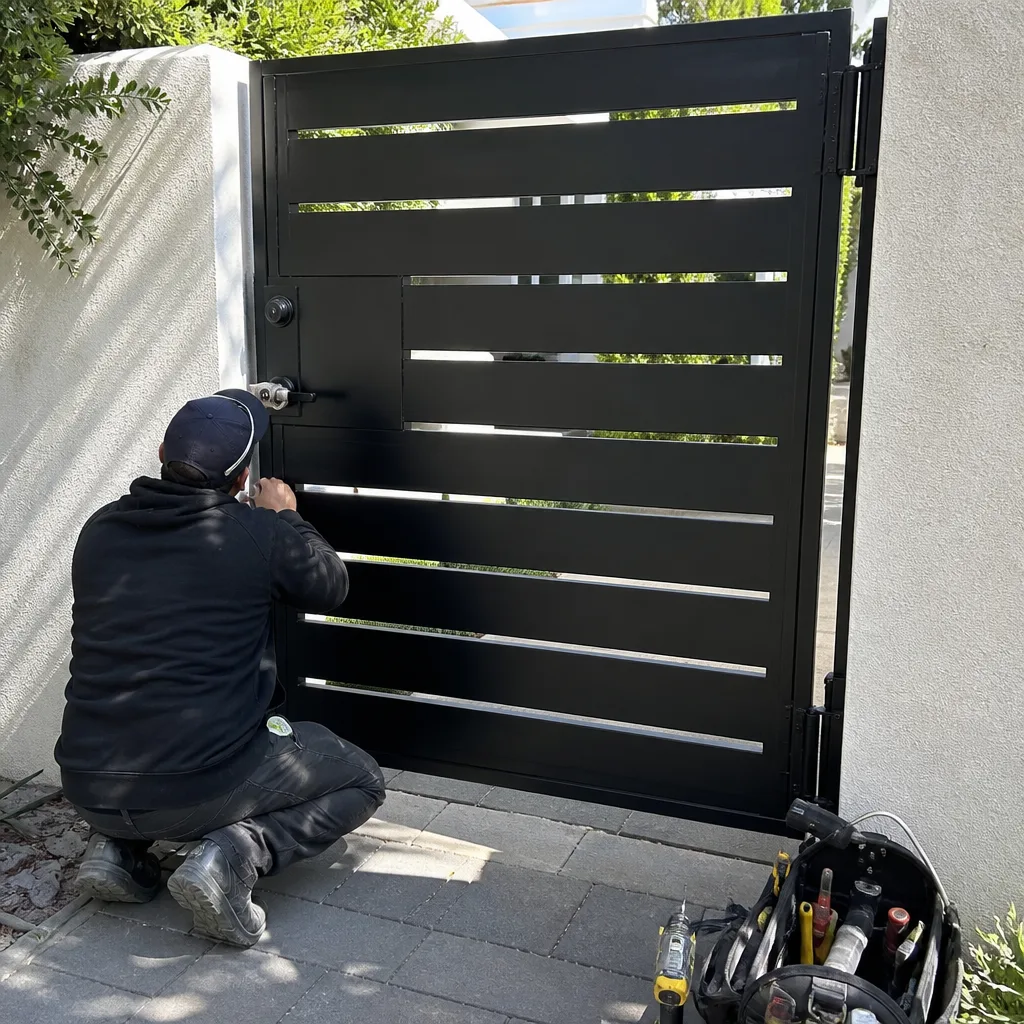 After
After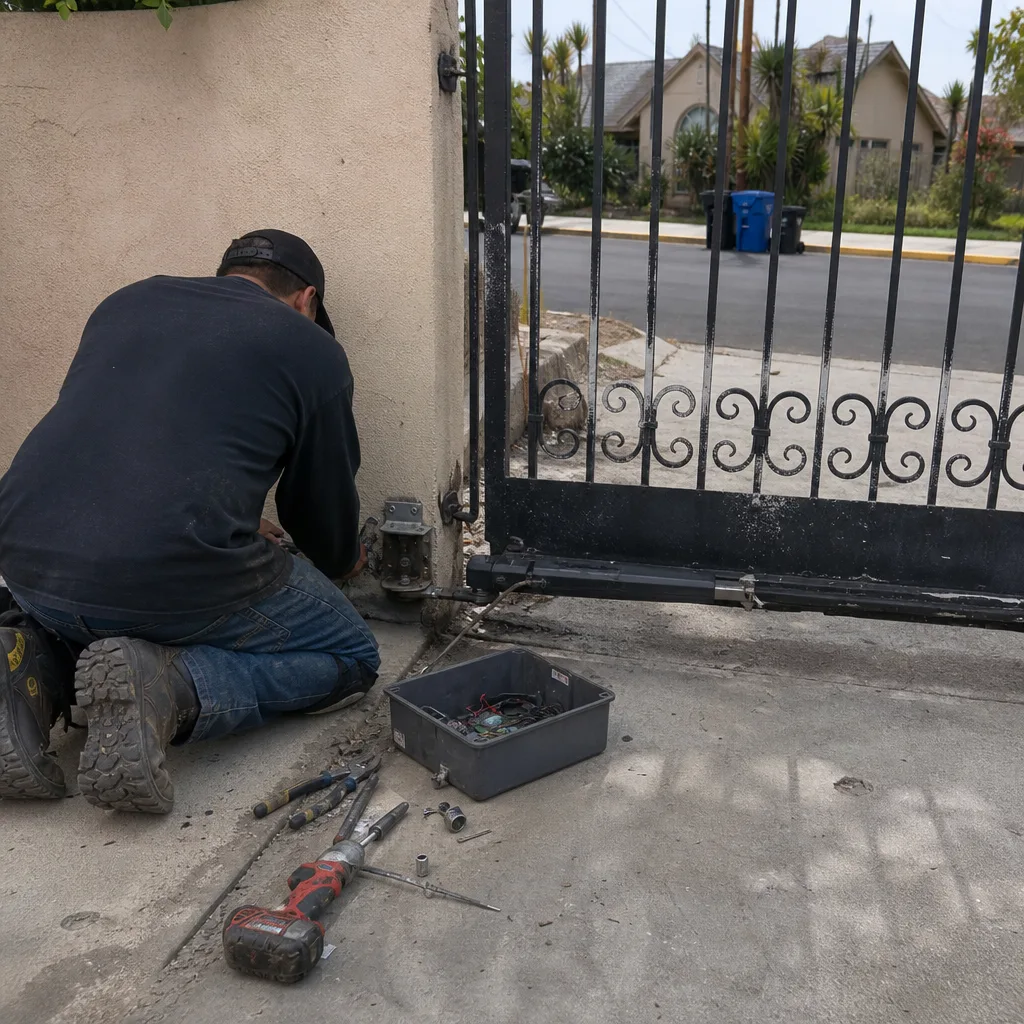 Before
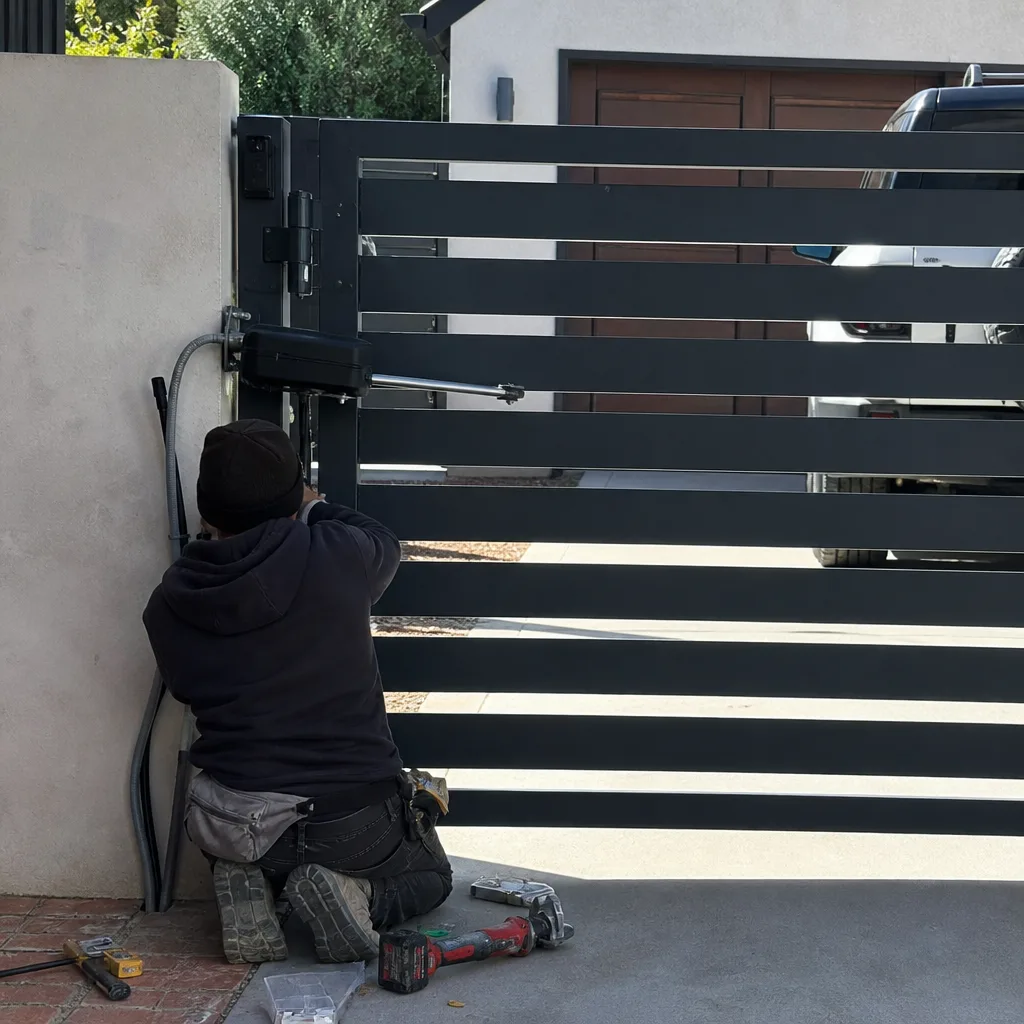 After
After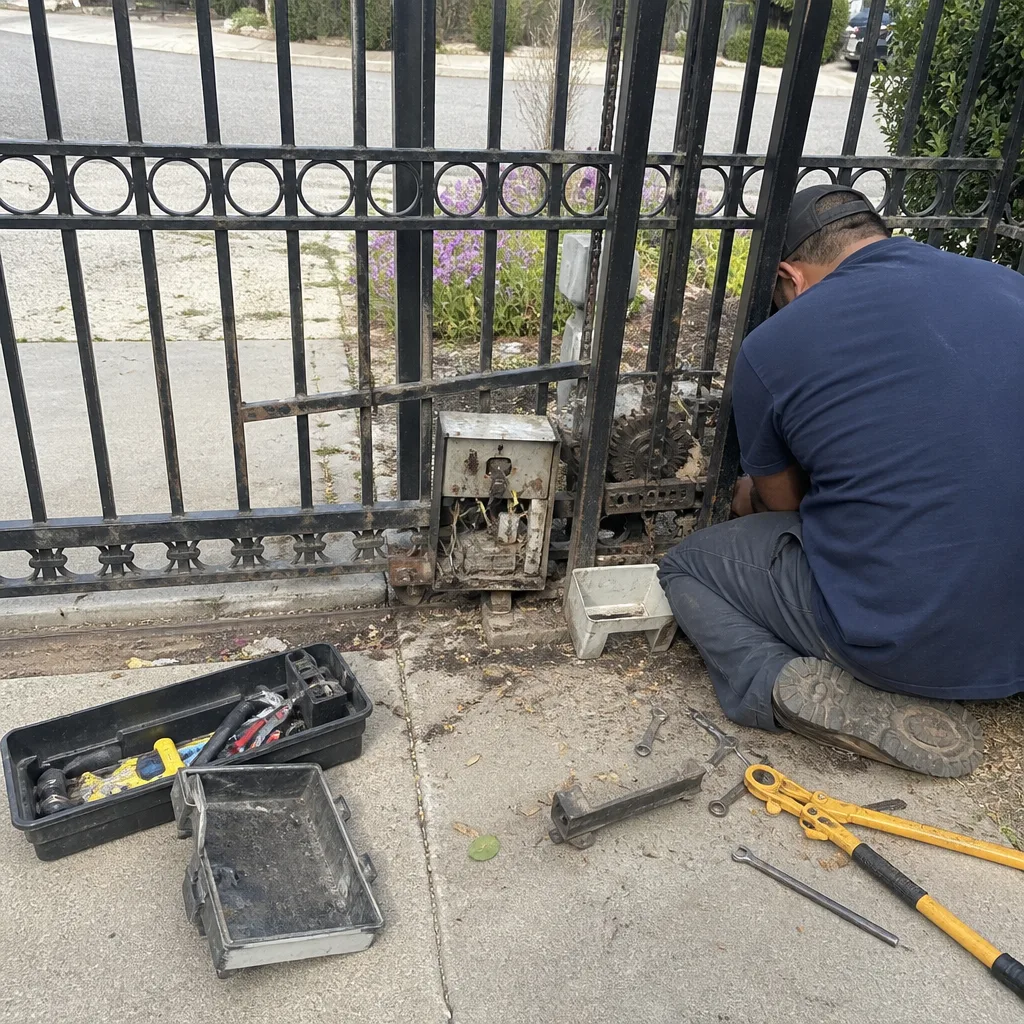 Before
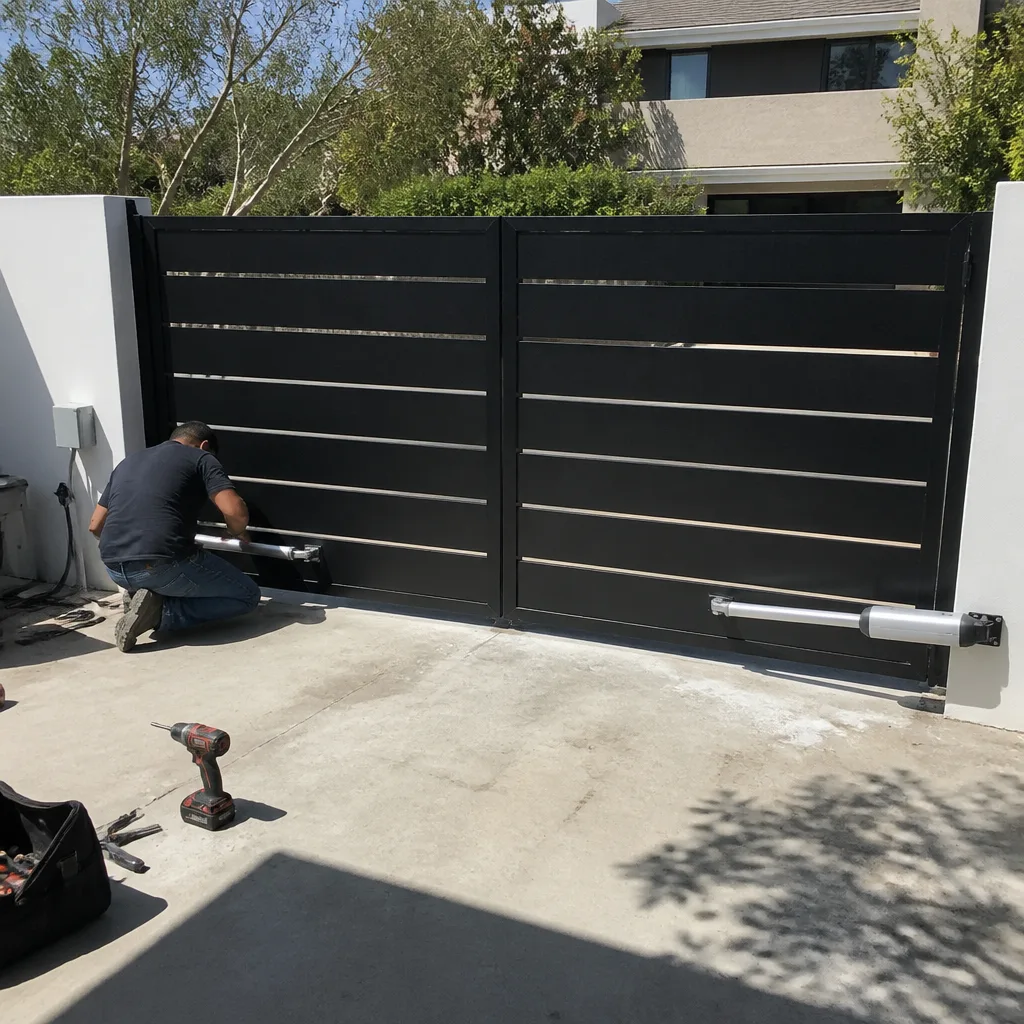 After
AfterBuzzing but Not Moving
When your electric gate hums or buzzes but doesn’t move, the motor is receiving power – the problem is almost always mechanical, not electrical. Something is either blocking the gate, locking it in place, or the motor itself has lost the torque to push through what’s holding it back. In most cases, this is a same-day repair once a technician can see what’s actually going on.
That buzz is the motor working. It’s straining against something it can’t overcome. The operator is doing its job; the gate isn’t cooperating. That’s actually useful information, because it narrows the cause considerably. A completely dead gate – no sound at all – is a different problem. A buzzing, straining gate almost always comes down to one of four things: a mechanical bind, a failed capacitor, a gate that’s slipped into manual lock mode, or a motor that’s worn to the point where it can no longer produce enough torque to move the load it was designed to move.
Why It Happens
Mechanical Bind – Something Is Stopping the Gate Physically
This is the most common cause by a wide margin. Debris in the track, a wheel that’s jumped its rail, a hinge that’s seized, or a post that’s shifted even slightly can create enough resistance that the motor stalls under the load. Walk the gate’s path and look for anything obvious: dirt packed into the bottom of a slide track, a sagging arm on a swing gate, a roller that’s cracked or locked up. If the gate moves freely when you push it by hand (with the operator disconnected by the manual release), the bind is almost certainly mechanical and right in front of you.
Failed Run Capacitor
The run capacitor is a small cylindrical component inside the operator housing that gives the motor the initial boost of current it needs to start moving under load. When it fails, the motor hums – it has voltage – but it can’t generate the starting torque to turn. This is one of the most common reasons an operator that was working fine yesterday suddenly won’t move anything today. You can’t diagnose a failed capacitor by looking at it from the outside, but if the gate moves freely by hand and the operator still just buzzes when you press the button, a bad capacitor is the first thing a technician will check.
Manual Lock or Travel-Limit Lockout
Most gate operators have a manual lock or a safety lockout feature that physically prevents movement if the gate is in a certain position or if a limit switch has been tripped incorrectly. If someone recently used the manual-release handle – during a power outage, for example – the gate may be mechanically locked and the operator is buzzing because it has no idea. Check whether the manual-release cord or handle is still in the disengaged position. On some systems, a travel-limit switch that’s drifted out of adjustment can have the same effect: the operator thinks the gate is already at the end of its travel and refuses to drive further.
Motor Wear or Thermal Overload
An older motor that’s been working hard – or one that just ran through a long automated cycle – can trip its internal thermal protection cutout, which shuts down movement but leaves the hum alive. It usually resets on its own after 15 to 30 minutes of cooling. If yours buzzes, goes quiet, and then buzzes again in a pattern, thermal overload is likely. A motor that’s genuinely worn out will also buzz without moving, but the hum sounds labored and lower in pitch than normal. Either way, if the gate is running hotter than usual or cycling more often than it should, the motor deserves a close look.
What to Do Right Now
- Stop pressing the button. Every failed start attempt pushes more current through a strained motor. If the motor is already struggling, repeated attempts heat it faster and can turn a capacitor job into a motor replacement. Press it once to confirm the symptom, then leave it alone until someone can look at it.
- Use the manual release to open the gate by hand – carefully. Almost every gate operator has a manual release, usually a cord or a lever near the motor unit. Disengage it so the gate is free from the drive mechanism, then try to push or swing the gate by hand. If it moves easily, the motor and drive train aren’t seized – the problem is likely electrical (capacitor, limit switch, or lockout). If the gate feels stiff, grinds, or won’t budge, you have a mechanical bind. Note which it is: this is exactly what the technician will ask you.
- Look at the track, rollers, and hinges. Before anyone arrives, take 60 seconds to look at the gate’s path of travel. Dirt packed into a slide track, a cracked bottom roller, a hinge pin that’s worked loose, or even a rock that rolled in after rain – any of these can stop a gate cold. If you see something obvious, photograph it. Don’t try to force the gate through it.
- Do not open the operator housing or touch wiring, capacitors, or motor terminals yourself. The capacitor inside the housing can hold a significant charge even after power is disconnected. This is not a component to probe with a multimeter unless you have the training to discharge it safely first. Leave the housing closed and let the technician handle what’s inside it. This is a genuine safety hazard, not a disclaimer.
- Note what’s changed recently. Did the gate start acting up after a storm, after a power outage, after someone used the manual release, or after it ran more cycles than usual? That context cuts diagnostic time considerably. Write it down or just be ready to tell the technician when they arrive.
How We Fix It
When your local Portcullis Gate Repair technician arrives, the first thing they do is run a quick physical check – gate free or bound, manual release in or out, visible damage on the track or hardware. From there they’ll power the operator and listen to the character of the buzz before opening the housing.
If it’s a mechanical bind, they clear the obstruction, reset any displaced rollers or hardware, and test the full open-close cycle. If the capacitor has failed, they carry replacements for the most common operator models – including LiftMaster, FAAC, BFT, Viking, and the other brands we service – and the swap typically takes under an hour. Limit-switch recalibration and manual-lockout resets are quick. A worn motor takes longer but is diagnosed on the same visit.
Before any of that work starts, you’ll have the price in writing – exactly what the Kingswell Way calls for. The repair is then covered by the 365-Day Done Right Promise: if it fails inside the guarantee period, we come back and correct it at no charge. This is a gate repair and, in cases where the operator is beyond saving, sometimes a gate installation of a replacement unit. Either way, nothing moves forward until you’ve seen and agreed to the number.
Frequently Asked Questions
It depends on where the gate is sitting. If the gate is stuck in the open position, your property is unsecured – that’s worth acting on today, not tomorrow. If it’s stuck closed and you can still get in and out safely another way, it’s less urgent, but every failed start attempt puts additional stress on the motor and capacitor. The longer a failing component works under strain, the more likely the repair becomes a larger one. Call (940) 412-7340 and let us help you figure out how urgent your specific situation is.
Call us at (940) 412-7340 – a live person answers around the clock, every day of the year including holidays. Your local Portcullis Gate Repair team will tell you exactly when a technician can be there and give you a real arrival window, not a four-hour guess. We do not route calls to voicemail or promise a callback by the next business day.
Yes, always. The technician diagnoses the problem first, then writes the price down before touching a single component. That written number is what you agree to – there are no additions after the gate is already apart. This is the Kingswell Way and it applies to every Portcullis job, every time.
Every repair Portcullis Gate Repair performs is covered by the 365-Day Done Right Promise. If the repair fails within that period, we return and fix it at no charge to you – that commitment is written directly on your repair invoice, not buried in fine print on a website. You don’t need to argue for it or escalate to anyone. It’s already there when you sign.
Get It Fixed
Call (940) 412-7340 – a live person picks up any hour of the day or night. Your local Portcullis Gate Repair team will give you a real arrival window, a written price before any work starts, and a repair backed by the 365-Day Done Right Promise. The gate should open and close the way it should. Let’s get it there.
Written by Dean Prescott, Owner and Lead Technician at Portcullis Gate Repair, a Kingswell company serving communities across the country since 2008.
What Our Customers Say
"Installed a new gate for us after the old wooden one rotted out. Clean work, showed up on time both days, and the written price didn't change. It swings perfectly."
- Donna Kirkpatrick"Gate was dragging and screeching across the driveway. I figured I'd need a whole new setup. He adjusted the track and rollers and it was a fraction of what I expected. Honest work."
- Omar Haddad"Our intercom and gate motor both quit. They fixed the whole system in one visit and explained the warranty clearly. On time, polite, and tidy. Can't ask for more."
- Yvette Marchetti