

Free on-site gate assessment - hinges, posts, and your LiftMaster or Nice gate operator checked before anything is quoted
The assessment is free and the quote is the invoice.
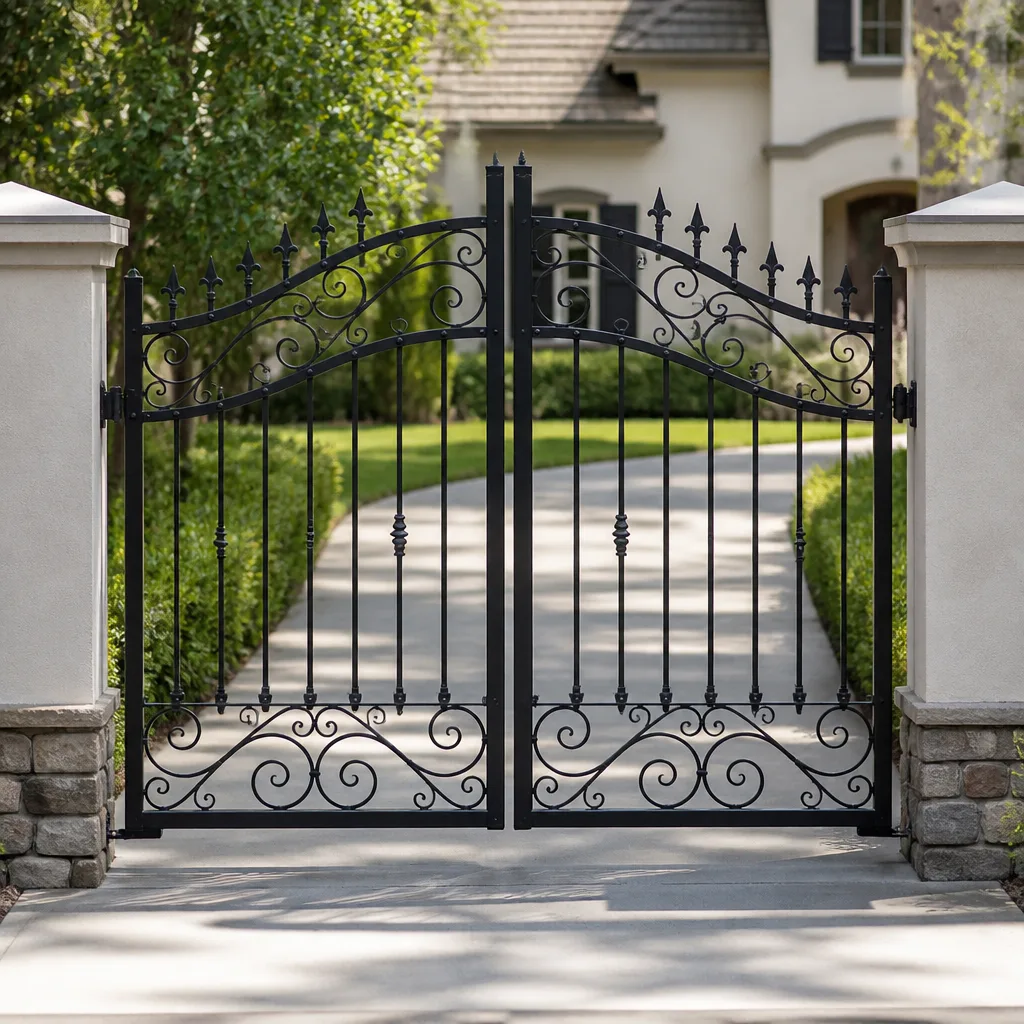
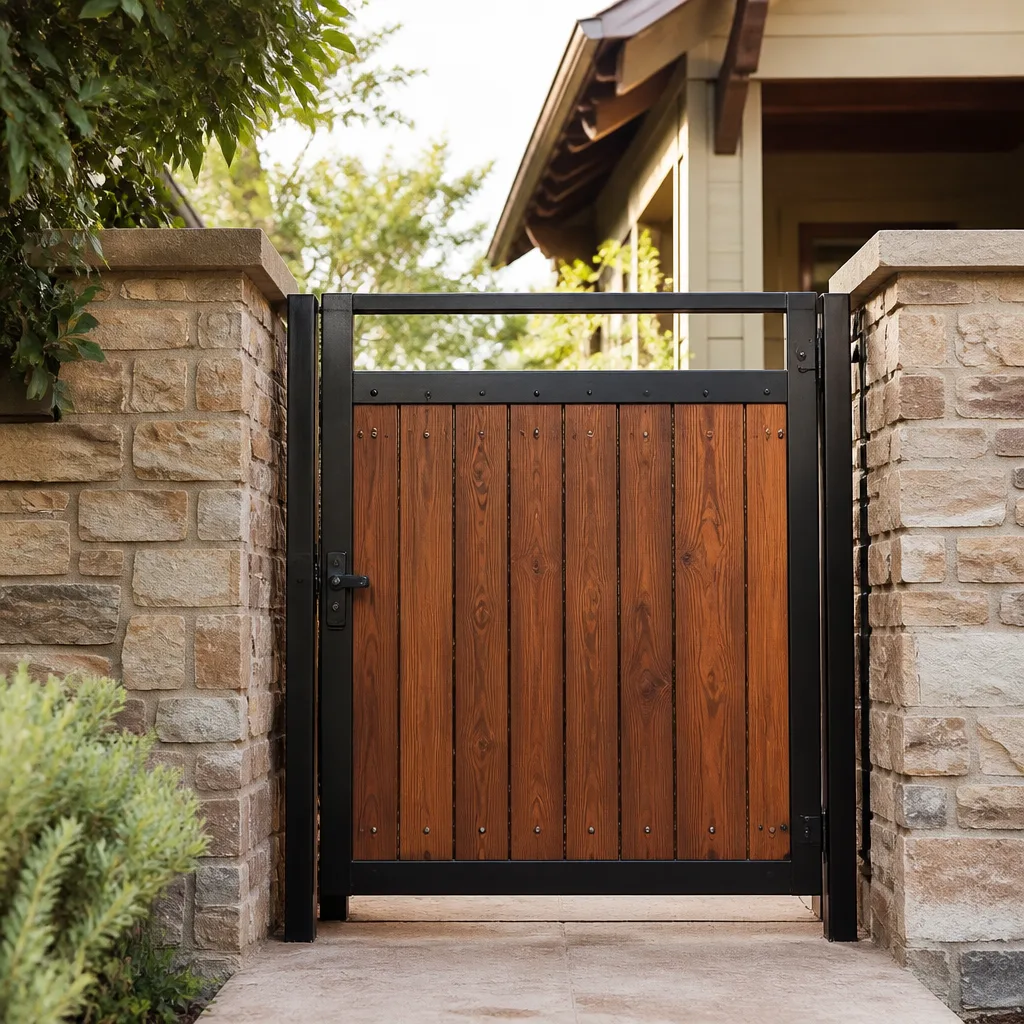
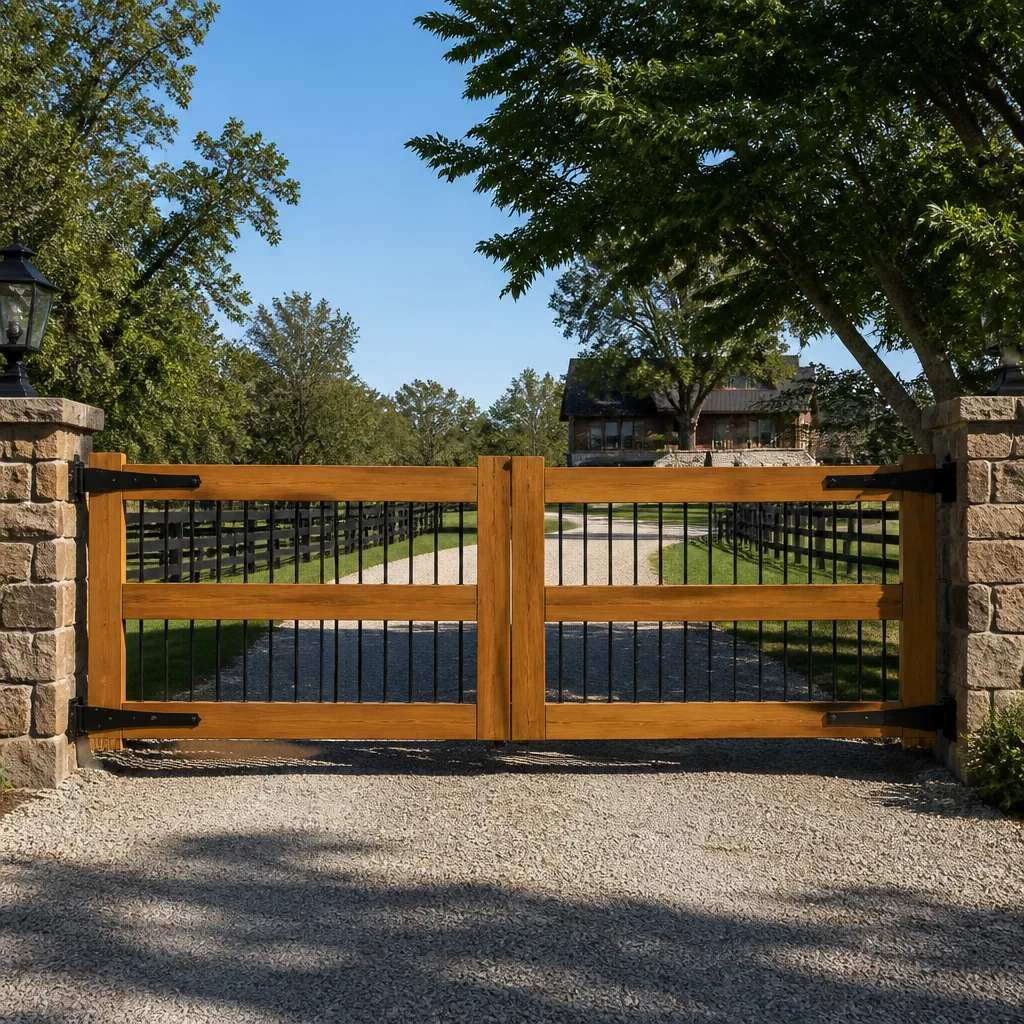
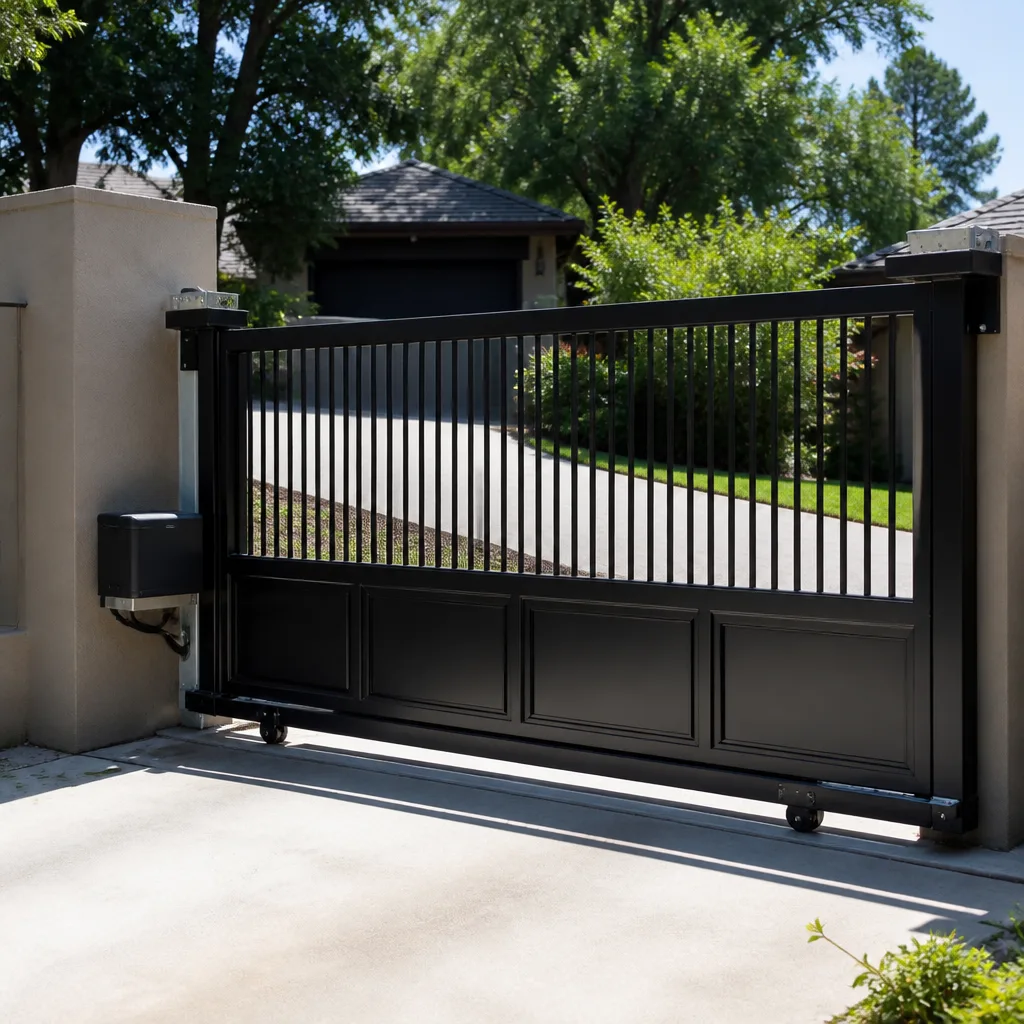
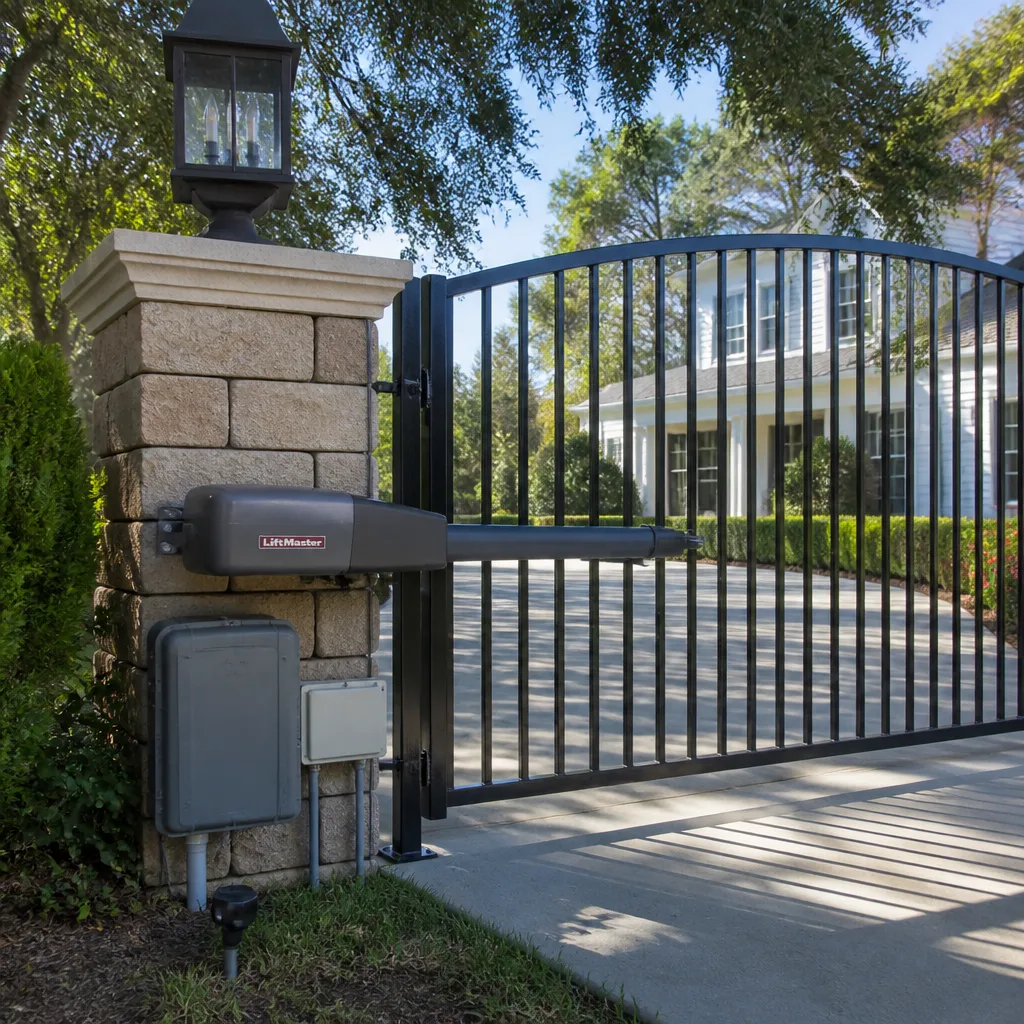
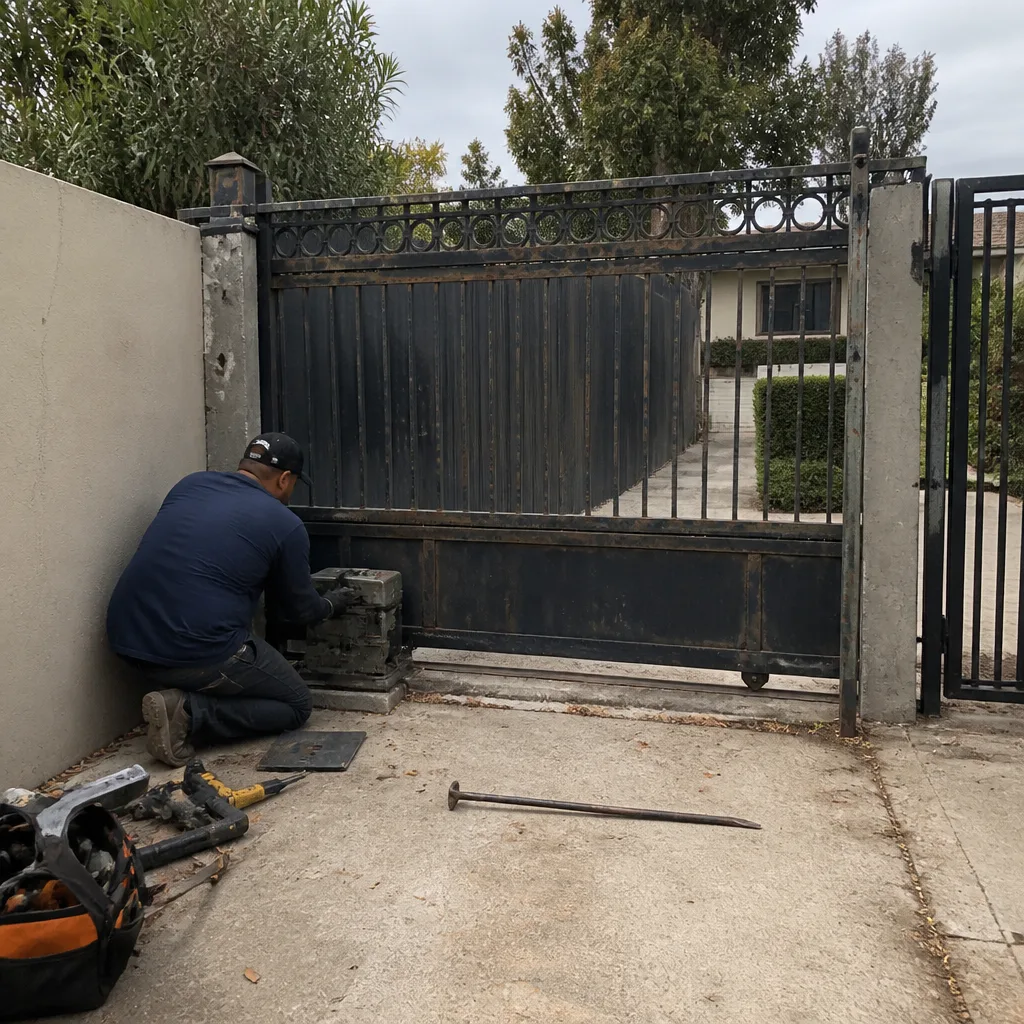 Before
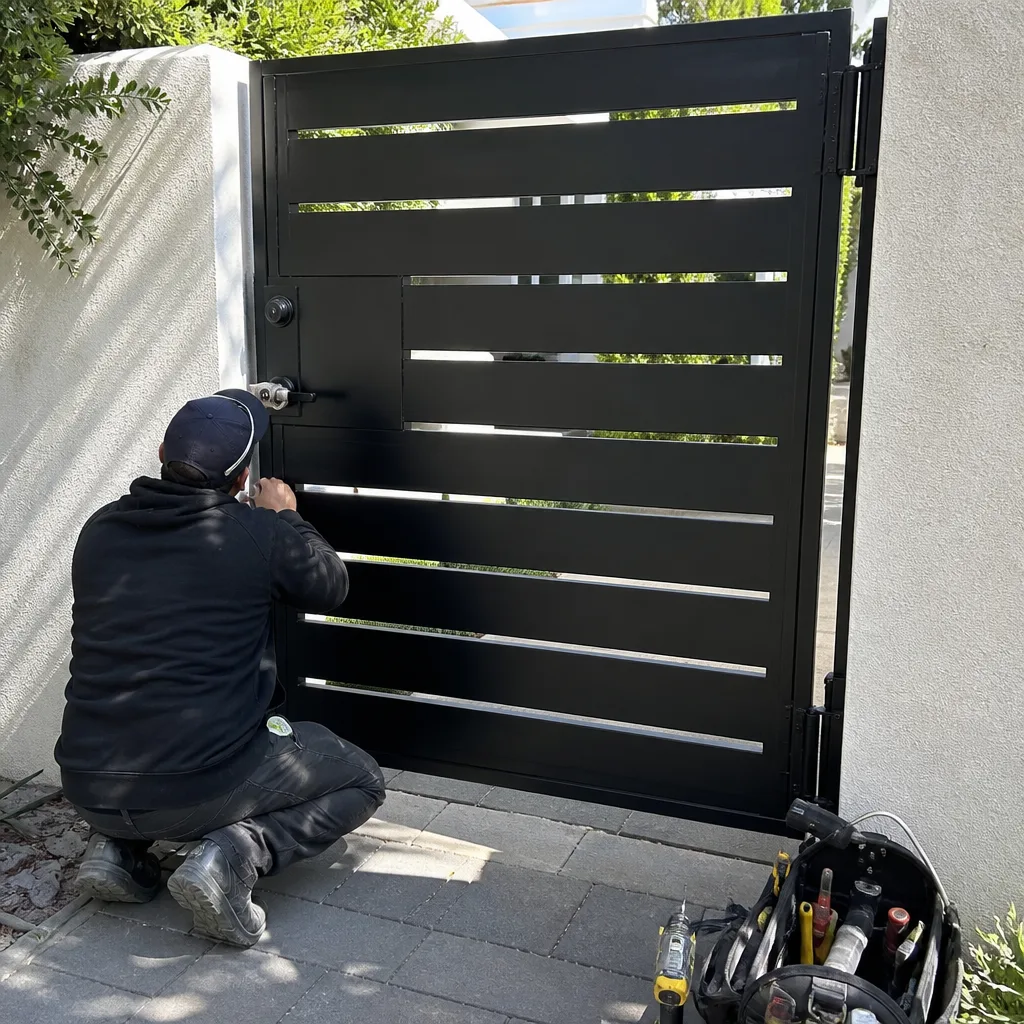 After
After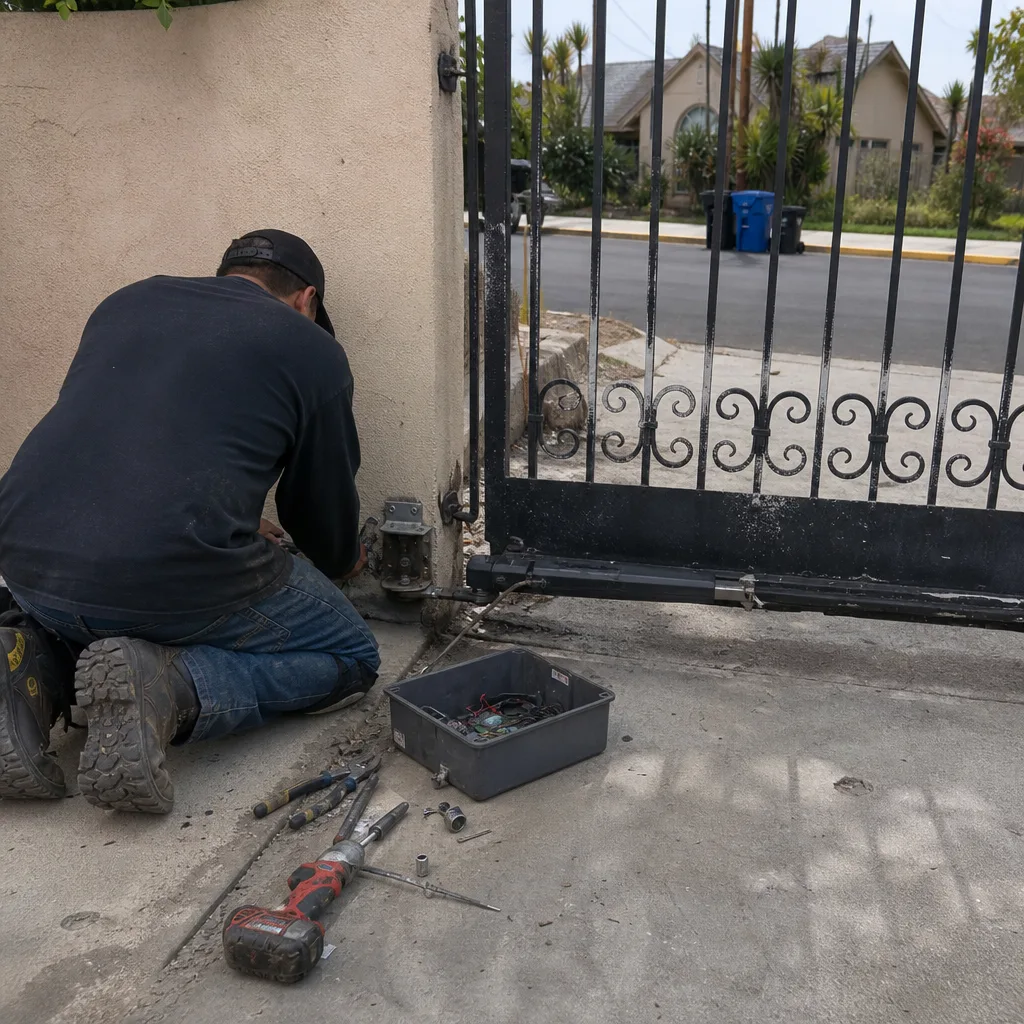 Before
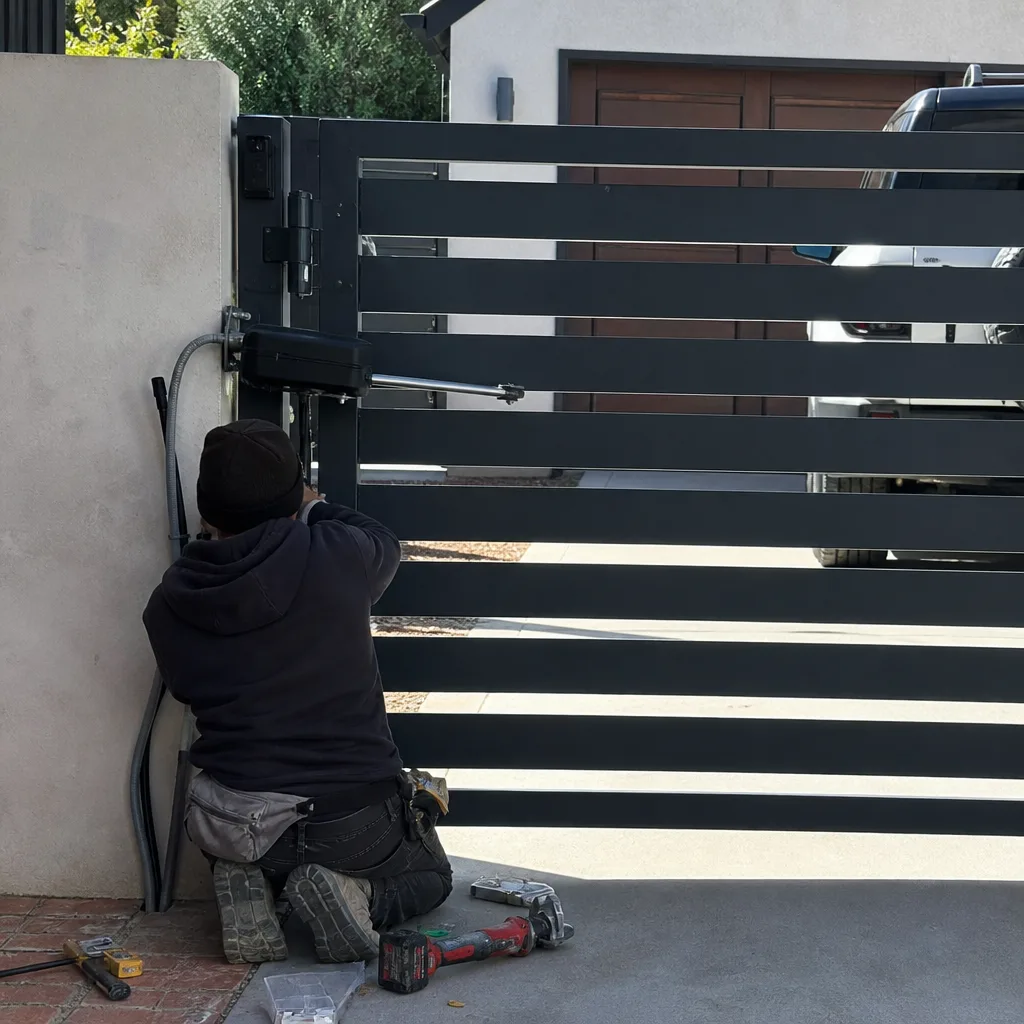 After
After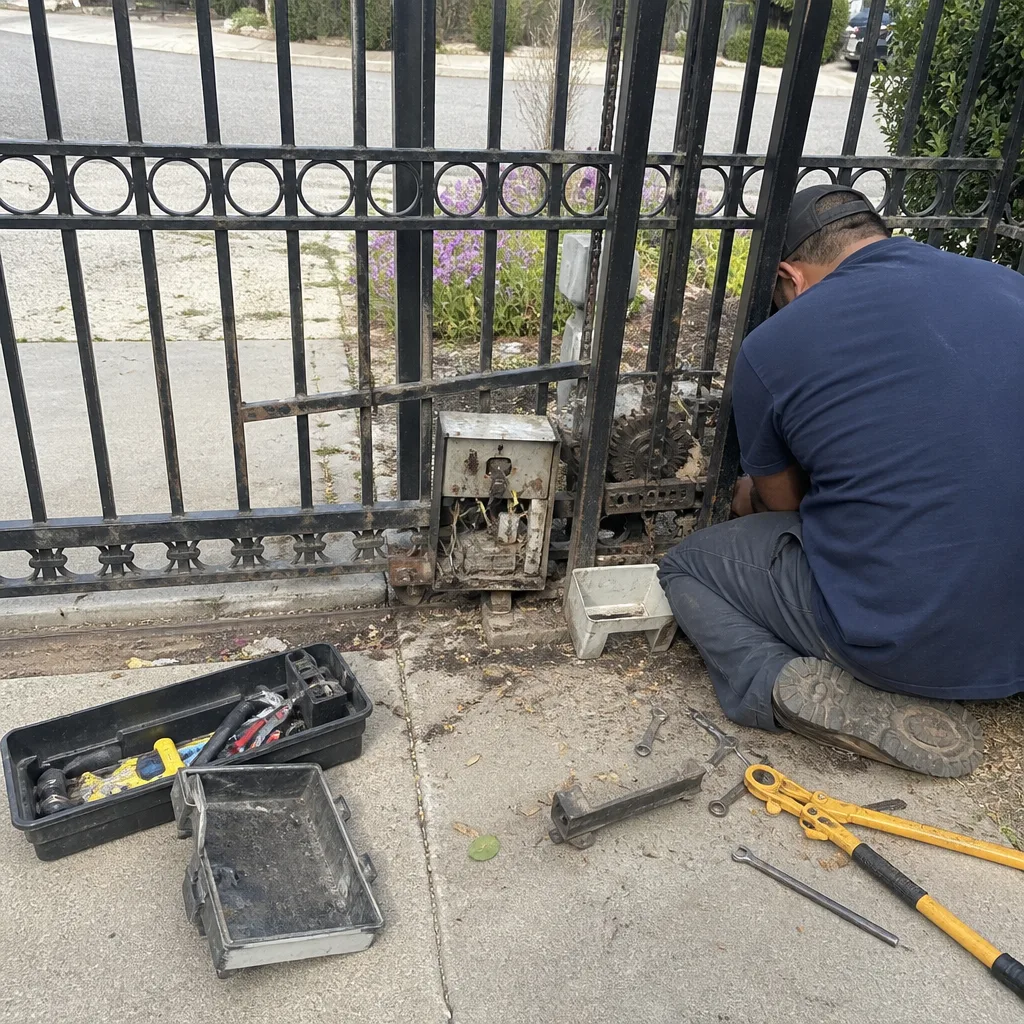 Before
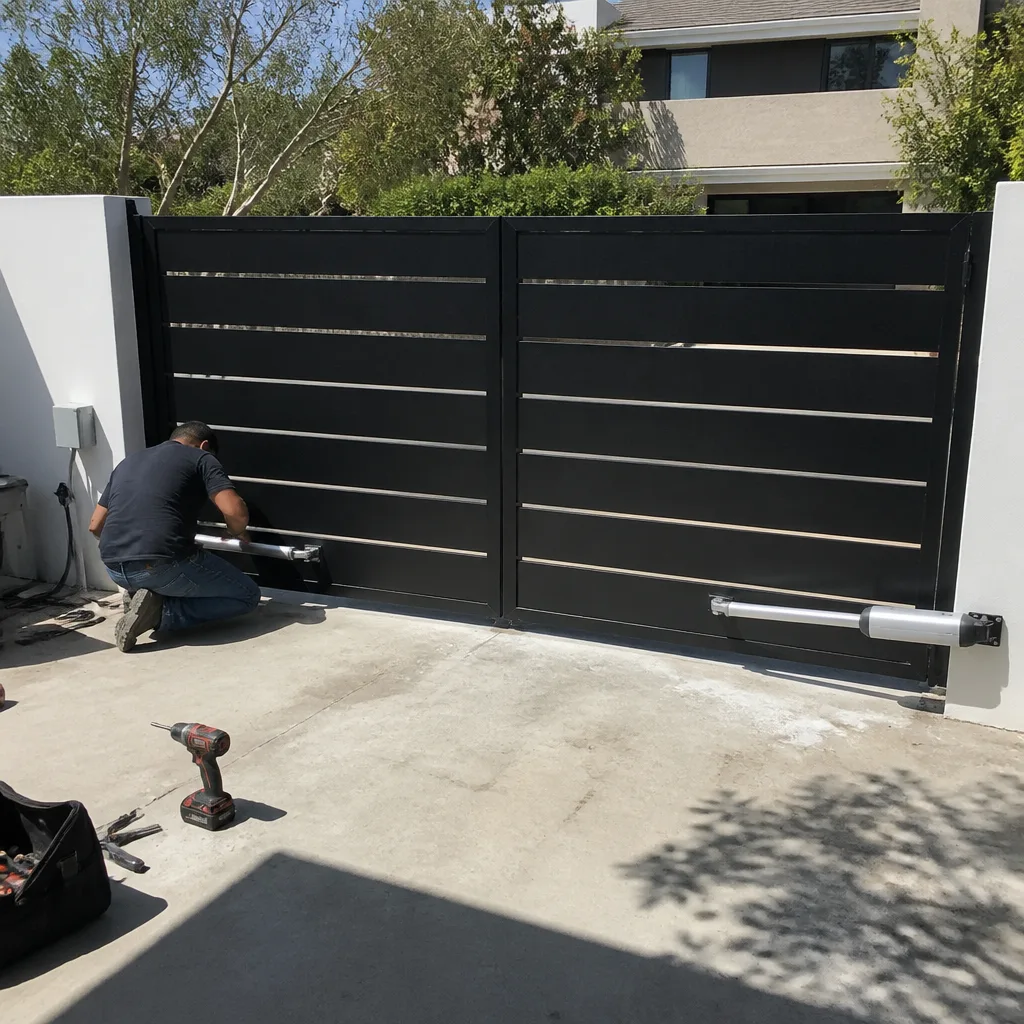 After
AfterGate Hinges Sagging or Dragging on the Ground
A gate that sags or drags on the ground almost always means one or more hinges have failed, shifted, or pulled away from the post. Left alone, the problem gets worse every time the gate swings – the weight transfers to the wrong places, the frame twists, and what started as a dragging latch side can turn into a gate that won’t move at all.
The good news is that a sagging gate is usually a mechanical problem with a clear fix. A technician can diagnose the cause in minutes by checking hinge condition, post integrity, and frame alignment. What matters is not ignoring it: a gate dragging along concrete or pavement is grinding off its own finish, bending its lower edge, and – if it’s a motorized gate – forcing the operator to work against resistance it was never designed to handle.
Why It Happens
Worn or Failed Hinge Hardware
This is the most common cause, by a wide margin. Hinges are the load-bearing joints of a gate, and they wear. The pin inside the barrel loosens, the barrel itself elongates from years of weight cycling through it, and eventually the gate drops. You’ll usually see a visible gap at the hinge knuckle where there used to be none, and the gate will feel loose and wobbly when you push it side to side by hand. On a heavy ornamental iron gate, a single failed hinge puts the full load on the others – and they follow quickly.
Hinge Fasteners Pulling Out of the Post
The hinge itself may be fine, but the bolts or lag screws holding it to the post have stripped out of the wood, or the weld holding it to a steel post has cracked. This is extremely common on wooden posts, especially in climates with wet winters and dry summers: the wood swells, shrinks, and eventually the fastener loses its bite. Look at the post side of the hinge – if there’s a gap between the hinge plate and the post, or you can see daylight where the lag screws used to sit flush, that’s your answer.
Post Lean or Foundation Shift
Sometimes the hinge and the fasteners are both fine, but the post they’re attached to has moved. A gate post set in shallow concrete can heave with frost, settle in soft soil, or simply lean over time under the constant lateral load of a swinging gate. Stand back and look at the post from across the driveway: if it’s no longer plumb – if it tilts toward the gate rather than standing straight – the post is the problem, not the hardware. This fix is more involved than a hinge swap, but it’s the only fix that holds.
Frame Distortion or Weld Failure
On older gates, the frame itself can rack or twist – particularly on gates that have been dragging for a while without repair. A gate frame that’s out of square puts uneven load on every hinge and on the latch, which accelerates wear across the board. You can usually spot this by looking at the gap between the gate and the frame or post along its full height: if the gap is consistent top to bottom, the frame is probably fine; if it’s wide at the top and pinched at the bottom, or vice versa, the frame has moved.
What to Do Right Now
- Stop operating the gate repeatedly. Every swing adds stress to the remaining hardware and grinds the gate edge against the ground. If the gate is motorized, disable the operator so it doesn’t keep trying to cycle.
- Photograph the hinge from multiple angles. A close-up of each hinge showing the gap, any separation from the post, and the condition of the fasteners gives the technician a head start before the truck is even in your driveway.
- Do not attempt to re-tension a motorized gate’s mechanical components. Electric gate operators involve springs, cables, and drive mechanisms under load. These are not safe to adjust without training and proper tools – leave them alone and let the technician assess.
- Check whether the post moves when you push it firmly at chest height. A small amount of give is a significant finding – note it and tell us when you call. If the post is loose in the ground, that changes the repair scope.
- Prop the gate level if it’s safe to do so – a block of wood under the latch-side corner keeps it from grinding further while you wait. Don’t force it back into the frame; just support the weight so it rests rather than drags.
How We Fix It
When your local Portcullis Gate Repair team arrives, the first thing the technician does is a full hinge and post assessment – not just a glance at the obvious failure point, but a check of every hinge, every fastener, the post plumb, and the frame square. That full picture is what produces an accurate written price, and that price is agreed before a single bolt turns. No surprises on the invoice.
If the hinges are worn, we replace them with hardware rated for the gate’s weight – not whatever’s closest in size. If the fasteners have pulled, we re-bore, re-anchor, and torque to spec. If the post has moved, we discuss the right correction: re-setting the base, adding a concrete collar, or in severe cases, replacing the post entirely. Frame issues may require welding or adjustment of the frame geometry before the gate hangs correctly again.
Most hinge repairs are finished in a few hours. Post work takes longer. Either way, the job is covered by our 365-Day Done Right Promise: if the repair fails inside that period, we come back and correct it at no charge. That promise is printed on your invoice – not a verbal assurance, a written one. This is Gate Repair, and it’s what we do.
Frequently Asked Questions
A sagging gate is a real safety and security concern, not just a nuisance. A gate that doesn’t latch or close fully leaves your property unsecured, and a motorized gate being forced to operate against a dragging frame can fail suddenly – sometimes mid-cycle. If you have children, pets, or vehicles moving through the gate, don’t leave it in service in this condition. Call (940) 412-7340 and we’ll get someone out to assess it.
Call us at (940) 412-7340 – a live person answers 24 hours a day, 7 days a week, and we’ll tell you exactly what availability looks like in your area right now. We don’t run you through a voicemail queue or promise a callback by end of day. Someone picks up, and we give you a real arrival window.
For a lightweight wooden gate on a solid post, swapping a hinge is a reasonable DIY job if the post is sound and the replacement hardware is rated for the gate’s weight. For steel or iron gates, motorized gates, or any situation where the post has moved, do-it-yourself hinge work usually treats the symptom without addressing the cause – and the gate sags again within months. A technician can tell you in the first few minutes whether this is a hardware swap or something deeper.
Yes, always – this is a core part of how we work. The Kingswell Way is plain about it: say the price before the work. Your technician assesses the gate, writes up the price for the repair, and you agree to it before anything is disassembled. No “we’ll know once we get in there” surprises at the end. If you want to know what a repair like this might run before anyone visits, call (940) 412-7340 – the estimate is free.
Get It Fixed
Your local Portcullis Gate Repair team is ready to diagnose the problem, give you a written price before any work starts, and back the repair with our 365-Day Done Right Promise. Call (940) 412-7340 – a live person answers right now – or book online and we’ll confirm your arrival window.
Written by Dean Prescott, Owner and Lead Technician at Portcullis Gate Repair, a Kingswell company serving residential and commercial customers since 2008.
What Our Customers Say
"Gate was dragging and screeching across the driveway. I figured I'd need a whole new setup. He adjusted the track and rollers and it was a fraction of what I expected. Honest work."
- Omar Haddad"Our intercom and gate motor both quit. They fixed the whole system in one visit and explained the warranty clearly. On time, polite, and tidy. Can't ask for more."
- Yvette Marchetti"Good repair on a sagging gate and a new hinge welded on. Took them a couple days to get the part in, but they told me that up front and it's been solid since."
- Hector Villanueva