
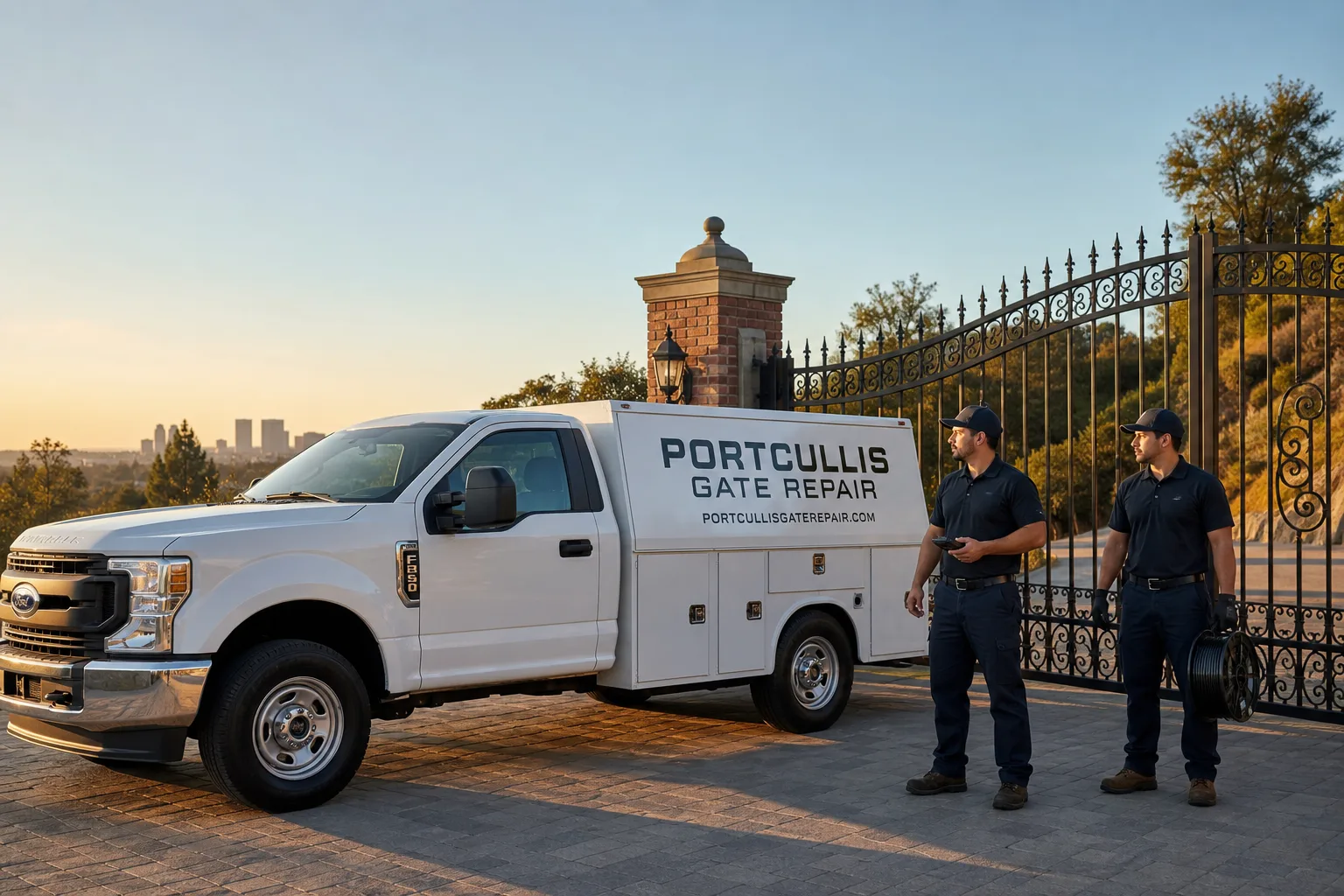
Free on-site gate assessment - hinges, posts, and your LiftMaster or Nice gate operator checked before anything is quoted
The assessment is free and the quote is the invoice.

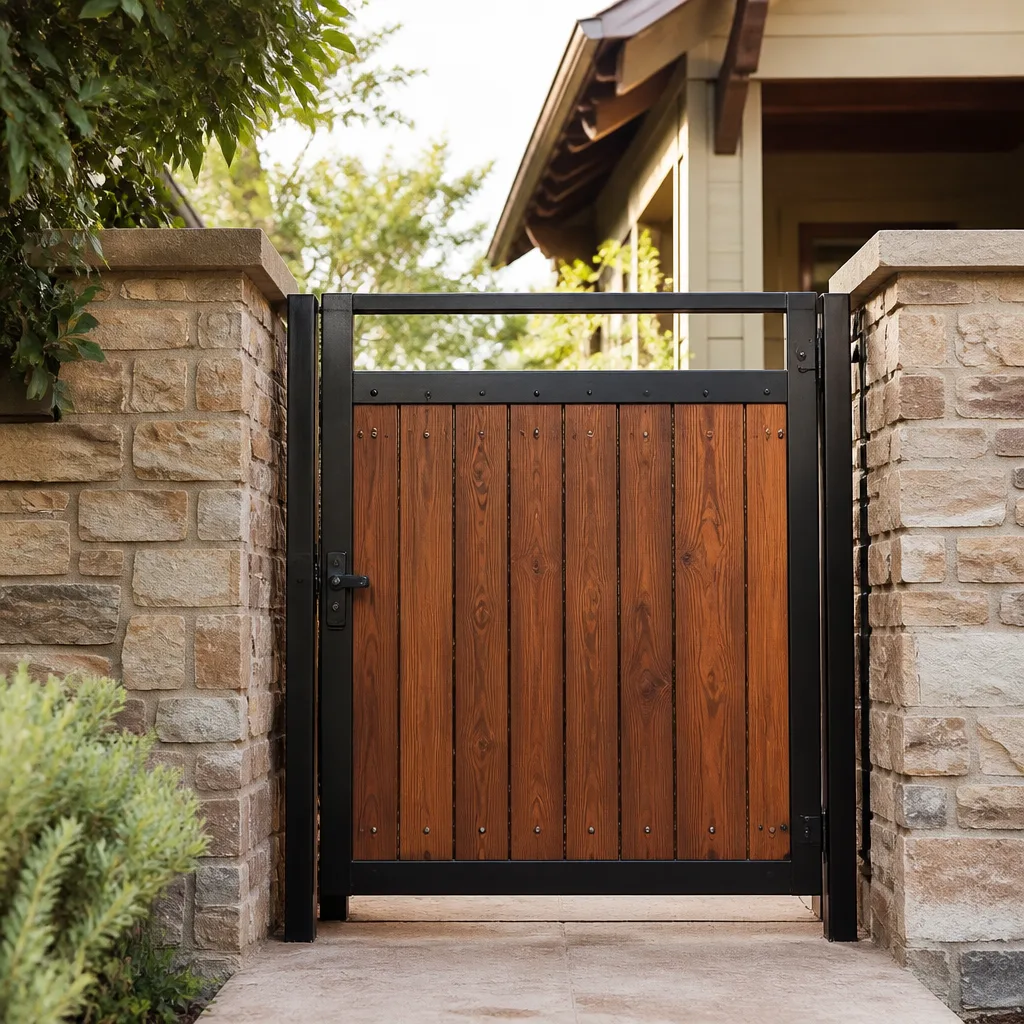
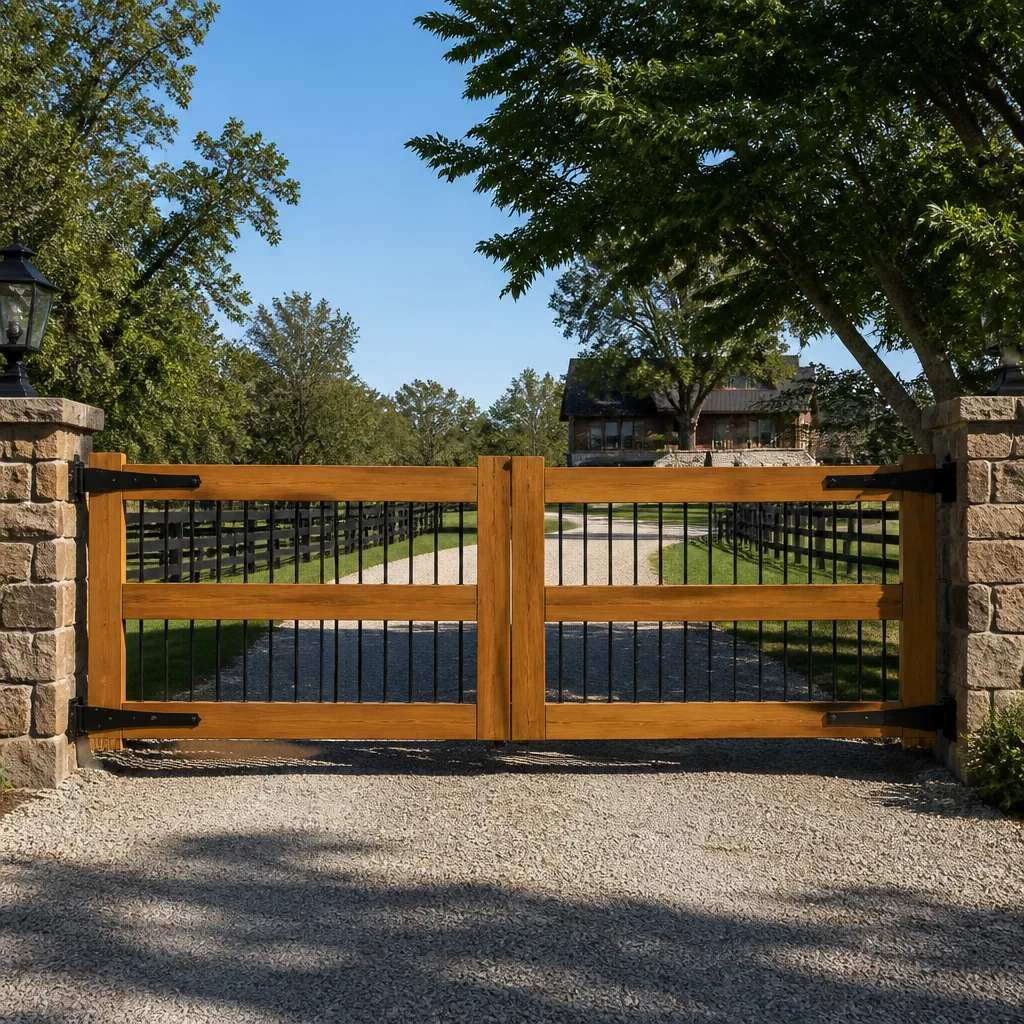
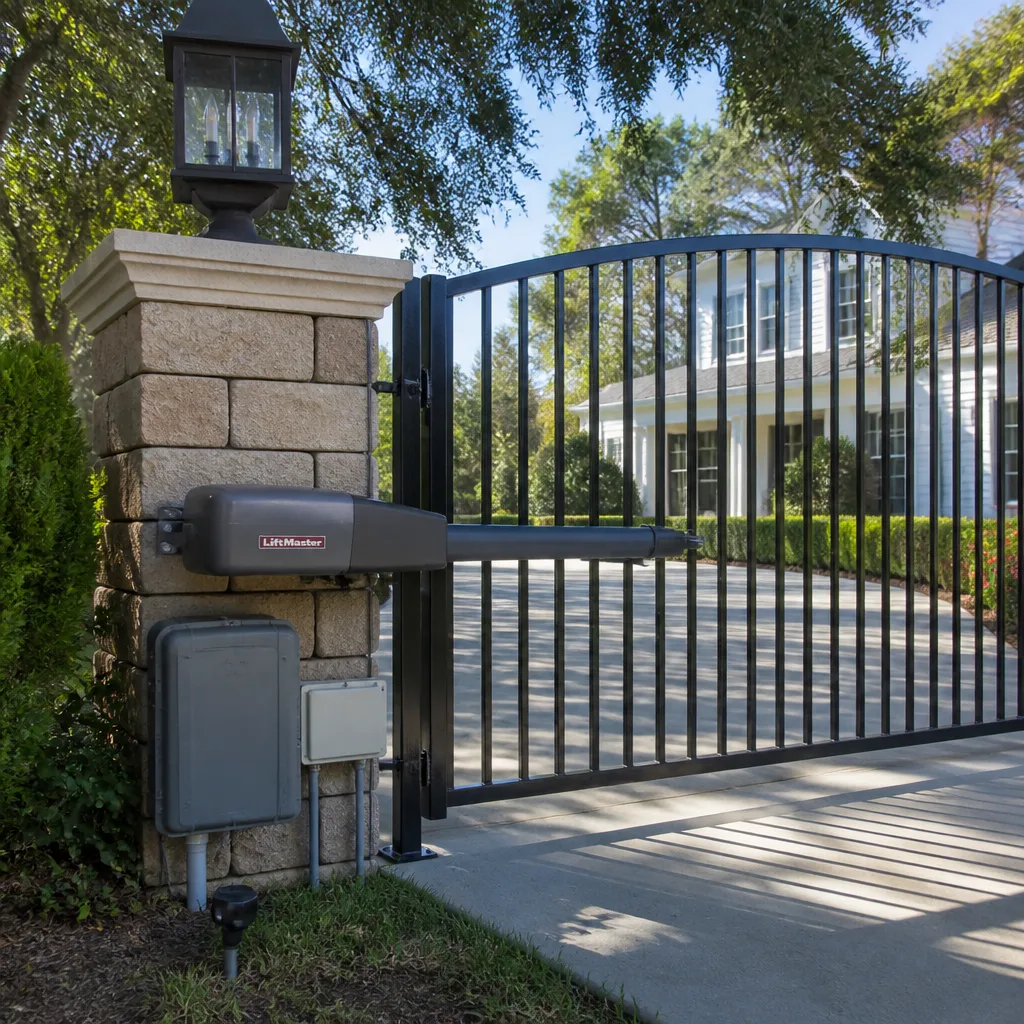
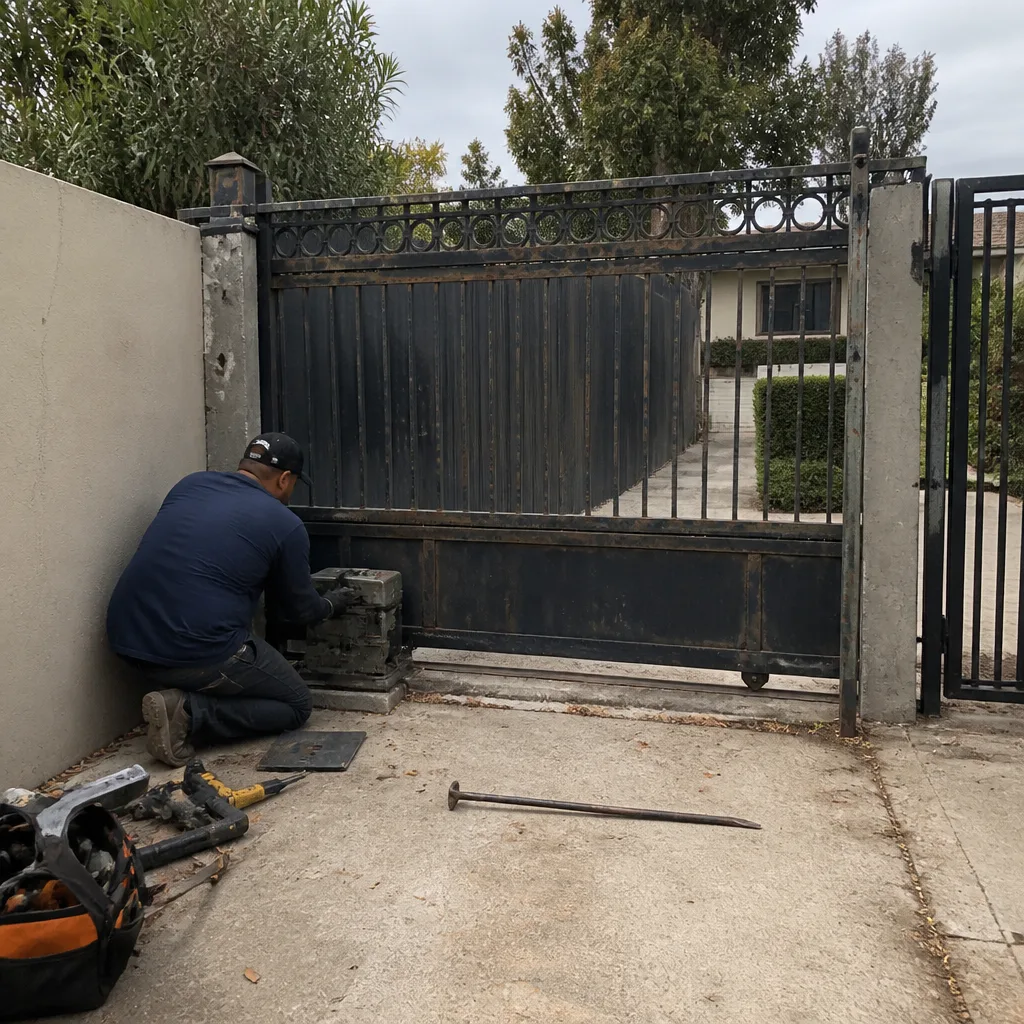 Before
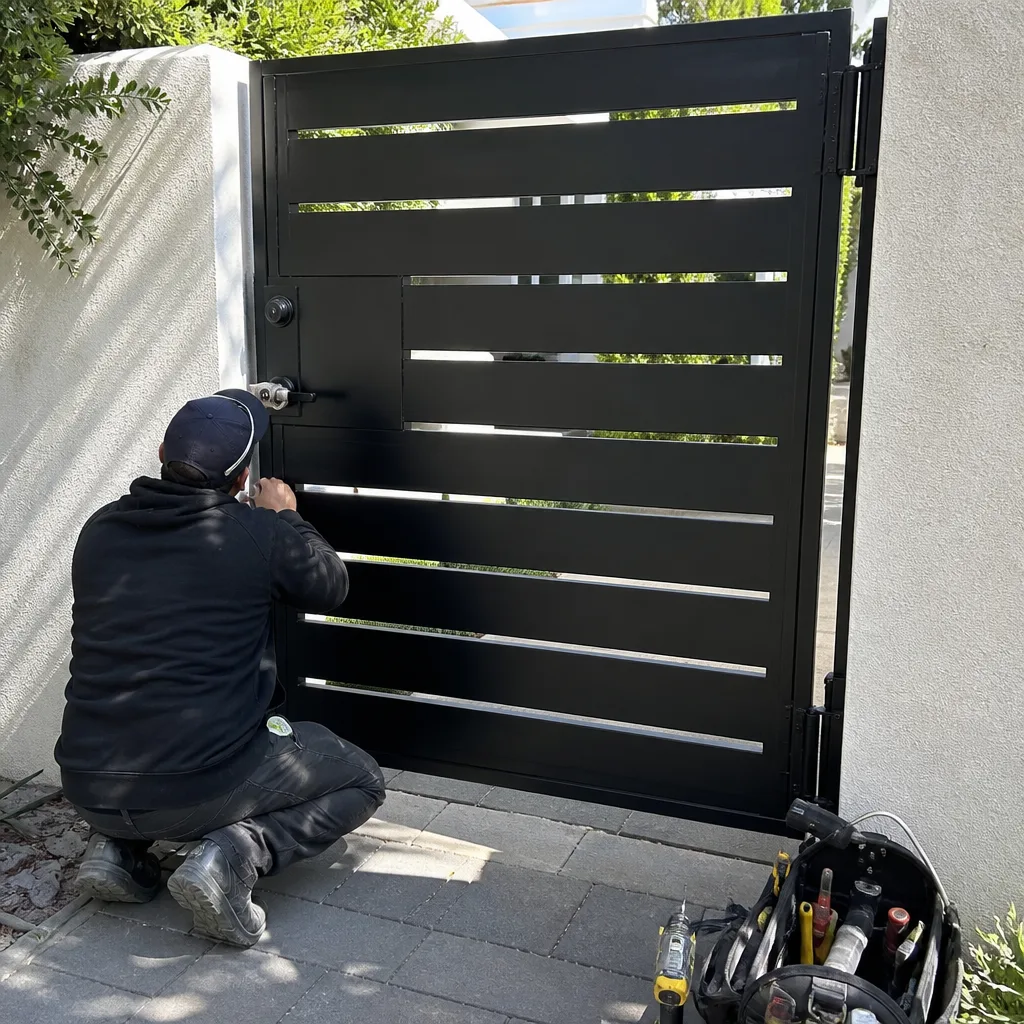 After
After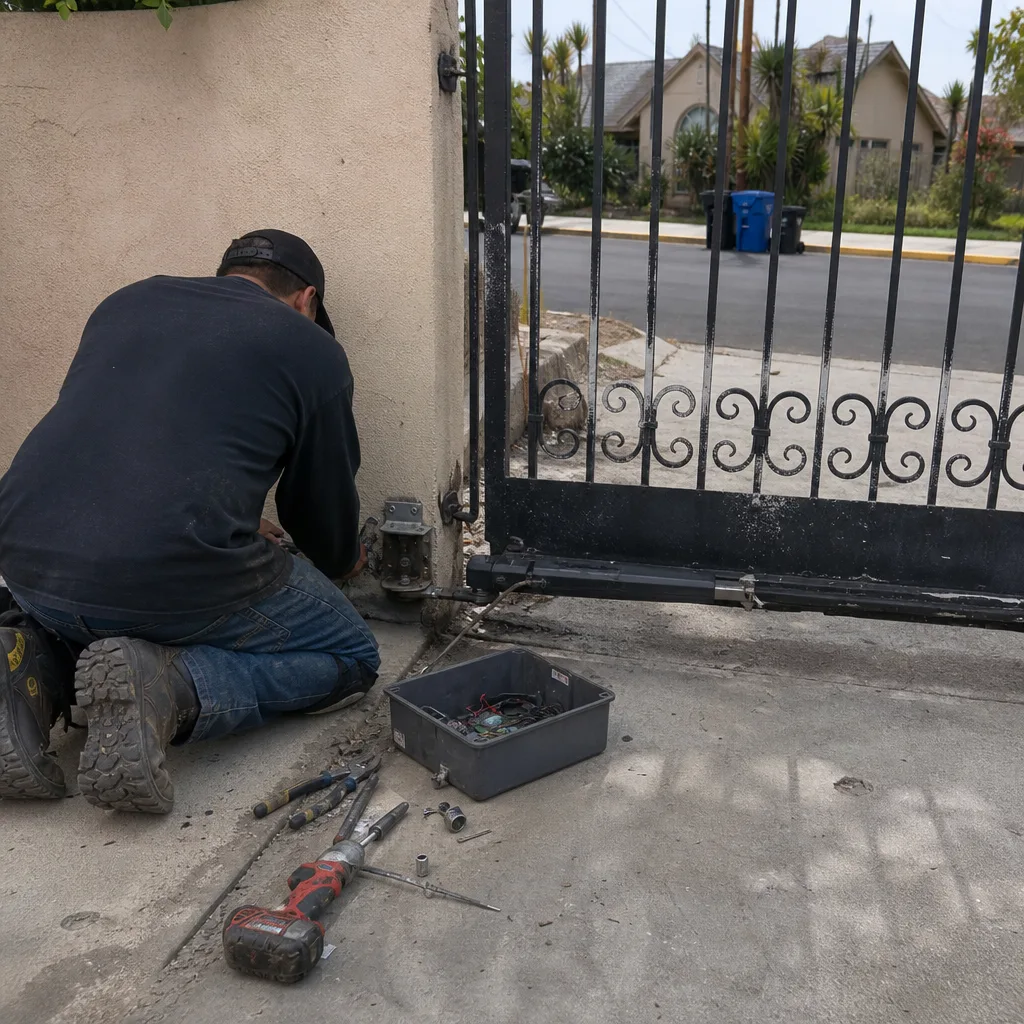 Before
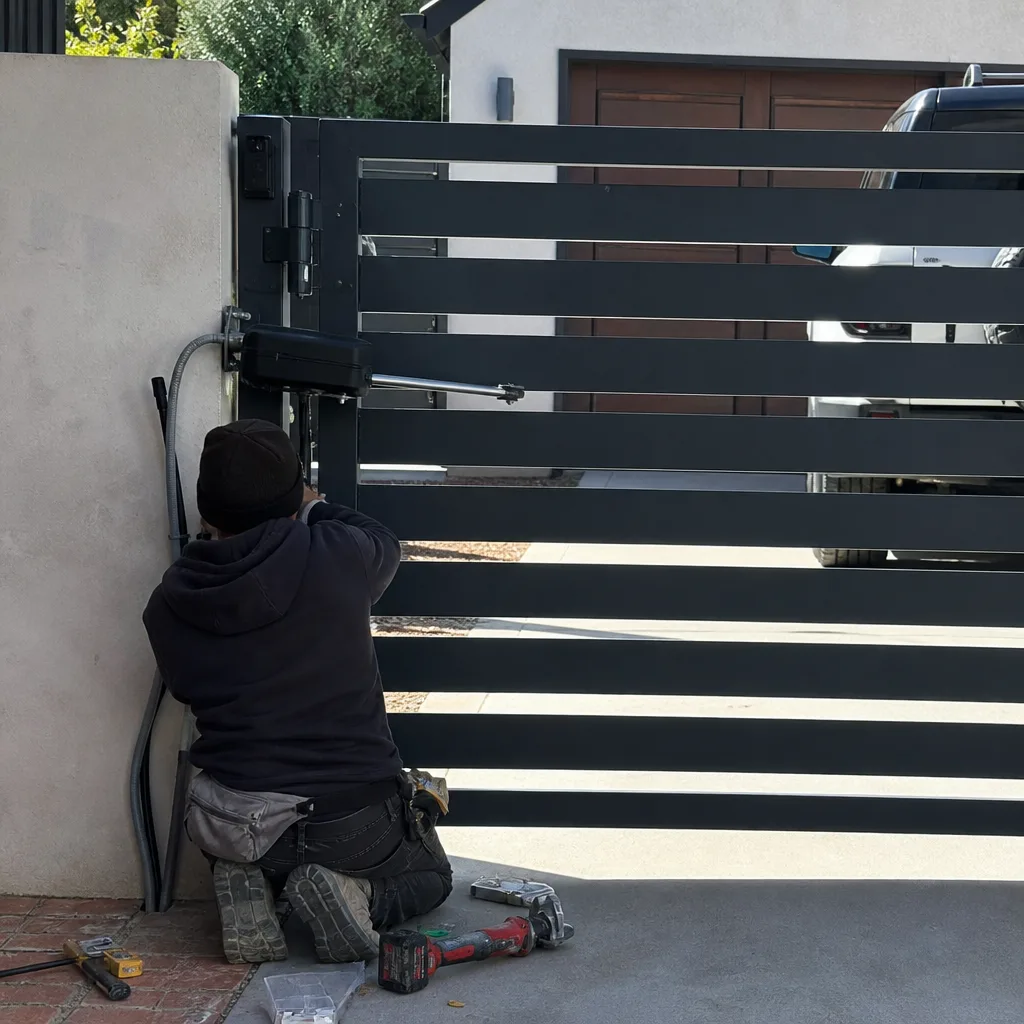 After
After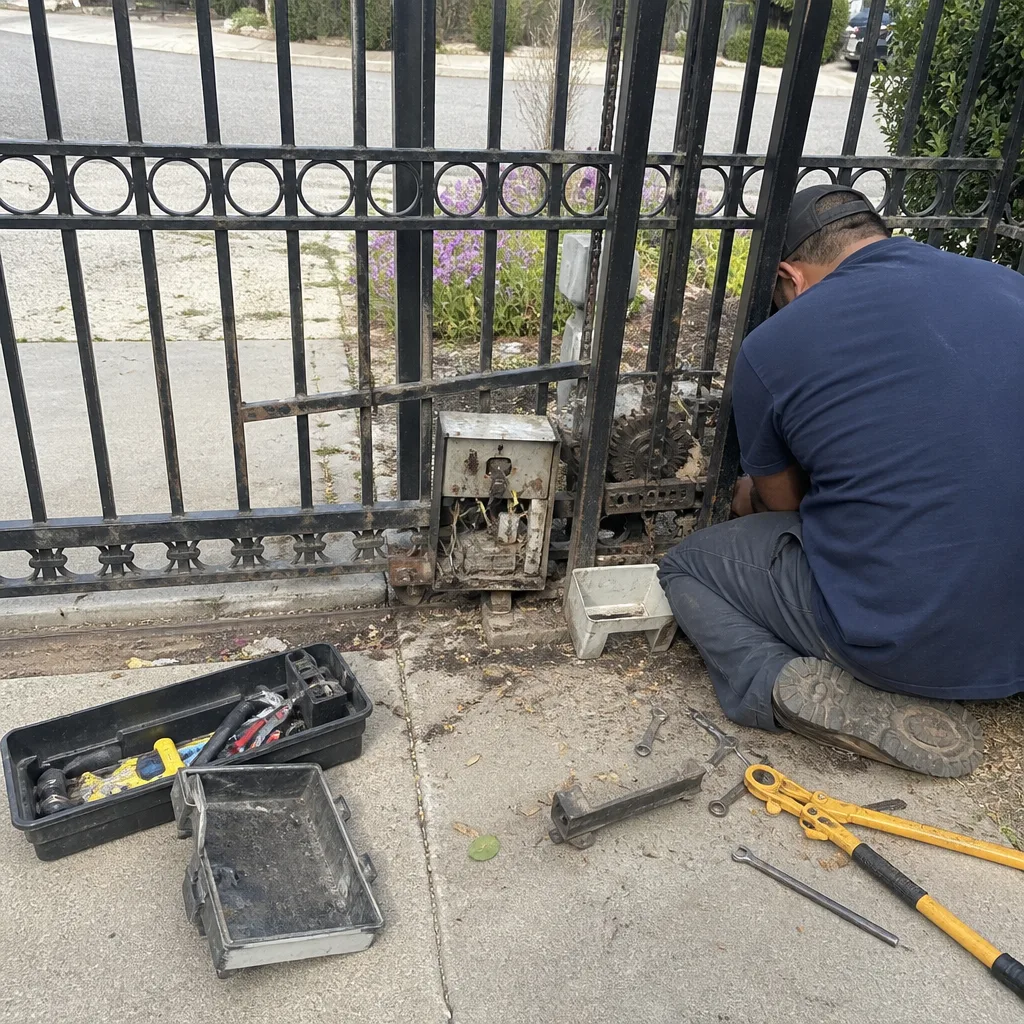 Before
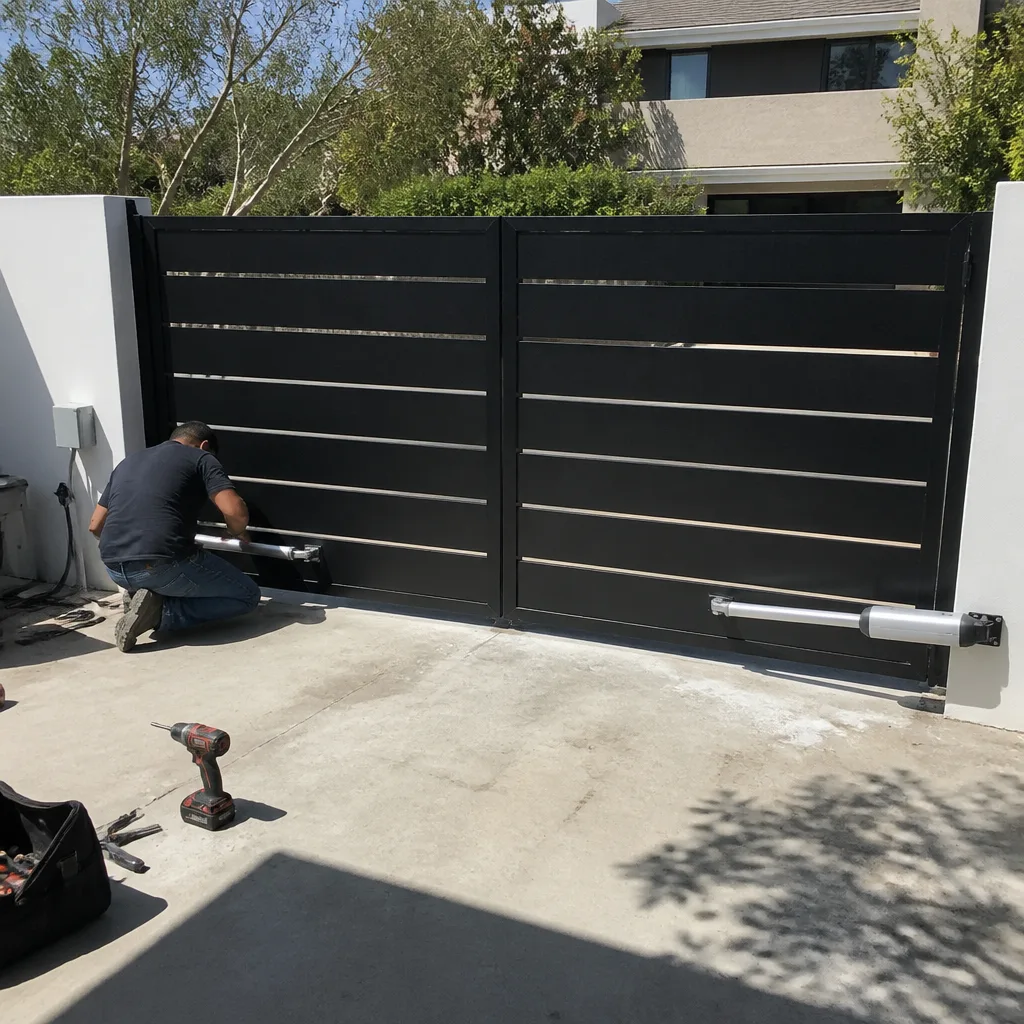 After
AfterWhat’s Happening
A loud grinding noise when your gate moves almost always means metal is contacting metal somewhere in the drive system – usually worn or dry rollers, a failing gearbox inside the operator, or a chain and rack assembly that’s lost its lubrication or has started to break down. It’s a mechanical distress signal, and it means something is wearing faster every time the gate cycles.
Grinding is different from a squeak or a hum. A squeak is surface friction; a hum is electrical. Grinding means hard components are cutting into each other. Left alone, what’s currently a $200 fix has a reliable way of becoming a gate that won’t open at all, usually at the worst possible moment. The gate may keep working for a while – grinding gates often do – but each cycle is doing additional damage to whatever is already failing.
Why It Happens
1. Dry or Worn Drive Gear Inside the Operator
Most gate operators – whether they’re running on a LiftMaster, FAAC, BFT, or Viking unit – use a gear set inside the motor housing to transfer torque to the drive mechanism. These gears are made from nylon or metal, and they wear over time, especially if the operator is working harder than it should because of a misaligned gate or a heavy leaf. When a gear starts to strip or crack, you’ll hear a rhythmic grinding that’s timed to the gate’s movement and gets louder under load – going uphill, or when the gate hits a stop point. If the grinding is coming from inside the operator box itself rather than from the track or hinges, a drive gear is the most likely cause.
2. Dry or Degraded Rack-and-Pinion or Chain Drive
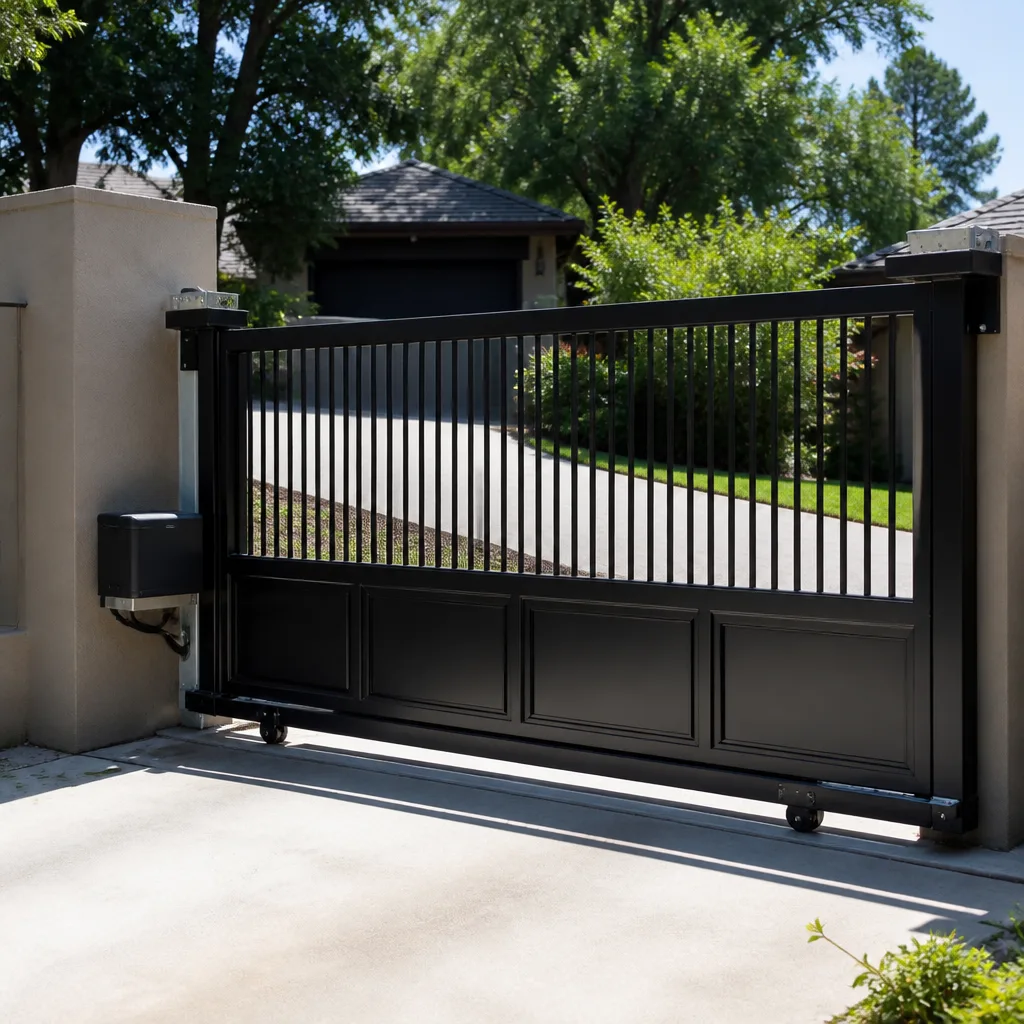
Slide gates and many swing-gate operators move the gate along a rack (a toothed strip) or via a chain. Both need lubrication to run quietly. Over time, grease dries out, debris packs into the teeth, or the rack develops rust spots. You can often see this one from a safe distance: look at the rack along the bottom of a slide gate for rust, missing teeth, or built-up grit. The grinding will sound more like metal scraping than clicking, and it usually runs the full length of the gate’s travel rather than only at one point.
3. Damaged or Seized Rollers or Wheels
Slide gates ride on rollers or wheels that sit in a track. When a roller bearing seizes – from rust, grit, or a cracked wheel – the roller stops spinning and starts dragging. That dragging is what you’re hearing. You can sometimes spot this by watching the bottom of the gate while it moves: a seized roller will scuff and skip along the track rather than rolling smoothly. The grinding tends to be intermittent, flaring up when the gate passes over that specific wheel, then quieting briefly.
4. Gate Misalignment Forcing Metal-on-Metal Contact
A gate that has shifted out of square – because a post has settled, a hinge has loosened, or the frame itself has warped after years of weather – can grind simply because part of the gate is rubbing against the frame, the track, or an edge stop it’s no longer clearing cleanly. This kind of grinding is usually visible: look for fresh scrape marks, shiny metal where paint used to be, or places where the gate is visibly catching. The grinding will be consistent and happen at the same point in every cycle.
What to Do Right Now
- Stop cycling the gate. Every additional open-and-close cycle is doing more damage to whatever’s failing. If the gate is closed and your property is secure, leave it closed until a technician has looked at it.
- Take a short video on your phone. Record the grinding from two angles if you can – one near the operator box and one near the track or hinges. A 15-second clip tells a technician more than a description over the phone and helps them arrive with the right parts.
- Look, don’t touch, at the rack and rollers. You can safely look at the rack along the base of a slide gate or the rollers in the track without touching anything. Note whether you see rust, missing teeth, cracked wheels, or fresh scrape marks – all useful information for the tech.
- Do not attempt to open the operator housing. Gate operator internals carry capacitors that hold a charge even when unplugged, and some have spring-assist components under tension. Opening the housing without training can cause serious injury. If the grinding is coming from inside the box, note it and leave the housing alone.
- Call your local Portcullis Gate Repair team at (940) 412-7340. A live person answers around the clock, every day of the year. Describe what you’re hearing and when the video you shot while the sound is fresh – the more specific you are, the better the tech can prepare before the visit.
How We Fix It
When a Portcullis technician arrives, the first thing they do is cycle the gate manually and observe. They’re listening for where in the travel the grinding peaks, watching the rollers and rack, and checking gate alignment before they open anything. That inspection takes about ten minutes and tells them whether this is a lubrication-and-clean job, a roller swap, a rack section replacement, or a gear kit inside the operator.
Before any part is touched, you get a written price. That’s not a range or an estimate subject to revision – it’s the number, in writing, agreed before a single bolt is turned. That’s the Kingswell Way, and it doesn’t change partway through a job.
Most grinding repairs are completed in a single visit. Roller replacements and rack sections are commonly stocked on the truck. Operator gear kits for brands like LiftMaster, FAAC, BFT, and Viking are standard service items. The repair is covered by the 365-Day Done Right Promise: if it fails inside the guarantee period, we come back and fix it at no charge. No argument, no fee, no new estimate.
This falls under our gate repair service, and depending on what the inspection finds, may also involve our electric gate repair service if the operator’s drive components are involved.
Frequently Asked Questions
Yes, in practical terms – it gets more dangerous the longer you run it. A grinding sound means a component is failing and taking adjacent parts with it each cycle. A worn gear that’s allowed to keep stripping will eventually destroy the gear housing. A seized roller will gouge the track. What starts as a repair can become a full operator replacement or a track rebuild if it’s ignored long enough. Stop cycling the gate and call (940) 412-7340 so your local Portcullis team can assess it before the damage compounds.
Call us at (940) 412-7340 and a live person will answer right now – not a voicemail, not a callback queue. Your local Portcullis Gate Repair team will give you a real arrival window, not a vague “sometime today.” We answer 24 hours a day, seven days a week, including holidays.
That’s exactly what the 365-Day Done Right Promise covers. If the repair we performed fails within the guarantee period, we return and correct it at no charge. That guarantee is written on your invoice when the job is closed – not a verbal assurance, a document. The five commitments of the Kingswell Way are: say the price before the work, show up in the window we gave, leave the place cleaner than we found it, put the guarantee in writing, and come back if it fails. The last one applies here directly.
The honest answer is that it depends on what’s causing it – a dry rack cleaned and re-greased costs less than a stripped gear kit inside a commercial-grade operator. What we can tell you is that your written price is provided before any work begins, and it doesn’t change once you’ve agreed to it. Call (940) 412-7340 and your local team will set up a free on-site assessment so you get the real number for your specific gate and operator, not a guess.
Get It Fixed
Call (940) 412-7340 – a live person answers any time of day or night – or book online. Your local Portcullis Gate Repair team will arrive in the window we give you, provide a written price before touching anything, and back the repair with the 365-Day Done Right Promise.
Written by Dean Prescott, Owner and Lead Technician at Portcullis Gate Repair, a Kingswell company in business since 2008.
What Our Customers Say
"Gate was dragging and screeching across the driveway. I figured I'd need a whole new setup. He adjusted the track and rollers and it was a fraction of what I expected. Honest work."
- Omar Haddad"Our intercom and gate motor both quit. They fixed the whole system in one visit and explained the warranty clearly. On time, polite, and tidy. Can't ask for more."
- Yvette Marchetti"Good repair on a sagging gate and a new hinge welded on. Took them a couple days to get the part in, but they told me that up front and it's been solid since."
- Hector Villanueva