
Last updated October 8, 2026
Free on-site gate assessment - hinges, posts, and your LiftMaster or Nice gate operator checked before anything is quoted
The assessment is free and the quote is the invoice.
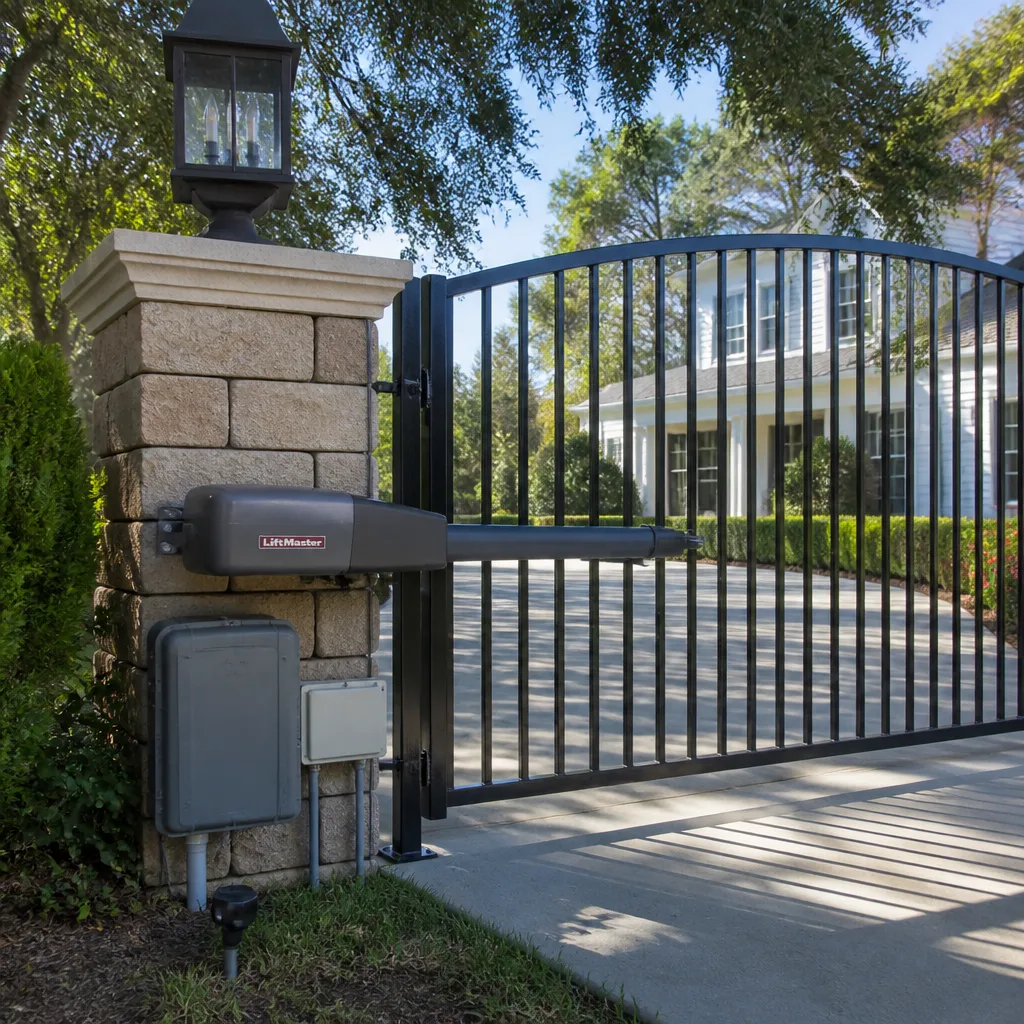
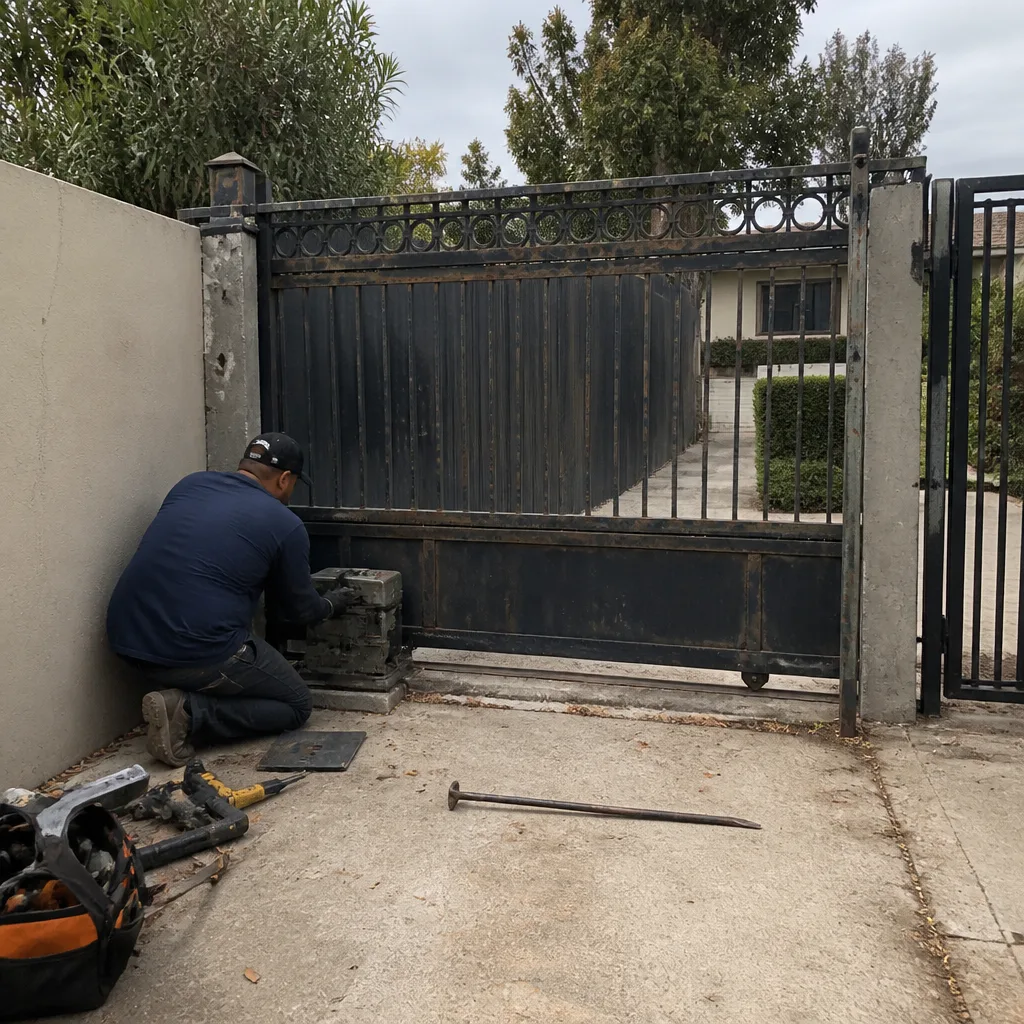 Before
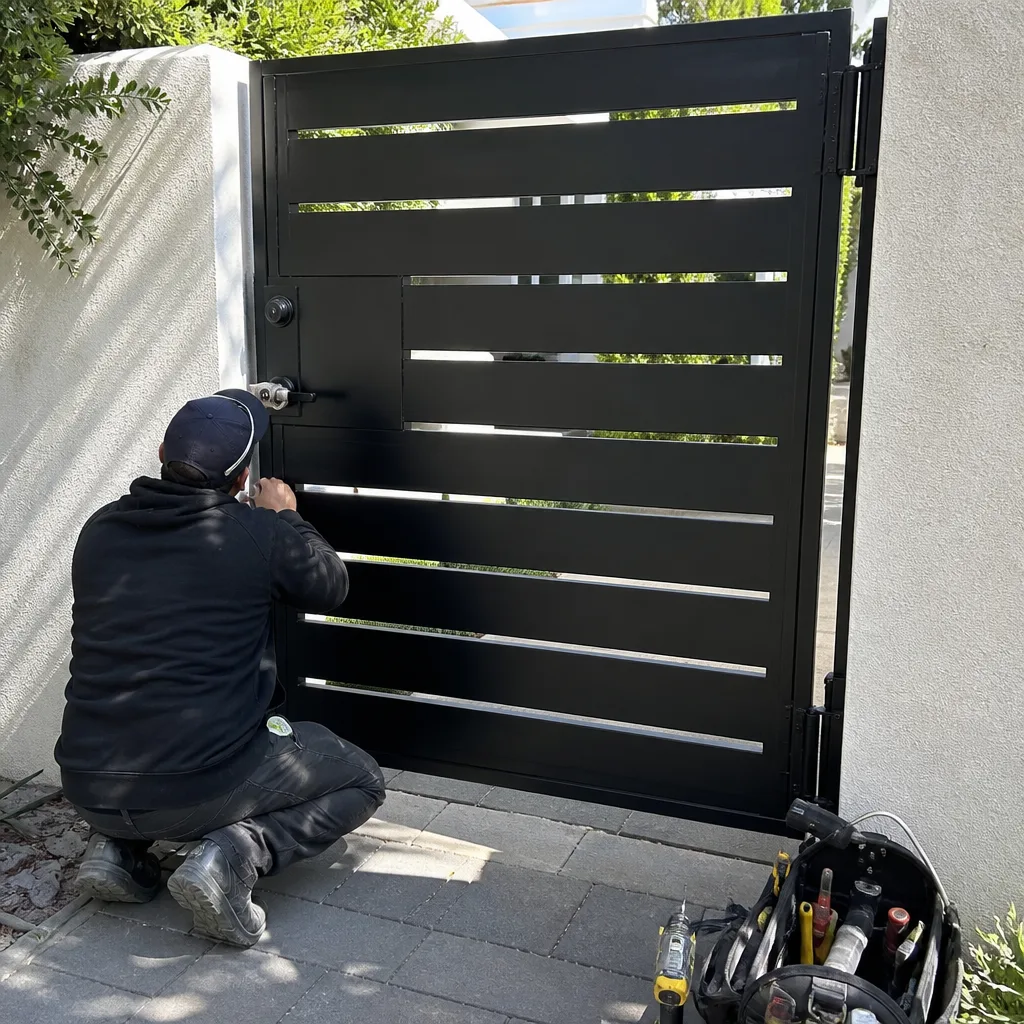 After
After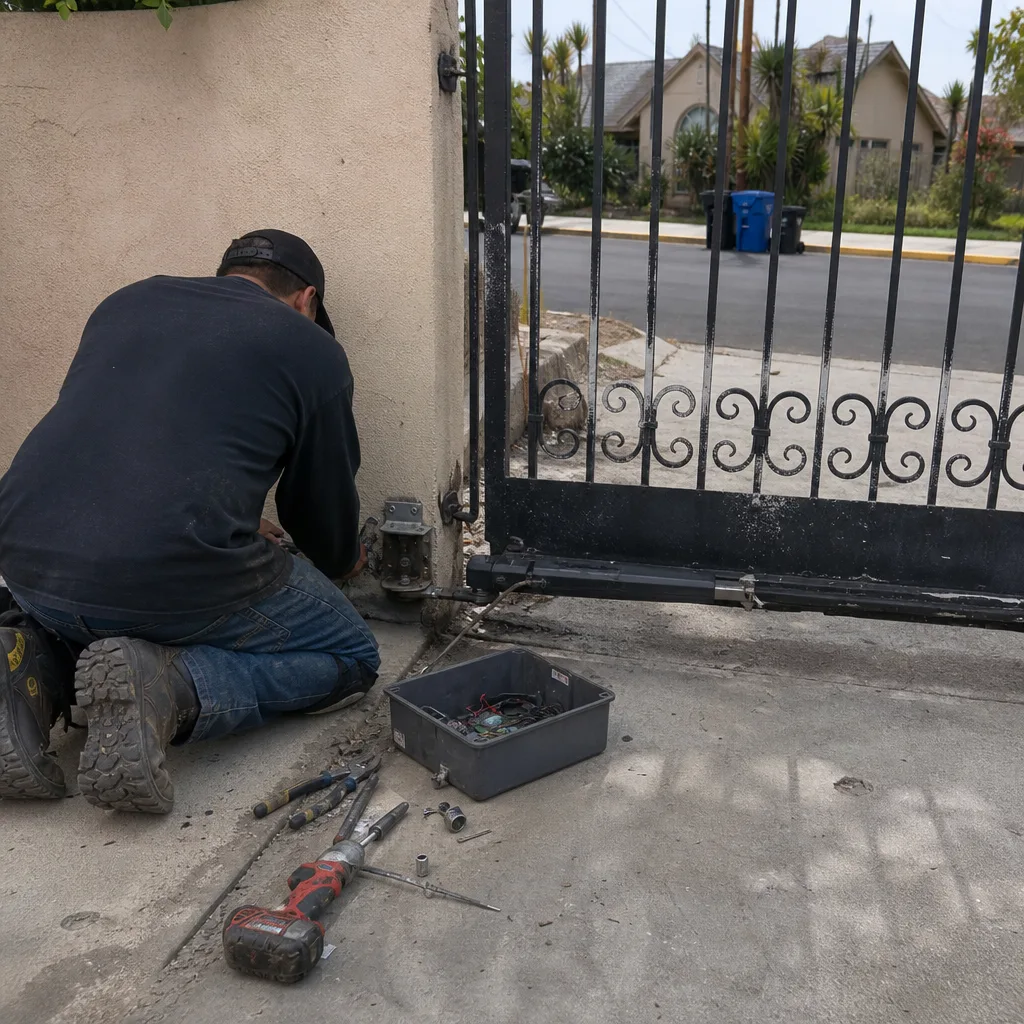 Before
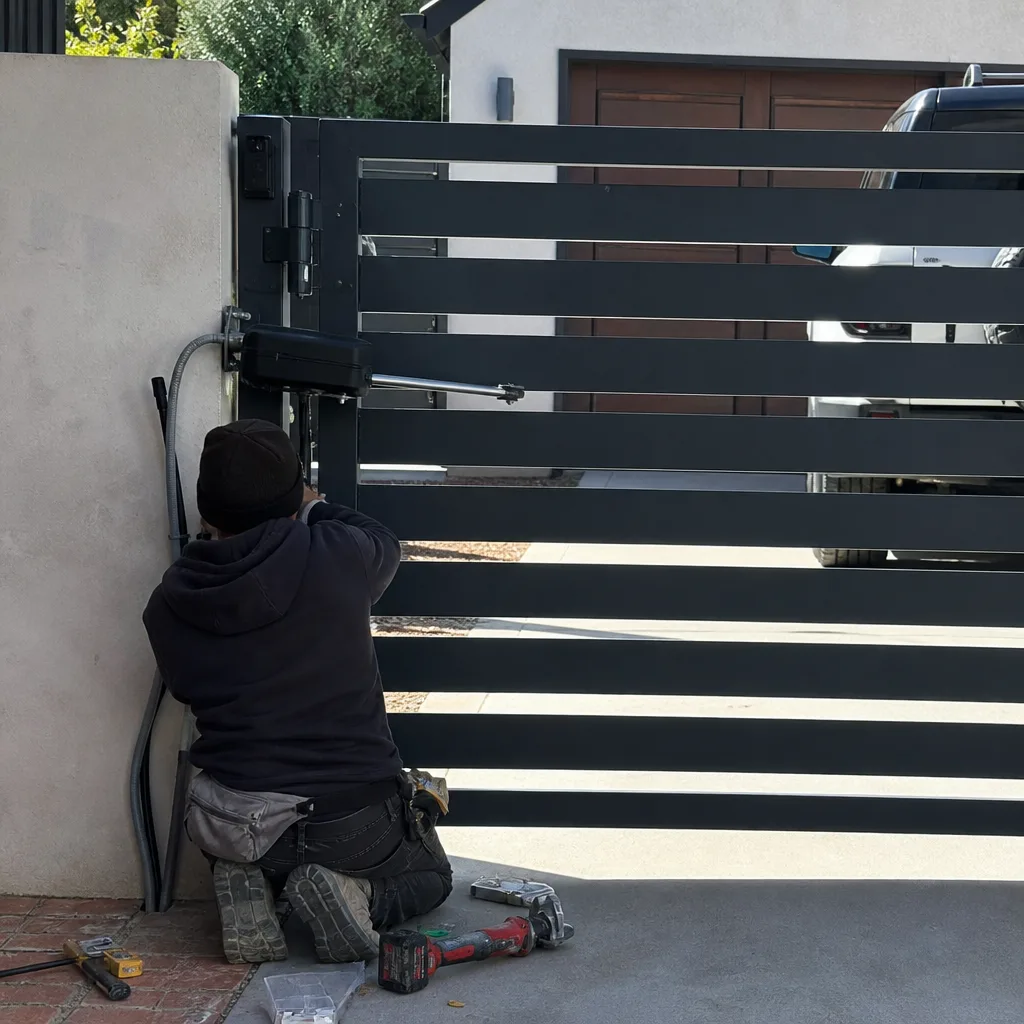 After
After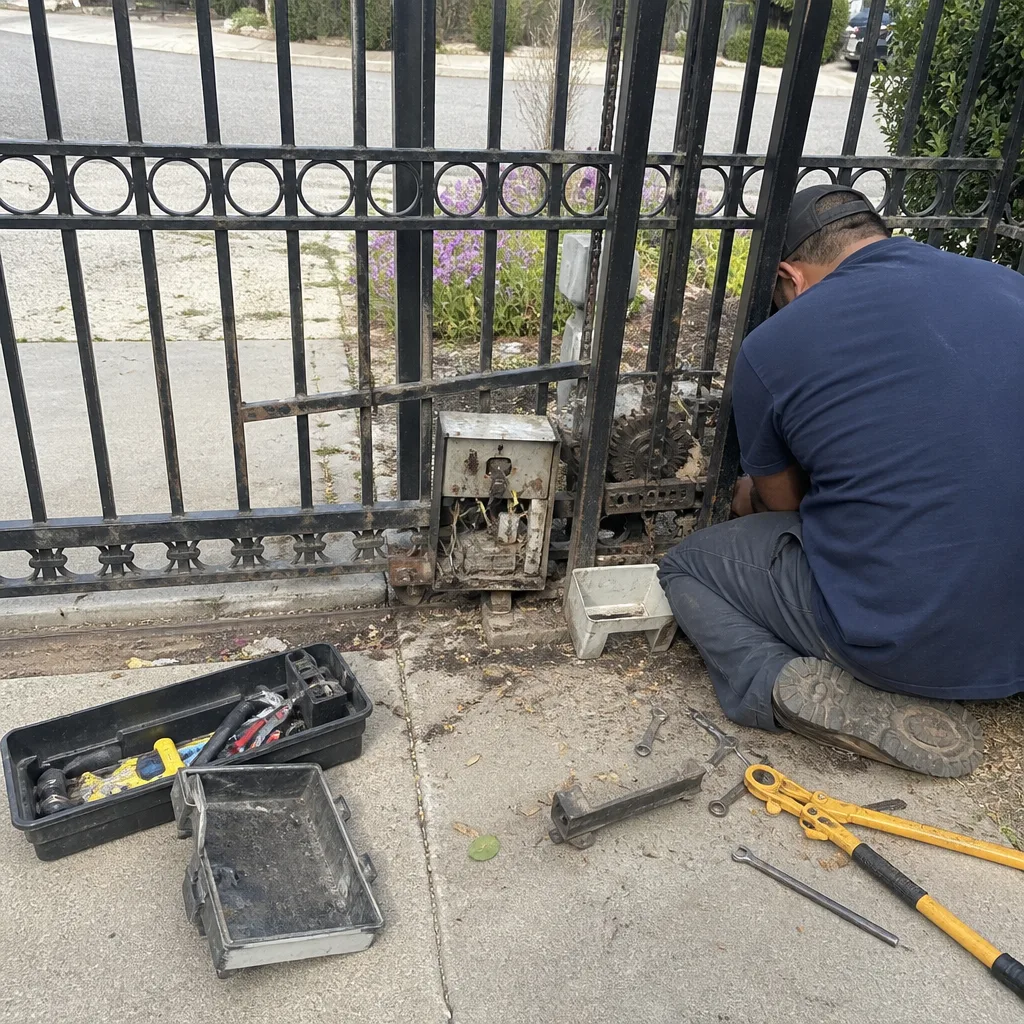 Before
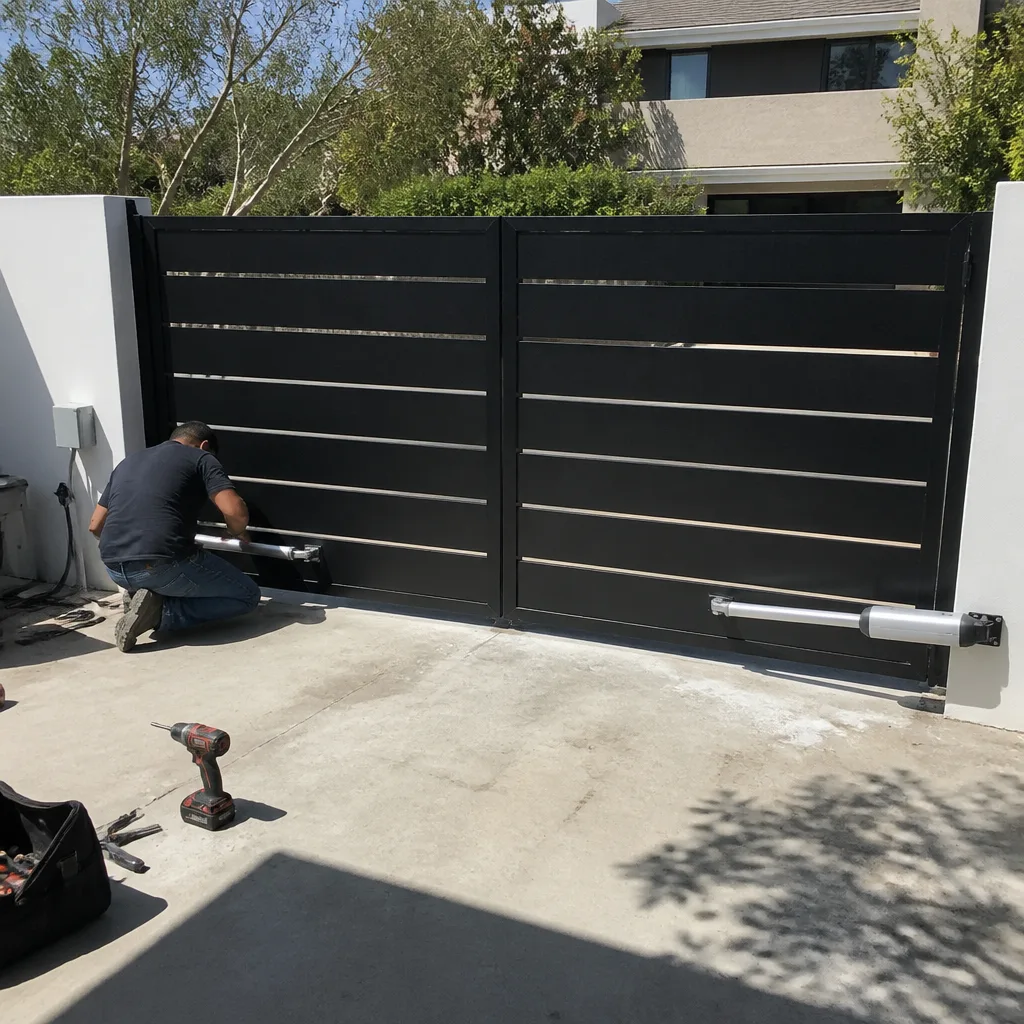 After
AfterThe Complete Electric Gate Repair Guide for Los Angeles Homeowners
A gate operator that works perfectly in Phoenix will corrode at the circuit board in a Playa del Rey garage within two years. Salt air from the Pacific travels further inland than most Los Angeles homeowners realize, and it’s just one of several regional factors that make electric gate repair in Los Angeles fundamentally different from gate repair anywhere else. This guide covers the failure patterns specific to our micro-climates, what repairs actually cost, the permit landscape, and how to vet a gate repair company before you hand over your gate code. You’ll finish with enough working knowledge to gut-check any quote and spot a failing component before it locks you out or leaves your property unsecured.
Quick Answer
Electric gate repair in Los Angeles typically costs between $225 and $1,400 depending on the failed component, with control board replacements running $350 to $800 and full operator swaps running $900 to $2,400 parts and labor. Most repairs take one to three hours once the technician arrives, and the most common failures in Los Angeles are corroded control boards from marine-layer moisture, misaligned photo eyes from shifting soil, and damaged actuators from gate impact. For a deeper look at these issues, see The Complete Gate Repair Guide for Los Angeles Homeowners. A reputable LA gate company will give you a written price before starting any work and back the repair with a written guarantee.
Table of Contents
- Why Los Angeles Gate Failures Are Different
- Mapping LA’s Micro-Climates to Gate Problems
- The Four Operator Brands We Service Most in LA
- Electric Gate Repair Costs in Los Angeles: Real Ranges
- The LA Permit Landscape for Gate Repairs
- The Brownout Problem: How LA’s Grid Damages Gate Operators
- How to Vet a Gate Repair Company in Los Angeles
- Common Mistakes to Avoid
- When to Call a Professional
- Frequently Asked Questions
Why Los Angeles Gate Failures Are Different
We’ve been repairing electric gates in Los Angeles since 2008, and the calls we get follow a pattern that would puzzle a technician from Las Vegas or Dallas. The failures here are environmental, and the environment changes block by block. A gate on the west side of the 405 faces a completely different set of stressors than a gate in Sherman Oaks, and a gate in the Hollywood Hills deals with forces that a flat-lot gate in Torrance will never see.
The three forces that shape electric gate repair in Los Angeles are moisture, soil movement, and voltage instability. Marine-layer moisture carried inland from the coast condenses on cool metal surfaces and seeps into control boards, corroding solder joints and shorting low-voltage circuits. Drought cycles followed by winter rains cause expansive clay soils to shrink and swell, torquing gate posts out of plumb and misaligning the photo eyes and limit switches. And the electrical grid operated by LADWP and Southern California Edison experiences voltage sags during peak demand and brownout conditions during heat waves, which gradually degrades the capacitors and transformers inside gate operator control boards.
A gate in Los Angeles is a mechanical system fighting a slow environmental siege. The good news is that once you understand which failure pattern matches your neighborhood, you can anticipate repairs before a full failure locks your gate in the open or closed position. The bad news is that generic maintenance advice written for the Sun Belt misses all of this.
Mapping LA’s Micro-Climates to Gate Problems
Los Angeles is not one climate. It’s a patchwork of micro-climates shaped by distance from the ocean, elevation, and the mountain ranges that trap or block marine air. Each zone produces a characteristic gate failure, and knowing yours tells you what to watch for.
Coastal Zone: Marina del Rey to San Pedro
If your gate is within about five miles of the coast, salt-laden marine air is your primary enemy. We regularly replace control boards in Playa del Rey, Westchester, and El Segundo where the solder joints look like they’ve been dipped in chalk. The salt aerosol lands on circuit boards, combines with moisture, and creates a conductive film that shorts low-voltage signal paths. The most common coastal failure we see is the operator clicking but failing to move, which is almost always a corroded control board or a failed relay.
What to watch for: green or white powdery residue around the control board, intermittent operation that worsens in the morning when marine layer is thickest, and corroded battery terminals on the backup battery.
Inland Valley: San Fernando Valley, Burbank, Glendale
The Valley heat is brutal on aluminum and plastic components. Summer temperatures in Woodland Hills and Northridge routinely push past 100 degrees, and gate operator enclosures mounted in direct sun can reach 140 degrees internally. Aluminum track sections expand and warp, causing the gate to bind or grind. Plastic limit switch housings become brittle and crack. Capacitors in the control board degrade faster in sustained heat, and we see more start-capacitor failures in Valley gates than anywhere else in Los Angeles.
What to watch for: a gate that groans or hesitates on hot afternoons but works fine at night, visible warping on sliding gate tracks, and a humming sound from the operator without movement, which usually points to a failed start capacitor.
Hillside Zones: Hollywood Hills, Mount Washington, Bel Air, Studio City
Hillside properties deal with gravity and geology. The soils in the Hollywood Hills and along the Santa Monica Mountains are a mix of decomposed granite and expansive clay. During drought years the clay shrinks and pulls away from foundations. During wet winters it swells and pushes. Either way, gate posts embedded in hillside soil move. We see piers cracked, posts leaning, and geometrically complex gates where a quarter-inch of post movement translates to a gate that scrapes, binds, or trips its safety sensors.
What to watch for: fresh cracks in masonry columns, a gate that scrapes after rain, and gaps appearing between the post base and the surrounding concrete. A leaning post on a hillside is not a cosmetic problem. It’s a structural one that will destroy the operator, the hinges, and eventually the gate leaf if left unaddressed.
The Four Operator Brands We Service Most in LA
Los Angeles gate operators lean heavily toward four brands: LiftMaster, Elite, FAAC, and DoorKing. Each has a distinctive failure signature, and knowing yours helps you understand what a technician is looking at when they open the cabinet.
LiftMaster: The most common residential operator in Los Angeles, and the most common failure we see is the logic board. LiftMaster boards are robust mechanical designs paired with circuit boards that are sensitive to power fluctuations. In LA’s brownout-prone grid, we replace more LiftMaster logic boards than any other single component. The operator will often beep or flash an error code at the wall console before failing completely. A LiftMaster logic board replacement in Los Angeles typically runs $350 to $650 including labor.
Elite: Elite operators are workhorses in the commercial and large-residential market, and their weak point in Los Angeles is the limit switch assembly. Elite’s SL3000 and SL4000 series swing and slide operators use mechanical limit switches that wear down with every cycle. When the limit switch fails, the gate either over-travels past its stop point or stops short, leaving a gap the size of a car or a pedestrian. We also see Elite photo eyes fail from sun degradation after years of direct exposure. Limit switch replacement on an Elite operator typically runs $225 to $400.
FAAC: FAAC operators are common on estate gates and hillside properties because of their hydraulic swing arms. The most common FAAC failure in Los Angeles is the in-ground hydraulic release mechanism. Soil movement in hillside installations shifts the underground release box, breaking the manual release linkage or cracking the hydraulic line. FAAC hydraulic line and release mechanism repairs are more invasive than board swaps. Expect $500 to $1,200 for a hydraulic line repair on a FAAC operator, depending on trenching and line routing.
DoorKing: DoorKing is the dominant brand for apartment buildings, condo complexes, and gated communities in Los Angeles. The most common failure we see on DoorKing operators is the relay board in the telephone entry system, especially in multi-tenant installations. Relay contacts arc and fuse over time, and a single failed relay takes out the entry code system for every resident. DoorKing relay board replacement typically runs $300 to $550. We also service operators from BFT, Linear, Viking, and Ghost Controls, covering nine brands total across the company’s service area.
Electric Gate Repair Costs in Los Angeles: Real Ranges
Every estimate we write in Los Angeles includes parts and labor quoted up front, before any work starts. Here are realistic ranges for the most common repairs we perform. These are the numbers you can use to gut-check a quote.
| Repair Type | Typical Part Cost | Typical Labor | Total Range |
|---|---|---|---|
| Photo eye realignment or replacement | $35-$90 | $90-$150 | $125-$240 |
| Limit switch replacement | $40-$120 | $110-$170 | $150-$290 |
| Control board replacement (liftmaster, elite, bft, linear) | $180-$450 | $120-$180 | $300-$630 |
| Start capacitor replacement | $30-$80 | $100-$150 | $130-$230 |
| Swing gate actuator replacement | $450-$900 | $250-$400 | $700-$1,300 |
| Slide gate chain or belt replacement | $200-$500 | $250-$400 | $450-$900 |
| Full operator swap (residential swing) | $800-$1,600 | $350-$550 | $1,150-$2,150 |
| Hinge replacement (welded, per pair) | $100-$250 | $200-$350 | $300-$600 |
These ranges assume a standard residential installation with accessible operator mounting and no structural repairs. If a post has shifted or a gate leaf has sagged, the structural correction comes before or alongside the mechanical repair, and that adds cost. Any honest Los Angeles gate company will explain exactly what they’re charging and why before touching a single bolt. If a technician gives you a vague verbal number and starts disassembling the operator, tell them to stop. The written price comes first.
The LA Permit Landscape for Gate Repairs
Here’s what most national gate guides never mention: in the City of Los Angeles, some gate work requires a permit, and some doesn’t, and the line depends on whether you’re repairing or replacing. LADBS treats repair-in-kind as maintenance. Replacing a failed control board, a photo eye, an actuator, or a limit switch on an existing operator does not require a permit. Replacing the operator itself with a like-for-like unit, same voltage, same mounting configuration, does not require a permit either.
What does require a permit is new electrical work and structural work. If your operator replacement requires a new electrical circuit from the panel, that’s an LADBS electrical permit, and in Los Angeles it must be pulled by a licensed electrical contractor. If you’re adding a gate where one never existed, or replacing a masonry post, or moving a fence line, that’s a building permit with plan review.
Then there’s the county layer. Los Angeles County has 88 incorporated cities, and many of them run their own building departments with their own inspectors. Pasadena, Burbank, Glendale, Santa Monica, Long Beach, Beverly Hills, West Hollywood, and Torrance all issue their own permits and have their own rules about gate work. Burbank and Glendale are stricter about electrical and operator replacement documentation than the City of Los Angeles. Santa Monica requires a permit for any operator replacement regardless of like-for-like status.
A competent Los Angeles gate company should be able to tell you, for your specific address, whether your repair requires a permit and who pulls it. If the company can’t answer that question, they don’t know the local landscape. We handle this daily, and part of our written estimate includes a clear statement on permit status for your specific municipality.
The Brownout Problem: How LA’s Grid Damages Gate Operators
Most homeowners think of a power surge as a dramatic event, a lightning strike or a transformer explosion. But the damage to gate operators in Los Angeles happens quietly, over years, through voltage sag. LADWP and SCE run their grids hard during heat waves, and when demand spikes, the utility sheds voltage. Your home might receive 108 volts instead of 120. Electric motors don’t care much about undervoltage. They run a little slower and a little hotter. But control boards care deeply.
Control boards use voltage regulators and capacitors to maintain stable low-voltage power for the microprocessor. When input voltage sags repeatedly, the regulator works harder, capacitors run hotter, and the accumulated thermal stress shortens the life of the board. We’ve replaced control boards in Los Angeles that were only three or four years old, in neighborhoods that experience frequent brownout events, where the capacitor tops were swollen and the regulator was scorched.
The fix is not optional in Los Angeles. A whole-home surge protector at the panel is good, but it only clamps voltage spikes. It does nothing for sag. What actually protects your gate operator is a dedicated surge suppressor at the operator’s power disconnect, and ideally an inline voltage monitor that cuts power when voltage drops below a safe threshold. These devices run $80 to $250 installed, and they’re the cheapest insurance you can buy for a $600 control board.
If your operator has been through several Los Angeles heat waves and brownouts, and it’s starting to behave intermittently, the board may already be damaged. Intermittent behavior is the classic early warning sign of brownout-related board degradation. It works fine now, but it won’t for long. And when it fails, it will likely fail in whatever position the gate was in, which is usually the worst possible position: open, at night, with the car inside.
How to Vet a Gate Repair Company in Los Angeles
We hear the same stories from Los Angeles homeowners every week. The company that never showed. The quote that doubled at the door. The repair that failed six weeks later, and the phone number that now goes to voicemail. Los Angeles is a big enough market that fly-by-night operations can survive entirely on new leads without ever needing repeat customers. That’s why the vetting matters.
Here’s what to check before you book:
- Does a live person answer the phone? Call at an inconvenient time. 7 p.m. on a Tuesday, or Saturday morning. If you reach a voicemail tree or a callback queue, that’s the experience you’ll have when the gate is stuck and you can’t get in or out. Portcullis Gate Repair has a live person answering calls 24 hours a day, 7 days a week, including holidays.
- Will they give you a written price before starting work? If the price is “we’ll see when we get there,” hang up. The written price is the single most important protection a homeowner has. Every Kingswell company, including Portcullis Gate Repair, puts the price in writing before a single bolt is turned.
- Is the guarantee written down? Every repair we perform carries a written 365-Day Done Right Promise. If the repair fails within the guarantee period, we come back and correct it at no charge. Ask any company you’re considering what their guarantee is, and ask to see it in writing.
- Do the technicians arrive in uniform and pass background checks? Gate repair involves giving a stranger access to your property’s security system. You should know who’s coming and what they look like. Our technicians are background-checked and uniformed.
- Do they actually know the operator brand on your property? A technician who services everything from refrigerators to garage doors but has never opened a Viking control board is not going to diagnose your gate accurately. We maintain certified service experience across nine operator brands, including LiftMaster, FAAC, BFT, Linear, Viking, Ghost Controls, DoorKing, Elite, and Mighty Mule.
The most reliable gate company in Los Angeles is the one that can answer yes to all five questions before you’ve spent a dollar. And you’ll know if they’re real or not within the first sixty seconds of the phone call. You can also check out our Portcullis Gate Repair home page or learn more about what Gate Repair in Los Angeles involves before you call.
Common Mistakes to Avoid
- Ignoring a gate that’s started to hesitate or scrape. “It still works” is not the same as “it’s fine.” A gate binding against a shifted post or a failing capacitor is sending you a warning. Once the post torques another half-inch or the capacitor gives out completely, you’ll be dealing with a fully failed gate and a much larger bill. Address the symptom when it’s small and cheap.
- Power-washing the operator cabinet. We see this all over Los Angeles, especially in coastal neighborhoods where homeowners are fighting salt and grime. High-pressure water forces its way through the cabinet gaskets and directly onto the control board. If you want to clean the operator cabinet, wipe it down. Never spray it.
- Reusing a failing operator’s parts to save money. When a control board fails because of corrosion on a coastal property, the photo eyes and limit switches sharing the same environment are usually not far behind. Swapping only the board and leaving degraded sensors creates a second service call within months. On the coast, a board replacement often should include new photo eyes. An honest technician will tell you this before you spend the money twice.
- Buying the cheapest operator on the internet and hiring a handyman to install it. We see internet operators arrive with no UL listing, no local parts availability, and wiring diagrams that lack proper grounding and safety circuitry. Then the handyman leaves, the gate doesn’t work properly, and the homeowner calls a real Los Angeles gate company to fix an unserviceable installation. Buy once from a brand with local parts availability.
- Skipping the surge suppressor because “we’ve never had a problem.” Brownout damage is cumulative. The fact that the board hasn’t failed yet doesn’t mean the capacitors aren’t degrading. The surge suppressor is $80 to $250. The control board it protects is $350 to $800. The math is easy, and in Los Angeles it favors the suppressor every time.
- Hiring a company without checking its Los Angeles track record. A national lead-gen brand can route you to a subcontractor with no local accountability. Check how long the company has operated in Los Angeles, whether the person answering the phone knows anything about your neighborhood, and whether the guarantee is written. Portcullis Gate Repair has operated as a Kingswell company since 2008, and the Kingswell Guarantee, written price, real arrival window, clean job site, and written guarantee on the repair, applies to every job.
When to Call a Professional
Gate work is deceptively dangerous. The springs, hinges, and actuators on an electric gate hold hundreds of pounds of tension, and a gate leaf that closes unexpectedly can crush a limb, a torso, or a child. If your gate has failed in the open or closed position, if the operator is grinding, smoking, or sparking, or if anything in the system is cracked, leaning, or coming loose, call a professional. Do not attempt to force a gate off its tracks or release a swing arm under load. If the failure involves wiring, control boards, or the safety sensors, call someone who does this every day. If you’re in Los Angeles, Portcullis Gate Repair offers free estimates for gate, electric gate, and operator work. Call (940) 412-7340 for a free estimate. We’ll tell you on the phone whether it’s an emergency and what it will cost to get someone out. For a closer look at what electric gate work involves, see our guide to Electric Gate Repair in Los Angeles. If your gate is beyond repair and needs replacement, we’ve covered Gate Installation in Los Angeles separately, including the factors that make installation different from repair.
Frequently Asked Questions
Electric gate repair in Los Angeles typically costs between $225 and $1,400 depending on the failed component. Photo eye realignment is at the low end around $125 to $240, control board replacement runs $300 to $630, and swing gate actuator replacement runs $700 to $1,300. Portcullis Gate Repair provides a written price before any work starts, so you’ll never face a surprise on the invoice. Call (940) 412-7340 for an exact quote. Estimates are free.
Yes, Portcullis Gate Repair offers same-day service for emergency gate repairs in Los Angeles, and our live phone line operates 24 hours a day, 7 days a week. If your gate is stuck open or stuck closed, call (940) 412-7340 and we’ll give you a real arrival window before the technician leaves. We don’t give vague arrival estimates. The window is part of the Kingswell Guarantee.
That clicking sound usually means the control board is delivering power to the motor but the motor or capacitor isn’t responding, which in Los Angeles is most often caused by a failed start capacitor or a corroded relay on the control board. Coastal humidity and brownout stress are the two leading causes we see in Los Angeles. A technician needs to test the capacitor and the board to know which one failed, and should be able to tell you the written repair price before starting work. Call (940) 412-7340 for diagnosis over the phone.
In the City of Los Angeles, replacing an existing gate operator with a like-for-like unit at the same voltage and mounting configuration does not require a permit. New electrical circuits and structural changes do require permits, and several cities in Los Angeles County, including Santa Monica, Burbank, and Glendale, have stricter requirements. Portcullis Gate Repair will tell you exactly what’s required for your address in writing before work begins. Call (940) 412-7340 and we’ll check your municipality while you’re on the phone.
In Los Angeles, expect 7 to 12 years from a residential gate operator before major components need replacement. Coastal locations run on the shorter end because salt air attacks the control board and enclosure hardware, and inland Valley locations see heat-related capacitor and track wear. Proper surge protection, regular hinge lubrication, and prompt attention to alignment issues can push the life toward the upper end. If your operator is over ten years old, it’s worth considering whether repair is still the right investment.
The 365-Day Done Right Promise is a written guarantee on every repair Portcullis Gate Repair performs. If the repair fails at any point during the 365 days following the repair, we return and correct it at no charge, including the service visit. The guarantee is stamped on the repair invoice, and it’s part of the Kingswell Guarantee that every independently owned Kingswell location, including Portcullis, is bound to. No one should accept a gate repair without a written guarantee. Call (940) 412-7340 and you’ll receive both the written price and the written guarantee before any work begins.
The Bottom Line
Electric gate repair in Los Angeles is a game of environment. The marine layer kills control boards. The Valley heat kills capacitors and warps tracks. The hillside soils crack posts and destroy alignment. The grid sags and degrades electronics slowly, over years, until one day the gate just doesn’t open. Knowing your micro-climate tells you what to expect, and knowing the real price ranges tells you whether a quote is honest. The company you choose should write down the price, the plan, and the guarantee, and they should be able to talk knowledgeably about your neighborhood and your operator. If they can’t, keep looking. For more guides & resources, explore our blog. And if you want to talk to someone who’s been doing this in Los Angeles since 2008, call Portcullis Gate Repair at (940) 412-7340. We’ll answer. A live person will answer. And the price will be in writing before any work starts.
Written by Dean Prescott, Owner at Portcullis Gate Repair, serving Los Angeles since 2008.