
FAAC Gate Repair in Los Angeles: A Homeowner’s Guide
FAAC gate repair in Los Angeles typically runs $285-$680 for most common failures, with hydraulic seal replacements and board reprogramming at the higher end of that range. The bigger challenge isn’t the price - it’s finding a tech who understands that FAAC’s Italian-engineered hydraulic operators work on a completely different principle than the American electromechanical arms most gate companies cut their teeth on. Call (940) 412-7340 if you’d rather skip the diagnostics and get someone out who already knows the difference.
FAAC’s underground hydraulic operators can run for 15 years without a major failure. That’s good news until the day one finally gives out, and you realize you’ve never thought about the gate once since you bought the house. Then you call the first gate company that pops up, and you discover they’ve never opened a FAAC housing either. We get those second-opinion calls a lot. Here’s what we tell homeowners when we pull up the first time.
How FAAC Hydraulic Operators Actually Work (And Why It Matters)
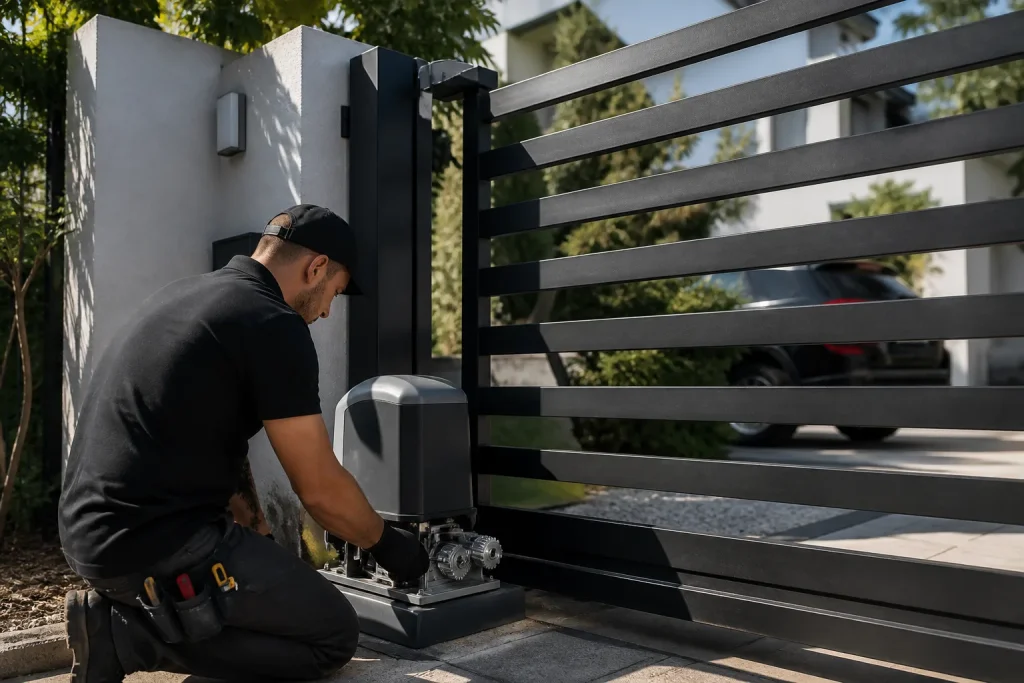
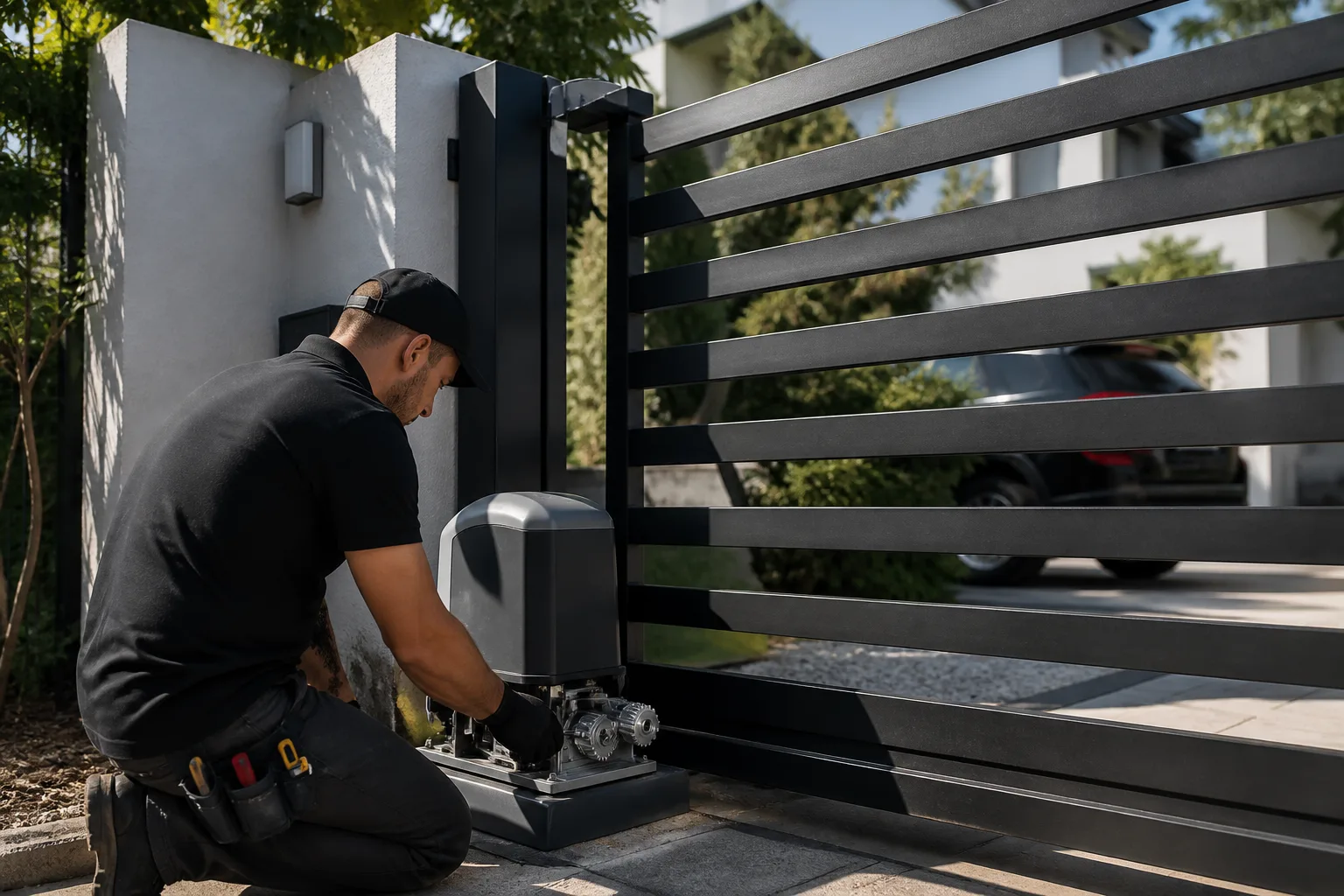
Most American gate operators - LiftMaster, Elite, some Linear units - use an electromechanical arm: a motor turns a gear that pushes a solid steel shaft. FAAC’s swing-gate operators, especially the underground models you see on high-end Los Angeles estate gates in Brentwood and Pacific Palisades, use a different design entirely. The motor drives a small hydraulic pump that pushes oil through lines to move the actuator - the motorized arm that physically pushes the gate open.
In plain terms: think of it less like a garage door opener and more like the brakes on your car. Hydraulic systems multiply force through fluid pressure, which is why a FAAC can swing a 900-pound wrought iron gate smoothly without straining. The trade-off is that hydraulic systems have three failure points electromechanical arms don’t:
- An oil reservoir that can leak or run low, and when it does, the gate starts moving slower and slower until it won’t move at all.
- A thermal cutout - a safety switch that shuts the motor down if the oil gets too hot. If your gate works fine in the morning but dies by 2 p.m. on a hot San Fernando Valley day, this is often the culprit.
- Adjustable flow control valves that regulate how fast the gate opens and closes. When these drift out of adjustment, the gate surges or crawls, and the fix is a screwdriver turn, not a part swap.
Why this matters for repair: a tech who treats a FAAC like an electromechanical arm will replace the motor or the board when the real problem is a $14 O-ring. You’ll pay for parts you didn’t need and still have a gate that fails next month.
Reading the Fluid: How to Tell a Real Hydraulic Leak from Normal Weeping
Every FAAC hydraulic operator weeps a little oil around the piston seals - that’s normal, and it shows up as a thin film of amber fluid around the actuator body. A genuine seal failure looks and smells different. Here’s how we tell the two apart on a Los Angeles service call:
- Genuine seal failure: The fluid is dark brown or black, which means it’s broken down from age and heat and has been circulating metal particles through the system. You’ll see an actual drip, not a sheen, and the gate will be noticeably slower than it was six months ago.
- Normal weeping: The fluid is still clear to light amber, the film around the seal is dry to the touch (oil migrates, it doesn’t drip), and the gate still opens at its normal speed. This needs monitoring, not a repair bill.
- Milky or tan fluid: Water has gotten into the system - a real concern in Los Angeles neighborhoods with heavy irrigation, like the Encino hills or anywhere on a slope with sprinkler overspray hitting the operator housing.
A surprising number of homeowners in Los Angeles get quoted $800-$1,200 for a “full hydraulic rebuild” when all they have is normal weeping. That’s the difference between a company that diagnoses and a company that sells parts. If a tech opens the housing, points at wet metal, and quotes a rebuild without checking the fluid color or the gate speed, get a second opinion.
FAAC Board Reprogramming: Why a Generic Tech Can Make It Worse
FAAC’s E124 and 770N control boards handle the brains of the operation - obstacle detection, opening and closing force, auto-close timing, safety edge inputs. Like every modern gate board, they can lose their programming after a power surge, a brownout (common during Santa Ana wind events when LA DWP equipment gets hammered), or a lightning strike.
Here’s the problem: FAAC boards don’t reprogram like LiftMaster or Mighty Mule boards. The sequence is different, and it’s specific. A tech who’s only worked on North American operators will often enter what they assume are “generic” jumpers or hold the reset button too long and wipe the board’s memory entirely. Now your gate doesn’t just need reprogramming - it needs a full board reconfigure, and if the board was already on its last legs, a replacement.
The specific differences that matter:
- Dip switch and potentiometer layout: FAAC uses physical potentiometers (small dials) for force and speed calibration on many models, not just digital menu entries. Twisting the wrong dial changes how hard the gate hits the stop - set it too high and you bend a hinge or crack a weld.
- Learning mode sequencing: FAAC’s auto-learn cycle requires the gate to run its full travel without interruption. If the safety edge trips partway through, the board stores a partial travel limit, and the gate stops opening at 70 percent.
- Accessory input voltage differences: FAAC boards expect different voltage signatures on the accessory terminals than most American brands. A tech who lands a photo-eye wire on the wrong terminal can burn the board.
We’ve reprogrammed E124 boards on gates in Bel Air and Rancho Park after other companies gave up. In our experience, the repair that takes 45 minutes with the FAAC service manual open is the same one that takes four hours - and a replacement board - when you’re winging it.
The Los Angeles Soil Problem: El Niño Years and Underground Operator Failure
Los Angeles has a specific climate pattern that punishes underground gate operators. Most years, the soil is dry and stable. Then El Niño hits - we get a winter of heavy rain in January and February - and everything changes. The clay-heavy soil in neighborhoods like Sherman Oaks, Studio City, and the hills around Mulholland expands dramatically when soaked.
That expansion does two things to a buried FAAC operator:
First, it compresses the steel or fiberglass housing. Underground operator boxes have a little flex built in, but repeated wet-year compression and dry-summer contraction cycles eventually stress the housing to the point where the lid gasket fails. Water gets in. Oil gets out. The actuator starts binding.
Second, it shifts the ground around the gate’s hinge posts. When the post moves even a quarter inch, the gate’s swing arc changes, and the actuator’s pivot points start fighting the geometry. The gate gets stiffer at one end of its travel, the motor draws more current, the thermal cutout trips more often. You’ll notice the gate hesitating or groaning at a certain point in its swing - that’s the sound of metal under stress.
We pulled a FAAC 770N out of a driveway in Encino after a wet winter where the housing had been compressed so tightly the technician had to cut it out with a reciprocating saw. The repair wasn’t just replacing the operator - it was regrading the soil around the pit, setting a new gravel drainage bed, and reinstalling everything so the next rainy season wouldn’t repeat the failure. That’s the difference between a surface fix and a fix that lasts in Los Angeles soil.
Genuine FAAC Parts vs. Counterfeit Substitutes: A Southern California Sourcing Guide
FAAC parts are not interchangeable with “off-brand equivalents,” no matter what the listing says. We’ve seen actuators, boards, and seal kits sourced from non-authorized online sellers that failed in weeks because the tolerances were wrong or the seals were made from inferior nitrile.
Here’s how we verify genuine FAAC parts in Southern California:
- Check the part number against FAAC’s international catalog before ordering. FAAC publishes a full parts catalog with engineering drawings, and the part number on the box should match the casting number on the original component exactly - not “close.”
- Genuine FAAC boards carry a manufacturer build stamp on the PCB itself, not just a sticker on the housing. If the board looks too clean, it might be a clone.
- Authorized distributors in the LA area keep current import stock, not surplus from a decade ago. Old-stock seals harden in storage and fail shortly after installation.
- Counterfeit hydraulic seals are the most common fake. They’ll pass a visual check but fail under pressure within a few hundred cycles. A quality seal kit should carry FAAC’s packaging with a traceable lot code.
We source through FAAC-authorized channels and verify every part number against the catalog before it goes on a truck. When a homeowner hands us a part they bought online, we’ll install it if it’s genuine - but more than once, we’ve had to send them back to the seller for a refund and order the right part ourselves.
When to Call a Pro (and When to Just Watch It)
Some FAAC symptoms are urgent. Others can wait a few weeks while you monitor them. Here’s our honest breakdown - and we’ve given this same advice over the phone to Los Angeles homeowners who never ended up hiring us:
- Call a professional today: The gate will not close and your property is unsecured, you smell burning electrical or oil from the operator area, the gate reverses direction on its own, or you see exposed wiring near the hinge posts.
- Schedule a service visit soon: The gate is noticeably slower than it was six months ago, the motor trips its thermal cutout on hot afternoons, you see dark, dripping fluid under the operator housing, or the gate slams at the end of its travel.
- Watch and monitor: Light amber sheen around the piston seal (normal weeping), gate speed is consistent, no new noises, no hesitation. Take a phone video of the gate’s opening and closing speed now, and check it against that video in a month.
One safety note: a FAAC operator that slams at the end of travel can hurt someone. The force settings are there for a reason. Don’t run the gate with a known or suspected force issue - especially around kids or pets. Disconnect it at the main power switch and call us.
Related Services in Los Angeles
If your FAAC operator has failed beyond practical repair, or you’re weighing repair versus replacement on an older gate, our Gate Installation in Los Angeles team can walk you through the option that makes sense for your property. And if you’re not sure whether it’s the operator, the gate itself, or the power run, our full Gate Repair in Los Angeles service covers swing gates, slide gates, and everything in between. For issues with the operator’s electrical and access control wiring, see Electric Gate Repair in Los Angeles.
We also service LiftMaster and Elite operators across Los Angeles - so if the diagnosis points to a different part of the system than the FAAC unit itself, the tech in the driveway can handle it without a second trip. And for general context on how we run every job, start at the Portcullis Gate Repair home page.
What happens when you call
- 1
A real person answersNo phone trees - you reach a local pro.
- 2
You get an upfront price rangeHonest numbers before anyone is dispatched.
- 3
A background-checked tech heads outLicensed & insured, dispatched right away.
- 4
You approve before work beginsNothing starts until you say go.
The Bottom Line
FAAC gate repair in Los Angeles comes down to three things: the hydraulic fluid tells you what’s wrong before you touch a wrench, the board reprogramming is sequence-specific and unforgiving if done wrong, and the soil under your gate is doing more than you think every time it rains. Get the diagnosis right and the repair is usually straightforward. Get it wrong and you’re paying for parts you didn’t need while the real problem keeps gnawing at the operator.
If you’re in Los Angeles and your FAAC gate is groaning, slowing down, or dead, Portcullis Gate Repair offers free estimates - call (940) 412-7340. We’ll give you a written price before any work starts, and we’ll put the guarantee in writing too. That’s the Kingswell Way, and it applies on every job we do.
Frequently Asked Questions
Most FAAC repairs in Los Angeles run between $285 and $680, with hydraulic seal kits on the lower end, control board replacements in the middle, and full actuator rebuilds at the top. The price is always quoted and agreed in writing before any work starts. Call (940) 412-7340 for an exact quote - estimates are free.
In most cases, yes. Common repairs like flow control valve adjustment, board reprogramming, and seal replacement are same-visit jobs if we have the part on hand. We carry the most common FAAC seals, boards, and sensors on hand. Call (940) 412-7340 and we’ll tell you honestly what’s possible before we schedule.
That’s almost always the thermal cutout doing its job. When the hydraulic oil gets too hot - which happens fast on a Los Angeles summer afternoon, especially if the operator sits in direct sun - the cutout shuts the motor down to protect it. The fix is usually a flow valve adjustment or a fluid flush, not a motor replacement. Don’t keep resetting it; it’s protecting the pump.
We do both. Our Gate Installation in Los Angeles service includes FAAC underground and above-ground swing-gate operators, and our Electric Gate Repair in Los Angeles service covers the full electrical and control side. Every job includes a written price before work begins and a written guarantee on the repair.
Written by the team at Portcullis Gate Repair.
Need Gate Repair Help?
Call Portcullis Gate Repair - licensed & insured, here with fast after-hours help in Los Angeles.
(940) 412-7340