
Last updated October 8, 2026
Free on-site gate assessment - hinges, posts, and your LiftMaster or Nice gate operator checked before anything is quoted
The assessment is free and the quote is the invoice.
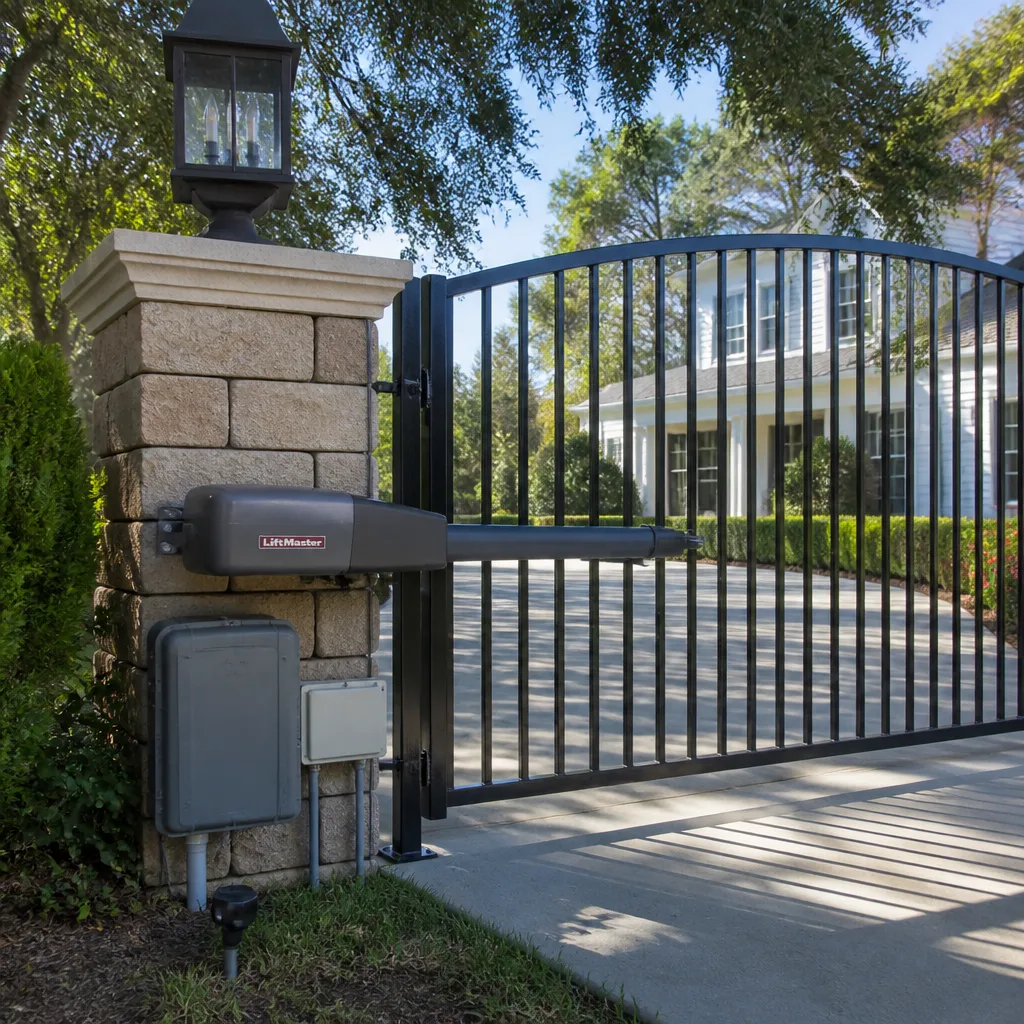
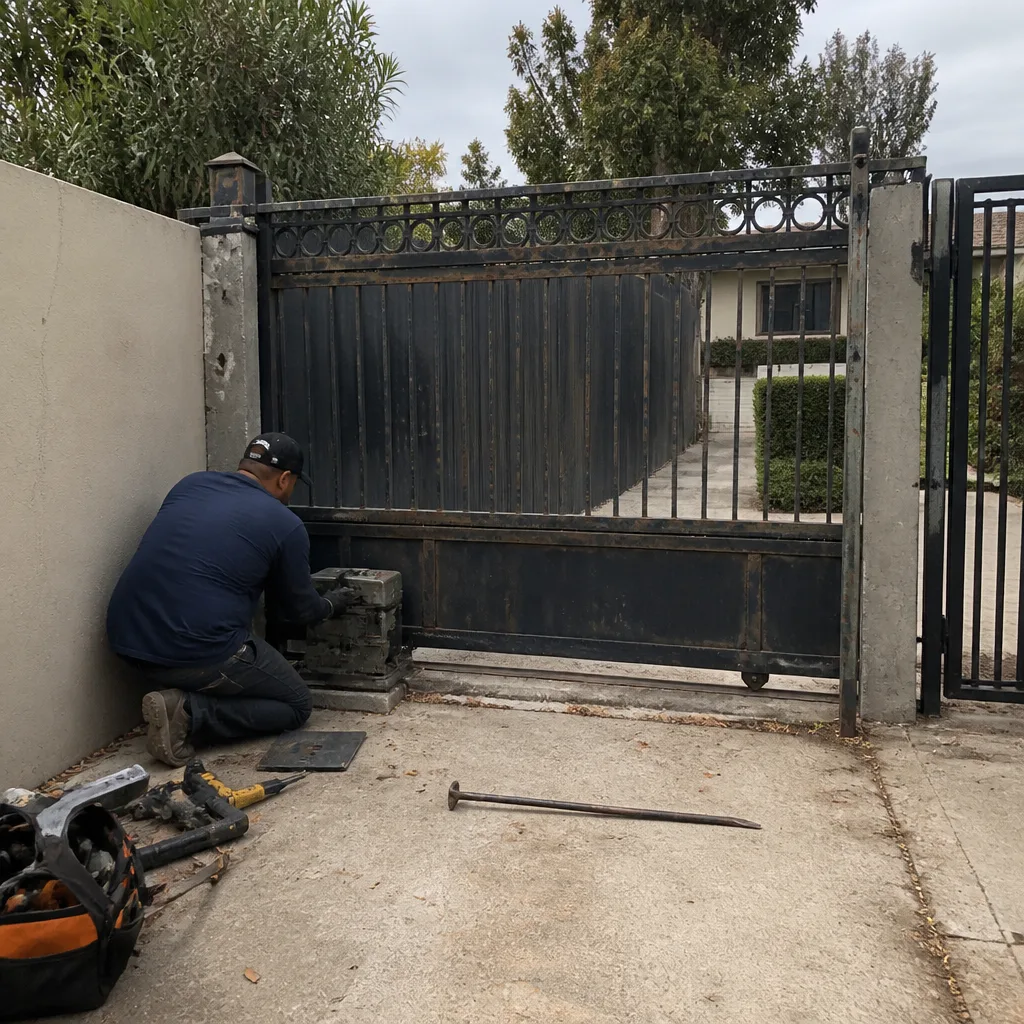 Before
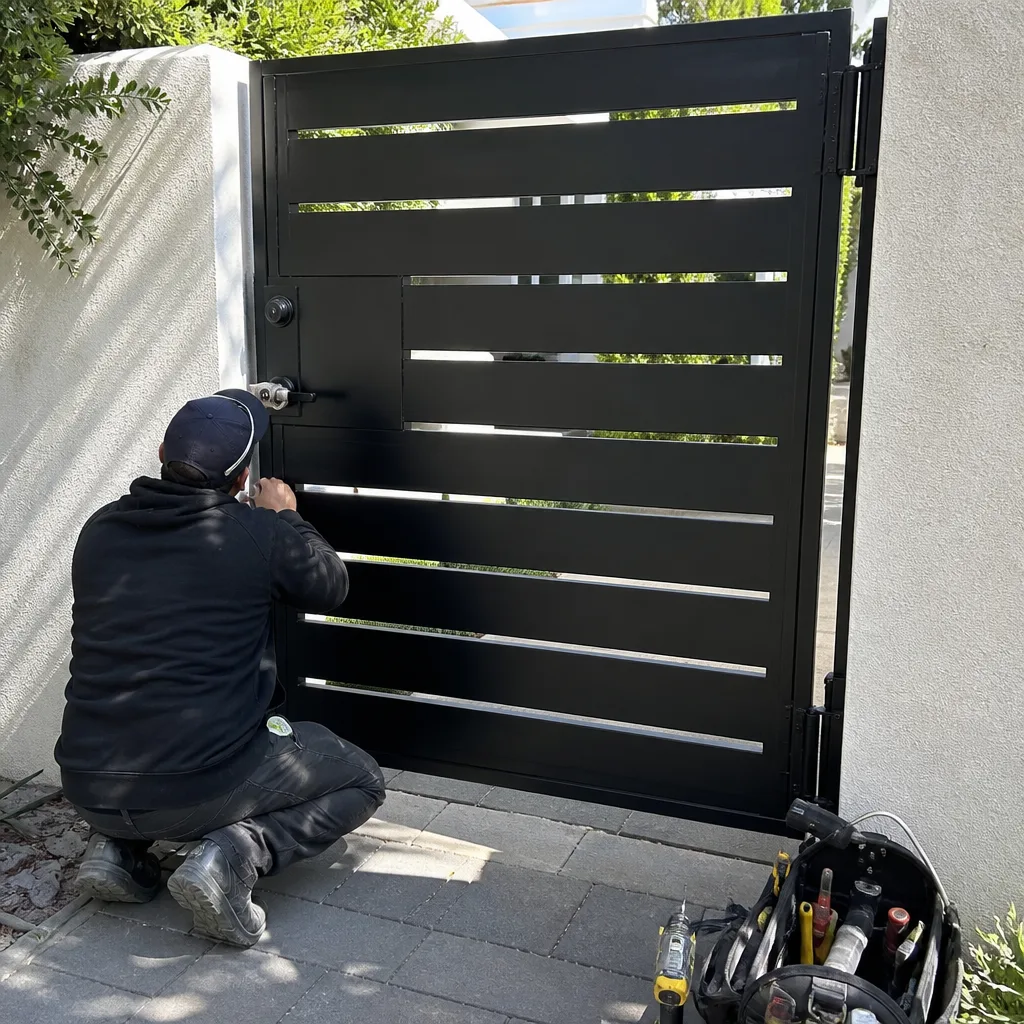 After
After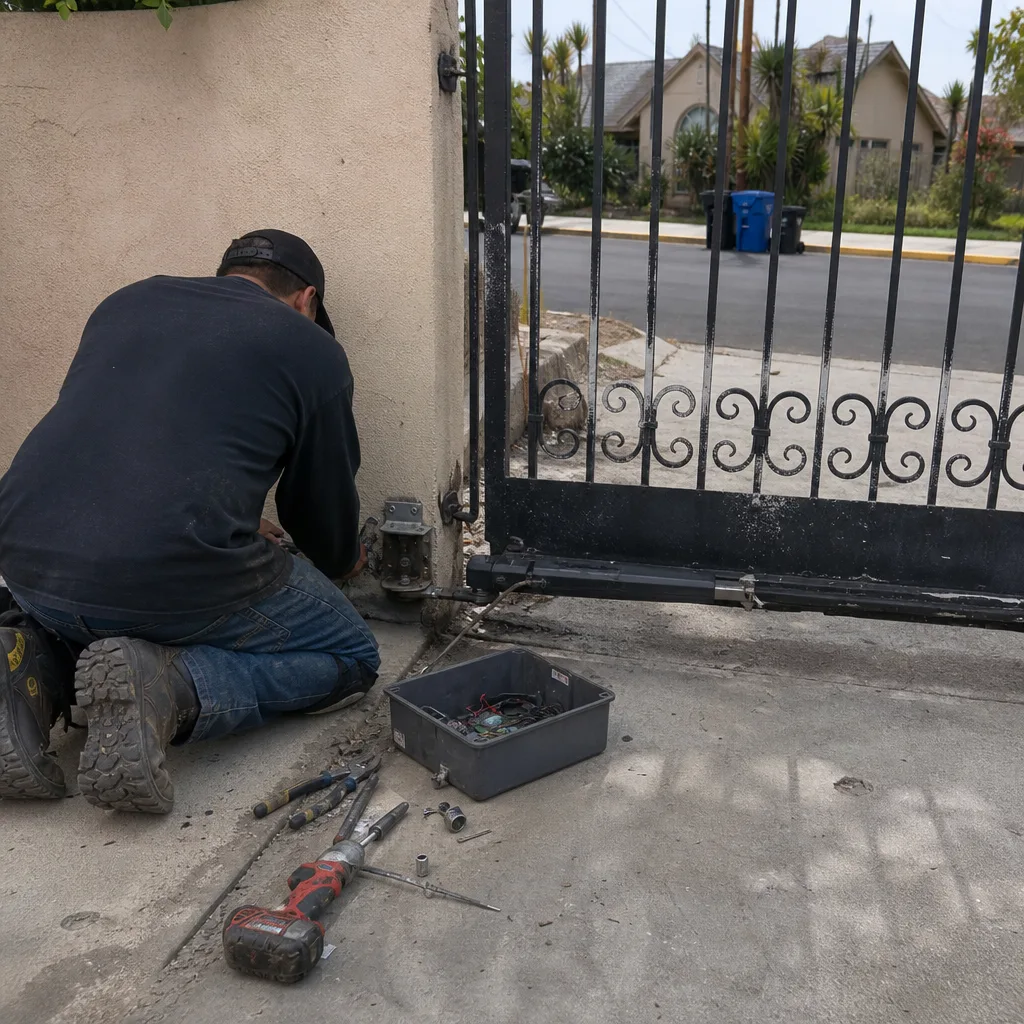 Before
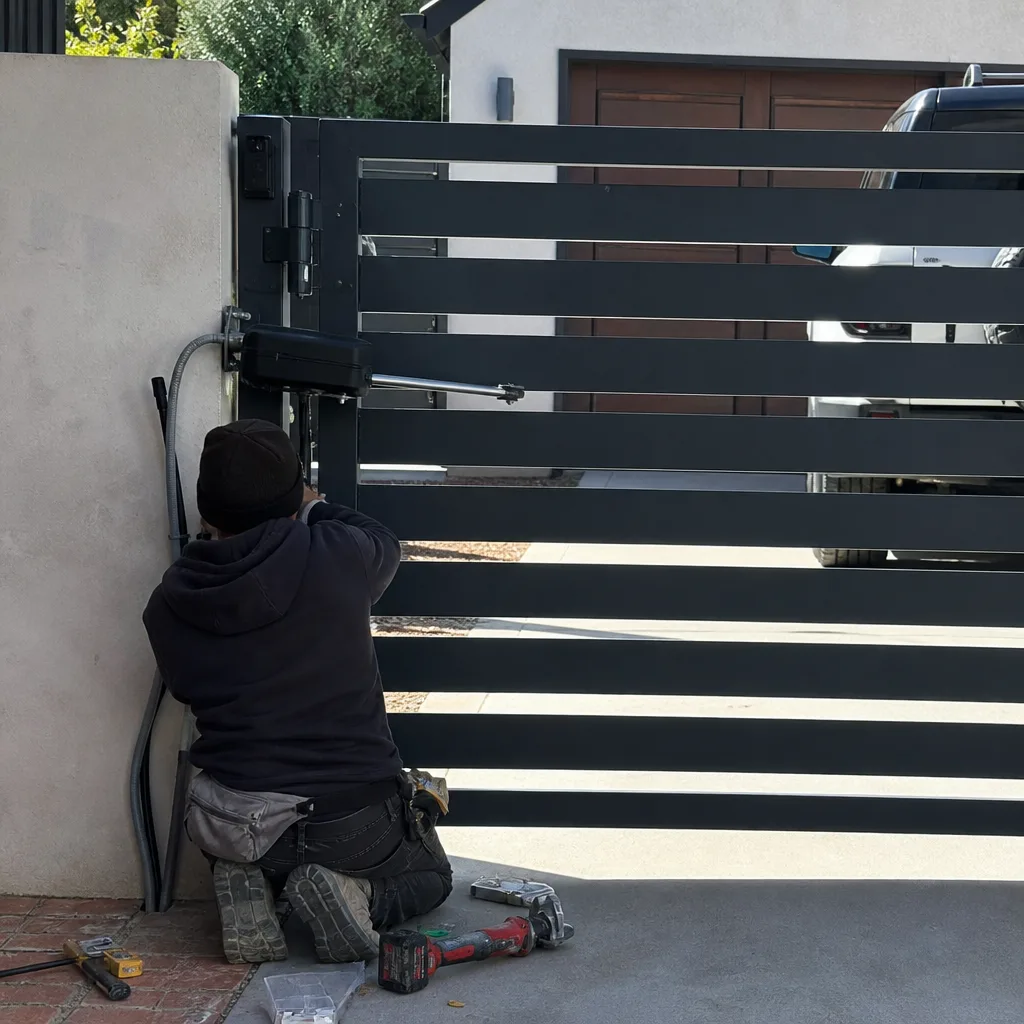 After
After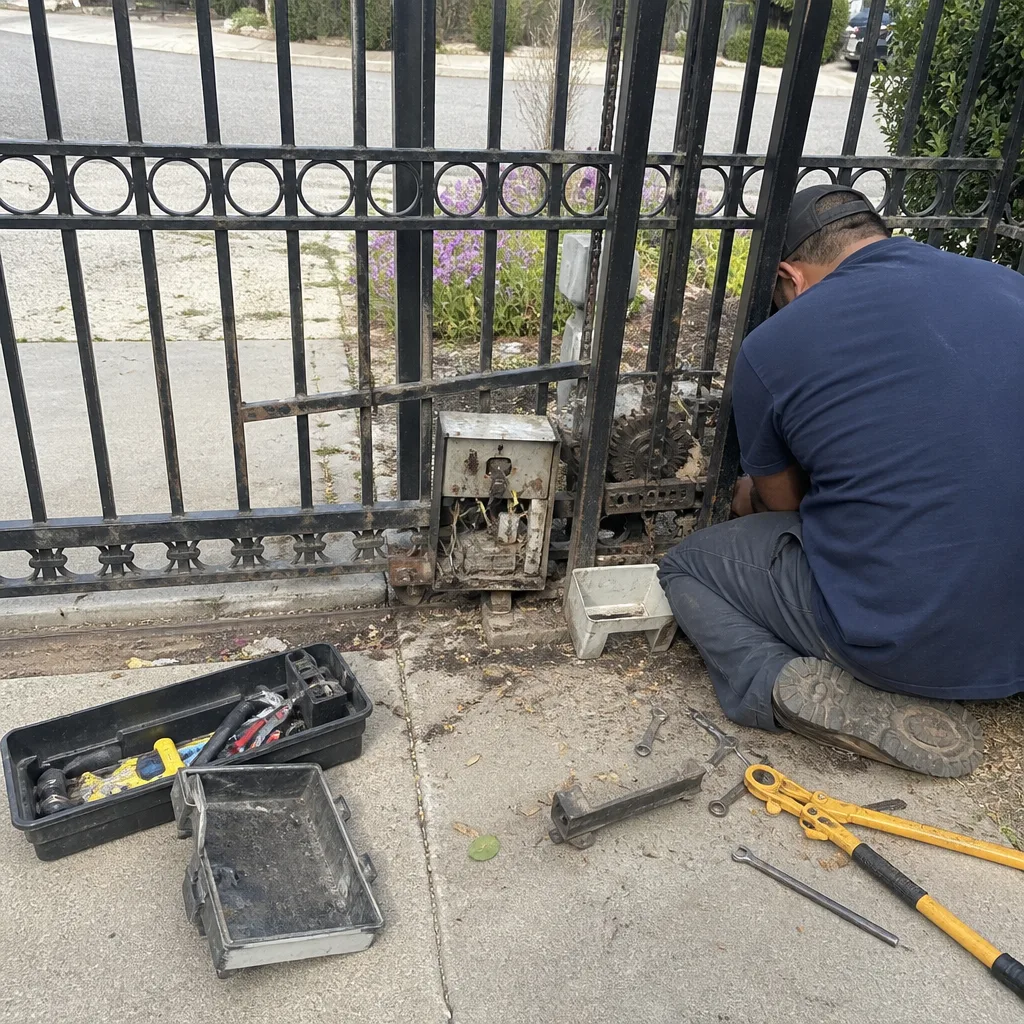 Before
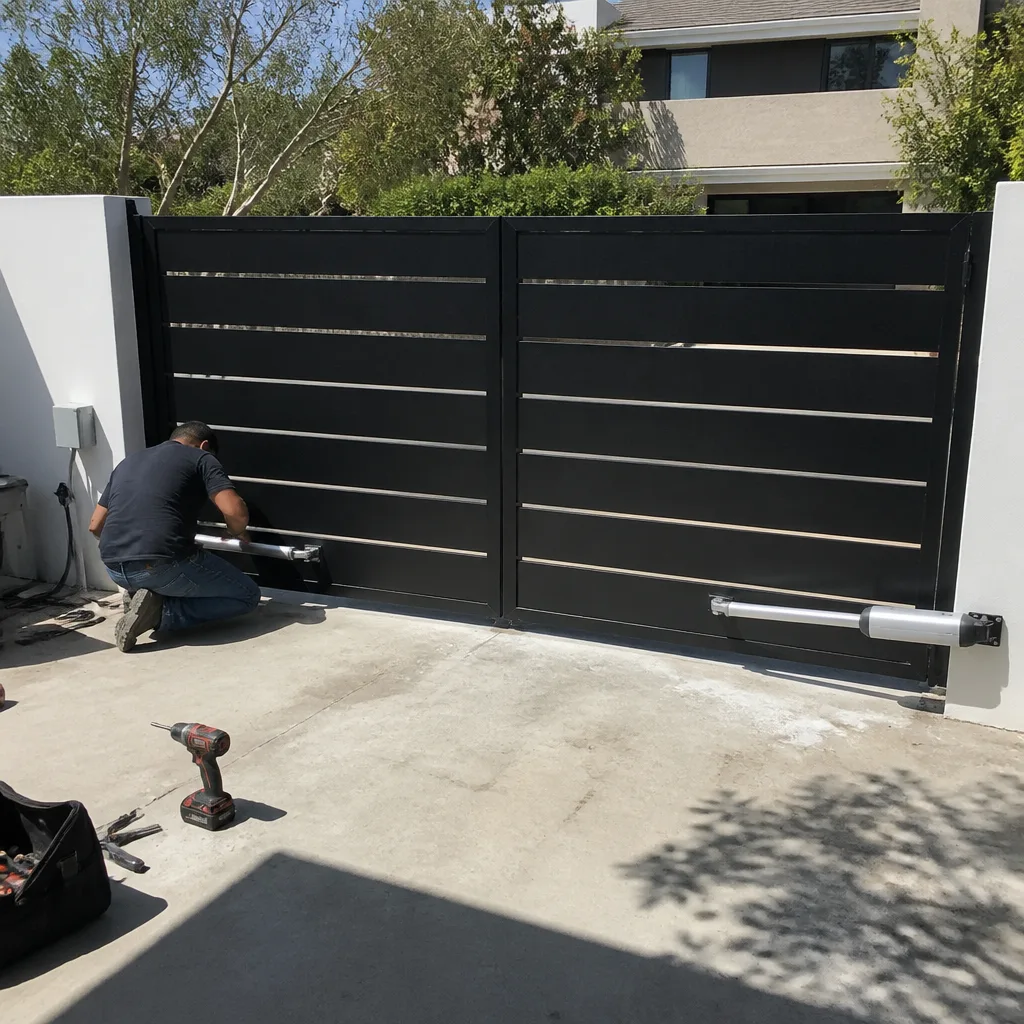 After
AfterHow Long Does Electric Gate Repair Take? Timelines and What to Expect
A failed control board can be diagnosed in 20 minutes, but if the replacement board is on a 3-day ship from a regional distributor, your gate is down for 72 hours. That gap between diagnosis and completed repair is what catches most Los Angeles homeowners off guard, because the technician who says “I’ll have this fixed in an hour” is almost always talking about labor time, not total downtime. This guide separates those two numbers and walks you through How Long Does Gate Repair Take? Timelines and What to Expect, from a misaligned photo eye to a full operator swap. By the time you finish reading, you’ll know exactly what to expect when a technician arrives, what questions to ask before work begins, and which repairs should never stretch past a single visit.
Quick Answer
Most electric gate repairs in Los Angeles take between 45 minutes and 4 hours of on-site labor, but total downtime can stretch from same-day completion to 3-5 business days when a specific part like a control board or operator motor has to be ordered from a manufacturer’s regional warehouse. Sensor alignment, limit adjustments, and many wiring repairs are typically done in a single visit under an hour. Control board replacements, operator motor swaps, and post repairs usually require either a longer single visit or a return appointment once the part arrives.
Table of Contents
- Repair Time vs. Downtime: The Two Numbers That Matter
- Timelines by Repair Type: What Each Job Actually Takes
- Parts Availability in Los Angeles: What’s Stocked vs. What Ships
- What to Do While You Wait: Securing a Gate That Won’t Move
- What a Good Repair Call Sounds Like: Four Conversations You Should Hear
- Why Some Repairs Are Same-Day and Others Aren’t
- Common Mistakes to Avoid
- When to Call a Professional
- Frequently Asked Questions
- The Bottom Line
Repair Time vs. Downtime: The Two Numbers That Matter
When a Los Angeles homeowner asks “how long does electric gate repair take,” they’re really asking two separate questions. The first is: how many hours will a technician be working at my property? The second is: how long until my gate opens and closes normally again? Those answers are not the same thing, and the difference between them is the single biggest source of frustration we see on repair calls.
Repair time is the labor component. It’s what the technician bills and what most service companies quote when you call. A control board replacement, for example, might take 90 minutes from the moment the truck parks to the moment the gate cycles correctly. That’s the repair time.
Downtime is the full period your gate is out of service. If the technician has the correct board on the truck, downtime equals repair time. But if the board has to come from a manufacturer’s regional warehouse, downtime includes every day between diagnosis and the return visit. In Los Angeles, that can mean 2-5 business days depending on the brand and the distributor’s stock levels.
The practical takeaway: when you book a repair, ask for both numbers. A company that answers honestly – “we’ll be there about 2 hours, but your gate may be down until Thursday while the part ships” – is giving you the full picture. A company that only gives you the labor estimate is setting you up for a surprise.
In our experience across Los Angeles neighborhoods from Sherman Oaks to Torrance to Pasadena, the labor side of gate repair is rarely the bottleneck. The wait for parts is. Understanding that division before the technician arrives changes how you plan, how you secure your property, and how you evaluate the quote.
Timelines by Repair Type: What Each Job Actually Takes
Different failures have different time signatures. Here are realistic on-site labor ranges for the repairs we handle most often in Los Angeles. These are the numbers we quote when a customer calls, and they hold across most gate brands including FAAC, LiftMaster, and Linear systems.
Sensor Alignment: 20-45 Minutes
Photo eyes – the small safety sensors mounted near the ground on either side of the gate opening – drift out of alignment when a post shifts, a gardener bumps one with a mower, or a delivery truck clips the gate. The fix is usually a realignment and a cleaning of the lens. This is the fastest common repair, and most technicians carry spare sensors, so it’s almost always a same-day, single-visit job.
Limit Adjustment: 30-60 Minutes
When a gate stops short of fully open or slams hard against the close position, the limit switches inside the operator have lost their setting. Adjusting them involves opening the operator housing, testing the open and close positions, and dialing in the stop points. It’s a bench-style task with testing cycles, and a technician who knows the specific operator model can typically finish in under an hour. No parts are needed for most limit issues, which means no return visit.
Wiring Repair or Loose Connection: 30-90 Minutes
Los Angeles weather is gentler than most, but sprinkler overspray, rodent activity, and simple vibration loosen connections over time. A technician traces the circuit, tightens or replaces the affected terminals, and re-tests. If the wire run is buried and the fault is underground, expect the job to run longer, sometimes 2-3 hours, because locating a break in conduit can take time.
Control Board Replacement: 1-2 Hours
The control board is the brain of the operator. When it fails – usually after a power surge, a lightning strike, or simply years of service – the gate may not respond at all. The physical replacement takes 60-120 minutes: remove the old board, install the new one, reconnect the peripheral wiring for sensors and remotes, and program the settings. The catch is the part itself. Control boards are brand-specific and model-specific, and only a handful of common boards are stocked locally in Los Angeles. We’ll cover that more below.
Operator Motor Replacement: 2-4 Hours
The motor – often called the operator head – is the heavy lifting component. Swapping one involves dismounting the old unit from its pad or pedestal, installing the new one, aligning the drive assembly with the gate, and running a full set of functional tests. On a swing gate with a piston-style actuator, expect 2-3 hours. On a sliding gate with a chain-driven operator, plan for 3-4 hours. This is a job where the right part on the truck is everything; if the motor has to be ordered, you’re adding days of downtime to a half-day labor job. For a full breakdown of installation timelines, see our guide on How Long Does Gate Installation Take? Timelines and What to Expect.
Post Repair or Reset: Half Day to Full Day
When a gate post has shifted – common in Los Angeles hillside neighborhoods where soil movement is a year-round reality – the gate may bind, drag, or refuse to close. Resetting a post means unbolting the gate, hoisting or supporting it, excavating around the post base, re-plumbing the post, and re-setting it in fresh concrete. The concrete then needs to cure before the gate can be re-hung and tested under weight. It’s a half-day job at minimum, and a full day is not unusual if both posts need work. This is structural repair, not just electrical work, and rushing it means doing it twice.
Parts Availability in Los Angeles: What’s Stocked vs. What Ships
Los Angeles has a deep bench of electrical supply houses and gate parts distributors, but “deep” does not mean “everything on the shelf.” Here’s how parts availability actually works here, and why it matters for your repair timeline.
Common wear items are usually stocked locally: photo eye sensors, remote transmitters, keypads, loop detectors, capacitor kits, and limit switches. A technician can typically get these the same day from a distributor in the San Fernando Valley, the San Gabriel Valley, or the South Bay. That means repairs requiring these parts are almost always same-day or next-day.
Brand-specific electronic components are a different story. A control board for a Viking operator or a FAAC hydraulic pump is not something a general electrical supplier keeps on the shelf. These parts ship from the manufacturer’s regional warehouse, which for most brands means 2-4 business days to a Los Angeles address. In our experience, BFT and Linear boards are sometimes available locally through specialized gate distributors, but FAAC and Viking parts more often come from out of state.
Operator motors fall in the middle. Common LiftMaster and DoorKing residential operators are stocked by multiple Los Angeles distributors because they’re used on thousands of homes here. But a specialized commercial-duty motor – say, a Linear industrial slide operator – may need to be built to order or shipped from a central depot.
What this means for your schedule: a technician who diagnoses a bad capacitor can probably fix your gate today. A technician who diagnoses a bad Viking control board may be scheduling a return visit for Thursday. Both are doing their job correctly. The difference is simply geography and supply chain.
Ask your repair company which category your part falls into at the diagnosis stage. A direct answer tells you they know the Los Angeles parts market and aren’t guessing at a timeline.
What to Do While You Wait: Securing a Gate That Won’t Move
If your repair requires a parts order, your gate may be down for several days. Here’s how to keep your property secure and your gate safe during that window, step by step.
- Put the gate in manual mode. Every operator has a manual release – usually a keyed disengage or a pull handle on the side of the motor housing. This disconnects the gate from the drive mechanism so you can push it by hand. On a sliding gate, the release lets the gate roll freely on its track. On a swing gate, it frees the leaf to pivot.
- Decide whether to leave the gate open or closed. If your gate protects a driveway that leads to a garage or a rear yard, you can close the gate manually and secure it with a chain and padlock around the gate frame and the post. If the gate is stuck open and cannot be moved safely, park a vehicle in the driveway as a secondary barrier and notify anyone who normally expects access.
- Don’t force the operator. If the gate is partially open or binding, do not repeatedly press the remote or the keypad button. That sends power to a possibly damaged motor or board and can turn a small repair into a large one. Disengage the operator and move the gate by hand only if it moves freely.
- Tell your technician what you observed. When the return visit happens, the technician will ask what the gate did after the diagnosis. Writing down the exact behavior – “the gate opened halfway and stopped,” “the motor hummed but the gate didn’t move,” “the remote did nothing at all” – saves time and helps confirm the original diagnosis.
If the gate is stuck open and you cannot close or secure it, keep exterior lights on at night, alert any household members, and ask your repair company if they can prioritize the return visit. Most Los Angeles gate companies, including ours, keep some buffer in the schedule for legitimate security concerns.
What a Good Repair Call Sounds Like: Four Conversations You Should Hear
A competent gate repair follows a sequence of four distinct conversations. If your technician skips one, you’re not getting a full repair – you’re getting a partial one, and the missing piece usually costs you time or money. Here’s what each stage should sound like.
Conversation 1: The Diagnosis
The technician should explain what failed and how they know. “The control board is not sending voltage to the motor. I tested the capacitor and it’s good, but the relay on the board is dead, which means the board itself needs replacement.” That’s a diagnosis. “It’s broke, we’ll need to replace some stuff” is not. A clear diagnosis takes five minutes to explain and confirms the technician actually traced the problem rather than guessing.
Conversation 2: The Written Price
Before any work begins, you should receive a written price for the repair. Not a verbal estimate, not a rough number, not “somewhere in this range.” A written price that matches what you’ll pay when the job is done. At Gate Repair, this is non-negotiable – every job gets a written quote before a single bolt is turned. If a company balks at putting the number in writing, find another company.
Conversation 3: The Parts ETA
If the repair requires a part that isn’t on the truck, the technician should tell you three things: what the part is, where it’s coming from, and when it will arrive. “The FAAC control board for your model ships from the manufacturer’s warehouse in Arizona. It typically lands in Los Angeles in 3 business days, so we’d schedule your return visit for Thursday morning.” That’s a parts ETA. Generalities like “we’ll call you when it’s in” leave you in the dark about your own gate.
Conversation 4: The Return Appointment
Before the technician leaves, you should have a specific date and a specific arrival window for the return visit. Not “sometime next week.” A day, a time range, and a confirmation that the price for the return visit is already covered by the original written quote. If the repair is part of a guarantee, that promise should be written on the invoice, not described verbally.
Why Some Repairs Are Same-Day and Others Aren’t
The difference between a same-day repair and a multi-day repair is usually not the skill of the technician. It’s the relationship between the diagnosis and the parts inventory.
Here’s the honest breakdown of which repairs are almost always same-day in Los Angeles:
- Sensor realignment and cleaning: No parts needed. The technician adjusts the photo eyes, cleans the lenses, and tests. Done in under 45 minutes.
- Limit switch adjustment: No parts needed in most cases. The technician recalibrates the open and close positions and verifies the gate cycles correctly.
- Remote or keypad reprogramming: No parts needed unless the remote or keypad itself is dead. Programming a new remote into an existing receiver takes minutes.
- Loose wiring re-termination: The technician tightens or replaces a terminal connector and re-tests the circuit. Small parts are usually on the truck.
- Capacitor replacement: A common failure on many operators. Capacitors are cheap and often stocked on service vehicles.
And here are the repairs that routinely require a return visit because the part is specific to your operator’s brand and model:
- Control board replacement: Brand-specific. A LiftMaster board doesn’t fit a Viking operator, and a FAAC board for one model doesn’t fit another model from the same brand.
- Operator motor replacement: Heavier, more expensive, and often model-specific. Many residential motors ship from regional warehouses rather than sitting on a Los Angeles shelf.
- Hydraulic pump or piston assembly: Found on many FAAC and BFT swing-gate operators. These are precision components, and they’re rarely stocked outside of specialized distributors.
The key question to ask your repair company before booking: “What’s your parts situation for my specific operator brand and model?” A company that services nine major gate brands – including FAAC, BFT, Linear, and Viking – will likely have better access to parts than a company that works on whatever shows up. More brand coverage means more distributor relationships, and more relationships mean faster parts.
Common Mistakes to Avoid
- Pressing the remote repeatedly when the gate stops working. Every press sends voltage to a possibly damaged board or motor. This can burn out a salvageable component and turn a $200 repair into a $900 replacement.
- Hiring a company that won’t put the price in writing. If the estimate is verbal, you have no protection when the invoice arrives higher. A written price before any work starts is the single best safeguard against surprise billing. Every Portcullis Gate Repair job includes it, and it’s one of the four Kingswell Guarantee commitments.
- Leaving a gate stuck open overnight without securing it. An open gate is an invitation. Use the manual release to close the gate, or chain it closed, or park a vehicle across the opening until the technician returns.
- Attempting to repair the operator motor yourself. Gate operators run on household voltage or higher, and the capacitors inside them can hold a dangerous charge even after power is disconnected. A shock from an operator capacitor is a genuine hazard. Let a trained technician open the housing.
- Ignoring a gate that’s getting slower. A gate that opens noticeably slower than it did last month is telling you something. Catching a failing motor or a binding hinge early often saves the cost of a full operator replacement later.
- Hiring a company that doesn’t know your brand. A technician who has never serviced a Viking operator will spend your paid time learning on site. Ask whether the company has specific experience with your brand before you book. We service nine major operator brands, which means the technician who arrives already knows the system on your property.
- Scheduling a repair with no arrival window. “We’ll be there sometime between 9 and 5” is not a schedule. A real arrival window is a specific commitment, and the Kingswell Guarantee requires it. If a company can’t commit to a window, they’re telling you how they’ll handle the repair too.
When to Call a Professional
Call a professional the moment your gate stops responding correctly to its remotes, keypads, or sensors. For more guides & resources on gate maintenance and troubleshooting, visit our blog. Delaying almost always increases the repair cost, because a failing motor that still half-works today may fully fail tomorrow and take the control board down with it. The same logic applies to a gate that’s binding, dragging, or making new noises. These are not self-correcting problems.
If your gate is stuck open and you cannot secure it, call right away. A gate that won’t close is a security issue, not just a convenience problem, and reputable Los Angeles gate companies prioritize these calls. Portcullis Gate Repair offers free estimates in Los Angeles – call (940) 412-7340.
Frequently Asked Questions
Most Los Angeles electric gate repairs run between $150 and $450 for common fixes like sensor realignment, limit adjustment, and wiring repairs. Control board replacements typically run $400-$800 parts and labor depending on the brand, and full operator motor replacements start around $900 and can reach $1,800 for premium brands like FAAC or Viking. Every Portcullis Gate Repair job includes a written price before any work begins. Call (940) 412-7340 for an exact quote on your specific operator.
In many cases, yes. Sensor realignment, limit adjustment, capacitor replacement, and most wiring repairs are completed same-day because the technician carries the parts or no parts are needed at all. Repairs requiring brand-specific components like a control board or motor may require a return visit once the part arrives from the manufacturer’s warehouse. When you call, ask which category your repair falls into and we’ll give you a straight answer.
A well-maintained residential gate operator in Los Angeles typically lasts 10-15 years before the motor, board, or drive assembly needs replacement. Coastal areas like Santa Monica and Palos Verdes see shorter lifespans due to salt air corrosion, while inland areas like Pasadena and Glendale often see longer service life. Regular maintenance – cleaning the photo eyes, checking the limit settings, and tightening connections – extends that lifespan by catching small issues before they become motor failures.
A full gate installation includes the gate itself, the operator motor, the control board, safety sensors, and all wiring and mounting hardware. On most Los Angeles residential jobs, it also includes a keypad or intercom system for access control and often a vehicle loop detector that senses a car waiting at the gate. For a detailed breakdown of what’s included and current pricing, see our Gate Installation in Los Angeles page.
Yes. The power run from your electrical panel to the operator, the safety edges that stop the gate if it contacts an obstacle, and the photo eye sensors are all part of the system we install and repair. Safety edges are a critical component – they’re what prevents the gate from closing on a child, a pet, or a car – and we test them on every repair and installation. If your safety edges are damaged or non-functional, we’ll flag that during the diagnosis and include the repair in your written quote.
A standard residential swing or slide gate installation in Los Angeles typically takes 1-2 days of on-site work, plus 3-5 days for permits and inspection scheduling depending on your city. Custom gates with masonry pillars, complex access control, or hillside site preparation can extend to 3-4 days on site. For a full timeline breakdown by gate type, see our Gate Installation in Los Angeles guide.
Yes, in most cases. Every operator has a manual release mechanism – usually a keyed disengage or a pull handle on the motor housing – that lets you push the gate open and closed by hand while the operator is disconnected. Your technician should show you how to use it before leaving. If the gate is too heavy to move comfortably or the release mechanism is damaged, leave the gate in a secure position and wait for the return visit.
We repair both. Commercial gate systems – apartment complex gates, parking lot gates, and industrial slide gates – use heavier operators and often have more complex access control, but the same repair timeline logic applies. The diagnosis is fast, the labor is usually 2-4 hours, and the parts availability determines whether the repair finishes same-day or requires a return visit. For commercial service in the Los Angeles area, call (940) 412-7340 and we’ll schedule a technician.
The Bottom Line
Electric gate repair time breaks into two numbers: on-site labor, which runs 45 minutes to 4 hours for most jobs, and total downtime, which can stretch to several days when a brand-specific part has to ship from a manufacturer’s warehouse. The difference between those numbers is the parts availability reality of the Los Angeles market, and knowing it in advance changes how you plan your repair. Ask for a written price before work begins, ask about parts ETA at the diagnosis stage, and ask whether the company knows your specific operator brand. Companies built on the Portcullis Gate Repair home model answer all three questions directly. We’ve been doing this since 2008 across Los Angeles, and every repair – from a simple sensor alignment to a full operator replacement – carries the same Kingswell Guarantee: a written price, a real arrival window, a clean job site, and a written guarantee on the work. If it fails inside 365 days, we come back and fix it at no charge. For electric gate repair in Los Angeles, see our Electric Gate Repair in Los Angeles page. For swing and slide gate service across the wider area, visit Gate Repair in Los Angeles.
Written by Dean Prescott, Owner at Portcullis Gate Repair, serving Los Angeles since 2008.