
Free on-site gate assessment - hinges, posts, and your LiftMaster or Nice gate operator checked before anything is quoted
The assessment is free and the quote is the invoice.
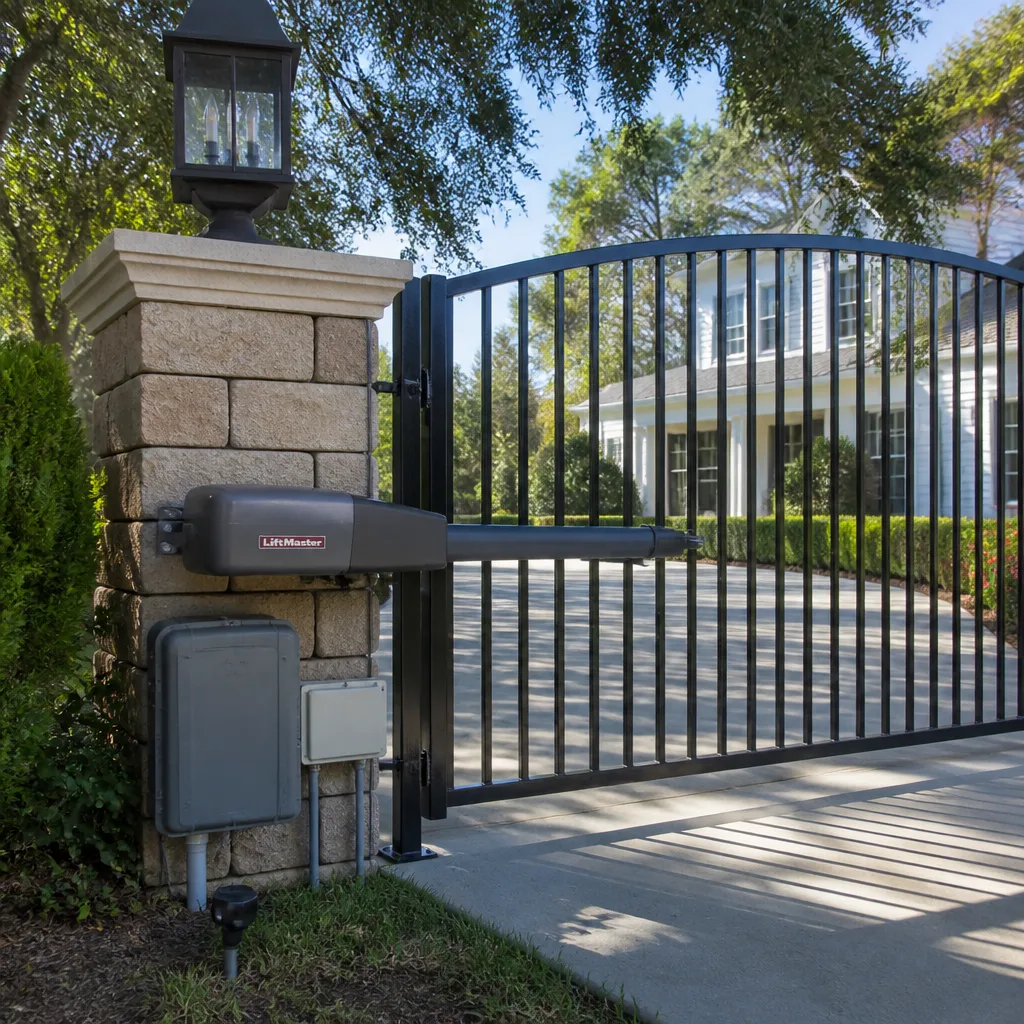
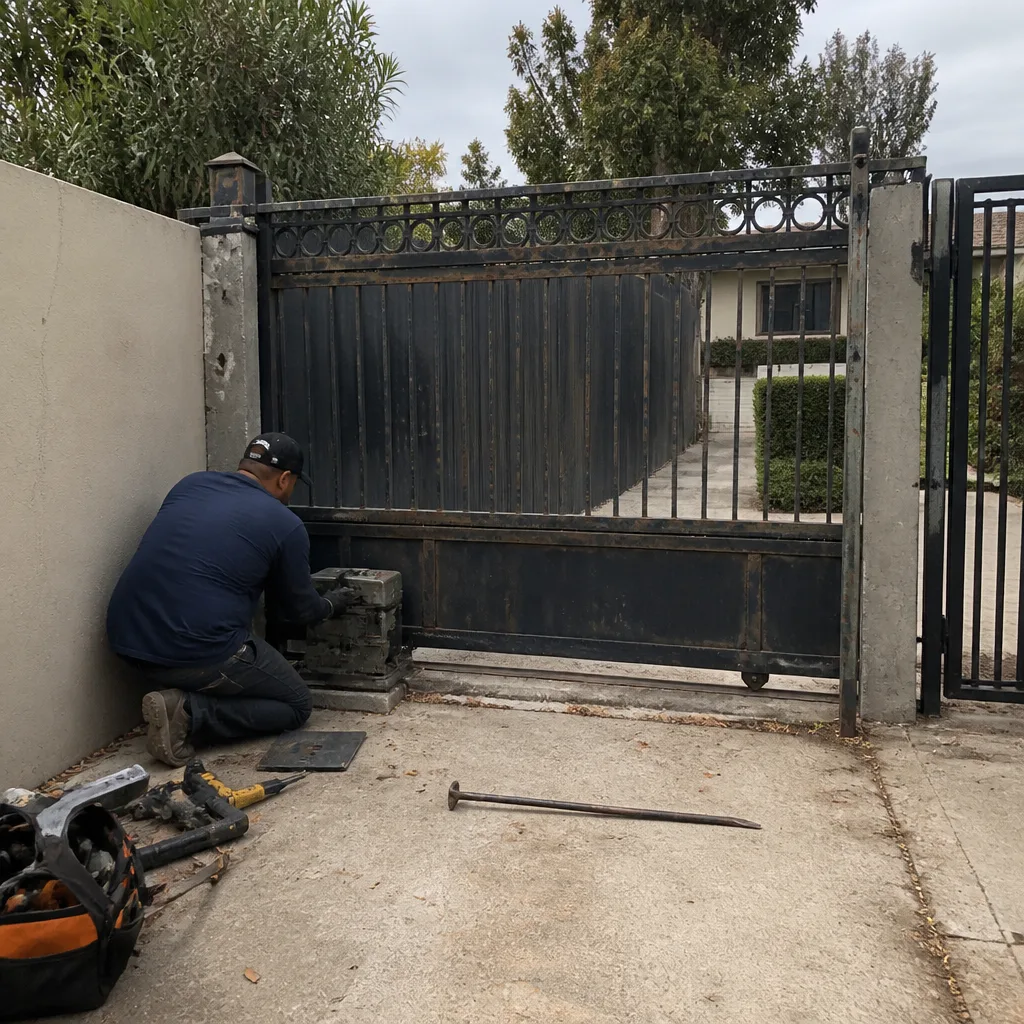 Before
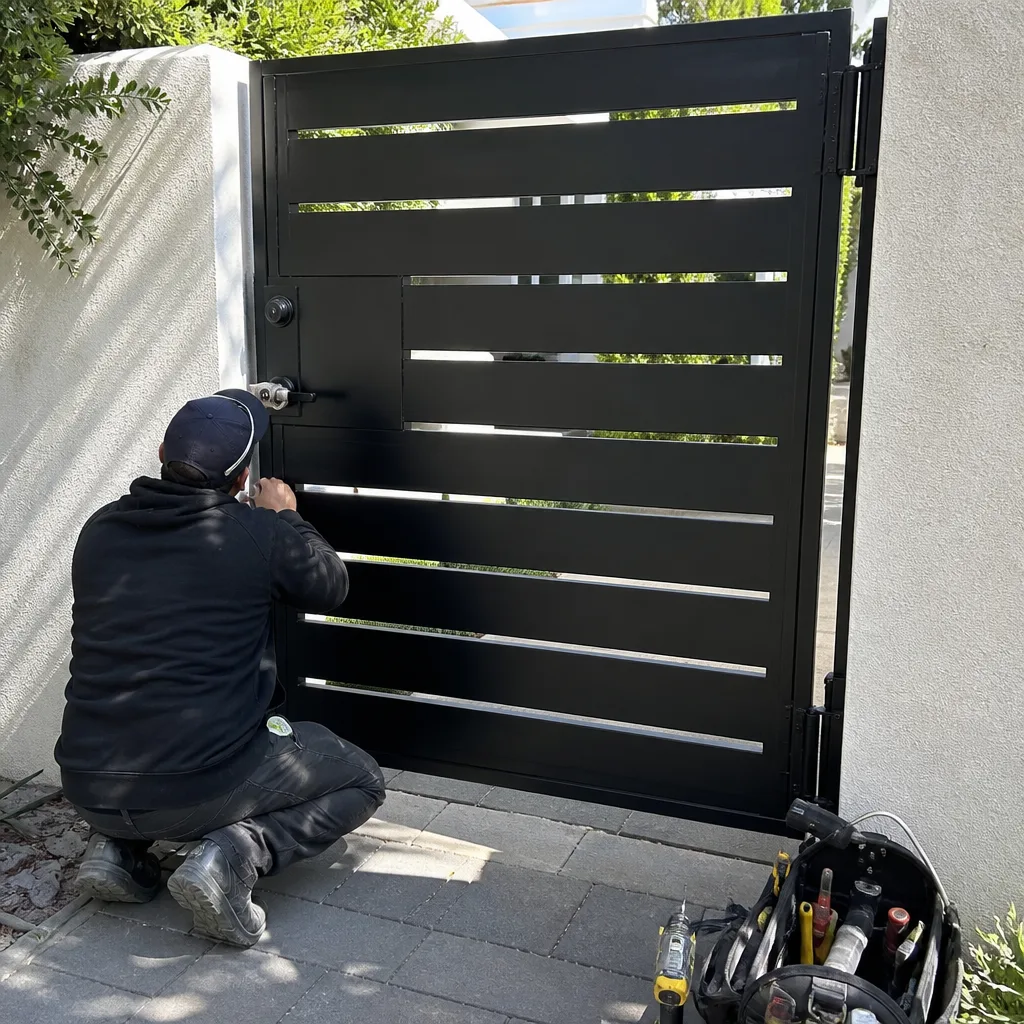 After
After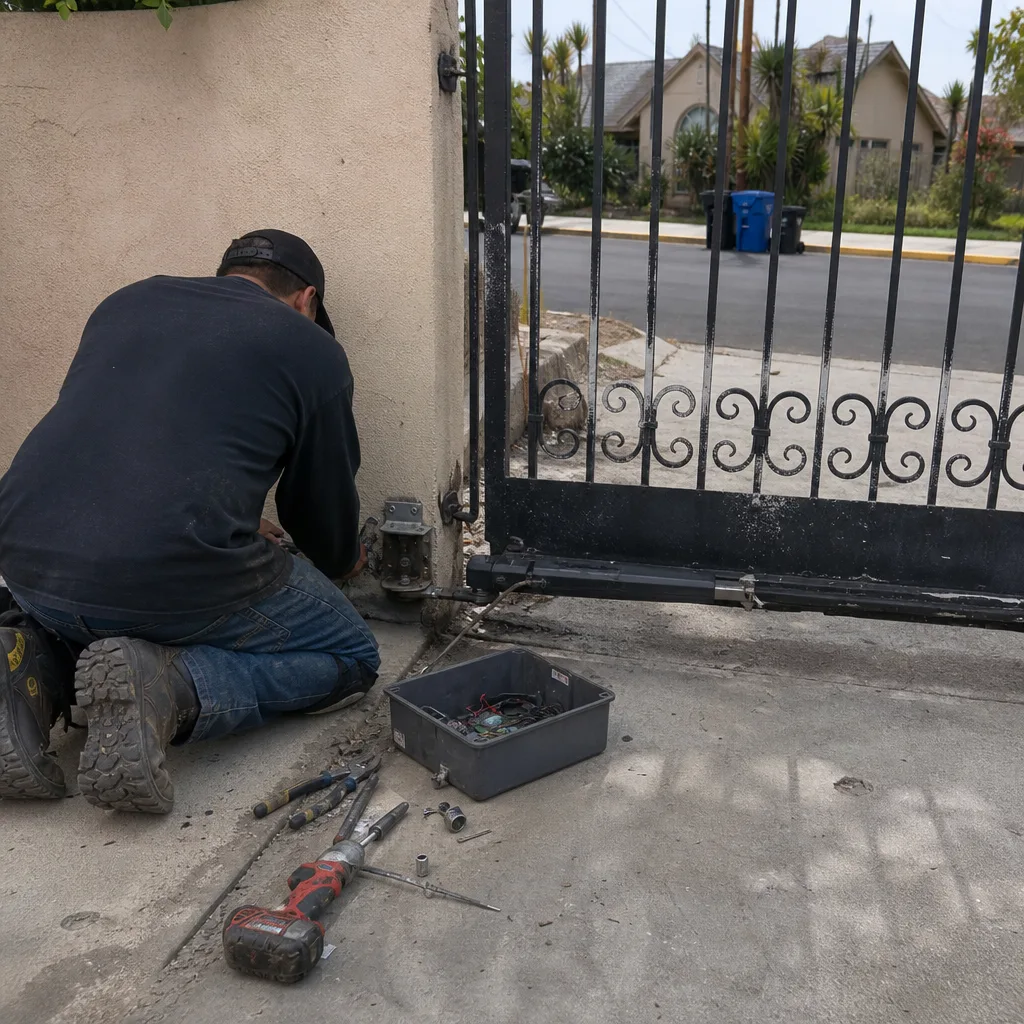 Before
 After
After Before
 After
AfterFAAC Access Control Installation: The Los Angeles Owner’s Guide
Most FAAC access control installations in Los Angeles run $1,850-$3,400 for a complete residential keypad, card reader, or intercom system, including the control board, outdoor-rated housing, and programming. We stock FAAC-compatible control modules and proximity readers on our trucks across Los Angeles County, and we can typically schedule a free measure and written quote within 24-48 hours. If your gate is clicking but not releasing, or your keypad accepts the code but the relay never fires, the control logic or power supply is usually the culprit.
We see this most often after a rainy winter like the ones that hit the San Fernando Valley hard, when moisture creeps into outdoor enclosures that were sealed five or six years ago and have since dried out and cracked.
Which FAAC Models This Applies To
FAAC’s access control line breaks into a few distinct series, and matching the right hardware matters because the communication protocol differs. The FAAC XK Series keypads use a simple two-wire bus that talks directly to FAAC’s own 780D or 844 control boards. The XS Series proximity readers and XT Series keypad-reader combos run on Wiegand 26-bit output, which means they’ll interface with third-party controllers but need the correct termination resistor or you’ll get intermittent “card read, no open” failures. The FAAC 455D standalone keypad is its own animal, with onboard relay contacts that don’t need a separate control board at all.
To identify what you’ve got, look for the silver FAAC label inside the housing door. The model prefix tells us the protocol; the suffix tells us the finish and voltage. A label reading “XK11” means a basic keypad, 12-24V AC/DC, while “XT4 433” means a combined keypad and proximity reader with built-in 433 MHz radio for wireless gate release. If the label’s sun-faded to illegibility, which happens on south-facing gates in Pasadena and Glendale by year four or five, we measure the mounting pattern and test the output with a multimeter.
On OEM versus aftermarket: FAAC’s own enclosures are die-cast aluminum with a specific gasket design that actually seals against the fine dust that blows through the Santa Ana passes. We’ve seen generic housings that look identical online fail at that seal within eighteen months. For the control modules themselves, we use FAAC factory boards on integrated systems and quality aftermarket Wiegand-compatible units where the customer wants to mix brands, but we always tell you which we’re proposing and why.
Signs Your FAAC Access Control Installation Is Failing
- Keypad beeps but gate doesn’t move. The keypad is receiving power and accepting input, but the control relay isn’t closing. Often it’s a failed output transistor on the board, sometimes it’s a break in the low-voltage run between keypad and operator. We test signal at both ends before quoting.
- Intermittent operation, worse in afternoon heat. Thermal drift in the power supply or control board. We’ve traced this to failing filter capacitors that test fine at 8 a.m. in Burbank and fail by 2 p.m. when the enclosure hits 140°F. The fix is replacing the power supply, not just the symptom.
- Proximity reader lights up, no response to card. The reader coil is intact but the Wiegand output is garbled. Usually corrosion at the terminal block where condensation has wicked up the cable. We cut back to clean copper and re-terminate, or replace the reader if the board’s damaged.
- System dead after rain, dries out and works again. Water intrusion at a cable penetration or gasket failure. This cycles worse over time. In Los Angeles, the combination of dry summers and sudden winter downpours makes gasket compression set a real problem; we replace with silicone-sealed cable glands.
- Code works from inside the house but not at the gate. If you have a separate indoor release button that functions, the operator and wiring are good. The fault is isolated to the outdoor access device or its supply. We see this when a previous installer ran the keypad off the operator’s 24V aux output, which sags under keypad load.
Replacement Cost & What’s Included
| Component | Typical Range (Installed) |
|---|---|
| FAAC keypad replacement (XK11 or equivalent) | $380-$620 |
| FAAC proximity reader swap (XS or XT series) | $440-$780 |
| Complete access control installation (new keypad, reader, housing, wiring, programming) | $1,850-$3,400 |
| Control board replacement (FAAC 780D/844 interface) | $680-$1,120 |
| Power supply upgrade (thermal-rated, outdoor enclosure) | $320-$580 |
What drives the range: distance from the operator to the access point (trenching or conduit run adds labor), whether we need to pull new low-voltage cable through existing underground conduit, and whether your current system uses FAAC-native protocol or requires a protocol translator. Every quote we write in Los Angeles breaks out parts, labor, and any trenching or concrete work separately. Written price first, work second - that’s the only order that makes sense.
The Kingswell Guarantee covers the installation for 365 days, written on the invoice. If the access control fails due to our workmanship or a defective part we supplied, we return and correct it at no charge. That includes the free second visit, not just the part.
DIY or Call Us?
There’s a safe middle ground here. You can check whether the keypad has 12-24V at the terminal block with a basic multimeter, and you can verify whether the issue follows the device by swapping it temporarily with an indoor button if you have one. What we don’t recommend: opening the operator control box to probe live terminals, running new cable through underground conduit without locating utilities, or attempting to program FAAC’s dip-switch protocols from the manual without the factory default sequence. The low-voltage side won’t electrocute you, but a miswired relay can fry a $600 control board in under a second.
Dean Prescott learned the hard way early in his career at Los Angeles Trade-Technical College that “low voltage” doesn’t mean “low consequence.” If you’re not certain which series you have or whether your operator board will accept the replacement protocol, call us. We’ll diagnose it correctly the first time and give you the written price before a single wire gets moved.
FAQs
Most FAAC keypads and readers last 7-12 years in Los Angeles, but the gasket and housing seal typically fail at 4-6 years due to UV exposure and thermal cycling. We see shorter lifespans on west-facing gates in the Valley where afternoon sun pushes enclosure temperatures past 150°F. Call (940) 412-7340 and we’ll inspect the seal condition during your free estimate.
Sometimes. A failed power supply or corroded terminal block is worth repairing. A control board with burned relay contacts or water-damaged traces is usually not, because the repair is temporary and the board will fail again. We’ll test and tell you honestly which path makes sense. Call (940) 412-7340 for a diagnostic.
A straightforward replacement of an existing keypad or reader on established wiring takes 2-3 hours. A full new installation with trenching, conduit, and programming takes a full day, sometimes spilling into a second morning if we hit rock in the trench path or need to coordinate with your HOA in gated Los Angeles communities. We give you a real arrival window, not a vague “sometime Tuesday.”
We carry FAAC-compatible control modules, XK and XT series keypads, proximity readers, and outdoor-rated power supplies on our Los Angeles service vehicles. For older discontinued FAAC models, we source factory-equivalent units with the correct mounting pattern and protocol, or we install a protocol translator that lets you keep the existing operator. We don’t start the job until the correct part is in hand.
Ready for a written quote on your FAAC access control installation in Los Angeles? Call Portcullis Gate Repair at (940) 412-7340. A live person answers 24 hours a day, and we’ll schedule your free estimate with a real arrival window. Every installation is backed by our 365-Day Done Right Promise and the Kingswell Guarantee: written price first, work second, and we come back if it fails.
Written by Dean Prescott, Owner & Lead Technician, Portcullis Gate Repair at Portcullis Gate Repair, serving Los Angeles and nearby areas.