
Last updated October 8, 2026
Free on-site gate assessment - hinges, posts, and your LiftMaster or Nice gate operator checked before anything is quoted
The assessment is free and the quote is the invoice.
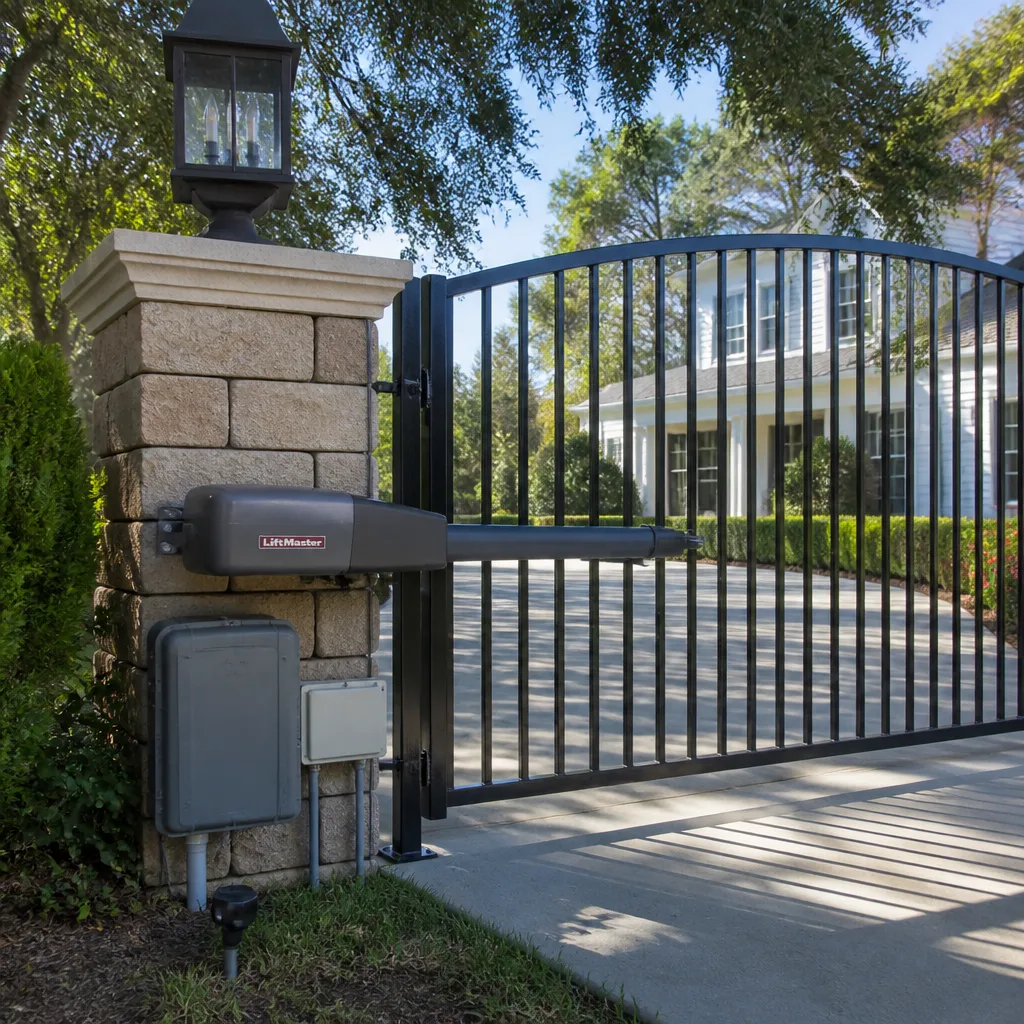
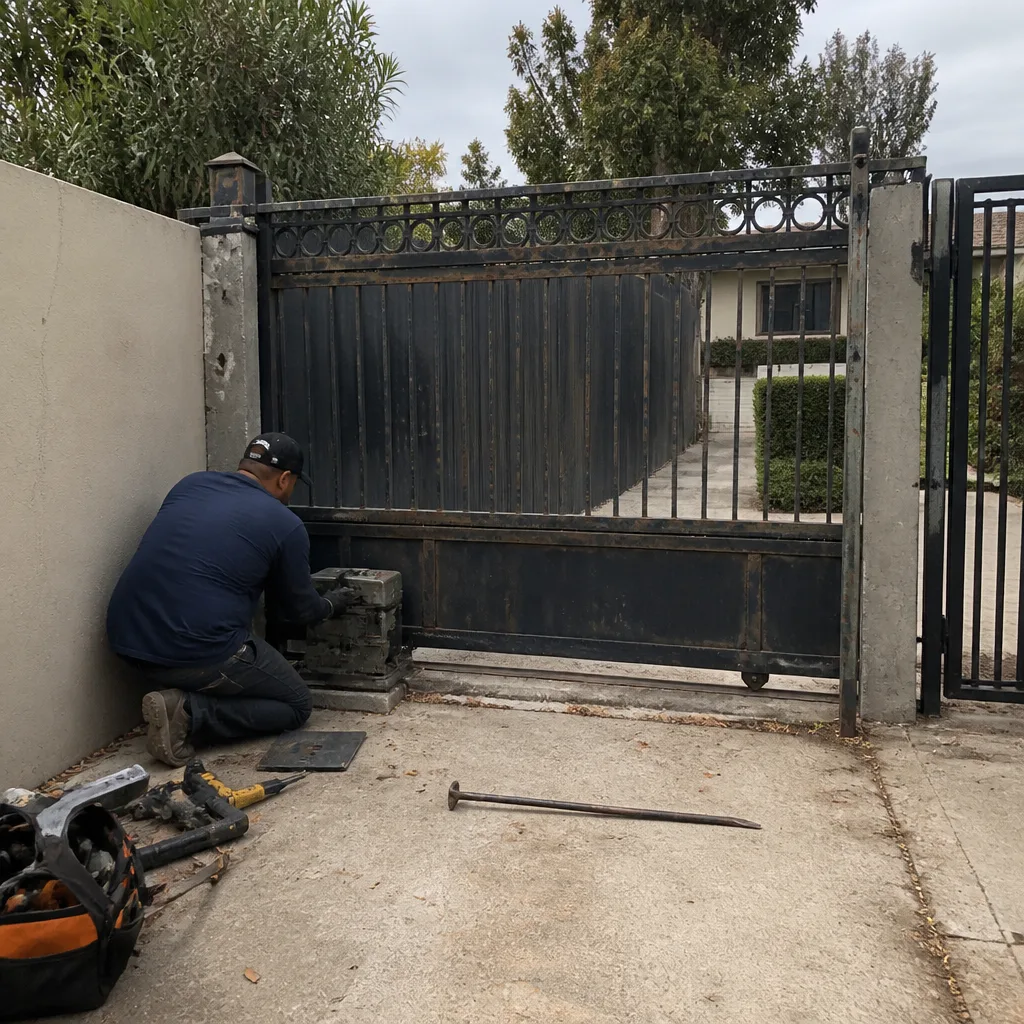 Before
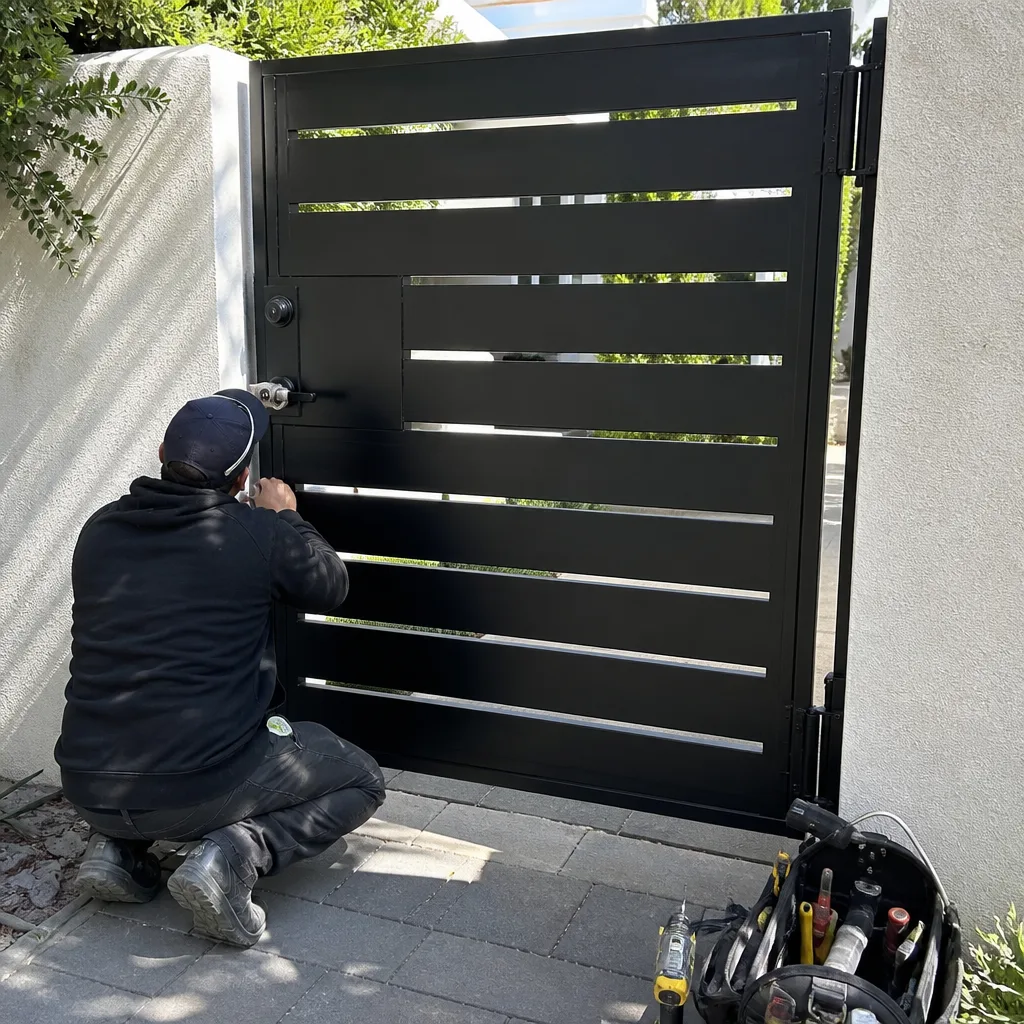 After
After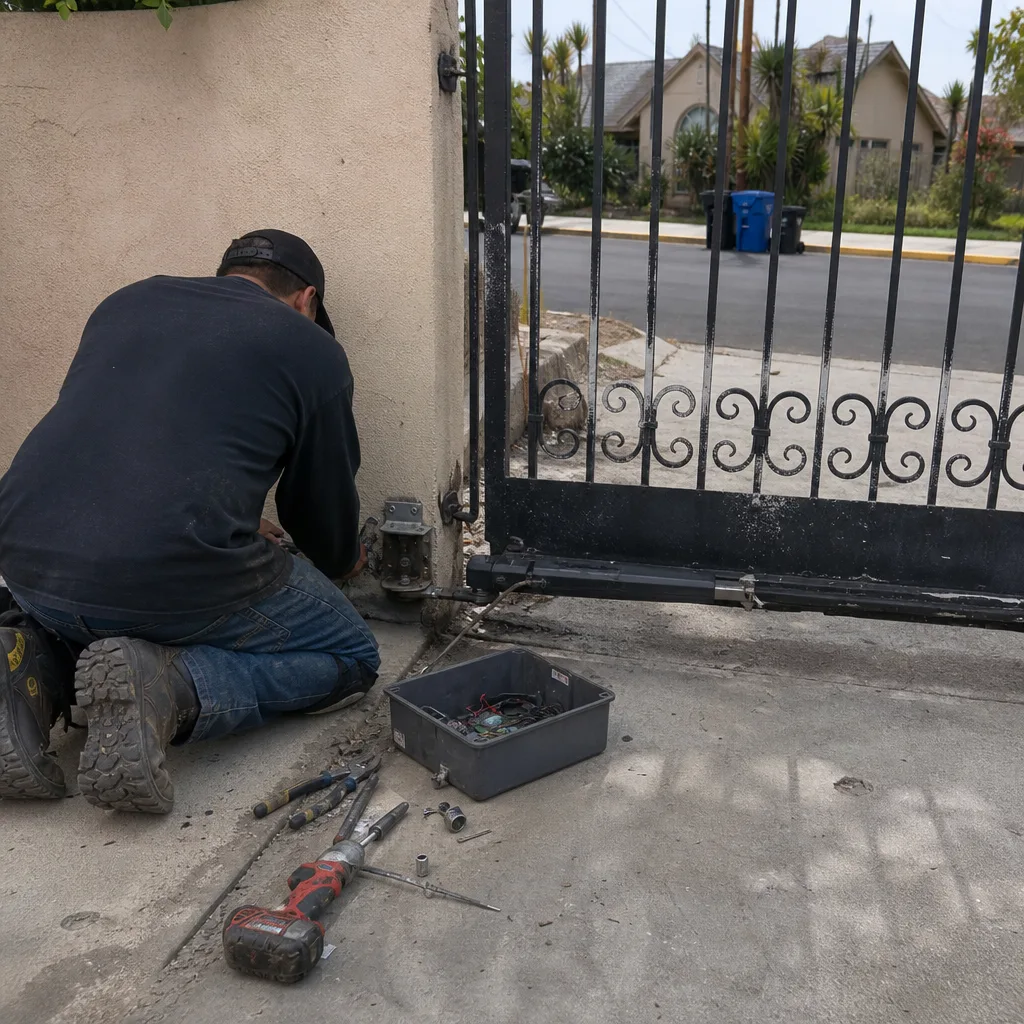 Before
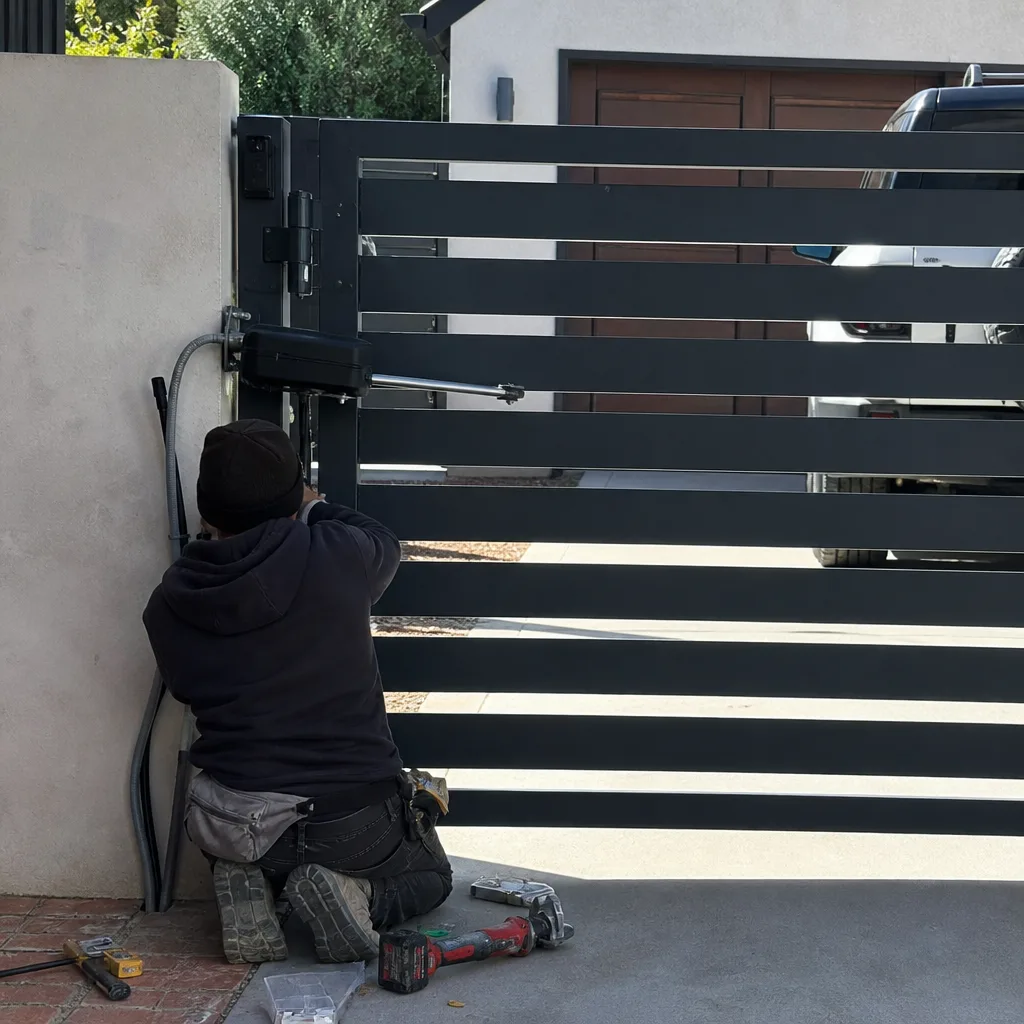 After
After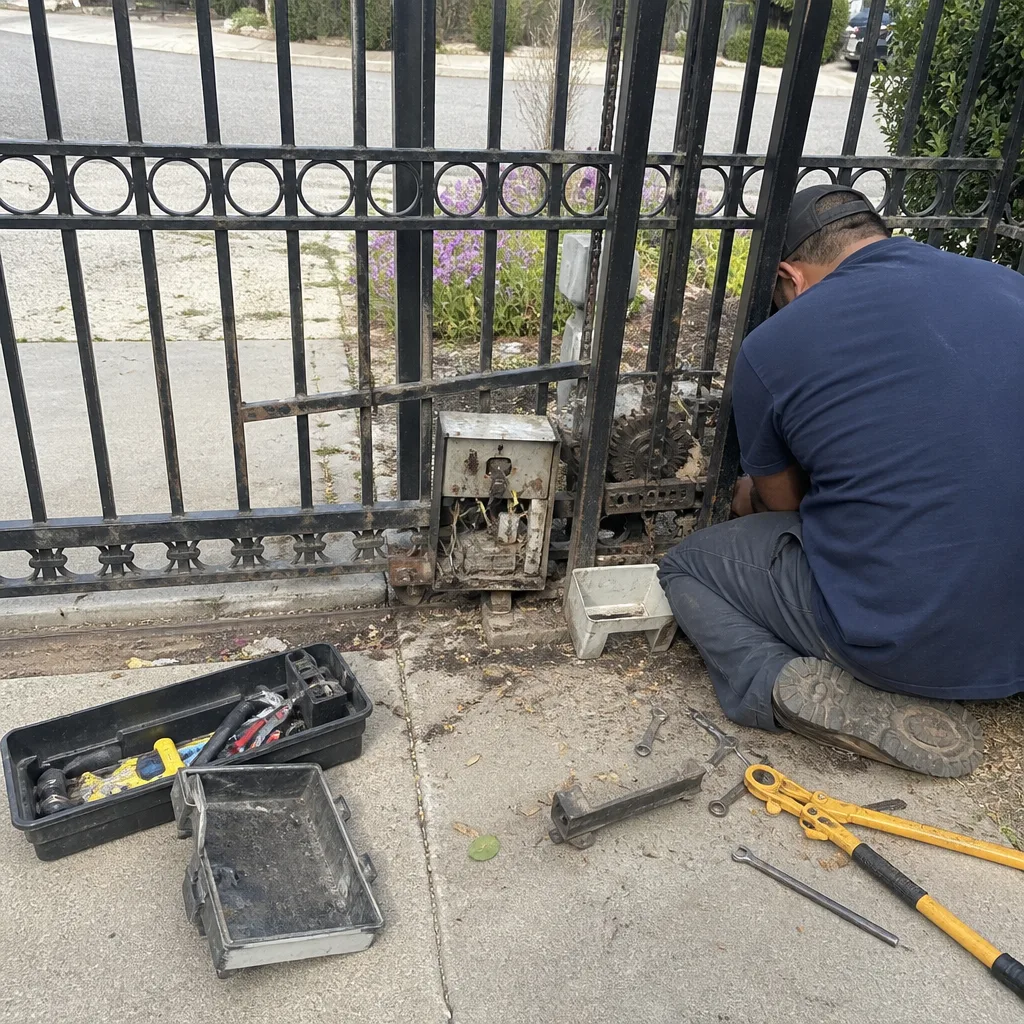 Before
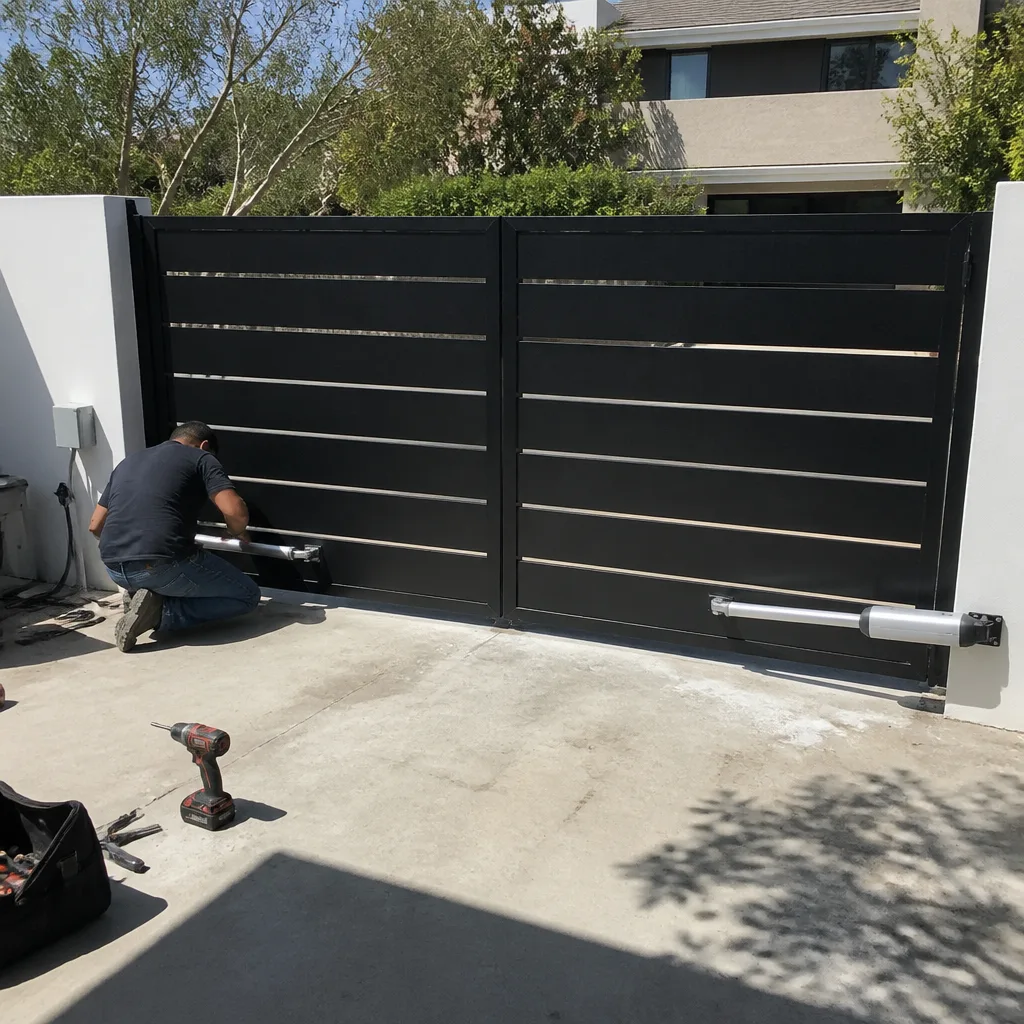 After
AfterGate Repair Warning Signs: A Los Angeles Homeowner’s Reference Guide
A gate that hesitates for two seconds before opening isn’t being slow. It’s drawing extra current to overcome a mechanical problem, and that extra current is burning out your operator’s capacitor. By the time the gate stops entirely, you’ve gone from a $180 fix to a $650 one. This guide walks you through the warning signs we see most often on Los Angeles properties, what each one means inside the gate, and how urgent the gate repair actually is.
Quick Answer
Most gate failures in Los Angeles announce themselves weeks or months in advance. The four signs that matter most are hesitation before opening, a grinding or scraping sound during travel, reversing mid-cycle for no reason, and a gate that opens but won’t latch closed. Each of these points to a specific underlying problem, and catching the first two early typically saves $300 to $500 compared to waiting for full failure.
Table of Contents
- How to Triage a Gate Problem: Cosmetic, Mechanical, Electrical, or Structural
- Hesitation and Stuttering: The Sign Most Homeowners Ignore
- Grinding, Scraping, and Squealing Sounds, Decoded
- Reversing Mid-Travel: What the Gate Is Trying to Tell You
- The Gate That Won’t Latch: Why This One Is an Emergency
- Out of Alignment vs. Out of Balance: Two Different Problems, Two Different Fixes
- Los Angeles-Specific Failure Patterns We See on Our Service Calls
- Common Mistakes to Avoid
- When to Call a Professional
- Frequently Asked Questions
How to Triage a Gate Problem: Cosmetic, Mechanical, Electrical, or Structural
Before you can decide whether to call a technician or keep an eye on things, it helps to sort what you’re seeing into one of four buckets. We use this same framework on every Los Angeles service call, because each category carries a different urgency level and a different cost range.
Cosmetic Signs
Peeling powder coat, surface rust spots, faded paint. These affect how the gate looks but not how it operates. Cosmetic issues can wait, though rust that’s left alone eventually becomes structural. In coastal Los Angeles neighborhoods like Playa del Rey and San Pedro, salt air turns surface rust into pitting corrosion faster than homeowners expect, often within two to three seasons.
Mechanical Signs
Hesitation, grinding sounds, a gate that sags on its hinges, a wheel that doesn’t roll smoothly in the track. Mechanical problems are progressive. They get worse every cycle, which means the repair cost climbs the longer you wait. Most mechanical repairs on residential gates in Los Angeles run $180 to $420, and they’re the most common category we see.
Electrical Signs
The gate doesn’t respond to the remote, the keypad works intermittently, the operator clicks but nothing moves, or the gate trips its breaker. Electrical problems on a gate operator can sometimes mean a simple fix like a blown fuse or a dead battery in a Mighty Mule control board, but they can also indicate a failing capacitor or a shorted transformer. A gate that works after it rains but not when it’s dry is a classic Los Angeles electrical problem, usually a ground fault or a connector that’s corroded just enough to be intermittent.
Structural Signs
Cracks in the post base, a post that leans, a hinge pulling away from the wall, or a gate that visibly sags and scrapes the ground. Structural problems are the costliest and the most urgent. They often mean the original post was undersized or set without proper concrete footing. We see this frequently on older Los Angeles homes where gate posts were installed in the 1970s and 1980s with little more than a bag of quick-set concrete.
Hesitation and Stuttering: The Sign Most Homeowners Ignore
When you press the remote and the gate waits a beat or two before moving, that pause is not the gate being lazy. Inside the operator is a capacitor, a component that stores energy and releases it to get the motor spinning. A healthy capacitor dumps its charge almost instantly, and the gate moves. A capacitor that’s degrading takes longer to build enough charge to start the motor, and every slow start generates heat inside the capacitor itself.
Heat is what kills capacitors. Each hesitant start shortens its remaining life, and eventually the capacitor fails completely. At that point the gate won’t move at all, and the operator’s control board may be damaged too. The economics are straightforward: replacing a capacitor on a standard residential swing gate in Los Angeles typically costs $180 to $280 parts and labor. Replacing a burned-out operator and control board from a LiftMaster or FAAC system runs $500 to $800 or more.
Stuttering is a related but different sign. If the gate starts, stops, starts again mid-travel, you’re usually looking at one of three things: a gear train in the operator that’s lost teeth, a limit switch that’s misadjusted and confusing the control board, or a power supply issue that’s delivering inconsistent voltage. Any of these means the gate is fighting itself on every open-and-close cycle.
The takeaway: hesitation is never normal. If your gate has always opened immediately and it now waits even half a second, have it checked. The fix at this stage is cheap compared to what comes next. We’d rather replace a capacitor on a scheduled visit at a written price than watch you spend three times that on an emergency call when the gate gives up entirely.
Grinding, Scraping, and Squealing Sounds, Decoded
Gates make noise when they’re healthy too, but it’s a smooth, consistent sound. When the sound changes character, the change tells you where to look. Here’s what we listen for on Los Angeles service calls.
Grinding
A gritty, gear-against-gear sound usually points to the operator’s gearbox. Most residential operators use a worm gear or a planetary gear assembly, and those gears are greased at the factory with the assumption that they’ll be re-greased during maintenance. Most never are. When the grease breaks down, metal starts wearing against metal. The fix, if caught early, is a clean-and-regrease or a gear replacement at $200 to $350. If ignored, the stripped gear takes out the motor shaft, and you’re replacing the entire operator.
Scraping
A scraping sound typically means something is dragging. On a sliding gate, it’s almost always a wheel bearing that’s seized or a track that’s shifted out of alignment from settling soil. In Los Angeles, where clay soil expands and contracts dramatically with the rainy season, this is particularly common. A scraping swing gate often means the gate has sagged enough to drag on the ground or catch on the paving. The repair can be as simple as adjusting hinges or replacing a wheel, usually $150 to $300, as long as you address it before the dragging action twists the gate frame itself.
Squealing
A high-pitched squeal during operation is often belt or pulley related on operators that use those components, but it can also be a hinge that has gone dry and begun to gall. Galling is metal transfer, the hinge pin actually microscopically welding itself to the hinge barrel. In coastal Los Angeles microclimates, salt-laden air accelerates this. A dry hinge gets lubricated and checked in fifteen minutes; a galled hinge requires drilling out and replacing the pin, which takes longer and costs more.
Reversing Mid-Travel: What the Gate Is Trying to Tell You
Modern gate operators are legally required to have an entrapment protection system, which means they sense resistance and reverse direction rather than crush whatever is in the way. When a gate reverses mid-travel with nothing in its path, the operator is detecting resistance it shouldn’t be feeling.
The most common causes are mechanical drag, a current sensor that’s set too sensitively, or a failing component inside the operator that’s drawing more current than the control board expects. A technician with a clamp meter can tell the difference in about ten minutes. The fix could be as simple as adjusting the force dial on a Linear or Elite control board, or it could mean tracking down a wheel that’s binding or a hinge that’s rusted stiff.
The important thing to know is that the reversing behavior is your operator’s built-in diagnostic tool. It’s telling you that the gate is working too hard. If you keep the reversing behavior going by repeatedly pressing the remote, you’re effectively making the gate push through whatever resistance it has detected, which compounds the wear and increases the repair bill.
The Gate That Won’t Latch: Why This One Is an Emergency
A gate that opens fine but won’t latch closed is a security and liability problem, not a minor inconvenience. Here’s what’s happening, in order of likelihood.
First, the post has shifted. The latch receiver and the latch itself are out of alignment, and the gate won’t close enough for the mechanism to engage. This can result from a post that’s loosening in clay soil, especially after Los Angeles rain cycles. Second, a component in the lock mechanism has failed, often a spring or a solenoid on an electric lock. Third, the gate has sagged, and the latch bar no longer meets the receiver at the right height.
The liability angle matters. A gate that won’t latch is a gate that can be opened by a strong breeze, a child, or anyone who pushes on it. For homeowners with pools, the situation is legally significant: California’s pool barrier laws require self-latching gates. A gate that doesn’t latch is a code violation and an attractive nuisance. We treat this as a same-visit repair whenever we can, because it genuinely is one of the few gate problems where waiting doesn’t just cost more later, it creates risk now. Expect to pay $140 to $280 for a latch alignment or replacement on a typical Los Angeles residential gate, depending on whether the post needs resetting.
Out of Alignment vs. Out of Balance: Two Different Problems, Two Different Fixes
Homeowners use these terms interchangeably, but they mean different things in the gate trade, and they’re addressed differently.
Out of Alignment
Alignment refers to the relationship of the gate in its track or its hinge axis. A sliding gate is out of alignment when the wheels are no longer riding the track squarely, which you’ll see as a gate that runs at a slight angle or wavers side to side as it travels. A swing gate is out of alignment when the hinge axis has shifted, usually because a post leans or the hinge screws have pulled loose in the wall.
Alignment repairs are geometric. We measure, adjust, shim, and re-secure. On a sliding gate, realigning the track and re-setting the wheels typically costs $250 to $450. On a swing gate, re-hanging and adjusting hinges is usually $180 to $350. These are the fixes that restore the gate to a clean, straight travel path.
Out of Balance
Balance means the gate’s weight is supported, not solely carried by the hinges. A properly balanced swing gate has most of its weight resting on the hinge posts, and the leaf distributes the load evenly across the hinge points. When a gate is out of balance, one hinge carries too much load, or the gate has sagged at the far end and now leans on the operator.
Balance fixes may require replacing hinges, adding a support wheel, or re-engineering the way the leaf hangs. They take longer, which is why we always begin with a specific written estimate rather than an hourly rate. An out-of-balance residential gate in Los Angeles might run $350 to $650 to correct properly, depending on how long it’s been sagging and what damage the sag has already done to the hinges and the operator.
Los Angeles-Specific Failure Patterns We See on Our Service Calls
Los Angeles is a big, varied place, and the geography affects gates in predictable ways. Here is what we encounter neighborhood by neighborhood.
Clay Soil and Post Movement in the Valleys
In Sherman Oaks, Encino, Tarzana, and much of the San Fernando Valley, the native soil is expansive clay. It swells when wet and shrinks when dry, and the movement works against any post that wasn’t set with proper depth and a proper concrete collar. We see posts that tested true in summer lean noticeably by February, after a winter of rain. When you see a post that tilts or a gate that no longer meets the latch, the likely cause in these neighborhoods is soil movement, not a hinge problem.
Coastal Corrosion in Beach Microclimates
Santa Monica, Venice, Marina del Rey, and the Palisades have salt in the air year-round. Iron hinges, exposed steel hardware, and any unpainted or damaged surface corrodes faster here than it does ten miles inland. Powder-coated aluminum gates survive reasonably well, but steel gates with scratches or stone chips become rust points that spread under the coating. We recommend an annual hardware inspection for coastal Los Angeles gates, the same way you’d treat a boat or an outdoor HVAC unit near the beach.
Canyon Properties and Wood Rot
In Laurel Canyon, Topanga, Benedict Canyon, and similar areas, gates often sit near irrigation lines, shade trees, and drainage paths. Wood gates here rot at the bottom rail and around hinge mortises first. A homeowner will see the gate sagging and assume the hinges failed, when the real problem is that the wood itself no longer holds the hinge screws. The repair involves replacing the affected rail or reinforcing the hinge point, not just tightening bolts. In wet winters, we see a cluster of these calls within weeks of each other.
Older Hillside Homes with Undersized Posts
Homes in the Hollywood Hills, Mount Washington, and Silver Lake built in the 1950s through 1970s often have ornamental gates on posts that were never engineered for a heavy electric operator. When an operator is retrofitted onto a post that’s too small or improperly footed, the vibration and repeated load eventually cracks the footing or bends the post cap. We see this as a leaning post, a gate that drags, or a post base with fresh cracks radiating outward.
Common Mistakes to Avoid
- Ignoring a change in sound. Grinding, scraping, and squealing noises almost never self-correct. There’s no amount of use that re-greases a gear or re-seats a hinge pin. Every cycle with a new sound is a cycle of accumulated wear.
- Lubricating the gate as a catch-all fix. Spray lubricant on a dry hinge is fine. But spraying lubricant into an operator, a track, or an electrical connection often makes problems worse by attracting dust and grit, or by contaminating components that weren’t designed for wet lubricants.
- Continuing to use a reversing gate. A gate that reverses mid-travel is following its safety programming. Forcing it through the cycle by repeated remote presses is running the machine against resistance, which compounds damage to the motor, gears, and control board.
- Waiting until the gate fails completely. A $220 hinge repair and a $700 operator replacement are two different projects. The first pays for the second, many times over, in a single year. The gate almost always tells you something is wrong before it stops entirely, and that’s the cheapest window to act.
- Assuming the operator is the problem. Most gate operators don’t fail on their own. They’re damaged by a mechanical problem that makes them work too hard: a sagging gate, a seized wheel, a binding hinge. If you replace the operator without fixing the mechanical root cause, the new operator is working against the same resistance and will fail the same way.
- Setting the force dial higher to push past the problem. This is a short-term workaround that creates a long-term problem. Higher force settings stress every component and can compromise the entrapment protection system required by code. We see operators burned out prematurely from exactly this practice.
When to Call a Professional
Any of the mechanical, electrical, or structural signs in this guide justifies a service call. The key threshold is this: if the gate is making a new sound, moving differently, or not latching, there is a specific mechanical or electrical reason, and a technician with the right experience and a clamp meter can find it in a single visit. If you’re seeing an open but unlatched gate, call the same day, not next week. Portcullis Gate Repair offers free estimates in Los Angeles, and every job includes a written price before any work starts. For how long electric gate repair takes, timelines vary by issue. Call (940) 412-7340 and a live person will answer, any hour, any day.
Frequently Asked Questions
The most common warning sign is hesitation before the gate starts moving when you press the remote. It usually means a failing capacitor is drawing extra current to start the motor, and the repair is far cheaper at this stage than after the capacitor fails and takes out the control board. Call (940) 412-7340 for an exact quote, and we’ll arrive at the time we committed to.
Most residential gate installations and repairs in Los Angeles run between $180 and $650, depending on what’s actually failed. A hinge adjustment or wheel replacement is usually $150 to $300, a capacitor or limit switch is $180 to $280, and a full operator replacement runs $500 to $800 or more. Every Portcullis job includes the price in writing before we begin, so there’s no surprise at the end.
We repair most gate problems on the first visit. Common mechanical repairs like hinge replacement, wheel replacement, latch alignment, capacitor swaps, and limit switch adjustments are handled same-visit on a standard service call. If a part isn’t on the truck, we’ll tell you exactly what to expect. Call (940) 412-7340 to schedule, and a live person answers around the clock.
A gate that opens but won’t latch usually means the latch and receiver are out of alignment, the lock mechanism has failed, or the gate has sagged enough that the latch bar no longer reaches the receiver. This is a security and liability issue, particularly for homes with pools under California’s self-latching gate requirements. The repair typically costs $140 to $280.
We service nine major gate-operator brands, including LiftMaster, FAAC, BFT, Linear, Viking, Ghost Controls, DoorKing, Elite, and Mighty Mule. The technician who arrives already knows the specific system on your property, so there’s no learning curve billed on your time. We also provide gate installation in Los Angeles and electric gate repair in Los Angeles for both residential and commercial properties.
Most mechanical repairs on a Los Angeles residential gate take one to two hours on site. Structural repairs that require re-setting posts or re-engineering hinges may take longer, and we’ll give you a specific time estimate along with the written price before any work starts. Every Portcullis job also includes the 365-Day Done Right Promise: if the repair fails inside a year, we come back and make it right at no charge.
A gate that grinds or squeals is not usually dangerous in itself, but a gate that reverses mid-travel or fails to latch is a safety and liability concern. Continued use of a noisy gate also compounds the mechanical wear and increases the eventual repair cost. If you’re unsure, describe the sound to us at (940) 412-7340 and we’ll tell you whether it needs a visit or can wait.
The Bottom Line
Gates in Los Angeles fail in a predictable sequence: a sound, a hesitation, a reversal or a latch problem, then a full stop. The gate tells you something is wrong for weeks before it gives up, and the repair cost rises at every stage. The cheapest approach is to act during the hesitation or noise stage, when a $180 capacitor or a $220 hinge adjustment solves the problem, rather than after it’s become a $650 operator replacement. The Kingswell Guarantee means every Portcullis repair includes a written price before the work, a real arrival window, a clean job site, and a written 365-day guarantee on the repair. If the repair fails inside that period, we return and fix it at no charge. That’s Gate Repair in Los Angeles done the way it should have been done the first time. Call (940) 412-7340 and we’ll tell you what we’re seeing, what it’ll cost, and when we can be there. For more on who we are and how we work, visit the Portcullis Gate Repair home page.
Written by Dean Prescott, Owner at Portcullis Gate Repair, serving Los Angeles since 2008. Browse our more guides & resources for additional gate maintenance tips.