
Last updated October 8, 2026
Free on-site gate assessment - hinges, posts, and your LiftMaster or Nice gate operator checked before anything is quoted
The assessment is free and the quote is the invoice.
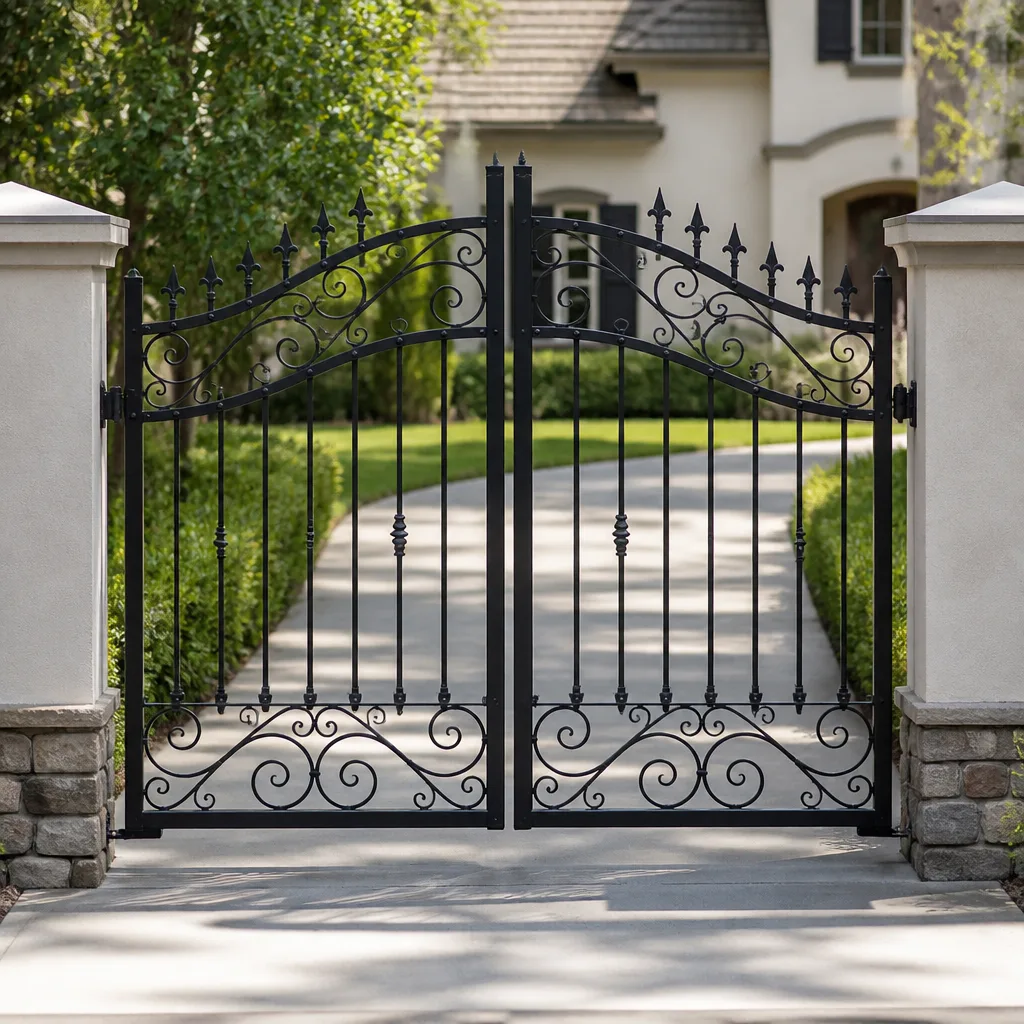
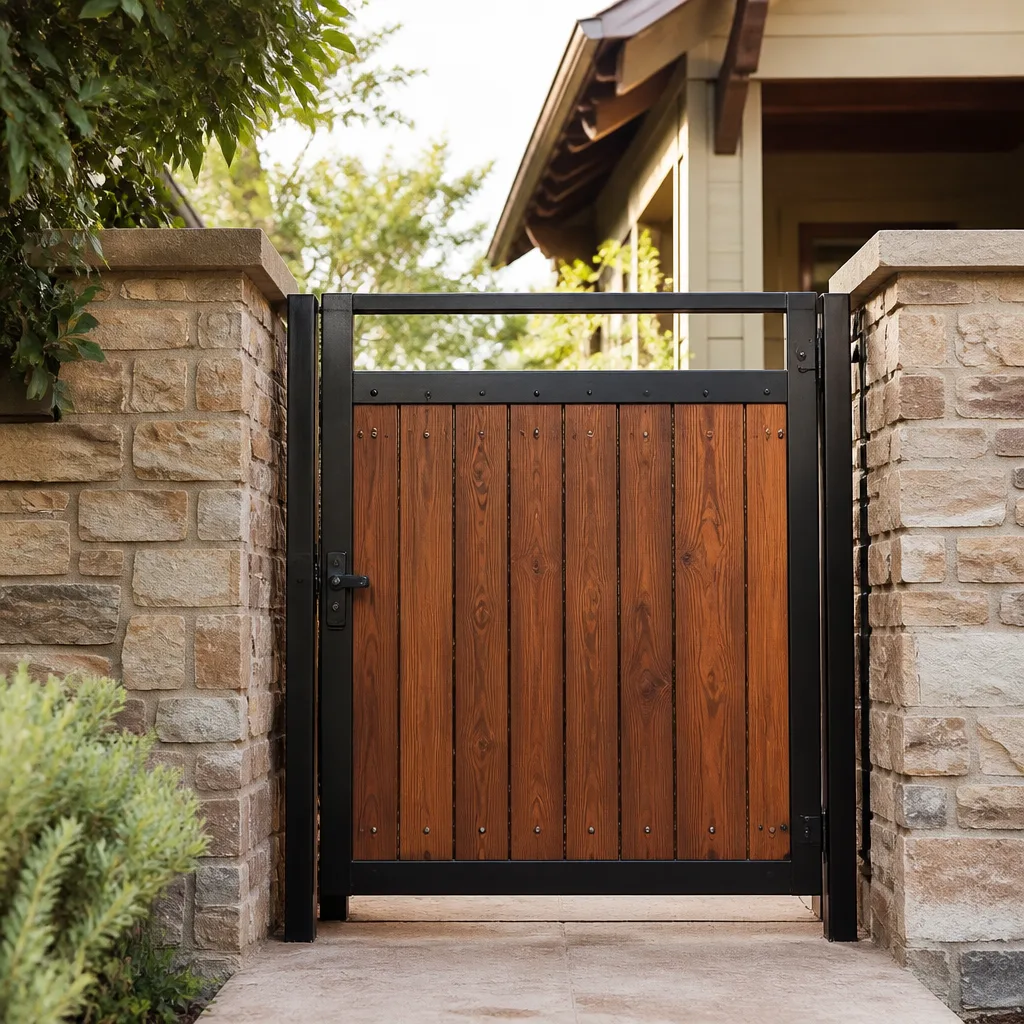
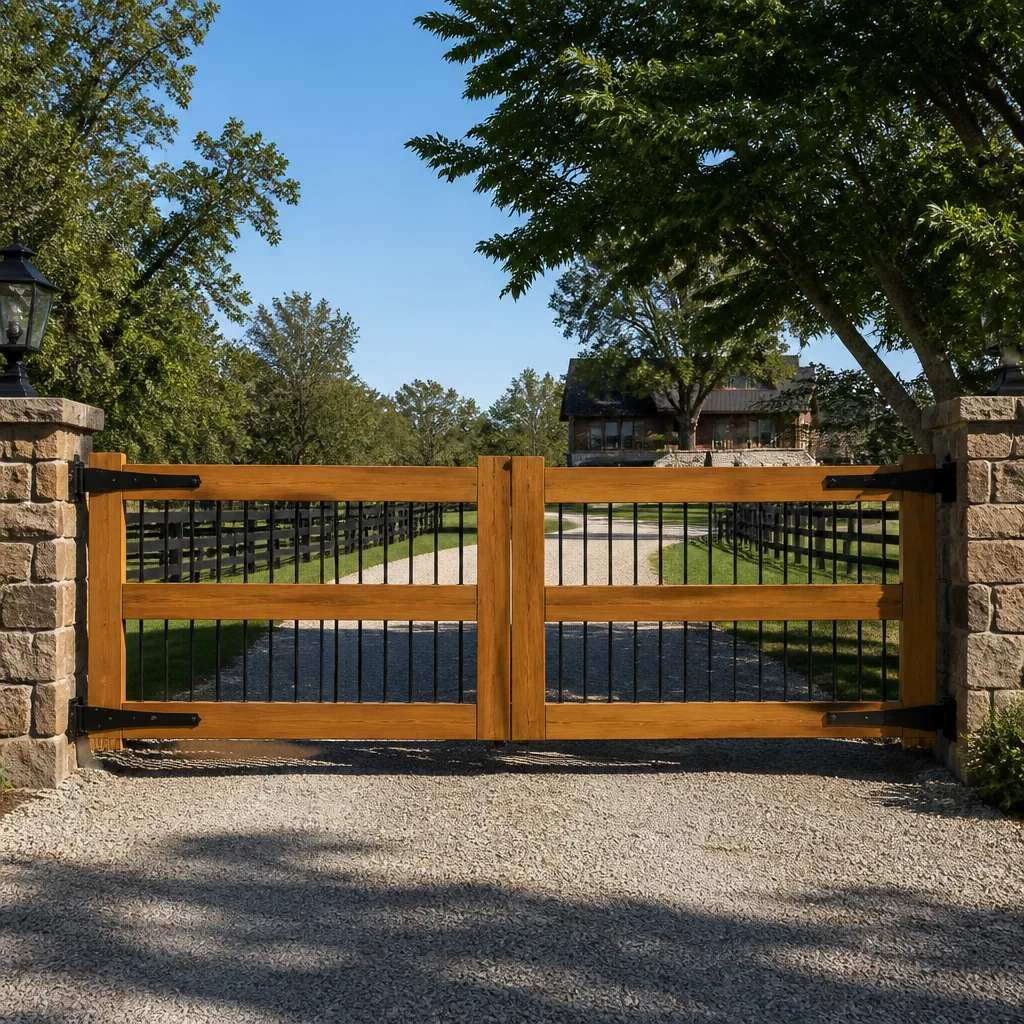
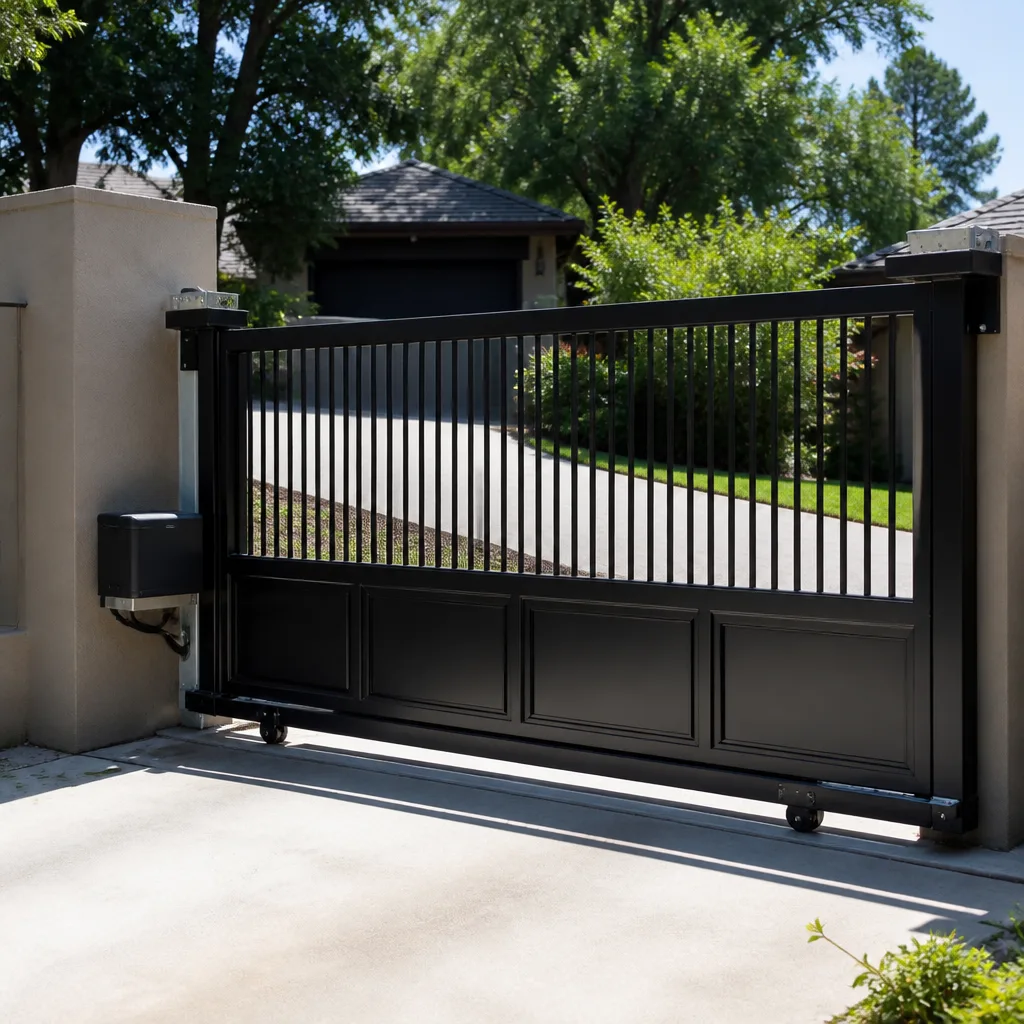
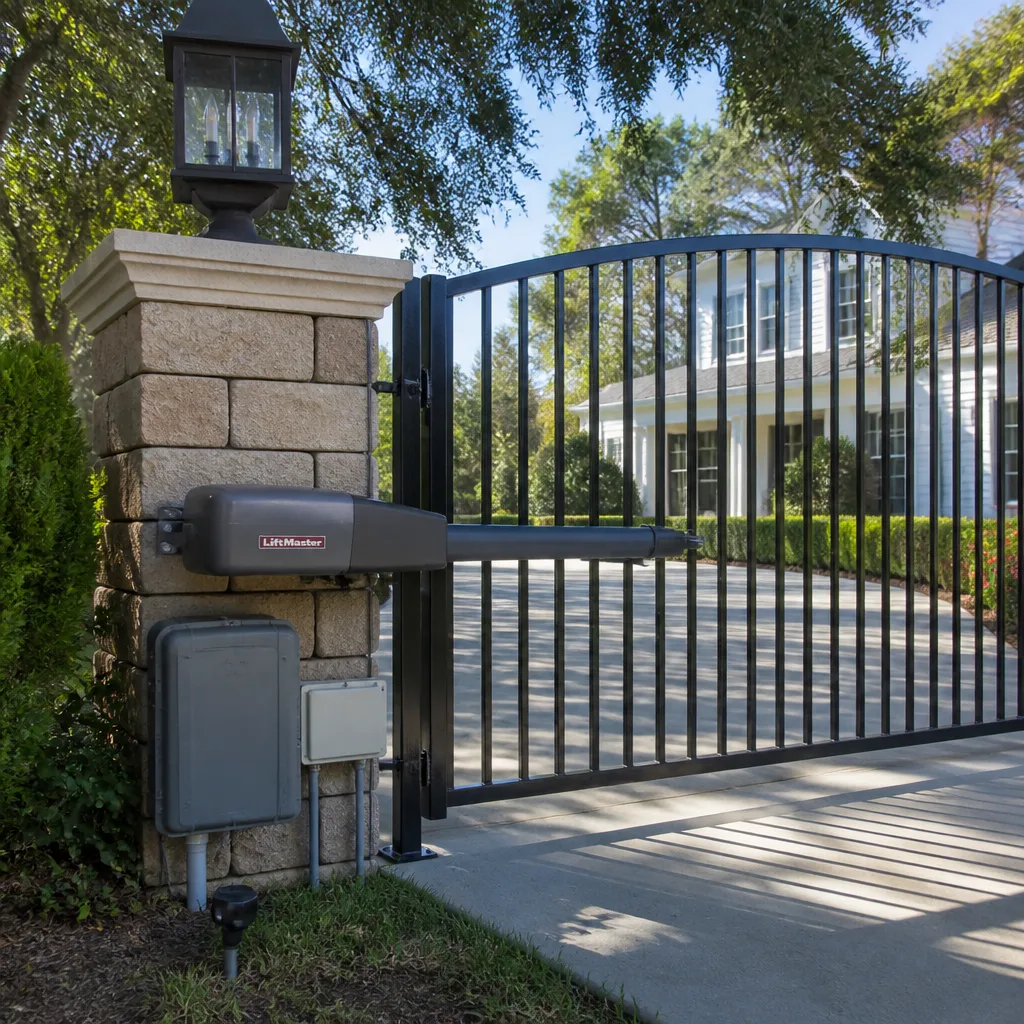
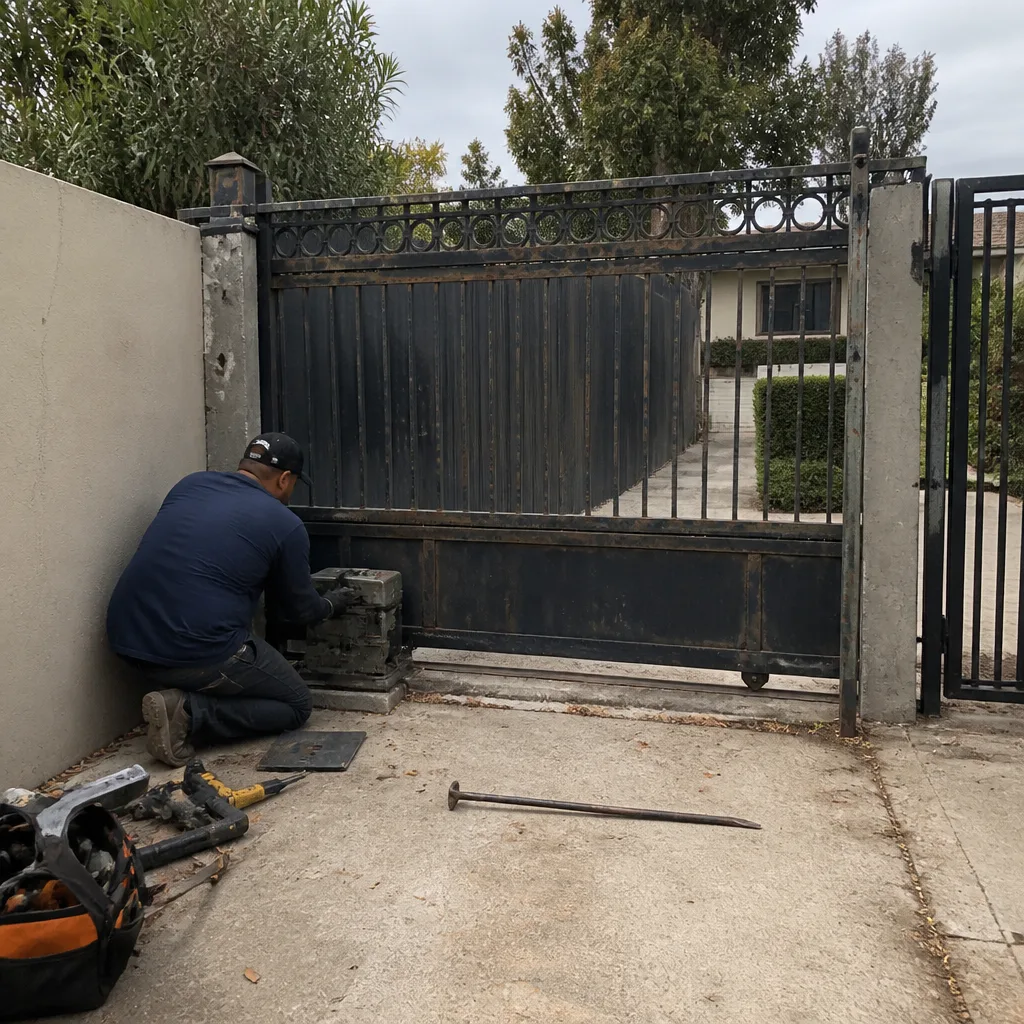 Before
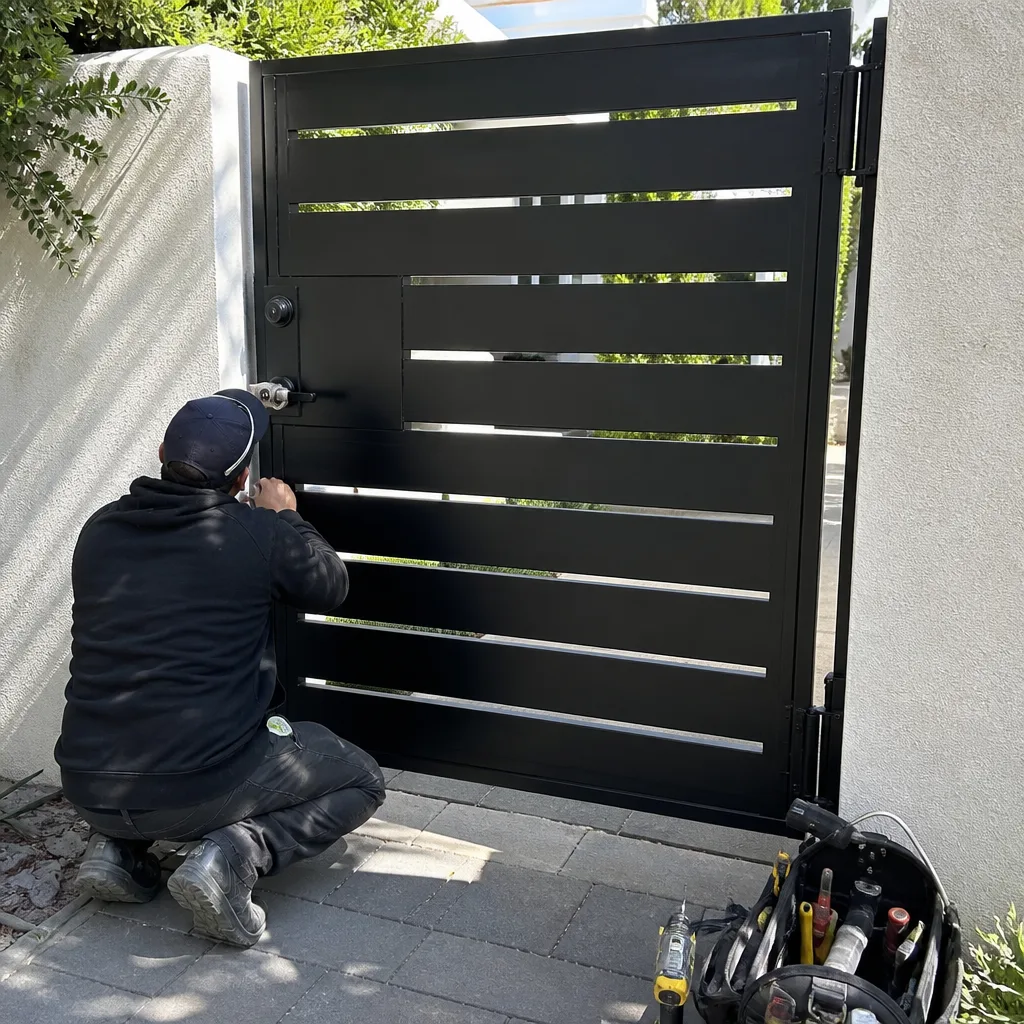 After
After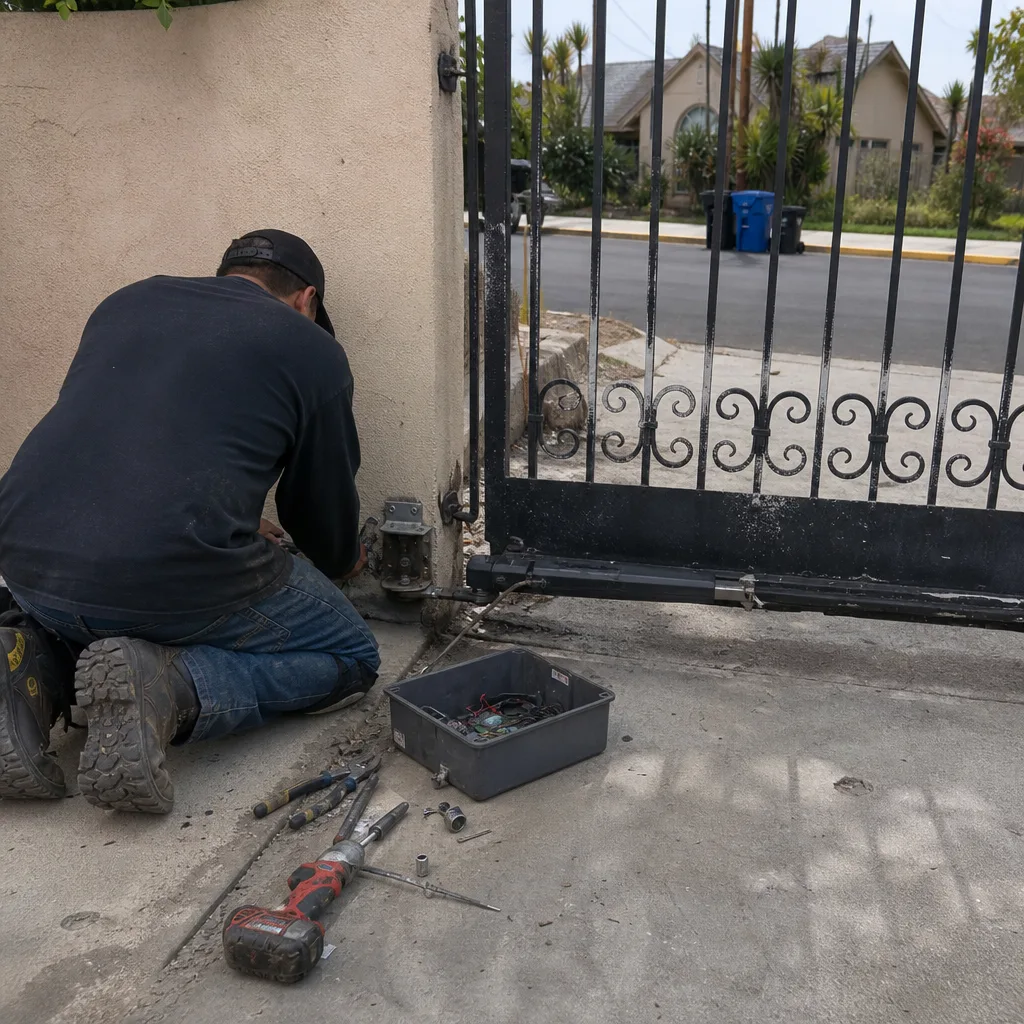 Before
 After
After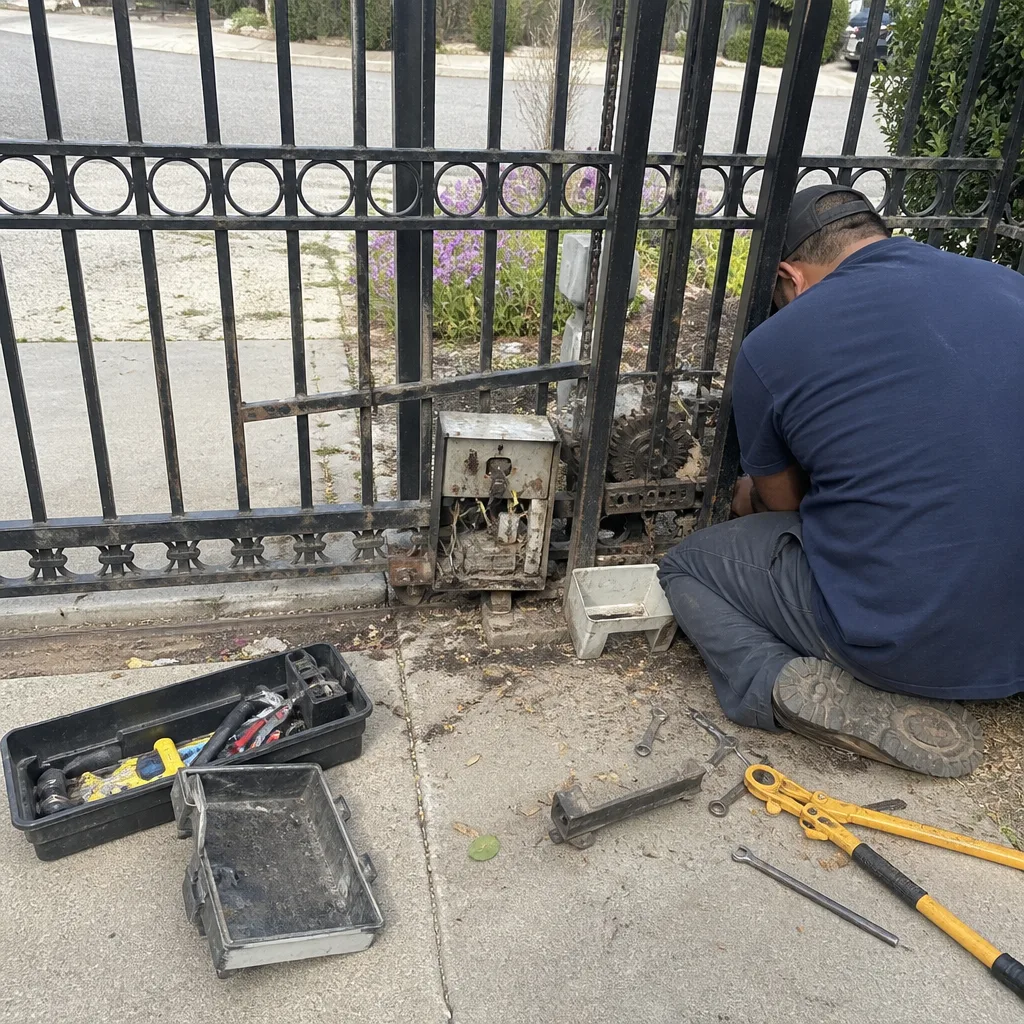 Before
 After
AfterThe Complete Guide to Gate Repair in Los Angeles
Here’s a statistic that surprises most Los Angeles homeowners: in our 17 years of service calls, the majority of gate repairs we perform are not first-time failures. They’re corrections of repairs someone else did wrong the first time. A new operator bolted to a failing post. A hinge greased instead of replaced. A control board swapped without resolving the short that fried the original. This guide exists because our Gate Repair services address more than one problem requiring one solution. It’s a dozen distinct failure categories, each shaped by your gate’s material, its drive system, and the micro-climate of your specific neighborhood, from the salt air of Playa del Rey to the Santa Ana grit of Pasadena. We’re going to walk through every major failure category, what it actually costs, and how to make sure you pay for the right fix once, not the wrong fix twice. Portcullis Gate Repair has served Los Angeles since 2008, and the repair patterns in this guide come from thousands of local jobs, not a textbook.
Quick Answer
Gate repair in Los Angeles typically costs between $180 and $850 for most mechanical fixes, while full operator replacements run $1,200 to $3,800 with labor. Same-day service is available for urgent failures, and a written price should always be provided before work starts. Most importantly, the correct repair depends entirely on diagnosing whether the failure is in the operator, the structure, or the access system, not just replacing whatever is easiest to reach.
Table of Contents
- Understanding the Three Failure Categories
- How Los Angeles Specifics Break Gates Differently
- Material-Specific Repair Logic: Steel, Wood, Aluminum, Vinyl
- What Gate Repair Really Costs in Los Angeles
- HOA, Hillside, and LADBS Permit Rules
- What a Written Price Should Include
- The Gate Operator Brands We Service Most
- Maintenance That Keeps a Repair From Becoming a Rebuild
Understanding the Three Failure Categories
Every gate repair call in Los Angeles falls into one of three buckets: operator failure, structural failure, or access-system failure. The problem is that most gate companies treat all three as the same thing because swapping a box is faster than diagnosing a symptom. Here’s the distinction that saves homeowners money.
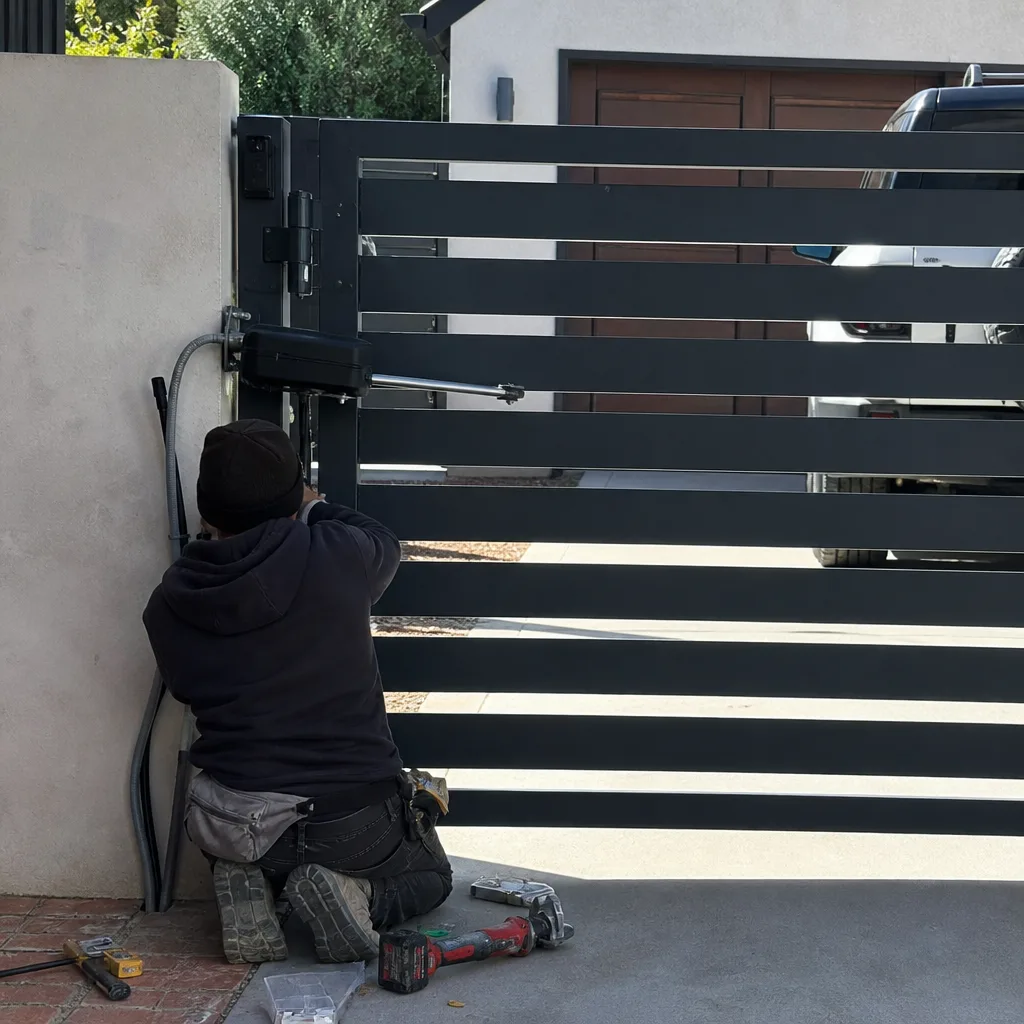
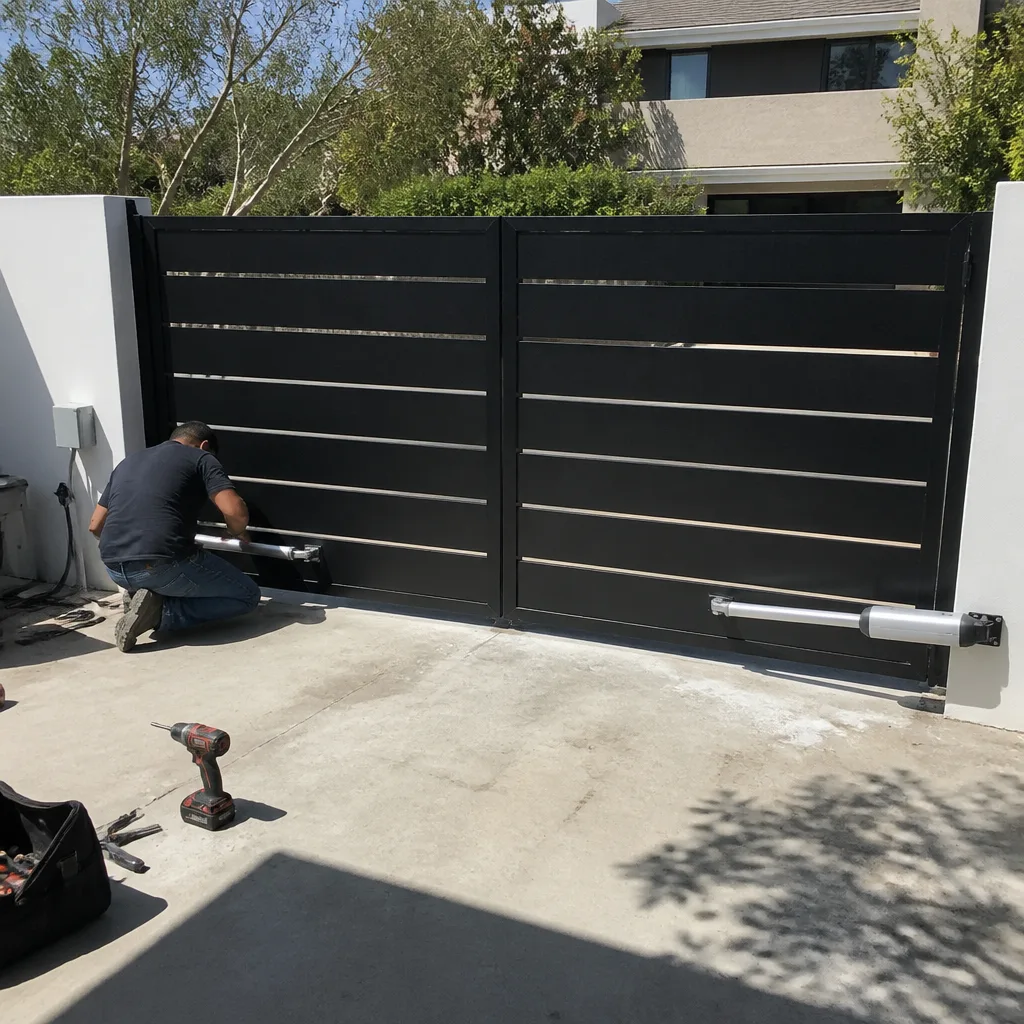
Operator failure is what most people picture: the motor isn’t turning, the gate stops halfway, or the remote stopped working. The operator is the motorized box (often called the gate opener) that drives the movement. But an operator rarely fails in isolation. It fails because something else forced it to work harder than it was designed to work. A misaligned hinge adds drag. A sagging post changes the load angle. When a technician replaces an operator without fixing the underlying drag, as covered in our guide to DIY vs Professional Electric Gate Repair: What’s Safe to Do Yourself, the new unit burns out faster than the old one did. In our experience, at least half of the “dead operators” we pull off Los Angeles gates show signs of being overworked by structural problems, not electrical failure.
Structural failure is everything physical that isn’t the motor: posts, hinges, wheels, track, chain, the gate frame itself. Los Angeles soil composition varies block to block, and hillside lots are notorious for slow post movement after rainy winters. A gate that scrapes the ground in June may have been perfectly level in October. Structural issues are usually the cheapest to fix individually, but the most expensive to ignore because they cascade into operator damage.
Access-system failure is the layer most companies never diagnose: keypads, intercoms, loop detectors, vehicle sensors, safety edges, and the wiring that connects them. A gate that won’t open from the street but opens fine from the house is an access-system problem, not an operator problem. Replacing a control board won’t fix a severed loop detector wire under the driveway. This category requires real diagnostic skill, which is why so many homeowners deal with three or four recurring “board replacements” when the actual problem is a $30 sensor.
We service all nine major operator brands in Los Angeles, including electric gate repairs that require the technician to understand both the drive system and the access layer. If a company can’t explain which category they’re fixing, they haven’t diagnosed the gate.
How Los Angeles Specifics Break Gates Differently
Los Angeles is not one climate. It’s a patchwork of micro-environments, and each one attacks gate components on different timelines. This is the context most national gate guides miss entirely.
Coastal salt air. From Santa Monica down through the South Bay and up into Malibu, marine air carries chloride ions that accelerate rust on steel and corrode electrical contacts. We regularly see gate hinge pins in Manhattan Beach and Playa del Rey with pitting that would take three times longer to develop in West Hollywood. For coastal properties, we recommend marine-grade stainless steel hardware on hinges and latches, sealed connectors on all low-voltage wiring, and an annual inspection for pitting on exposed metal. The salt is invisible until the day your hinge snaps because its internal bore has rusted to a third of its original thickness.
Santa Ana wind events. Every fall, the Santa Ana winds push 40-to-70-mph gusts through the canyons and foothills. Gates act as sails. A solid wood or composite gate catches enormous lateral force, and the fulcrum point is always the hinge side. If your gate uses hollow-core metal hinges or bolts that thread into the post without through-bolting, repeated wind loading creates micro-fractures around the fasteners. We’ve pulled gate hinges out of posts in Tarzana and Woodland Hills where the bolts looked fine externally but had been cycling back and forth for five seasons of Santa Ana events. The gate was hanging by rust and habit.
Hillside seismic micro-movement. Los Angeles sits on a web of fault lines, and hillside lots in areas like Silver Lake, Mount Washington, and the Hollywood Hills move continuously, not just during earthquakes. Soil creep shifts gate posts a few millimeters per year. A sliding gate with an inch of clearance when installed can be dragging by year three. If your gate was perfectly level after the last rainy season and now scrapes or binds, the post has moved, not the gate. The fix is re-shimming or resetting the post, not cranking the motor force higher. Cranking the force just burns out the operator faster.
Material-Specific Repair Logic: Steel, Wood, Aluminum, Vinyl
Gate material determines the repair approach more than almost anything else, because each material has its own failure profile in the Los Angeles climate.
Wrought iron and steel. The most common statement we hear from Westside and Valley homeowners is “It’s iron, it’ll last forever.” It won’t. Steel rusts, especially in coastal air. The classic failure points are the bottom rail (water pools there), the hinge weld points (stress concentration), and any decorative scrollwork where water sits in pockets. Surface rust is cosmetic. Flaking rust with visible material loss is structural. Repair for steel gates usually involves cutting out a rotted section, welding in new material, and re-coating with a rust-inhibiting primer and paint. The best repairs re-treat the entire gate, not just the patched area, because patch-only repairs create a paint seam that becomes the next rust starter.
Wood. Wood gates in Los Angeles contend with two opposite problems: drying and warping in our hot dry summers, and rot wherever soil or sprinkler spray touches the bottom edge. A wood gate that no longer closes flush usually hasn’t shifted, it’s warped. The fix depends on the warp direction. A slight bow can sometimes be corrected with tension rods or anti-sag hardware. A serious twist often means the frame rail has failed internally and needs replacement. We recommend sealing the bottom 6 inches of any wood gate that sits near lawn sprinklers, because that’s where LA rot consistently starts.
Aluminum. Aluminum doesn’t rust, which is why it’s common in beach communities. But aluminum is softer than steel and fatigues differently at weld points. Cracks in aluminum gates usually follow the weld line, and welding aluminum requires different equipment and filler material than steel. If an aluminum gate develops a crack, the worst thing you can do is let a welder who mostly works steel “take a crack at it,” because contaminated welds create brittle joins that snap exactly where the original crack was. Ask specifically for aluminum welding experience.
Vinyl and composite. Vinyl gates are popular because they’re low maintenance, but they have two LA-specific failure patterns. First, the material expands and contracts more than steel or aluminum with our big temperature swings between night and day. Second, vinyl gets brittle with UV exposure over a decade, and gates that looked fine start cracking at stress points. A cracked vinyl gate frame is rarely repairable in a satisfactory way; once the structural integrity is compromised, replacement is usually the honest recommendation, not patching.
What Gate Repair Really Costs in Los Angeles
We believe homeowners deserve real dollar ranges before they call. Here’s what we’ve seen across Los Angeles service calls in 2024 and 2025. These are ranges, not quotes, because every gate is different, but they’re honest ranges from actual jobs.
| Repair Type | Typical Range (Parts + Labor) |
|---|---|
| Hinge replacement (pair, standard steel) | $180 - $380 |
| Post re-shimming or resetting | $350 - $850 |
| Weld repair (minor crack, steel gate) | $220 - $450 |
| Control board replacement | $400 - $1,100 |
| Actuator (swing-arm operator) swap | $750 - $1,600 |
| Slide operator replacement | $1,200 - $2,400 |
| Full sliding gate operator replacement, installed | $1,600 - $3,800 |
| Photo-eye or safety-edge replacement | $180 - $420 |
| Loop detector replacement | $300 - $700 |
Every job we perform in Los Angeles involves a written price before any work starts. Not an estimate delivered verbally while the gate is disassembled. A written price with parts, labor, and any ancillary work itemized. If a company refuses to provide that before touching your gate, that’s a red flag, not a negotiation tactic.
One additional note: the cheapest repair is rarely the right one. A $150 hinge job that doesn’t address the sagging post that caused the hinge to fail means you’ll be calling again in six months. The written guarantee we issue with every repair matters more than the initial number, because it tells you exactly what happens if the fix doesn’t hold. Ours is the 365-Day Done Right Promise: if the repair fails inside the guarantee period, we come back and correct it at no charge. That guarantee is stamped on the invoice, in writing, every time.
HOA, Hillside, and LADBS Permit Rules
This section saves Los Angeles homeowners more money than almost any other, because nobody tells you about permitting issues until you’re already ankle-deep in a project.
What’s typically fine without a permit: Repairing or replacing existing gate components on the same footprint. Swapping an actuator, replacing a control board, re-welding a cracked hinge, or resetting a post within its current location are all considered maintenance and repair, not new construction. The Los Angeles Department of Building and Safety (LADBS) generally doesn’t require a permit for component-level repair work.
What may trigger permit requirements: Installing a new gate where none existed, especially if it includes permanent electrical wiring for an operator. LADBS electrical permits are required for any new low-voltage run that connects to a permanent power source. If you’re adding a new automated driveway gate on a hillside lot, as discussed in DIY vs Professional Gate Installation: What’s Safe to Do Yourself, the installation may also require engineering review for motorized gate safety standards, particularly for sliding gates that must have proper safety entrapment protection.
HOA overlay: Many Los Angeles neighborhoods with HOAs, from Beverlywood to Encino’s gated communities, have architectural standards that override the city’s minimums. Some HOAs restrict gate height, material, color, or even the type of operator you’re allowed to install. Some require matching the gate style of your neighbors. If you’re replacing a gate (not repairing one), check your HOA’s CC&Rs before ordering materials. We’ve seen neighbors’ gates bought, delivered, and then rejected by an HOA board over a paint finish.
Hillside setbacks: On hillside lots, gate posts that sit near the property line may need to comply with hillside grading regulations, especially if concrete footings are being poured or re-poured. A gate post that has shifted on a hillside lot often requires a deeper footing solution than flat-land lots, because the soil creep that moved the post in the first place will just move the patch job next year. The honest fix addresses the footing, not just the post.
When you get a quote, ask for the permit status. A company that knows Los Angeles building code will tell you upfront whether your specific project needs a permit or falls under maintenance, and that transparency is part of what a real gate repair service in Los Angeles should provide.
What a Written Price Should Include
We’ve built our entire reputation on the written price, because we’ve seen what happens to homeowners who trust a verbal estimate. Here’s the line-item breakdown every written gate repair quote in Los Angeles should contain.
1. The specific repair, not a category. “Gate repair” is not a line item. “Replace worn hinge set on left post, including new stainless steel hardware and weld cleanup” is a line item. If the quote doesn’t specify what’s being fixed, you can’t evaluate whether the price is fair, and you can’t hold the company accountable if the gate fails again.
2. Parts with brand and model where applicable. “Operator replacement” isn’t enough. A LiftMaster operator costs differently than a BFT, and the labor to install them differs too. The written quote should name the exact part being installed. We service many brands, including LiftMaster and Elite, and the written quote always specifies the exact unit.
3. Labor broken out from materials. This matters because it lets you see whether the company is charging more for parts (some mark up 200%) or more for labor. Honest companies are comfortable showing the split.
4. Disposal or cleanup of old parts. This is where hidden fees hide. A dead operator, a rusted gate section, a cracked post, none of those go in your blue bin. The quote should state what the company will do with them.
5. Warranty terms in writing. Not “guaranteed” spoken over the shoulder. The specific guarantee period, what it covers, and what it excludes should be typed on the quote and again on the invoice. Ours reads: every repair carries a written guarantee, and if the repair fails within 365 days, we return and correct it at no charge.
6. A statement that no work begins without your approval of the written number. This seems obvious, but many gate companies in Los Angeles show you a low verbal number, disassemble the gate, then announce the “real” price. The written price is your only protection against that practice.
Take a picture of the written quote. Keep it. If the final invoice doesn’t match the quoted price and you didn’t approve a change, that’s a dispute you’ll win because the paperwork works in your favor.
The Gate Operator Brands We Service Most
Different neighborhoods in Los Angeles trend toward different gate operator brands, and in many cases the original installer determines what’s still on the property. Here’s what we see most often on LA service calls.
LiftMaster has the largest installed base in Los Angeles residential properties. Parts are widely available, and most issues on LiftMaster units are control-board or gear related. A failing plastic gear inside an older LiftMaster produces a loud grinding sound that many people mistake for a broken motor. It’s actually a $40-to-$100 gear kit inside the unit, but many contractors will sell you a whole new operator instead of the gear. That’s the difference between a repair and an upsell.
Elite operators are common in the Valley for swinging driveway gates. These are robust units, but their weak point in the LA climate is the limit switch assembly, which drifts over time. A gate that opens too far or stops short on an Elite unit usually needs the limit switches re-adjusted, not the operator replaced.
Mighty Mule is the DIY-common brand, often installed by a previous homeowner looking to save money. These units work well when properly installed and lightly used, but they’re not designed for high-cycle commercial use, and they’re sensitive to low-voltage wiring that’s been nicked or partially severed. If a Mighty Mule won’t respond, check the battery and the wiring before assuming the board is dead.
FAAC operators are common in nicer hillside and luxury installations. They’re excellent equipment, but they require periodic hydraulic fluid checks on older models, and a FAAC that’s become sluggish often just needs the fluid level addressed. That’s a $150 service call, not a $2,000 operator replacement.
If you don’t know which brand you have, the operator box itself has a nameplate. Take a photo before you call, so the technician can arrive with the right parts the first time. That’s also why our techs carry stock for the nine brands we service, from LiftMaster and Elite on the residential side to BFT and FAAC on the commercial side, and we arrive knowing your specific system before the truck pulls up.
Maintenance That Keeps a Repair From Becoming a Rebuild
The lowest-cost gate repair in Los Angeles is the one you prevent. Here’s the maintenance schedule we recommend for every automated gate in Los Angeles, with more guides & resources available regardless of brand or material.
Every month (homeowner tasks): Visually inspect the gate path. Look for debris in the track (sliding gates), vegetation touching the gate edges (especially ivy and jasmine, which grow fast in LA and add drag), and any visible sag at the hinge side. Check that the safety photo-eyes are clean. A dirty photo-eye causes the gate to randomly stop or reverse, and it’s a 10-second wipe, not a repair.
Every six months: Lubricate hinges and rollers with a proper metal-safe lubricant. Do not use WD-40 as a hinge lubricant; it washes away in a month and leaves the joint dry. Use a silicone-based or lithium grease product. If your gate is on the coast, wipe down exposed metal and check for early rust spots. Touch up paint chips before they become pitting.
Every 12 months: Schedule a professional inspection. A technician should check operator force settings, test safety entrapment devices, measure the gap between gate and ground (to catch post movement early), and verify all wiring connections are sealed and corrosion-free. This is the single best money you’ll spend on any gate, because Los Angeles’s climate doesn’t kill gates suddenly. It kills them gradually, and the difference between a $300 adjustment and a $3,000 replacement is one annual inspection.
Common Mistakes to Avoid
- Replacing the operator without diagnosing the cause. A new operator on a gate with misaligned hinges or a sagging post will burn out the same way the old one did, often faster. We see this exact pattern on dozens of Los Angeles service calls every year.
- Painting over rust without treating it. A coat of paint over active rust looks fine for 90 days and then the rust blooms through. The rust must be neutralized or removed before paint, especially in coastal neighborhoods.
- Welding a cracked gate without stress-relieving the root cause. A crack in a steel gate almost always starts at a stress point. Weld the crack without reinforcing the joint, and the next crack appears right next to the weld.
- Ignoring a gate that scrapes the ground. Scraping means the post has moved or the hinges have worn. Both get worse, and they add load to the operator, which shortens its life significantly.
- Using a generic contractor for a specialized operator brand. A general handyman can fix a hinge, but when a control board on a LiftMaster or Elite unit is involved, you need someone who has actually worked on that brand. The learning curve is paid for in your labor hours.
- Skipping the annual safety test on automated gates. Los Angeles code requires motorized gates to have functioning safety entrapment protection. A gate that auto-reverses on an obstruction can still cause injury if the force settings are too high. Annual testing catches this before a liability claim does.
When to Call a Professional
Call a professional gate repair company when any of these occurs: the gate makes a new sound (grinding, squealing, or a thunk that wasn’t there before), the operator runs but the gate doesn’t move, the gate reverses randomly, the remote works from the house but not the street, or the gate has visible rust, cracks, or sag. None of these problems fix themselves, and almost all of them get more expensive the longer they’re ignored. Safety devices like photo-eyes and safety edges are not optional, and trying to bypass them is both dangerous and a code violation. Portcullis Gate Repair offers free estimates in Los Angeles, call (940) 412-7340, and every job starts with a written price before work begins.
Frequently Asked Questions
Most gate repairs in Los Angeles cost between $180 and $850 for typical mechanical or electrical component fixes. Full operator replacements run $1,200 to $3,800 installed. The exact price depends on the repair type, but the written price should always be provided before work begins. Call (940) 412-7340 for an exact quote, estimates are free.
Yes, we offer same-day service for most emergency gate repairs in Los Angeles, and our phone is answered by a live person 24 hours a day, 7 days a week. Urgent failures like a gate stuck open, a gate that won’t secure, or a safety system malfunction are prioritized for same-day dispatch. Call (940) 412-7340 and we’ll give you a real arrival window, not an all-day maybe.
Because the underlying problem was never fixed. Most repeat operator failures we see in Los Angeles trace back to a structural issue, a misaligned post, worn hinges, or a wiring fault that put extra load on the new operator. Any shop that swaps a box without diagnosing the cause is setting you up for the same repair in another year. We diagnose the entire gate, not just the part that stopped working.
For most component-level repairs, replacing an operator, control board, hinge, or sensor, no permit is required. New gate construction or new permanent electrical runs may trigger LADBS permit requirements, and HOA rules may add restrictions. A reputable Los Angeles gate company will tell you the permit status on every quote.
A real warranty is written, specific, and names the repair. It states the coverage period, what’s included, and what happens if the repair fails. Our repair warranty is the 365-Day Done Right Promise: every repair carries a written guarantee, and if it fails inside the guarantee period, we return and fix it at no charge. If a company won’t put the warranty in writing, treat that as no warranty at all.
In our experience across Los Angeles, the most common single failure is a gate that’s dragging or binding due to post movement or hinge wear, which then overloads the operator. The second most common is a dead control board that was actually killed by a wiring fault or short. Both categories benefit from real diagnosis, not a parts swap. Call (940) 412-7340 for an exact quote, estimates are free.
The Bottom Line
Gate repair in Los Angeles is never about fixing one broken part in isolation. It’s about understanding why the part failed, what the LA environment did to accelerate the failure, and whether the repair addresses the root cause or just postpones the next breakdown. The right company writes the price down before work starts, specifies exactly what will be replaced, and backs the repair with a written guarantee. The wrong company swaps boxes and hopes you won’t notice when it fails again. If you’re dealing with a gate that’s been repaired once and already failing, we can help. Gate installation in Los Angeles, whether replacement or repair, starts with a diagnosis, not a sales pitch. Call Portcullis Gate Repair at (940) 412-7340 for a free estimate and a written price before any work begins.
Written by Dean Prescott, Owner at Portcullis Gate Repair, serving Los Angeles since 2008.