
Last updated October 8, 2026
Free on-site gate assessment - hinges, posts, and your LiftMaster or Nice gate operator checked before anything is quoted
The assessment is free and the quote is the invoice.
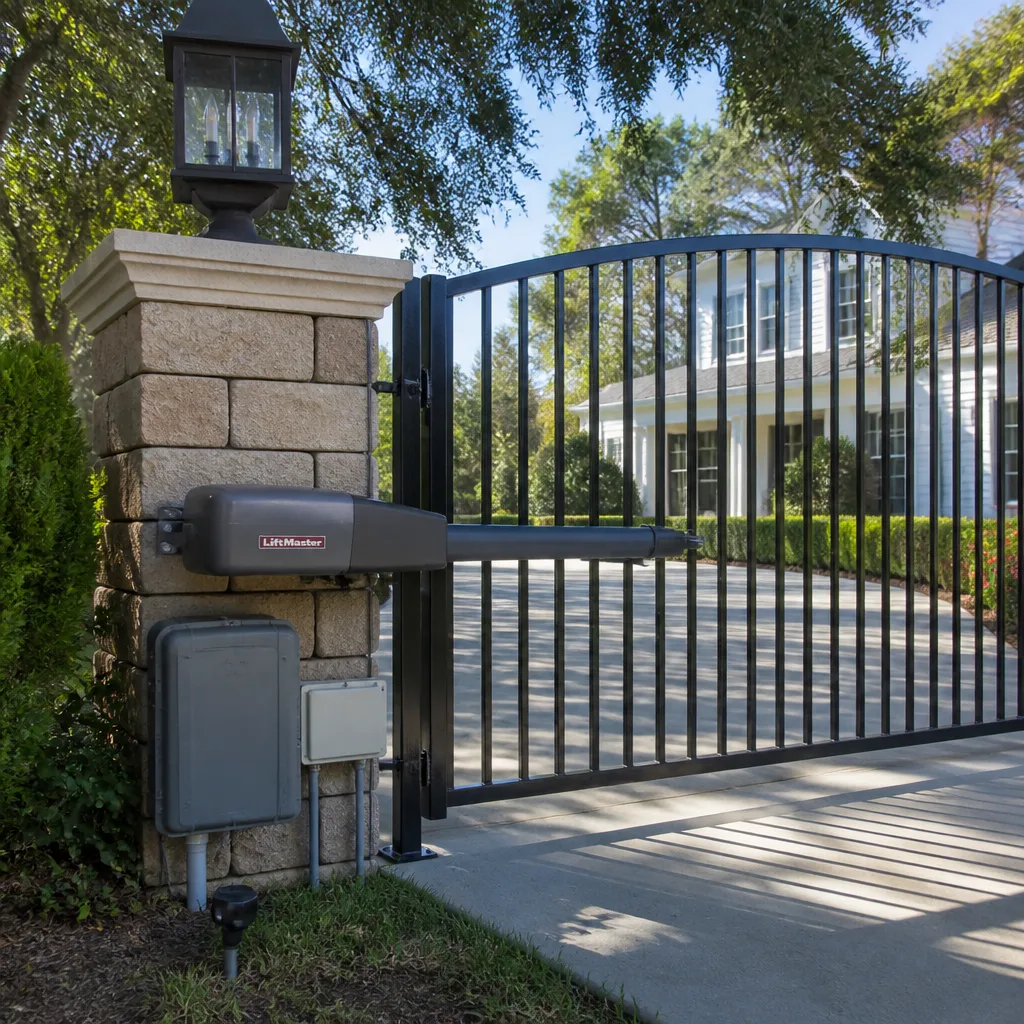
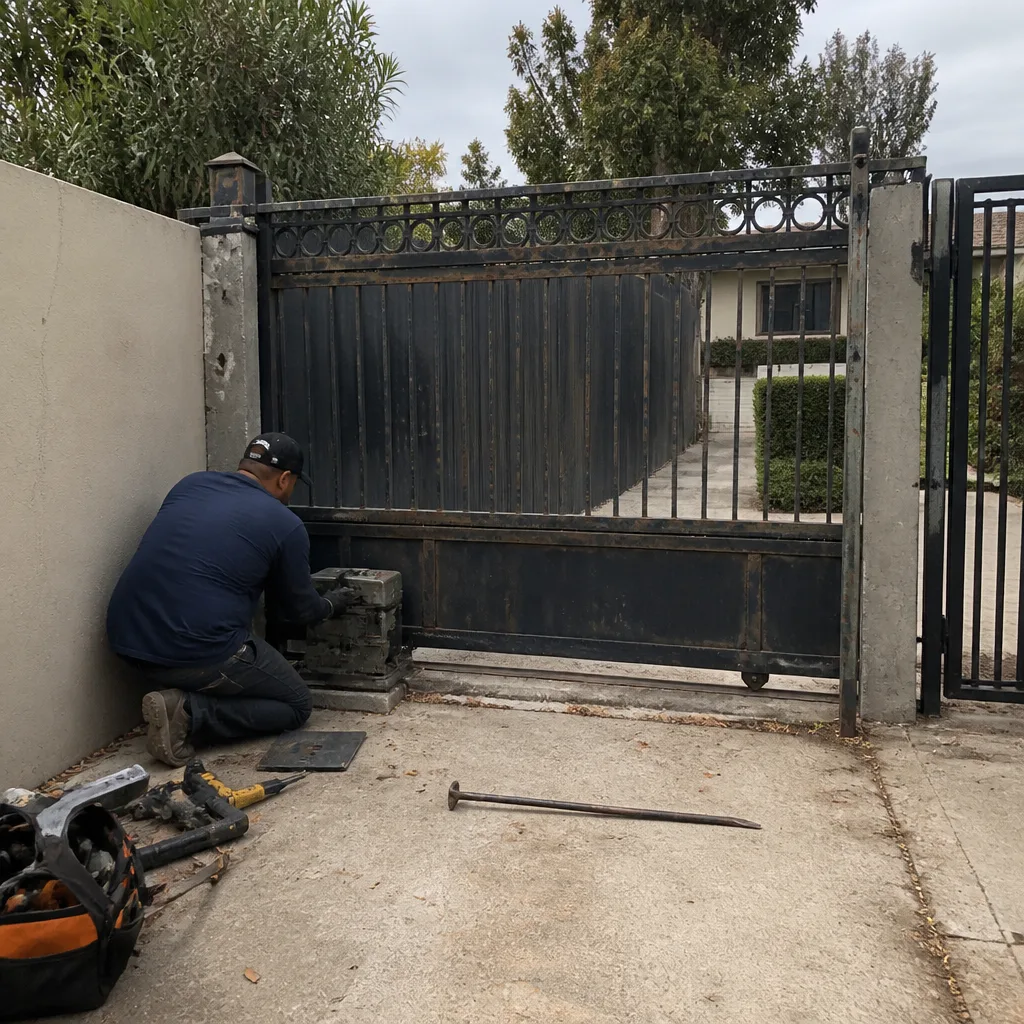 Before
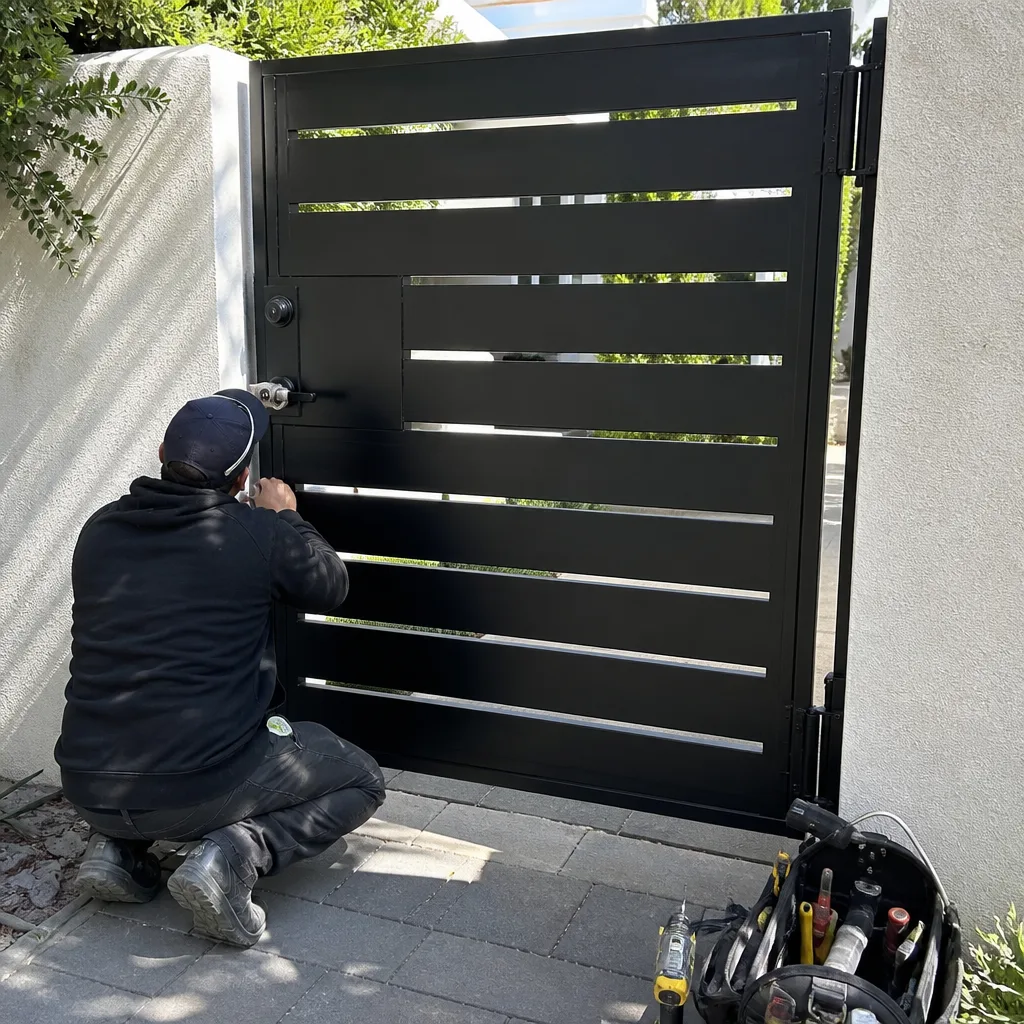 After
After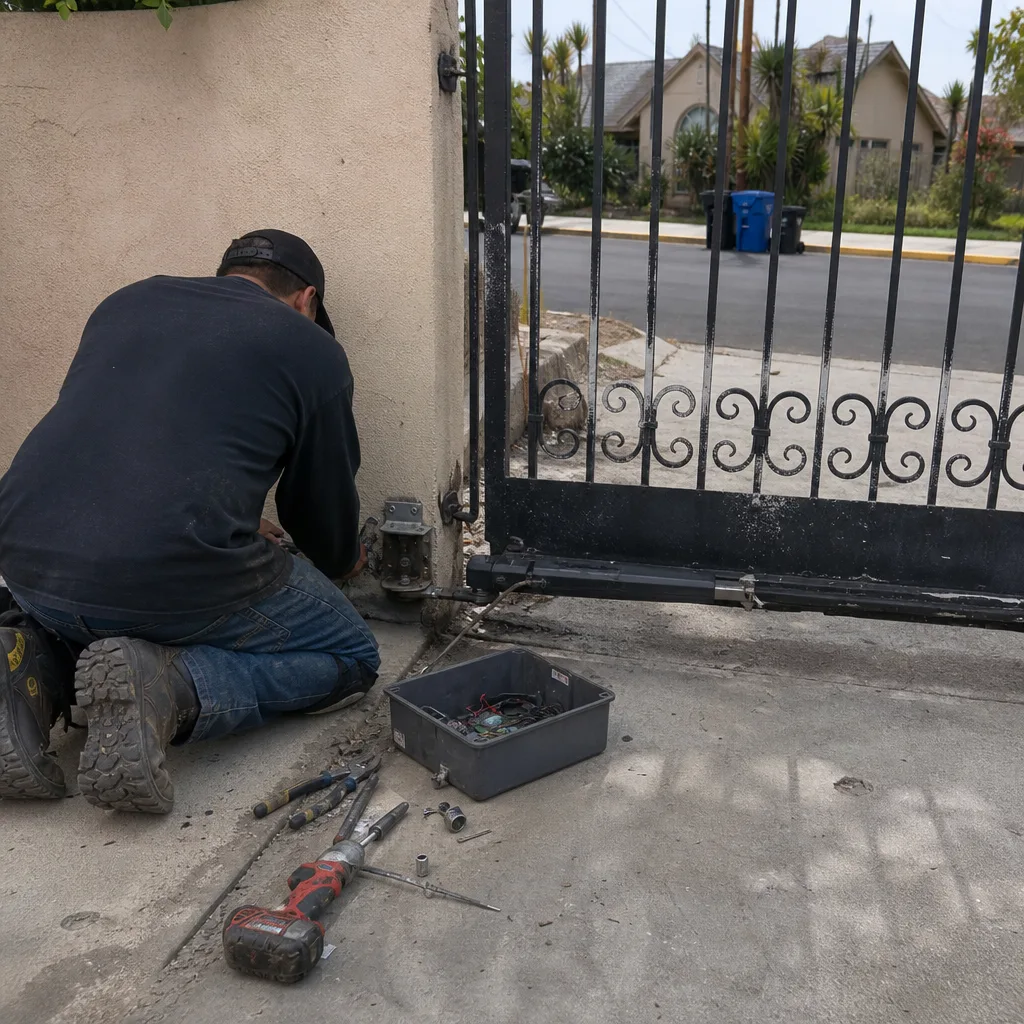 Before
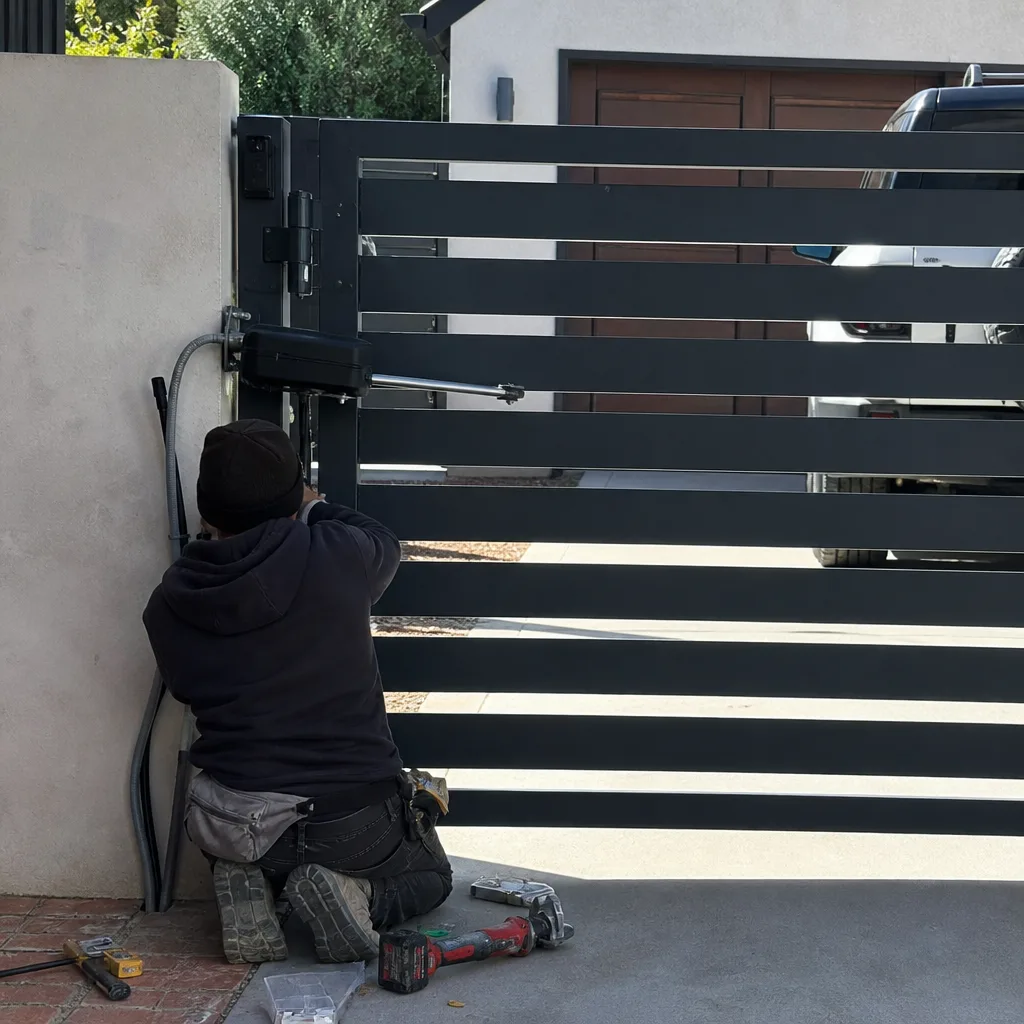 After
After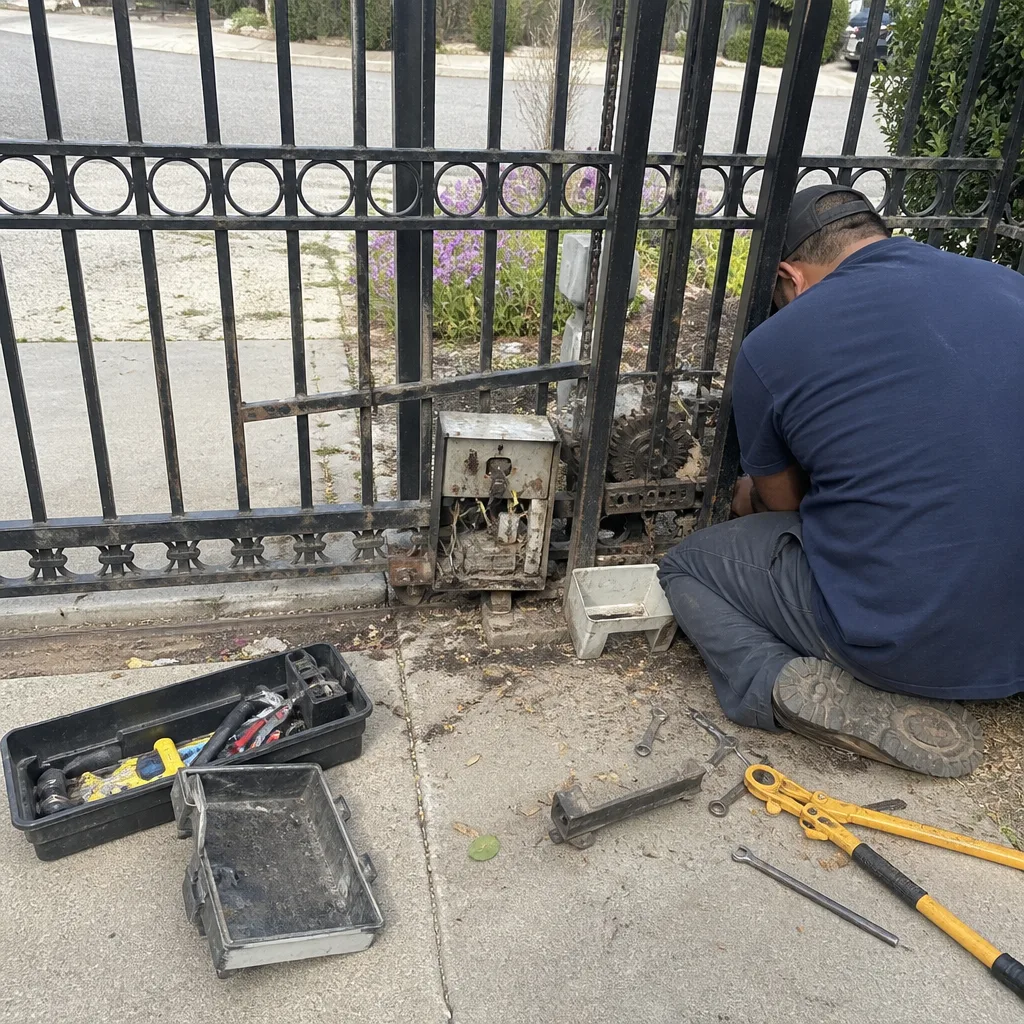 Before
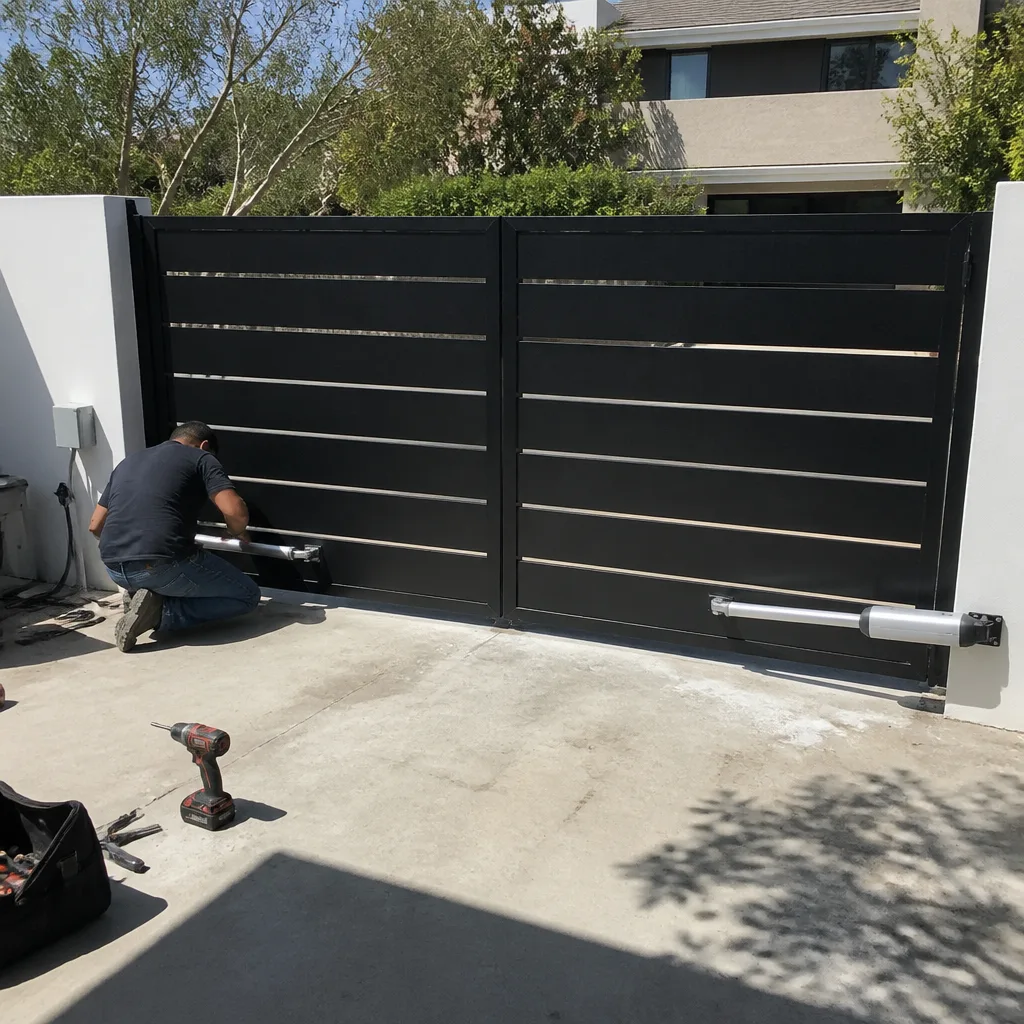 After
AfterDIY vs Professional Gate Installation: What’s Safe to Do Yourself
Here’s a number most Los Angeles homeowners never hear until it’s too late: UL 325. That’s the national safety standard for automated gates, and it exists because entrapment accidents maim and kill people every year. If your homemade gate install crushes a child’s arm, “I built it myself” won’t stand up in court. This guide walks you through exactly what you can safely build with your own two hands, what you should hire out, and where Los Angeles code draws the line. For a deeper look at what’s safe to tackle yourself, see our DIY vs Professional Gate Repair: What’s Safe to Do Yourself. By the end, you’ll know the real costs, the real risks, and the three installation tasks that separate a weekend project from a liability lawsuit.
Quick Answer
A manual pedestrian gate under 6 feet tall on wood posts is a reasonable DIY project for a competent homeowner. An automated driveway gate is not, because UL 325 entrapment protection, electrical rough-in, and post footing engineering make mistakes expensive and dangerous. In Los Angeles, unpermitted automated gate installations can become a mandatory removal order when you sell the house, so the safe split is this: do the carpentry if you must, hire the automation and the concrete work. For professional help, explore our Gate Installation services.
Table of Contents
- The Liability Ceiling: What UL 325 Actually Requires
- What’s Genuinely Safe to DIY: Manual Pedestrian Gates
- What Most DIYers Get Wrong: Automated Driveway Gates
- Los Angeles Permits and Inspection Realities
- The Three Tasks Where Amateur Error Causes Injury
- What Installation Actually Costs in Los Angeles
- How to Use a Written Quote to Pressure-Test a Contractor
- Common Mistakes to Avoid
- When to Call a Professional
- Frequently Asked Questions
For context on where this guide comes from: we’ve been servicing gates in the Los Angeles area since 2008. We’ve pulled apart DIY installs in Cheviot Hills, Brentwood, and the San Fernando Valley that looked fine from the street and were ticking time bombs underneath. What follows is what we’ve learned from those jobs, plus the standards that govern safe installations regardless of who turns the wrench.
The Liability Ceiling: What UL 325 Actually Requires
UL 325 is a safety standard published by Underwriters Laboratories covering automated gate systems. Los Angeles adopted it by reference into the building code, which means an automated gate installed here without UL 325 compliance is not just unsafe, it’s illegal. The standard governs entrapment protection: the sensors, edges, and force limits that stop a moving gate before it crushes a person. Compliance during installation means the installer must verify that the gate reverses or stops when it encounters an obstruction at multiple points along its travel path, not just at the closed position.
Most DIY installers have never heard of UL 325. That’s not a criticism of their work ethic. It’s a reflection of how specialized gate automation has become. The standard requires two independent forms of entrapment protection on most automated gates: a monitored safety edge or photo eye, plus a secondary device like a reversing mechanism calibrated to a specific force threshold. Getting that calibration right requires a force gauge and an understanding of motor torque curves. Guessing at it is how fingers get severed.
Here’s what compliance actually requires during installation, in plain terms:
- Entrapment sensors tested at multiple points along the gate’s full travel, not just at the latch post.
- Force limitation calibrated to the specific gate weight and swing arc, so the motor reverses before crushing force exceeds safe limits.
- Warning signage mounted on both sides of the gate where pedestrians might pass.
- Photo eyes or safety edges installed and verified as monitored devices, meaning the system detects a wiring fault and shuts down rather than failing silent.
- Wire routing done in conduit rated for burial or exposure, with connections sealed against the Los Angeles wet season that starts every November.
From a liability standpoint, the property owner bears the legal responsibility for a gate that injures someone. Not the neighbor kid who wired it for $200. Not the handyman who “does gates on the side.” The owner. Premises liability in California doesn’t care whether you knew about UL 325. It cares whether the entrapment protection was installed correctly. That’s the ceiling we’re talking about.
What’s Genuinely Safe to DIY: Manual Pedestrian Gates
We’re not going to tell you every gate project requires a truck with a logo on it. That would be dishonest, and it would insult the capable homeowners who call us for automation but built their own fence line. A manual pedestrian gate, the kind that swings open with your hand, is a reasonable weekend project when it meets certain conditions. The key word is manual. No motor, no sensors, no electricity, no entrapment risk. Just hinges, latch, and lumber.
Here’s the honest DIY scope in Los Angeles:
- Gate width under 4 feet. Wider than that, and the gate’s weight starts to torque the hinge posts. You’d need steel-reinforced posts or engineered hinges, which pushes you out of weekend-warrior territory.
- Post holes dug below the frost line and set in concrete. Los Angeles doesn’t have a deep frost line the way Chicago does, but we do have expansive clay soils that shift with rain. A 4×4 post set 2 feet deep with a bag of Quikrete is the minimum in most LA neighborhoods. In hillside areas like Mount Washington or Baldwin Hills, you may need deeper footings because the slope adds lateral pressure when the gate swings full arc.
- Pressure-treated lumber or powder-coated steel. Untreated pine rots at the post base within two or three winters in Los Angeles’s wet-dry cycle. If you’re building with wood, use pressure-treated posts and either cedar or redwood for the frame. If you’re going steel, have the frame welded or use a bolt-together kit rated for exterior use.
- Self-closing hinges with a soft-close feature. A slamming pedestrian gate is how fingers get pinched, even without a motor. Spend the extra $20 on spring-loaded hinges with a damper.
The materials for a simple manual gate in Los Angeles run $150 to $400 depending on width, hardware quality, and whether you’re painting or staining. That’s the project where DIY genuinely saves you money. The labor to hire it out would run $500 to $1,200 in most LA neighborhoods, so there’s real savings to grab if you’re comfortable with a level and a post-hole digger.
But here’s the thing we tell every Los Angeles homeowner who calls us after attempting a DIY gate: the gate you build by hand is fine as a gate. It becomes a liability the moment someone attaches a motor to it. If there’s any chance you’ll want automation later, run conduit under the gate opening now, even if you leave it empty. Digging that trench later, after the concrete has cured, triples the labor cost.
What Most DIYers Get Wrong: Automated Driveway Gates
An automated driveway gate is a different species from a manual pedestrian gate. The motorized arm that pushes the gate open is called an actuator, and it exerts several hundred pounds of force at the hinge point. A mistake in mounting the actuator means the gate can shear a bolt, swing free, and take out a car bumper or a person. We’ve seen this play out in Encino, Sherman Oaks, and Westchester: a homeowner mounts a gate opener from a big-box store, the gate works for six months, then the actuator mount fails because it was lag-bolted into wood siding instead of through-bolted to a steel post. The gate swings into traffic on Ventura Boulevard. That’s not a hypothetical.
The DIY ceiling on automated gates isn’t about carpentry skill. It’s about three things most homeowners don’t have: concrete engineering knowledge, electrical rough-in experience, and access to the force-calibration tools UL 325 requires. You can buy a LiftMaster or Ghost Controls opener online. You cannot buy the training to install it safely. The instruction manual is not a substitute for the force gauge test, and it certainly doesn’t cover what to do when your gate’s swing arc intersects a sloped driveway, which is half of Los Angeles.
Specific failure modes we see from DIY automated gate installs:
- Motor size mismatched to gate weight. A residential opener rated for 400 pounds can’t safely move a 600-pound steel driveway gate. The motor burns out within a year, and the gate stalls mid-travel, leaving you stuck outside or inside your own property.
- Sensor placement wrong. Photo eyes aimed too high or too low miss a child on a bike or a dog running through the gate’s arc. Entrapment sensors belong at the leading and trailing edges of the gate’s travel, not just wherever it’s convenient to mount them.
- Post footings too shallow. An automated gate’s post takes all the torque of the motor pushing against the gate’s weight. A footing that’s 18 inches deep instead of 36 inches will start to lean within two years. In hillside Los Angeles neighborhoods, the lean comes faster because gravity doesn’t negotiate with concrete.
- Wiring run without conduit. Direct-burial romex or, worse, an extension cord run through the bushes, is a fire hazard when the insulation degrades. Los Angeles’s wet winters and dry summers cycle that insulation hard. A gate opener on an ungrounded, unconduited line is a hazard waiting for the January rain.
The honest truth: if your driveway gate is automated, hire the installation. If you’re comfortable with the manual gate build, do that yourself and call an expert for the automation. That’s the split that keeps you safe, keeps you legal, and keeps your home insurable.
Los Angeles Permits and Inspection Realities
Los Angeles requires a building permit for most automated gate installations, and many manual gate installations that exceed a certain height or abut a public right-of-way. The permit exists for good reason: the city wants a record that the gate’s footings meet seismic standards and the automation meets UL 325. When you sell your house, the buyer’s inspector will check for unpermitted work. An unpermitted automated gate in Los Angeles can become a mandatory removal order at resale. That means you pay to tear out the gate, restore the driveway, and pay a contractor to do it again with a permit. The DIY money you saved evaporates, plus interest.
Here’s the Los Angeles-specific reality most guides skip: LA’s permitting process for gates varies by whether the gate is on a slope, how close it sits to the property line, and whether it faces a public street or a private alley. A gate that swings outward over a public sidewalk is a different permit category, and in most Los Angeles neighborhoods, outward-swinging driveway gates over sidewalks are restricted or prohibited outright because of the pedestrian hazard. If you install one anyway, the city can issue a code violation, and your homeowner’s insurance can deny a claim if the gate injures a pedestrian passing on the sidewalk.
Our technicians pull permits for the jobs that need them, and we tell homeowners when a job doesn’t need one. That transparency is part of the reason people call Portcullis Gate Repair home when they’re not sure where the line is. The rule of thumb for Los Angeles: any automated gate, any gate over 6 feet tall, any gate within 3 feet of a public sidewalk, and any gate that will be connected to household electrical power probably needs a permit. The city’s Department of Building and Safety will confirm over the phone, and the call is free.
If you’re weighing a DIY gate installation in Los Angeles, add the permit question to your planning before you buy materials. Unpermitted work gets flagged at resale, and the fix is never cheaper than the permit would have been.
The Three Tasks Where Amateur Error Causes Injury
Not all gate installation mistakes are equal. A crooked latch is an annoyance. A misaligned gate is a cosmetic problem. But three specific tasks carry injury risk when done wrong, not just warranty-voiding annoyance. Here they are, in order of danger to human bodies.
1. Post Depth and Footing Design
The gate post carries the full weight of the gate plus the dynamic force of opening and closing. An automated gate adds the motor’s torque to that equation. An undersized or shallow footing means the post leans, the gate drags, and eventually the post shears at the concrete line. When a 400-pound gate falls, it falls on whatever is underneath it. That’s usually a car. Sometimes it’s a person. Proper footing in Los Angeles means digging below the expansive clay layer into stable soil, using rebar-reinforced concrete, and letting it cure before hanging the gate. The standard depth in most LA neighborhoods is 3 feet for a driveway gate post, more on slopes. Most DIY installs we’ve been called to repair after a failure stopped at 18 to 24 inches.
2. Operator Mounting and Torque Management
The operator, or opener, is the motorized unit that drives the gate. The actuator is the arm that physically pushes it open. Both must be mounted to a rigid, plumb surface with hardware rated for the torque involved. Lag bolts into wood siding are a common DIY approach, and they fail catastrophically. The actuator’s pushing force is concentrated at the mounting bracket, and when that bracket tears free, the gate becomes an uncontrolled swinging object. The mounting surface should be steel or concrete, through-bolted or welded. In our Los Angeles service territory, we see actuator mount failures most often on gates that face busy streets, because the vibration from passing traffic accelerates hardware fatigue.
3. Entrapment Sensor Placement
The sensors that stop a gate when something crosses its path are the line between safe and fatal. UL 325 requires entrapment protection at every point where the gate’s moving edge could crush or pin a person. That means photo eyes at the gate opening, safety edges on the leading edge of the gate panel, and force reversals calibrated to the gate’s actual weight. Most DIY installers mount one photo eye at the wrong height and call it done. That leaves the trailing edge, the hinge-side pinch point, and the bottom gap completely unprotected. A child’s arm fits through a 4-inch gap. An engineer’s spec sheet knows that. Most YouTube tutorials don’t.
These three tasks are where the injury risk lives. The carpentry, the latch, the paint, those are all recoverable from a mistake. But a gate that falls, an actuator that shears, or a sensor that fails to stop the gate, those aren’t recoverable. That’s the DIY ceiling we keep coming back to. It’s not about skill. It’s about what happens when the skill runs out.
What Installation Actually Costs in Los Angeles
Let’s talk real numbers, because the cost question drives most DIY decisions. If you’re weighing whether to build it yourself, you need an honest baseline for what a professional installation costs in the Los Angeles market.
- Manual pedestrian gate, wood construction: $800 to $2,200 installed, including posts, hardware, and paint or stain. DIY materials: $150 to $400. Genuine savings here if you’re handy.
- Manual driveway gate, steel or aluminum: $2,500 to $6,000 installed. The price range is wide because driveway gates range from a simple 10-foot aluminum panel to a 16-foot custom steel gate with ornamental work.
- Automated single swing gate: $4,500 to $9,000 installed. The cost includes the operator, the actuator, entrapment protection, electrical rough-in, and permit. Most swing-gate actuator swaps run $800 to $1,500 parts and labor if you’re replacing an existing operator rather than doing a fresh install.
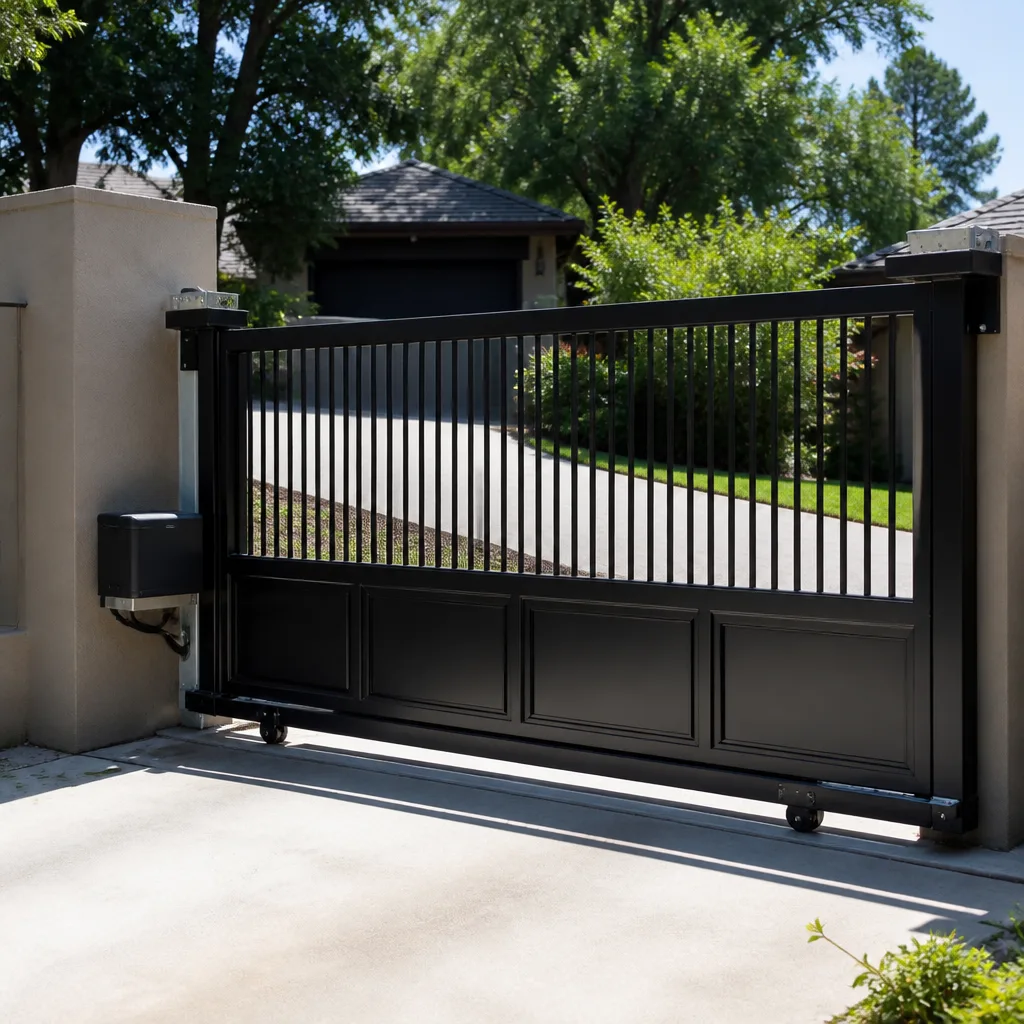
- Automated sliding gate: $6,000 to $14,000 installed. Sliding gates need a track, a motor, and a concrete base, and the labor is substantially higher than swing gates because of the ground work involved.
- Electrical rough-in alone: $800 to $2,000, depending on trenching distance from the panel to the gate and whether the run goes under pavement or through landscaping.
Those are Los Angeles prices, and they reflect the local cost of skilled labor, the permit fees, and the reality that our crews are driving in LA traffic. A company that quotes significantly under these ranges is either cutting something out of scope or planning to hit you with a change order mid-job. The written quote should match the work, not understate it.
One specific Los Angeles factor: many older homes in neighborhoods like Silver Lake, Echo Park, and the San Fernando Valley pre-1980s have electrical panels that are already maxed out. An automated gate needs a dedicated circuit, and if your panel can’t take another breaker, you’re looking at a subpanel installation, which adds $1,500 to $3,000. That’s the kind of thing a good contractor flags during the quote, not after the concrete is poured.
If you’re comparing a professional quote to your DIY cost estimate, make sure you’re comparing the same scope. A DIY automated gate that skips the permit, skips UL 325 compliance, and skips the dedicated circuit is not the same project as a professional installation. It’s a different project with different risks and different resale consequences.
How to Use a Written Quote to Pressure-Test a Contractor
A written installation quote is a diagnostic tool. It tells you whether the contractor knows the gate trade or is winging it. Here’s how to read one, line by line, based on what we’ve seen across hundreds of Los Angeles gate projects.
Line items that should appear on a complete automated gate installation quote:
- Site survey and measurements with the specific gate width, height, weight, and swing direction. If the quote doesn’t show measurements, the contractor didn’t take them.
- Footing excavation with depth and diameter specified. “Dig holes and set posts” without dimensions is a red flag.
- Concrete volume and cure time estimate. Concrete needs 3 to 7 days to cure before the gate is hung. A contractor who says the gate goes up same-day as the concrete is cutting corners.
- Gate material and construction spec. Steel gauge, aluminum thickness, finish type. “Aluminum gate” without gauge means nothing.
- Operator brand and model. LiftMaster, FAAC, BFT, or Linear, with the specific model number. If the quote just says “electric opener,” ask for the model.
- Entrapment protection devices listed separately: photo eyes, safety edges, force calibration. UL 325 compliance should be stated in writing.
- Electrical rough-in with trenching distance and circuit requirements specified.
- Permit fees listed as a line item or explicitly included. If the quote ignores permits for an automated gate in Los Angeles, walk away.
- Warranty terms in writing, including what’s covered and for how long.
Omissions that signal a cut-corner bid:
- No mention of entrapment protection or UL 325. This is the biggest red flag in the industry, and it’s shockingly common.
- No permit line item for an automated gate in Los Angeles.
- No electrical rough-in, or an electrical estimate that doesn’t mention a dedicated circuit.
- No concrete cure time. A gate hung on green concrete will lean within months.
- Vague operator brand (“generic opener” or “premium motor” instead of a named model).
- No written warranty. Verbal promises are worthless when the gate fails six weeks after install.
At Portcullis Gate Repair, every installation quote includes a written price before any work starts, the specific operator brand and model, the entrapment protection plan, the permit status, and the Kingswell Guarantee in writing on the invoice. That’s the standard we’ve held since 2008, and it’s the same standard every Kingswell location is bound to: written price, real arrival window, clean job site, and written guarantee on the repair. Not a franchise promise. A written one.
Common Mistakes to Avoid
- Mounting an operator to wood siding. The actuator’s force will tear the mounting bracket free, and the gate becomes an uncontrolled swinging object. Mount to steel or concrete, through-bolted.
- Ignoring the permit on an automated gate in Los Angeles. An unpermitted automated gate can become a mandatory removal order at resale, and your insurance carrier can deny the claim if the gate injures someone.
- Skimping on post depth. In Los Angeles’s expansive clay soils, a shallow footing means the post leans within two years. Go 3 feet for driveway gates, more on slopes.
- Using a manual gate opener on a gate that’s too heavy. The motor burns out, the gate stalls mid-travel, and you’re stuck with a half-open driveway and a dead operator.
- Placing entrapment sensors where they’re convenient instead of where the danger is. Every pinch point along the gate’s travel path needs protection, not just the latch side.
- Assuming a YouTube tutorial covers UL 325 compliance. It doesn’t. Entrapment protection requires calibrated tools and testing at multiple points along the gate’s travel.
- Comparing a professional quote to a DIY estimate that skips permits and safety compliance. You’re comparing two different projects. The cheap one isn’t the same gate.
When to Call a Professional
Call a professional when the gate is automated, when it’s wider than 4 feet if manual, when it’s on a slope, when it faces a public sidewalk, when the post holes hit rock or hardpan, when the electrical panel is full, or when you’re not certain about any of the three injury-risk tasks above. That’s the honest list. Gate Installation in Los Angeles isn’t something to hand to a handyman who “does gates on the side,” because the consequences of a mistake are heavier than the savings. Portcullis Gate Repair offers free estimates in Los Angeles. Call (940) 412-7340 and we’ll send a technician who arrives in the window we gave, with a written price before any work starts and a written Kingswell Guarantee on the back end.
Frequently Asked Questions
You can physically install one, but you shouldn’t if the gate is automated and UL 325 compliance is required, which it is for most driveway gates in Los Angeles. The legal and injury risk falls on the property owner, not the person who wired it. Call (940) 412-7340 for an honest assessment of whether your project is DIY-safe or needs a licensed installation. Estimates are free.
A manual pedestrian gate runs $800 to $2,200 installed, a manual driveway gate runs $2,500 to $6,000, and an automated single swing gate runs $4,500 to $9,000. Automated sliding gates run $6,000 to $14,000. These are Los Angeles market prices that include labor, materials, and permit costs where applicable.
Most automated gates, gates over 6 feet tall, gates within 3 feet of a public sidewalk, and gates connected to household electrical power need a building permit in Los Angeles. An unpermitted automated gate can become a mandatory removal order when you sell the house. Check with the Department of Building and Safety before you buy materials.
UL 325 is the national safety standard for automated gate systems that governs entrapment protection, force limits, and sensor monitoring. It matters because a gate that injures someone exposes the property owner to premises liability, and installing a gate without UL 325 compliance is illegal in Los Angeles. Most DIY installers have never heard of it.
A manual gate goes up in one day. An automated driveway gate typically takes 2 to 5 days, because the concrete footings need to cure for 3 to 7 days before the gate can be hung and the automation tested. Any contractor who promises same-day automated gate installation is skipping the cure time.
A legitimate written quote for an automated gate in Los Angeles should include specific measurements, footing depth, concrete volume and cure time, gate material specs, the operator brand and model (like LiftMaster, FAAC, BFT, or Linear), entrapment protection devices, electrical rough-in, permit fees, and a written warranty. If any of those are missing, ask why before you sign. For a quote that meets the Kingswell standard, call (940) 412-7340.
No. An automated gate needs a dedicated circuit run from your main panel in conduit rated for outdoor use. Tapping an existing circuit, running an extension cord, or burying romex without conduit is a fire hazard and a code violation. If your panel is full, you’ll need a subpanel, which adds $1,500 to $3,000 to the project.
LiftMaster, FAAC, BFT, and Linear all manufacture operators that hold up well in Los Angeles’s wet-dry climate when installed correctly with sealed connections and proper conduit. The brand matters less than the installation quality. A premium operator mounted to wood siding with improper sensors is still a hazard. A mid-range operator with proper entrapment protection and a calibrated force limit will serve you well.
The Bottom Line
The DIY ceiling on gate installation isn’t about carpentry skill. It’s about concrete, electricity, and the legal liability that attaches to an automated gate that hurts someone. A manual pedestrian gate under 4 feet on properly set posts is a fair weekend project for a competent homeowner. Anything automated, anything on a slope, anything facing a public sidewalk belongs with a professional who carries the permit, calibrates the sensors, and puts the guarantee in writing. In Los Angeles, the cost of getting it wrong is a removal order, a denied insurance claim, or worse. The cost of getting it right is a phone call.
For a free estimate on gate installation in Los Angeles, call (940) 412-7340. A live person answers, every time.
Written by Dean Prescott, Owner at Portcullis Gate Repair, serving Los Angeles since 2008.