
Last updated October 8, 2026
Free on-site gate assessment - hinges, posts, and your LiftMaster or Nice gate operator checked before anything is quoted
The assessment is free and the quote is the invoice.
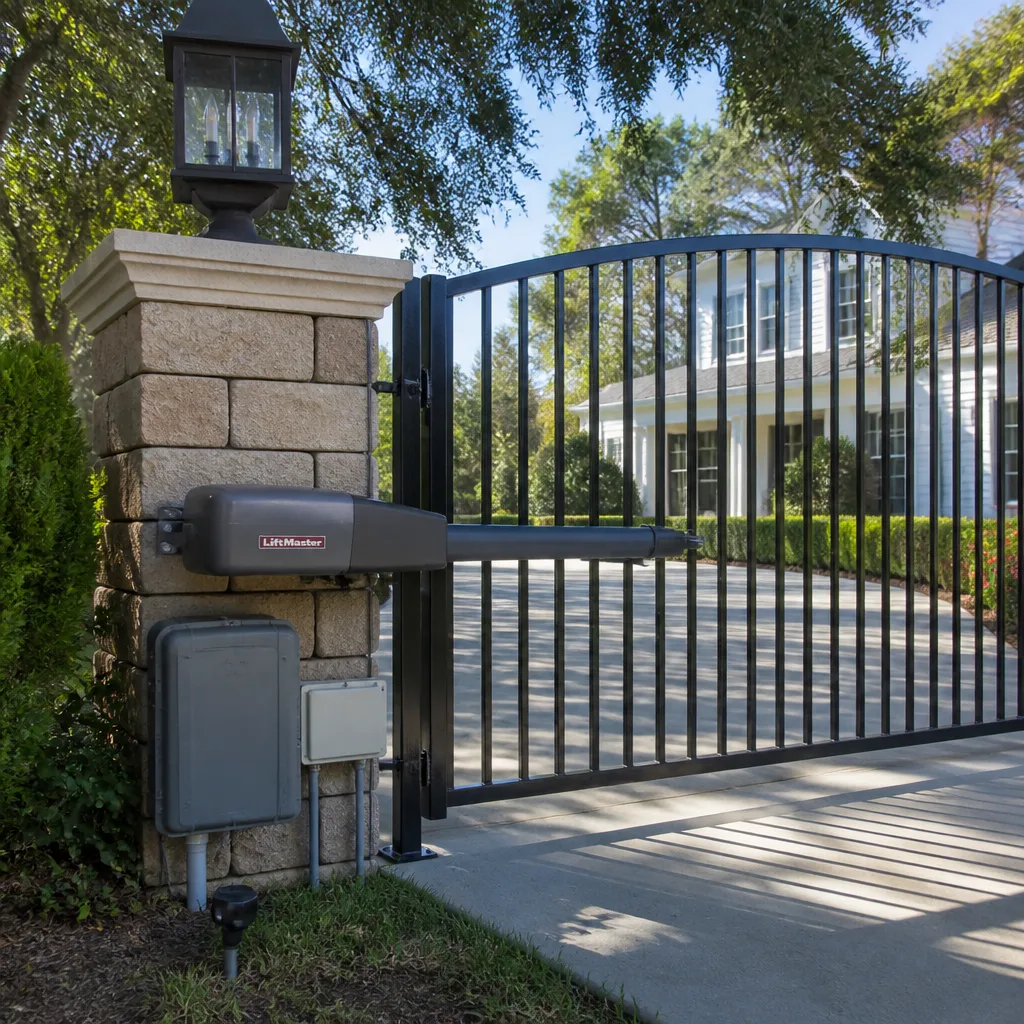
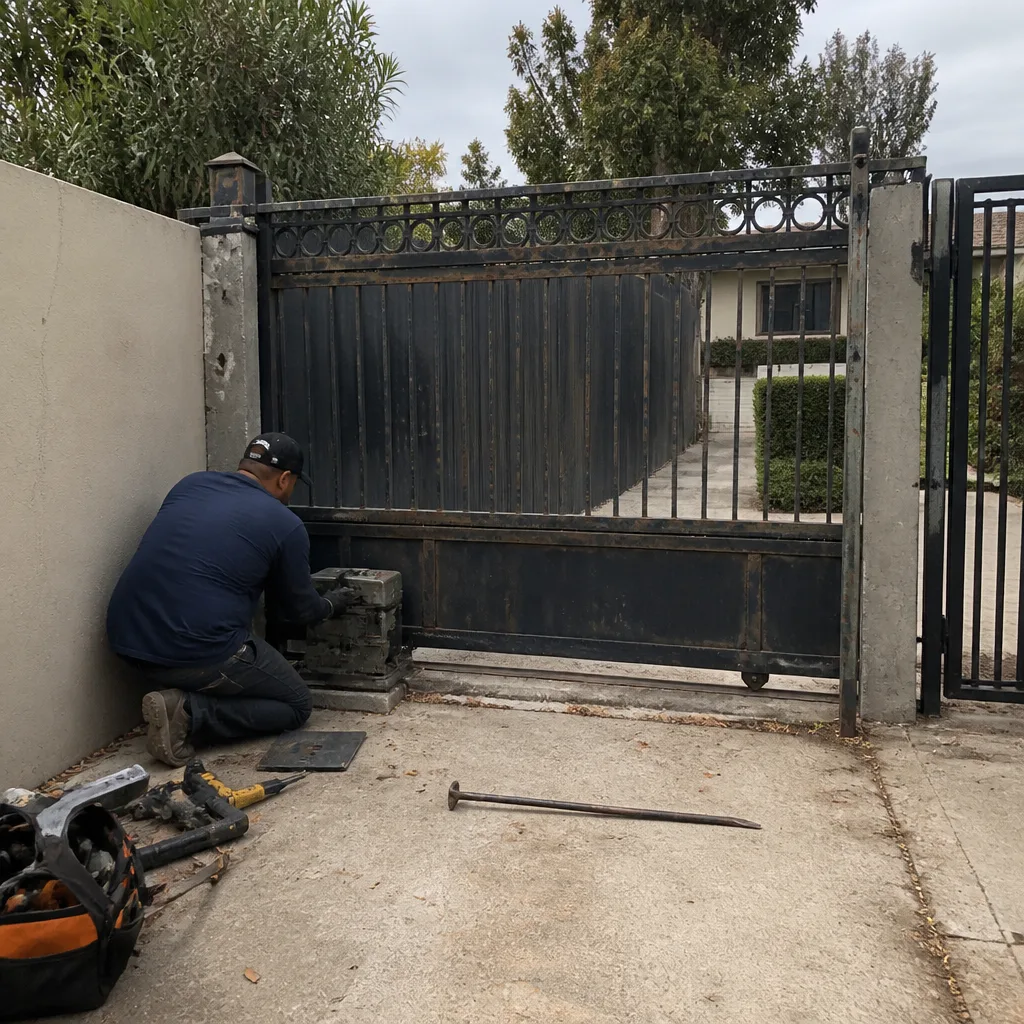 Before
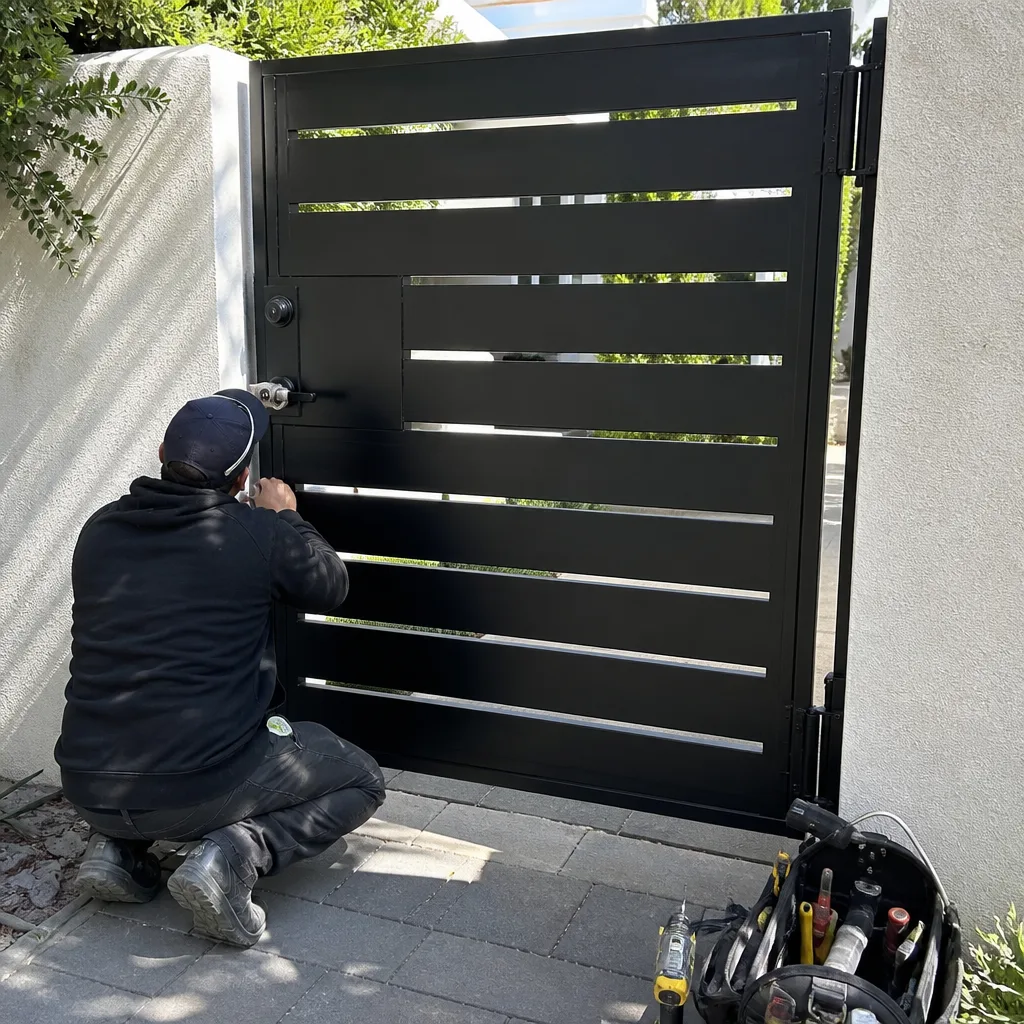 After
After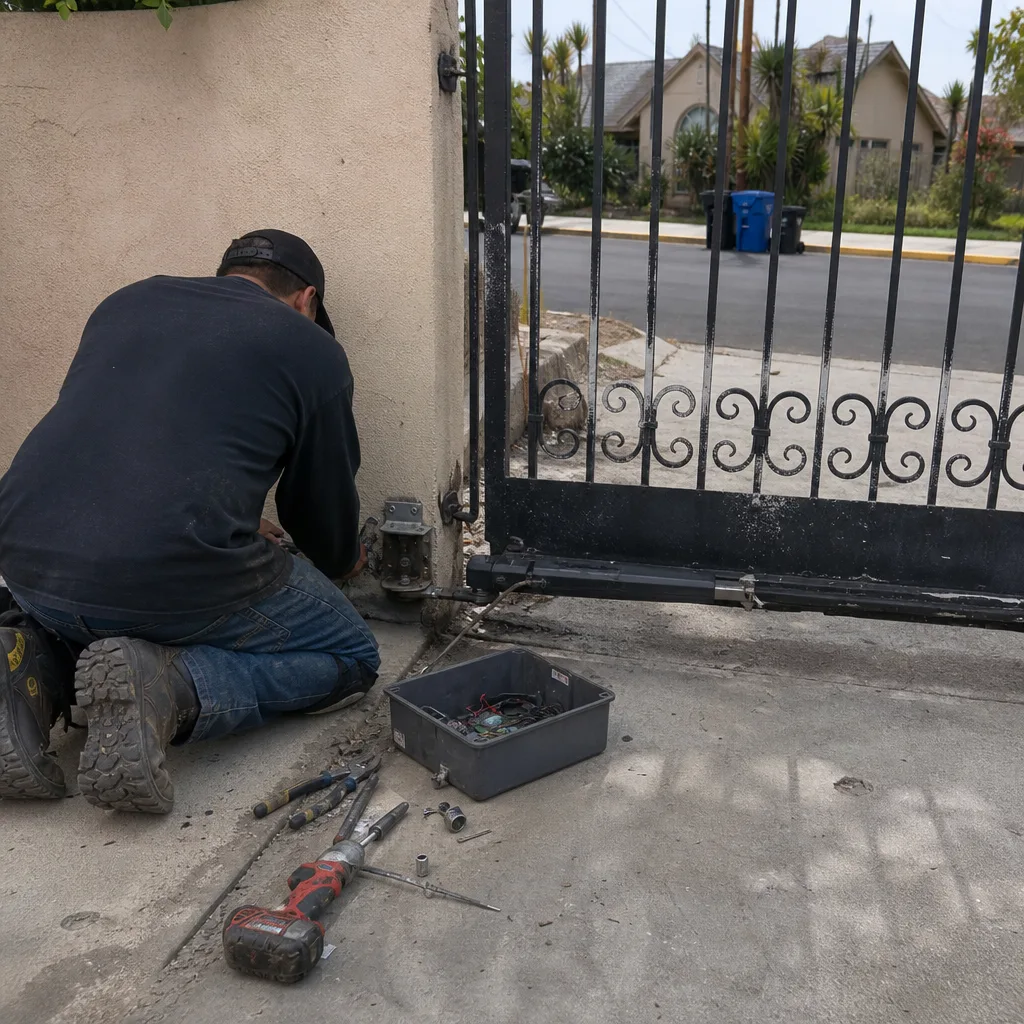 Before
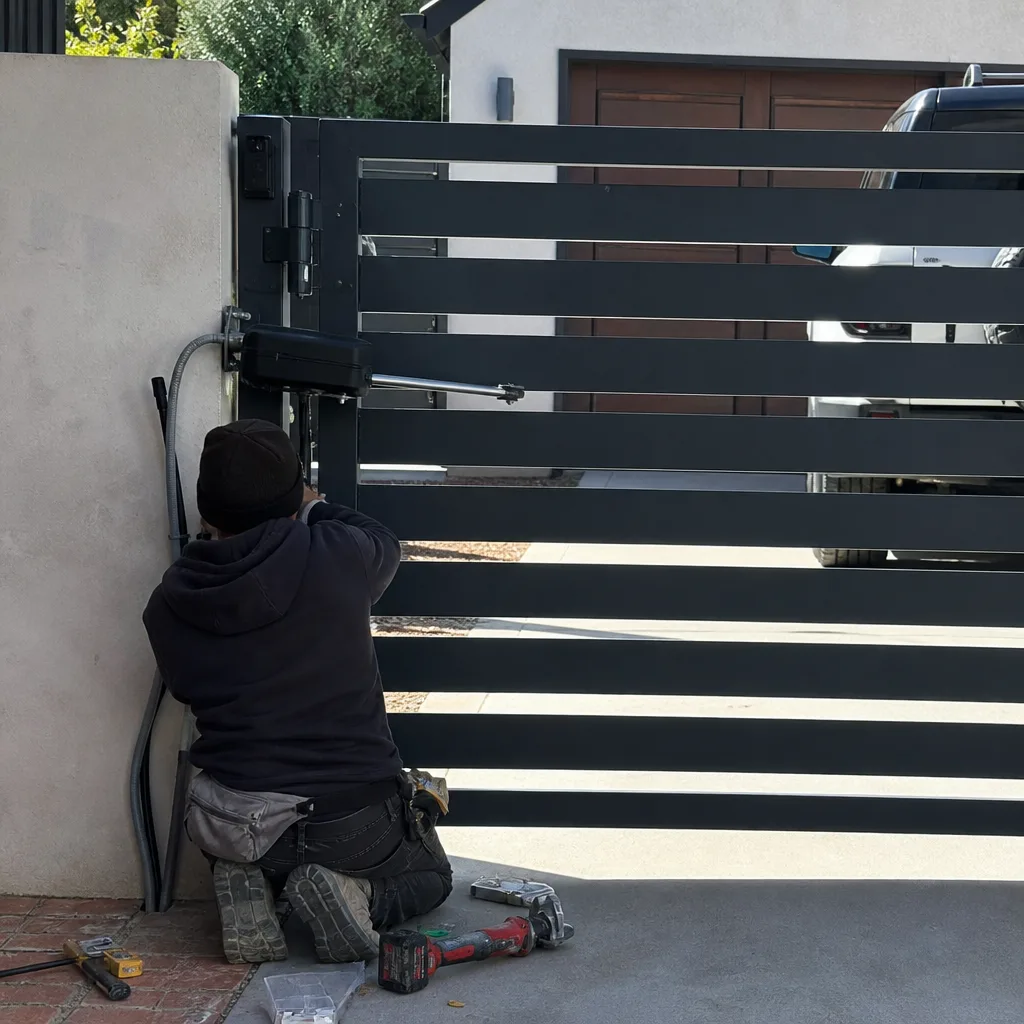 After
After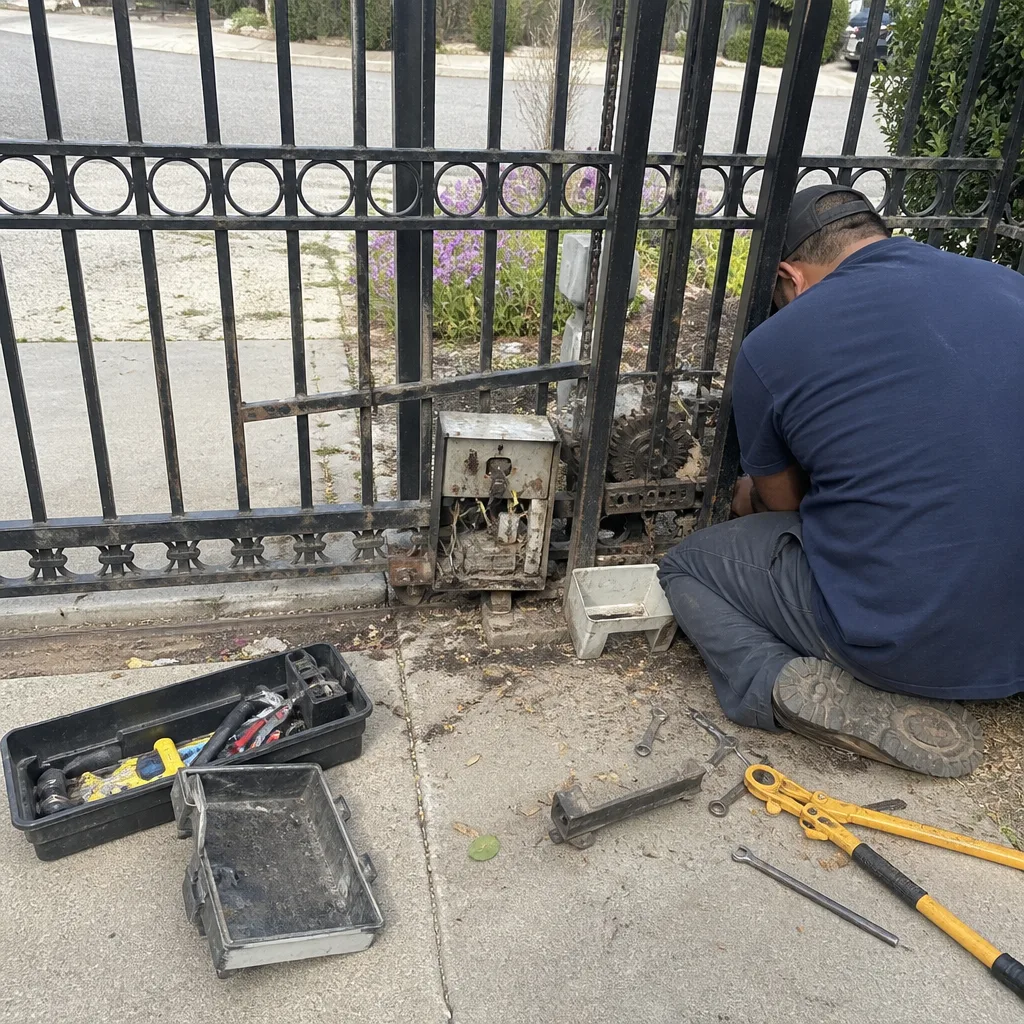 Before
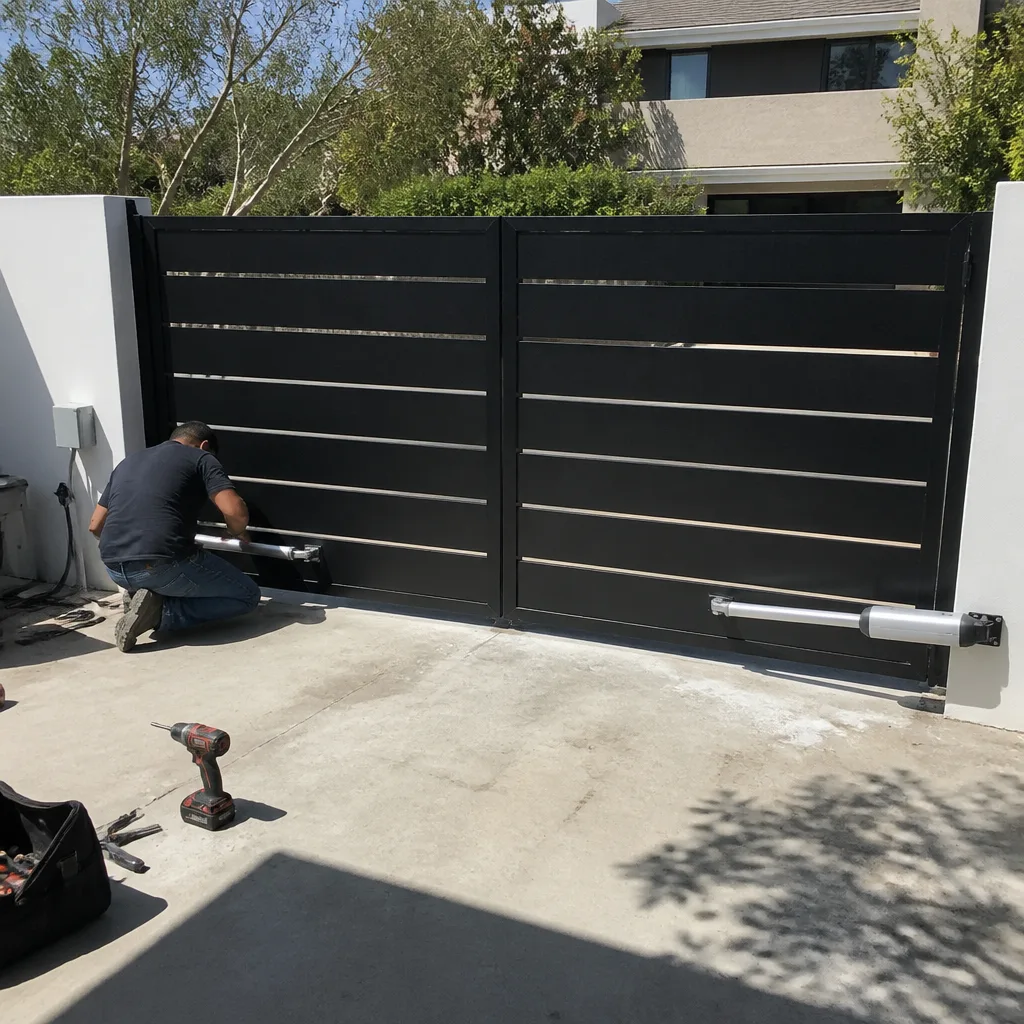 After
AfterDIY vs Professional Gate Repair: The Los Angeles Homeowner’s Decision Guide
Here’s a number most Los Angeles homeowners never hear until it’s too late: UL 325, the federal safety standard for automatic gates, requires that any repair affecting entrapment protection zones keeps the gate compliant. Replace an operator yourself, skip the sensor calibration, and that gate can now crush a person, a car, or a delivery driver’s leg. And you, the homeowner, are liable. This guide isn’t about whether you’re handy. It’s about which repair category you’re facing, because some gate fixes are genuinely fine for a Saturday afternoon in Los Angeles, and others belong squarely in the hands of a licensed professional.
Quick Answer
In Los Angeles, DIY gate repair is safe and sensible for about 30% of common issues: lubrication, hinge tightening, remote batteries, and basic cleaning. The other 70% involve electricity, structural steel, or entrapment safety systems, and those jobs carry liability, insurance, and code consequences that make professional Gate Repair cheaper in the long run than any money saved upfront.
Table of Contents
- The Three Categories of Gate Repair
- Safely DIY-Able: What You Can Do This Weekend
- Proceed With Caution: The Gray Zone
- Professional-Only: Where DIY Becomes a Liability
- The Real Cost of a DIY Mistake in Los Angeles
- California Contractor Law and Your Gate
- How DIY Affects Your Homeowner’s Insurance
- Tools and Parts: What You Can Actually Buy
- Common Mistakes to Avoid
- When to Call a Professional
- Frequently Asked Questions
The Three Categories of Gate Repair
Every gate problem in Los Angeles falls into one of three buckets. The first is genuinely homeowner-accessible: lubrication, hinge tightening, remote battery replacement. The second is the gray zone: basic access-code reprogramming, minor wood repairs, adjusting a sagging gate leaf. The third is professional-only: anything involving the operator’s internal wiring, entrapment sensors, structural posts, or UL 325 compliance. We’ve worked on thousands of gates across Los Angeles since 2008, and the pattern is consistent: homeowners who correctly identify the category save money. Homeowners who misidentify it spend double, because we’re now repairing their repair.
The distinction isn’t about talent. Plenty of Los Angeles homeowners are skilled with tools. The distinction is about liability, insurance, code, and access to parts. A homeowner can buy penetrating oil at Home Depot. They cannot buy a FAAC operator’s internal control board without a trade account, and even if they could, installing it without calibrating the torque limiter is how gates kill people.
Safely DIY-Able: What You Can Do This Weekend
Let’s start with what you can genuinely handle yourself. These tasks require no electrical knowledge, no structural work, and no special tools. They also happen to be the tasks most often neglected, which is why gates in Los Angeles neighborhoods like Sherman Oaks and Pasadena fail sooner than they should.
We recommend homeowners perform these four tasks on a regular schedule:
- Lubrication. Swing-gate hinges, slide-gate rollers, and the operator’s drive chain all need a light lubricant two to three times per year. In Los Angeles, we see more gate failures from dry, squealing hinges near the coast than from any other single cause. Use a dry silicone spray on the hinges and rollers, and a light machine oil on the drive chain. Keep lubricant off the gate’s safety edges and photo eyes.
- Hinge tightening. Swing gates sag over time, especially the heavier steel and wrought-iron styles common in Los Angeles hillside homes. A socket wrench and ten minutes of checking hinge bolts can push a full hinge replacement years down the road. If the hinge is cracked or the weld is failing, that’s a different category, stop and call us.
- Remote battery replacement. The remote that opens your Viking or Linear operator runs on a small battery, usually a CR2032 or A23, depending on the model. If the remote blinks but the gate doesn’t move, the battery is the first thing to swap. If a new battery doesn’t fix it, the issue is probably the receiver board inside the operator, and that’s professional territory.
- Cleaning the photo eyes. The photo eyes, also called photoelectric sensors, are the small black boxes mounted near the bottom of the gate opening on either side. When they get covered with Los Angeles dust, cobwebs, or landscape debris, the gate reverses or refuses to close. A dry cloth clears most cases. Just don’t aim a pressure washer at them; water inside the sensor housing creates a short.
None of these tasks affect UL 325 compliance, none carry meaningful liability, and none require parts you can’t buy at a Los Angeles hardware store. This is the safe end of the DIY pool.
Proceed With Caution: The Gray Zone
This middle category is where Los Angeles homeowners get into trouble. The tasks sound simple. They aren’t, and the margin for error is narrower than people expect. We’ve seen each of these go wrong often enough to describe them precisely, so you can make an informed call or consult our Electric Gate Repair Troubleshooting: Common Problems and How to Fix Them first.
Basic Access-Code Reprogramming
Adding or deleting a keypad code on a BFT or DoorKing system is usually a matter of following the manual. Many Los Angeles homeowners do this successfully. The risk comes when you accidentally reset the entire receiver system while fishing through settings you don’t recognize, especially on older Linear and Mighty Mule units. If you’re confident and have the manual, proceed. If you’re guessing, stop before you erase every remote on the property and call us instead. Reprogramming a wiped receiver board is a service call you don’t need.
Minor Wood Repairs
Wooden driveway gates are common in Los Angeles, especially in neighborhoods like Hancock Park and Studio City. A cracked picket or a loose brace is a reasonable weekend repair, provided the gate’s frame and post are sound. The caution here is structural: if the gate post wobbles when you push it, the problem isn’t wood, it’s the foundation under the post. Bolting new wood onto a failing post is like repainting a sinking boat.
Sagging Gate Adjustments
A swing gate that’s dragging on the ground can sometimes be corrected by tightening hinge bolts. But if the gate post itself has shifted, which is common in Los Angeles hillside yards where soil expands and contracts with the seasons, the fix requires resetting the post in new concrete or installing a welded steel post. That’s structural work, and it belongs in the professional-only category.
Professional-Only: Where DIY Becomes a Liability
This is the category where we stop being polite about it. Do not attempt these repairs yourself. The reasons aren’t snobbery; they’re federal law, California law, and physics.
Anything affecting UL 325 entrapment protection. UL 325 mandates that automatic gate operators include redundant systems to prevent the gate from crushing a person: photo eyes, safety edges, and torque limiters that reverse the gate when it hits resistance. When a homeowner replaces an operator themselves, skips the sensor calibration, or disables a reversing edge that was “too sensitive,” that gate is now a federal safety violation. If a child, a neighbor, or a mail carrier is injured, the homeowner’s liability is nearly impossible to defend. Even in Los Angeles, where gate repair companies are plentiful, UL 325 compliance is non-negotiable.
Electrical work inside the operator. The internals of a FAAC, BFT, Linear, or Viking operator include capacitors that hold a charge even when the power is off, circuit boards that are static-sensitive, and wiring that must match the original diagram precisely. A wrong wire on the control board can burn out a $600 board in a second. We’ve replaced boards for Los Angeles homeowners who attempted a “simple” wiring fix and learned what a capacitor discharge feels like. It isn’t a lesson you want firsthand.
Structural repairs. Gate posts, steel frames, and welded joints are load-bearing. A gate that weighs 400 to 800 pounds, which is typical for Los Angeles driveway gates, can kill someone if a weld fails. Structural repair requires proper welding, correct post footing depth, and an understanding of how the gate’s weight distributes through the hinges. This is not a bolt-together project.
Operator replacement. When an operator, the motorized arm that physically pushes the gate open, fails, the replacement involves electrical wiring, mounting alignment, travel-limit setting, and entrapment-sensor integration. It also involves programming the new operator to match the existing remote system. Miss one step and the gate either won’t open, won’t close, or won’t stop when it should.
The Real Cost of a DIY Mistake in Los Angeles
Here’s where the economics get honest. A DIY gate repair that goes wrong almost always costs more than the professional repair would have cost in the first place. We’ve seen the invoices.
Consider a common Los Angeles scenario: a swing-gate operator stops working. The homeowner buys a generic operator online for about $300, spends a Saturday installing it, and can’t get the entrapment sensors to calibrate. The gate works manually but won’t open with the remote. Frustrated, they call us. We arrive to find the generic operator isn’t compatible with the existing safety edges, the mounting bracket was drilled in the wrong position, and the wiring needs to be redone. The repair now costs more than a standard operator swap because we’re removing the failed DIY work first.
Typical costs in the Los Angeles market, based on what we quote every week:
- Standard operator swap on a swing gate: $650-$1,200 parts and labor, depending on the operator brand and gate weight.
- Re-repair after a DIY operator attempt: $900-$1,600, because we’re removing the wrong parts, correcting the wiring, and often replacing components the homeowner damaged.
- Basic hinge lubrication and tightening: the cost of a $12 can of spray. Genuinely DIY.
- Photo-eye replacement: $150-$350. Many homeowners buy the wrong sensor online and spend more than this on two failed attempts.
- Post reset in concrete: $800-$1,800, depending on post size and access. A homeowner who tries this with a bag of Quikrete almost always ends up paying us to dig out the failed footing and do it correctly.
And those numbers don’t include the liability. If a DIY-repaired gate injures someone, the cost isn’t in hundreds. It’s in tens or hundreds of thousands, and your homeowner’s insurance may not cover it.
California Contractor Law and Your Gate
Los Angeles homeowners often ask us: can I legally work on my own gate? The answer is yes, mostly, with limits. California law allows a property owner to perform work on their own property without a contractor’s license, provided they’re not selling the property within a certain window and they’re not working on someone else’s gate. You can replace your own remote battery. You can lubricate your own hinges. You can even replace your own operator, legally speaking.
But here’s what the law doesn’t protect you from. If the gate injures someone because the work wasn’t done to UL 325 standards, the fact that you legally did the work yourself doesn’t reduce your liability. It may actually increase it, because a licensed professional has insurance and a paper trail that shows the work met code. You, the homeowner, have neither. And if you’re in a Los Angeles neighborhood with an HOA, which many gated communities in the city have, the HOA may specifically require licensed work on any gate that serves common areas. Check your covenants before you pick up a drill.
How DIY Affects Your Homeowner’s Insurance
This is the section most DIY guides skip, and it’s the one that matters most if something goes wrong. If your gate injures someone, or a gate failure allows a burglary, your homeowner’s insurance company is going to ask one question: who worked on the gate last? If the answer is you, and the work wasn’t done by a licensed professional with documentation, the claim can be denied. This isn’t theoretical. Los Angeles insurance adjusters see gate-related claims every year, and a homeowner-modified operator with no service record is a red flag they look for.
If a professional gate company made the repair, you have an invoice, a written guarantee, and a licensed entity whose insurance covers the work. That’s why the Kingswell Guarantee is written on every Portcullis Gate Repair invoice, not just promised over the phone. If the repair fails within 365 days, we return and fix it at no charge. That paper trail is worth more than the repair itself if a claim ever lands.
Tools and Parts: What You Can Actually Buy
A gate is not a car. You can’t walk into an auto parts store and buy what you need. This is the hidden wall Los Angeles homeowners hit. Some parts are genuinely available at retail. Most are gated behind trade accounts for good reason.
What You Can Buy as a Homeowner
- Dry silicone spray and machine oil, available at any Los Angeles hardware store.
- Replacement remote batteries, sold everywhere.
- Gate hinges from big-box stores, for standard sizes.
- Replacement remotes, though compatibility matters more than you’d think.
- Keypad units, with the same compatibility caveat.
What You Cannot Easily Buy (and Shouldn’t Try)
- Internal control boards for FAAC, BFT, Linear, or Viking operators. These are sold through trade channels only. We stock them because we’re certified service providers for all nine major gate-operator brands.
- Entrapment safety edges and matching photo eyes. Universal versions exist, but matching them to your specific operator’s sensitivity requirements is the hard part.
- Structural gate posts and custom steel frames. These are fabricated to order by steel shops that work with gate companies, not with walk-in retail customers.
- Operator arms and piston assemblies. The actuator, the motorized arm that physically pushes the gate open, is brand-specific and trim-specific.
The parts wall isn’t an accident. These components carry the same liability profile as the repair itself. The manufacturers restrict access because installing them wrong creates a safety hazard and a product-liability claim against them. When we install these parts, we’re doing it as certified service providers with the training, insurance, and documentation to back the work.
Common Mistakes to Avoid
- Skipping the breaker before opening the operator. We’ve seen Los Angeles homeowners work on live operators. Capacitors inside hold a charge even with the breaker off. Always cut power, but know that a capacitor can still bite.
- Buying a universal operator from an online marketplace. Universal sounds like a deal. It’s rarely compatible with your existing safety edges, remote system, or mounting points, and now you own a paperweight.
- Adjusting the torque limiter to “make the gate stronger.” Homeowners sometimes crank the torque up because the gate is slow or stopping. That setting exists to keep the gate from crushing a person. Turning it up is a UL 325 violation and a genuine danger.
- Ignoring a sagging gate and replacing parts instead. If the gate drags, the problem is often the post or the hinges. Replacing the operator on a sagging gate just burns out the new operator too.
- Using penetrating oil on the photo eyes. Oil on the lens attracts dust and creates a film. Dry cloth, that’s it.
- Attempting a weld without a professional. A bad weld on an 800-pound gate is a guillotine waiting for the wrong moment. This is not a beginner’s project.
- Working on a shared gate in an HOA or condo building. Gates serving common areas in Los Angeles are governed by the HOA’s rules, and unlicensed work can violate both the CC&Rs and the city’s building code.
When to Call a Professional
Call a professional if the gate won’t move and the remote and keypad both work; if it’s making grinding or popping sounds during operation; if it starts, then stops and reverses for no visible reason; if the post wobbles when you push it; if you smell anything burning near the operator; or if you’ve touched any wiring and the gate now behaves differently than before. These are failures where guessing costs more than a service call. Portcullis Gate Repair offers free estimates in Los Angeles, call (940) 412-7340, and we quote the price in writing before any work begins.
Frequently Asked Questions
Yes, California law allows property owners to work on their own gates, but only for non-structural, non-electrical, non-entrapment-safety tasks like lubrication, hinge tightening, and remote battery replacement. Anything touching wiring, entrapment sensors, or structural posts should be handled by a licensed professional.
Typical gate repairs in Los Angeles run $150 to $350 for photo-eye and hinge issues, $650 to $1,200 for a standard operator swap, and $800 to $1,800 for a post reset in concrete. Every Portcullis Gate Repair quote is a written price before work starts, so there are no surprises. Call (940) 412-7340 for a free estimate.
UL 325 is the federal standard that requires automatic gates to have working entrapment protection: photo eyes, safety edges, and torque limiters that reverse the gate if it hits something. Any repair that affects these systems, including operator replacement, must keep the gate compliant, or the homeowner is liable for injuries the gate causes.
If your gate won’t open or close and you’re locked in or out, Portcullis Gate Repair answers calls around the clock at (940) 412-7340. We service all of Los Angeles, and a live person picks up, no voicemail trees.
It might not. Insurance adjusters look at who worked on the gate last, and a homeowner-modified operator with no service record is a common basis for claim denial. Repairs by a licensed, insured gate company leave a paper trail that protects you if a claim ever lands.
Yes. Our Gate Installation in Los Angeles service includes the full electrical run, entrapment sensor installation, and operator programming, done to UL 325 standards. For electric gate issues, see our Electric Gate Repair in Los Angeles page. And for all other repair work, start with Gate Repair in Los Angeles.
The Bottom Line
The DIY question in Los Angeles isn’t whether you’re capable. It’s whether the repair you’re facing falls into the safe category or the liability category. Lubricate your own hinges. Clean your own photo eyes. Replace your own remote batteries. But when the gate stops moving, when the post wobbles, when the operator sparks or the safety edge stops working, the money you save doing it yourself is a fraction of what one injury claim will cost. Portcullis Gate Repair has served Los Angeles since 2008, with written prices before any work, background-checked technicians, and a 365-Day Done Right Promise on every repair. Call (940) 412-7340 and we’ll tell you the truth about your gate, even if the truth is that it just needs a little oil.
Written by Dean Prescott, Owner at Portcullis Gate Repair, serving Los Angeles since 2008. Explore more guides & resources on gate repair and maintenance.