
Last updated October 8, 2026
Free on-site gate assessment - hinges, posts, and your LiftMaster or Nice gate operator checked before anything is quoted
The assessment is free and the quote is the invoice.
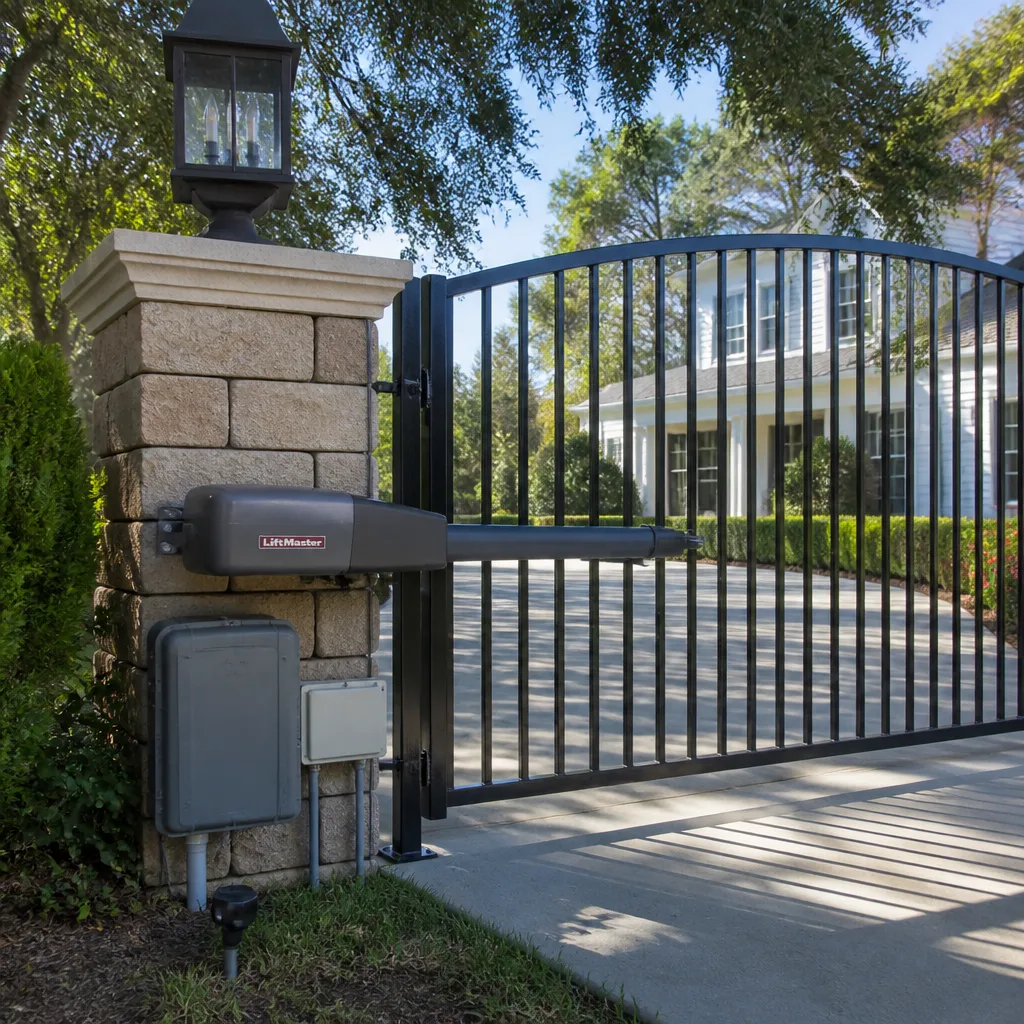
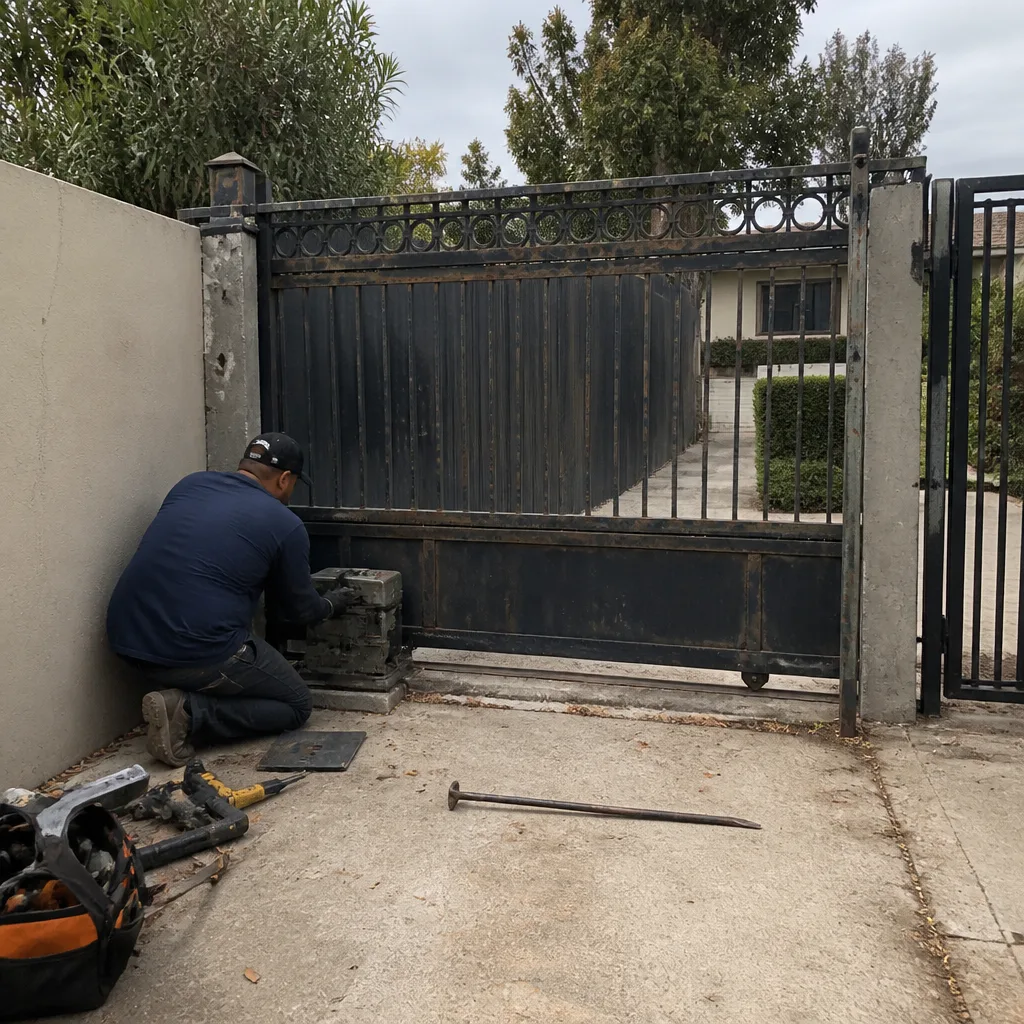 Before
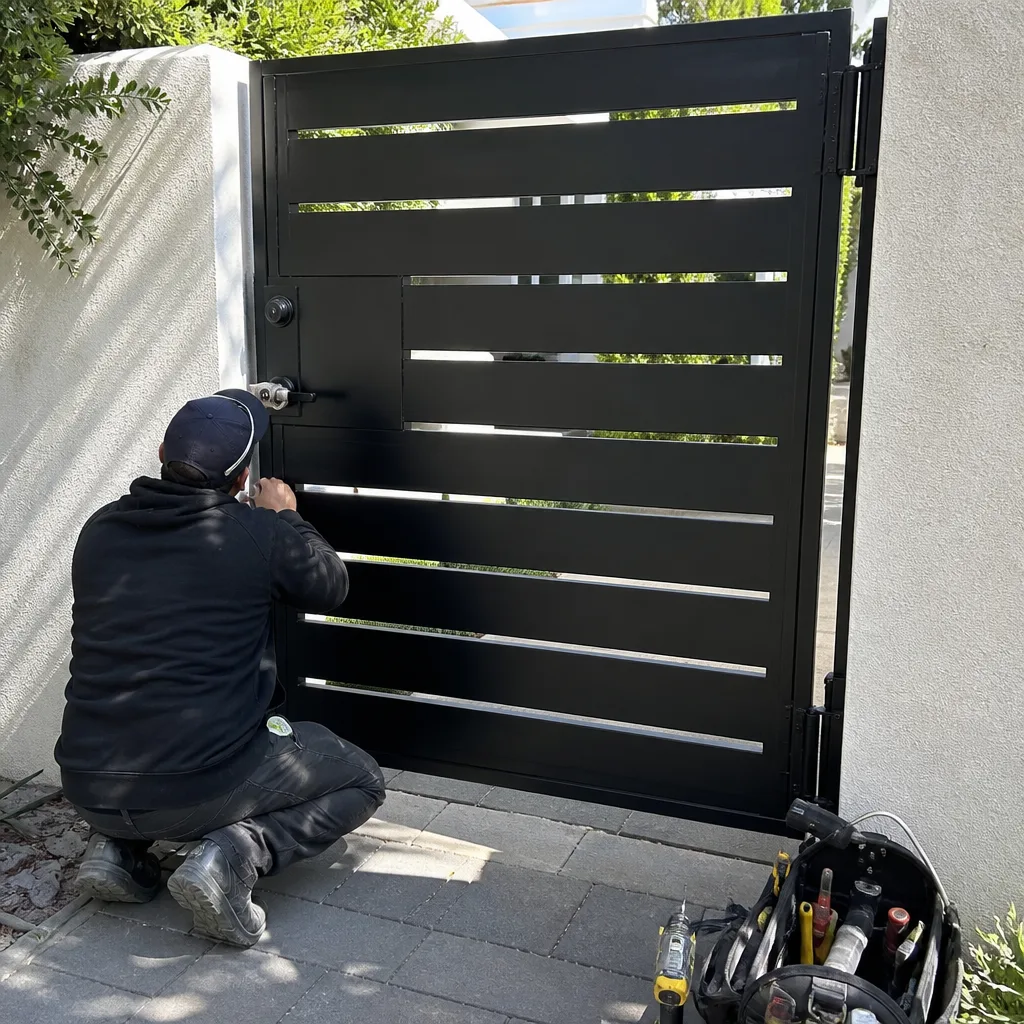 After
After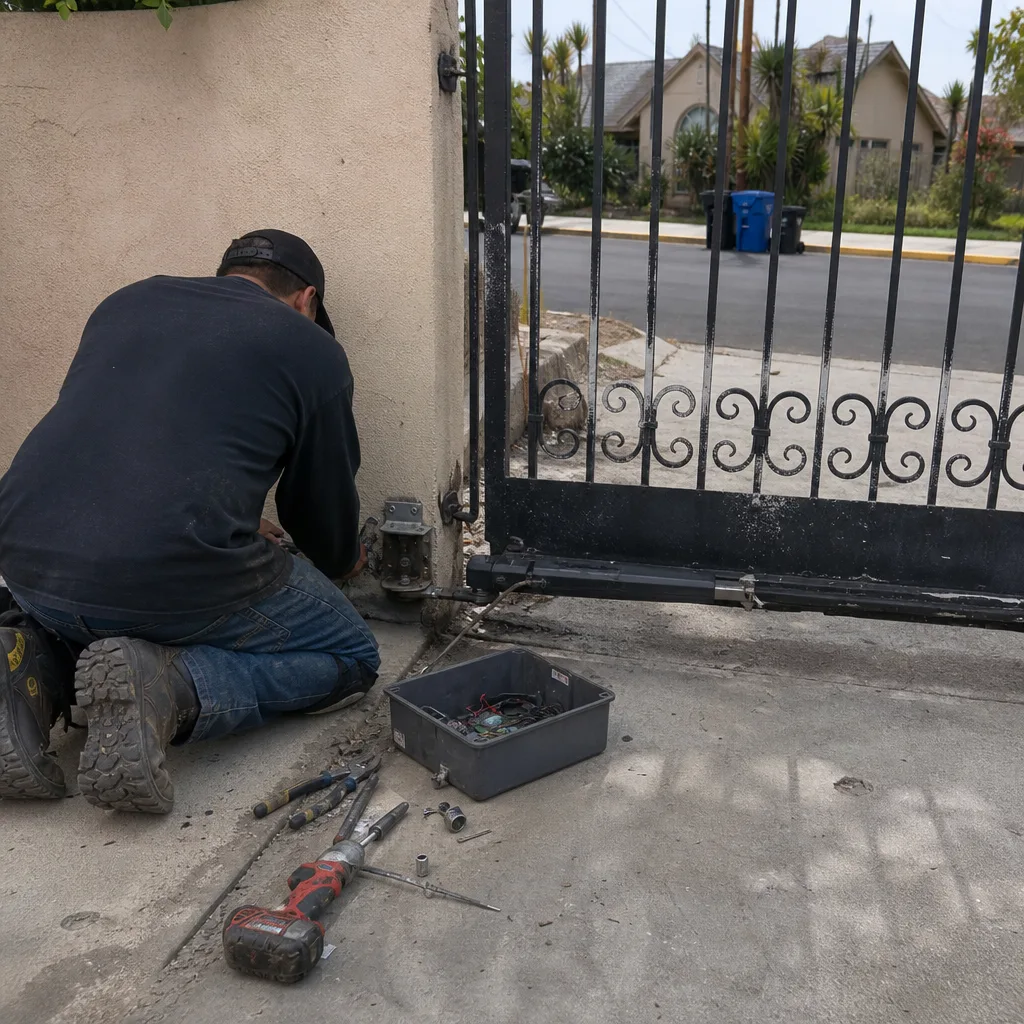 Before
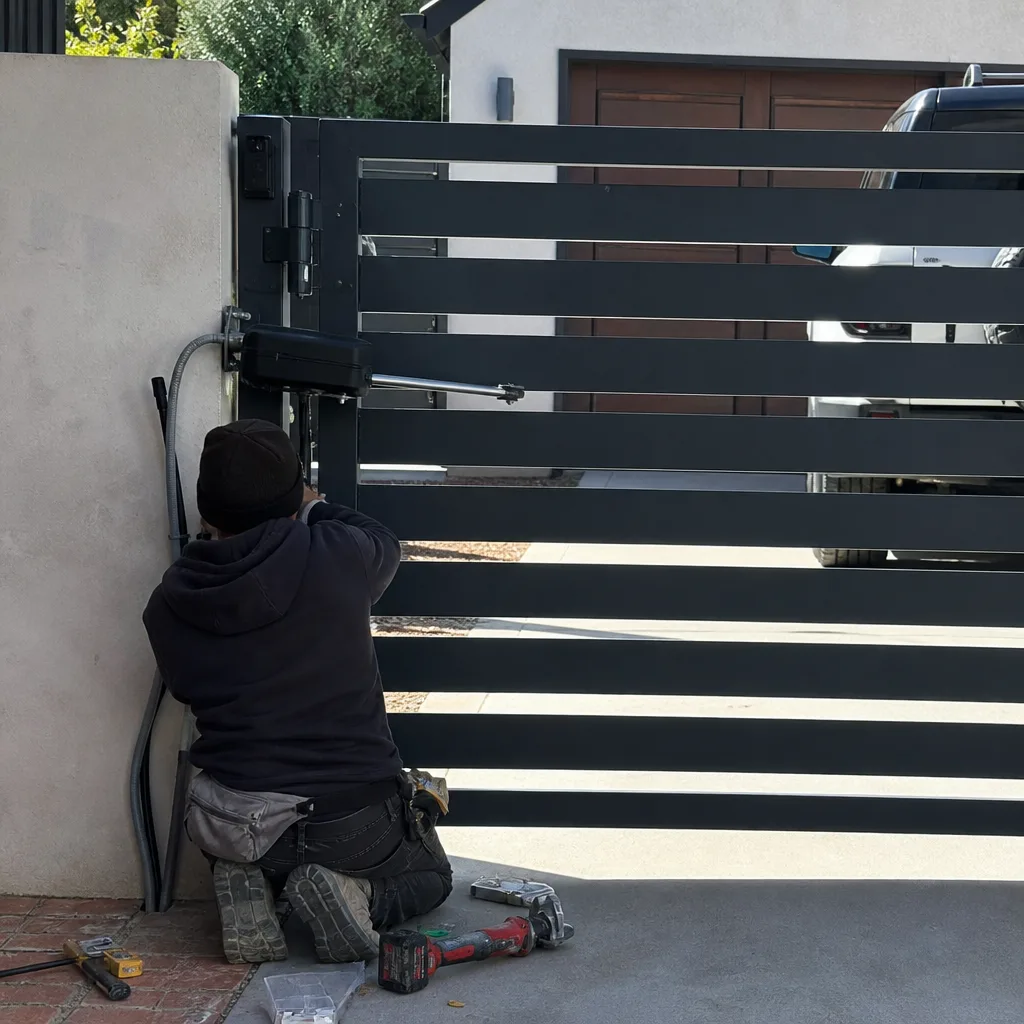 After
After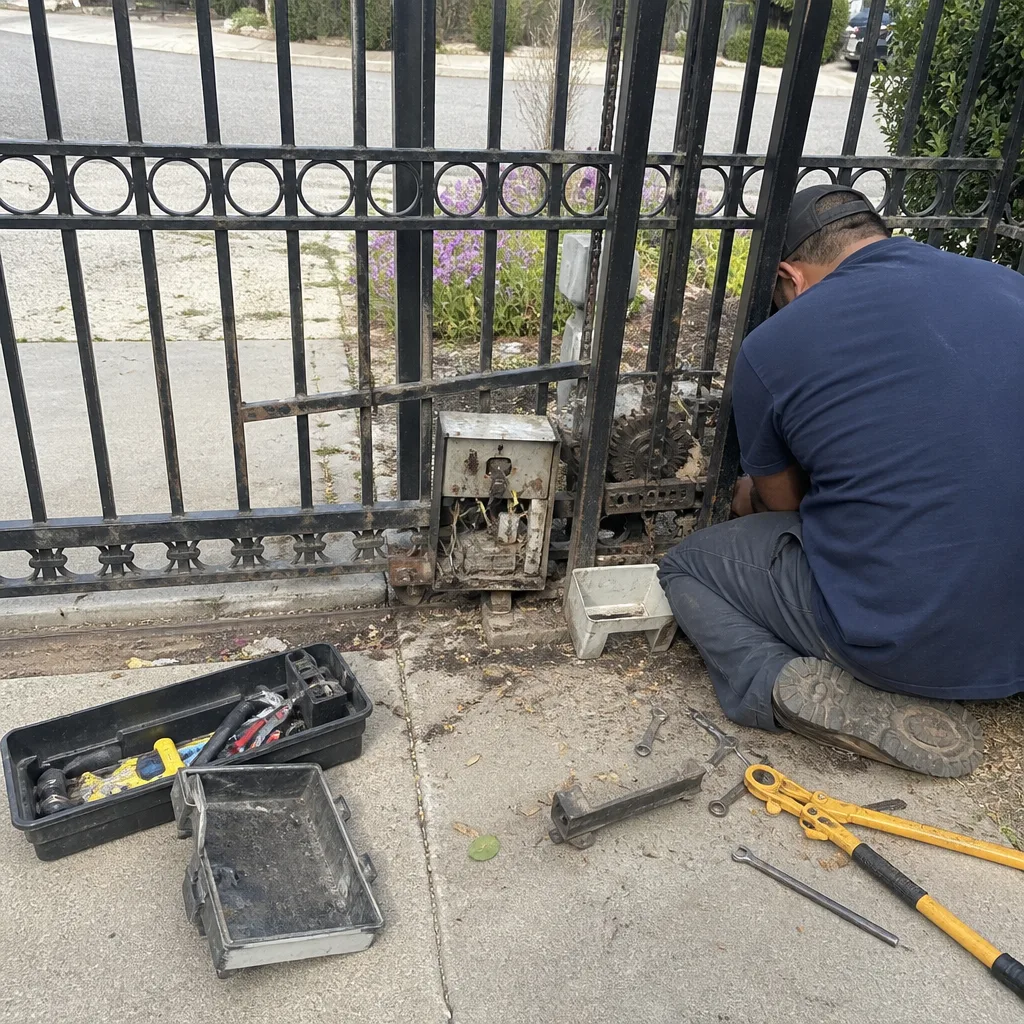 Before
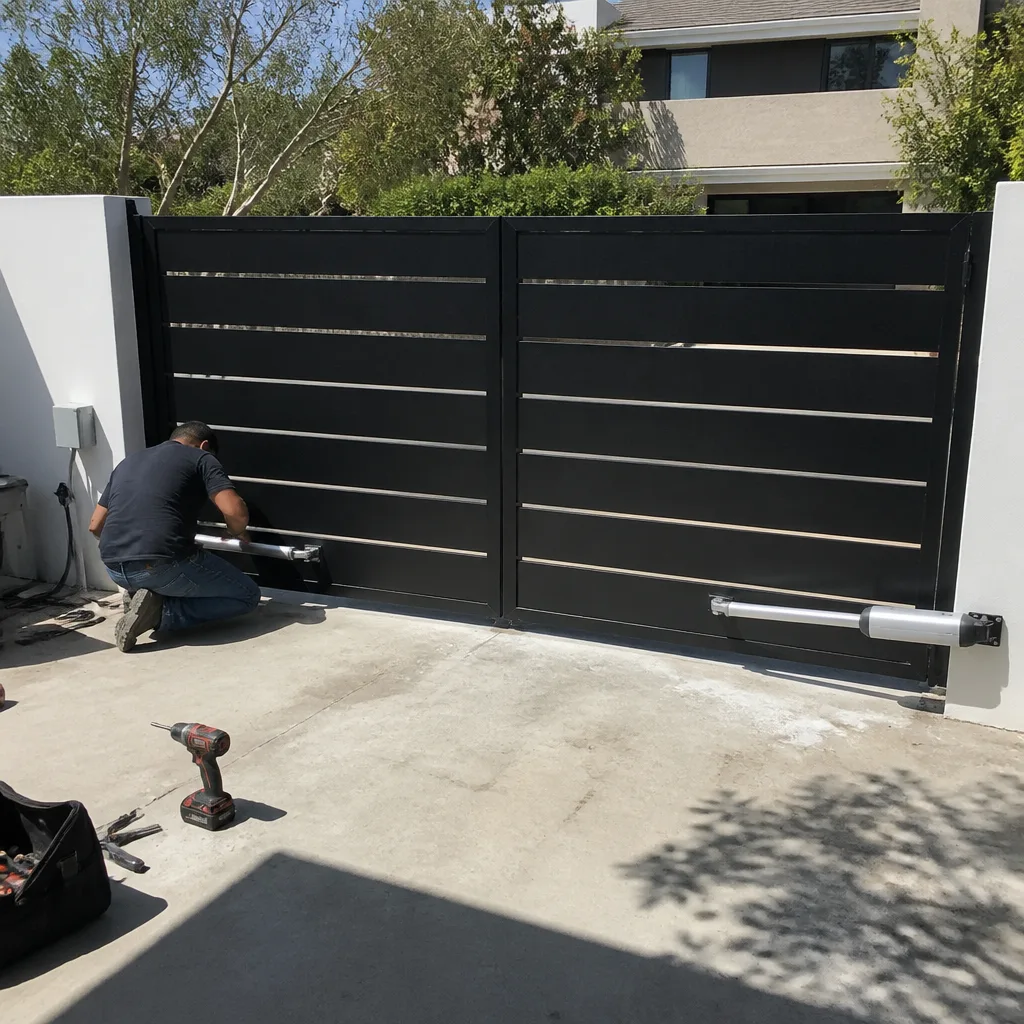 After
AfterThe Complete Gate Repair Guide for Los Angeles Homeowners
Most gate repair guides are written for Atlanta or Phoenix. They assume flat ground, predictable weather, and a homeowner’s association that’s never heard of wrought iron. Los Angeles has coastal corrosion zones, active fault-line soil movement, and some of the strictest HOA aesthetic rules in the country. None of that shows up in the generic advice. This guide is written by people who actually turn wrenches on LA gates, and we’ll walk you through what actually fails here, what it costs, and what you should know before anyone touches your gate.
Quick Answer
Gate Repair in Los Angeles typically costs $150 to $2,500 depending on whether you’re dealing with a misaligned hinge, a failed gate operator, or a snapped weld on a steel gate. Coastal neighborhoods like Pacific Palisades and Playa del Rey see faster hinge and operator corrosion from salt air, while inland zones like Studio City and Sherman Oaks deal with dry-soil post lean and heat-related electronics failure. Most residential repairs are completed in one visit, and the price should always be written down before the technician picks up a tool.
Table of Contents
- How LA Geography Changes Gate Repair
- Common Gate Problems in Los Angeles
- Gate Operator Brands and What Their Failures Look Like
- Los Angeles Permits and Code: What Actually Requires a Permit
- HOA Finish-Match Rules and What Documentation You Need
- Real Price Ranges for Gate Repair in Los Angeles
- The Repair Process Step by Step
- Common Mistakes to Avoid
- When to Call a Professional
- Frequently Asked Questions
- The Bottom Line
How LA Geography Changes Gate Repair
A gate in Los Angeles is not the same as a gate in Dallas or Denver. This city stretches from Pacific salt spray to high-desert temperature swings, and the geography dictates what breaks first. If you understand the failure pattern in your specific neighborhood, you’ll know what to watch for before a minor annoyance becomes a gate that won’t open at 7 a.m. on a Monday.
The Coastal Corrosion Zone
From Santa Monica up through Malibu and down into Palos Verdes, the marine layer deposits salt on everything metal. We regularly see gate hinges in Manhattan Beach and Hermosa Beach that are rusted through after seven or eight years, while the same hinge in Pasadena would last twenty. The salt doesn’t just attack visible surfaces; it creeps inside actuators and operators, corroding circuit boards and limit switches. A gate operator two miles from the ocean ages roughly twice as fast as one ten miles inland. If you live west of the 405 and within sight of salt air, expect to replace hinges, rollers, and operator internals sooner than the national averages suggest.
The Inland Heat-Cycling Zone
Out in the Antelope Valley, Woodland Hills, and parts of the San Fernando Valley, the problem isn’t salt. It’s heat. Summer temperatures in Woodland Hills routinely cross 105 degrees, and that heat expands and contracts metal gates daily. Over years, this cycling fatigues welds, loosens fasteners, and bakes the capacitors inside gate operators. We see more blown capacitors and fried control boards in the Valley than anywhere else in Los Angeles. The electronics simply work harder and fail sooner when daytime highs spend months above ninety.
Clay Soil and Post Lean
Los Angeles sits on active fault lines, and many hillside neighborhoods such as Silver Lake, Mount Washington, and Echo Park are built on expansive clay soil. That soil swells when wet and shrinks when dry. The result is something we’ve diagnosed hundreds of times: a gate that scrapes the ground or won’t latch properly. The homeowner assumes the hinges bent or the gate shifted. In reality, the posts have leaned because the soil beneath them moved. Fixing the hinge without re-setting the post is a temporary patch, and the gate will be binding again within a season. A proper repair requires pulling the post, re-setting it in concrete, and re-hanging the gate on new hardware. It’s a bigger job than a hinge swap, and it’s the only fix that holds in clay.
Common Gate Problems in Los Angeles
These are the issues we see week after week across Los Angeles. Some are obvious. Some look like one problem but are actually another.
- Actuator failure. The actuator, which is the motorized arm that physically pushes a swing gate open, is a wear item. Its internal gears are often plastic or soft metal. In coastal air or summer heat, actuators fail within five to ten years. Symptoms include a gate that moves slowly, makes a grinding noise, or stalls partway through its travel.
- Hinge wear and rust. Hinges carry the entire weight of a gate. When they wear, the gate sags. When they rust, they bind. Both problems strain the operator, so a worn hinge left alone eventually destroys a healthy motor.
- Post lean and soil movement. As described above, hillside and clay-heavy neighborhoods like Silver Lake and Highland Park see foundations shift. The fix is a post reset, not just a hinge adjustment.
- Operator control board failure. The control board is the brain of an electric gate. Power surges, lightning, and heat can fry a board in one event. The gate suddenly won’t respond, or it behaves erratically: opening halfway, closing on a delay, ignoring remotes.
- Safety sensor misalignment. Electric gates are required to have safety devices that stop and reverse the gate if something is in the way. When a sensor gets bumped, coated in dust, or drifted out of alignment, the gate may refuse to close or may reverse at random.
- Weld fractures. Steel gates develop cracks at high-stress joints. The crack starts hairline and grows. If you hear a creak when the gate moves, there’s a weld working loose.
- Battery backup failure. Many electric gate operators in Los Angeles have backup batteries so the gate works during a power outage. Batteries have a three-to-five-year service life. When they die, the gate loses power during every Public Safety Power Shutoff, leaving you manually pushing a heavy gate.
Gate Operator Brands and What Their Failures Look Like
We train our technicians on nine major gate-operator brands, including LiftMaster, FAAC, and Elite. Each brand has its own failure signatures, and knowing the brand before arriving means we bring the right parts on the first trip.
LiftMaster
LiftMaster is one of the most common operator brands in Los Angeles residential gates. These units are generally reliable, but their control boards are sensitive to power fluctuations. In older LA neighborhoods with aging transformers and frequent voltage drops, we replace LiftMaster boards more often than their motors. A typical symptom is a gate that opens with the remote but won’t close with the same remote.
FAAC
FAAC operators are popular on heavy swing gates, especially driveway gates in Brentwood, Bel Air, and Pacific Palisades. They’re hydraulic or electromechanical, and their weak point in LA conditions is the hydraulic fluid seals. Heat accelerates seal degradation, and coastal salt corrodes the external fittings. We often see a FAAC gate that works fine when cool but becomes sluggish or groans after sitting in direct afternoon sun.
Elite
Elite slide gate operators appear on many Los Angeles apartment buildings and commercial properties. Their failure pattern is usually limit switch drift. The gate opens too far or not far enough, or it stops short of the closed position. The fix is usually a limit switch adjustment or replacement, not a whole new operator.
Mighty Mule
Mighty Mule is a common DIY-installed operator for single-family driveway gates. We get called when a homeowner has already attempted the fix themselves. The most frequent issue is control board failure caused by improper grounding. LA’s dry, rocky soil provides poor electrical grounding, and a nearby lightning strike or a wire fault can surge straight through the board. A replacement board plus a proper ground rod usually solves it permanently.
Los Angeles Permits and Code: What Actually Requires a Permit
This is where Los Angeles gets complicated, and it’s the part generic gate guides skip entirely. The City of Los Angeles has its own building codes, and unincorporated LA County areas have different rules. Some neighborhoods require a permit for a gate operator replacement. Others do not.
Here’s what we tell every homeowner in Los Angeles:
- A simple hinge, wheel, or weld repair does not require a permit. If we’re not altering the structure, the electrical system, or the gate’s fundamental operation, it’s maintenance, not construction.
- Replacing a gate operator with a like-for-like unit generally does not require a permit in most LA city neighborhoods. We’re swapping an appliance, not changing the structure. There are exceptions, and we check before we schedule.
- Installing a brand-new gate or moving an existing gate requires a permit if the gate exceeds certain height, weight, or location thresholds. This applies more to installation than repair, but it matters when a repair reveals that the original gate was never permitted. We’ve seen this in hillside communities like Mount Washington, where an unpermitted gate built before current codes complicates an otherwise simple repair.
- Safety device requirements are state law. California requires electric gates to have safety edges, photo eyes, or an equivalent entrapment protection system that will stop and reverse the gate when it encounters an obstruction. If your gate’s safety devices are missing or bypassed, the repair is not optional. A gate without entrapment protection is genuinely dangerous, especially with children or pets on the property. This is not a code nitpick; it’s a serious injury risk.
For any job where a permit is required, the permitting process adds time and cost. We tell you upfront what’s needed, what it costs, and what the timeline looks like. No surprises after the gate is already off its posts.
HOA Finish-Match Rules and What Documentation You Need
Los Angeles has hundreds of gated communities, and many of them fall under HOA jurisdiction that regulates gate color, material, and so-called architectural conformity. If your HOA dictates a specific black powder coat finish or a particular wrought iron pattern, any repair that changes the gate’s appearance can trigger a violation notice.
This affects repair work in ways homeowners don’t expect:
- Replacing a hinge or bracket means matching the finish. If your gate is finished in a specific satin black powder coat, a raw galvanized hinge is visually obvious. We order hardware that matches or we apply a finish coat on site that matches the existing hardware closely enough that an HOA inspector won’t flag it.
- Weld repairs require finish touch-up. After repairing a weld, we grind it smooth, prime it, and apply a finish coat that matches the surrounding metal. The goal is a repaired gate that looks like it was never damaged.
- Documentation matters. After any gate repair in Los Angeles, we provide a written description of what was done, what parts were used, and what finish was applied. If your HOA asks questions later, you have a paper trail. This is standard for every job we complete, not an add-on.
In neighborhoods like Porter Ranch, Tarzana, and Studio City where HOA enforcement is active, finish matching is as important as the mechanical repair itself. We treat it as part of the job, not an afterthought.
Real Price Ranges for Gate Repair in Los Angeles
Every gate company in Los Angeles quotes differently, and the range is enormous. Some charge a flat trip fee. Some quote by the hour. Some won’t give you any number until a technician is already standing in your driveway, and by then you feel obligated to proceed. We don’t work that way. Here are the real price ranges we see across Los Angeles for common residential gate repairs, with parts and labor included.
| Repair Type | Typical Los Angeles Range |
|---|---|
| Hinge replacement (single gate) | $150 - $350 |
| Hinge replacement (double gate, both leaves) | $300 - $700 |
| Post re-set in concrete (clay soil) | $500 - $1,200 |
| Weld repair (single fracture) | $180 - $450 |
| Gate operator actuator swap (swing gate) | $600 - $1,400 |
| Control board replacement | $350 - $900 |
| Safety sensor repair or replacement | $180 - $500 |
| Battery backup replacement | $150 - $400 |
| Full slide gate operator replacement | $1,500 - $2,500 |
These ranges reflect what we actually bill across Los Angeles neighborhoods, from Long Beach up to Santa Clarita. The variance comes from gate weight, access, parts availability, and whether the gate was properly installed to begin with. Every repair we do carries a written price before any work begins. No technician starts turning bolts on an estimate. You see the number, you approve it, and then the work happens. If the job turns out to require more than the written estimate, we stop and get your approval before proceeding. That’s the Kingswell Guarantee, and it applies to every Portcullis Gate Repair job in Los Angeles.
The Repair Process Step by Step
If you’ve been burned by a gate company before, you probably already know what a bad process looks like. A tech shows up late, glances at the gate, names a number out loud, and starts taking things apart. Here’s what a proper repair process looks like, and it’s the process we follow on every job in Los Angeles.
- You call and a live person answers. No phone menu, no call center script, no voicemail that gets returned two days later. A real person answers 24 hours a day, 7 days a week. You describe the problem in plain words.
- We schedule a real arrival window. Not “sometime between 8 and 5.” You get an actual window, and a uniformed, background-checked technician shows up in that window.
- The technician diagnoses the gate and explains the problem. Using plain language, not jargon. You’ll know exactly what failed, why it failed, and what the options are.
- You get a written price. The full price, parts and labor, in writing, before any work begins. If the repair needs parts that aren’t on the truck, we tell you what the parts cost, when they’ll arrive, and what the total will be.
- We do the work and clean up. The Kingswell Way includes leaving the job site cleaner than we found it. No metal shavings, no discarded packaging, no grease smears on the driveway.
- You get a written guarantee. Every repair carries the 365-Day Done Right Promise. It’s printed on the invoice. If the repair fails within 365 days, we come back and fix it at no charge. That includes a free return visit. No re-diagnosis fee, no “well, it’s a different problem now” conversation.
Common Mistakes to Avoid
- Lubricating a gate without cleaning it first. Spraying lubricant onto rusty hinges without removing the rust first just creates a grinding paste that accelerates wear. Clean the metal, then lubricate.
- Replacing the operator when the gate itself is binding. If your gate scrapes the ground or fights the hinges, a new operator will burn out the same way the old one did. Fix the mechanical problem first.
- Ignoring post lean in clay-soil neighborhoods. In Silver Lake, Echo Park, and Mount Washington, a gate that’s starting to scrape isn’t a hinge problem; it’s a foundation problem. Waiting makes the fix more expensive.
- Buying the cheapest operator on the internet. A discounted operator that doesn’t match the gate’s weight or duty cycle will fail early. In Los Angeles heat or salt air, an undersized operator dies in two or three years instead of ten.
- Bypassing safety sensors to make the gate close. This is dangerous and illegal under California law. If your gate won’t close because a sensor is triggering, the problem is real, and bypassing the sensor creates a genuine injury risk.
- Paying before the price is written. Any company that won’t put the number in writing before starting work is betting on your discomfort. You have every right to demand a written price. We provide one automatically.
- Skipping repairs until the gate won’t open at all. A gate that’s slow to open is a gate that’s about to strand you outside. Fixing the problem early is almost always cheaper than replacing a damaged motor.
When to Call a Professional
Call a professional when the gate is visibly sagging, when it moves unevenly, when it makes grinding or screeching sounds, or when it opens and closes on its own. Call immediately if the gate won’t close securely, because an unsecured gate is a property protection issue, especially in Los Angeles where street access is wide open. Call if the gate operator is dead, clicking, or working intermittently. And call before you try to fix anything yourself. Gate springs, high-tension cables, and heavy operators carry genuine injury risk. Torsion springs and counterbalance systems on larger gates are under enormous tension and can release suddenly during disassembly. That is not a DIY project. Portcullis Gate Repair offers free estimates in Los Angeles. Call (940) 412-7340 and a live person will answer, day or night.
Frequently Asked Questions
Gate repair in Los Angeles typically costs between $150 and $2,500, with most residential repairs landing in the $200 to $900 range. Hinge replacements run $150 to $350, operator actuator swaps run $600 to $1,400, and a full slide gate operator replacement runs $1,500 to $2,500. The exact price depends on the gate’s weight, the repair type, and your location within LA. Every Portcullis Gate Repair job gets a written price before work starts, so you’ll never wonder what the final bill will be. Call (940) 412-7340 for an exact quote; estimates are free.
In most cases, yes. We carry common parts for LiftMaster, FAAC, Elite, and Mighty Mule operators on the truck, so the repair is often completed on the first visit. If your gate needs a part we don’t have on hand, we’ll tell you before any work begins and schedule the repair as soon as the part arrives. A live person answers our phone 24/7, so you never wait until the next business day just to book the visit. Call (940) 412-7340 and we’ll get you on the schedule.
A full operator replacement includes removing the old operator, installing the new one, connecting the power and control wiring, aligning the safety sensors, programming the remotes, and testing the full open-close cycle. We also check the gate’s hinges, wheels, and posts to make sure the mechanical side isn’t fighting the new operator. The price you’re quoted includes parts, labor, and disposal of the old unit. You get it all in writing before we start.
Yes. If the gate needs a new power run from the house, a new conduit, or new safety edges, that’s part of the job. We don’t install an electric gate without entrapment protection, because California law requires it and because a gate without safety devices is genuinely dangerous. Everything is included in the written quote, so there are no separate electrical surprises.
In Los Angeles, a gate that suddenly scrapes or binds is usually one of three things: a worn hinge, a post that has leaned because of clay soil movement, or a gate leaf that has sagged on its hinges. In hillside neighborhoods like Silver Lake and Echo Park, post lean is the most common culprit. A quick hinge adjustment will only mask the problem; the right fix is re-setting the post. We’ll diagnose it on the first visit and show you exactly what’s happening before you approve any work.
Look for a company that answers the phone, shows up in the window it promised, and puts the price in writing before starting. Ask whether the repair carries a written guarantee and for how long. Ask whether the technicians are background-checked and whether they arrive in uniform. Ask if they service your specific operator brand. Every Portcullis Gate Repair job in Los Angeles includes all of those: live phone answer 24/7, a real arrival window, written upfront pricing, background-checked uniformed technicians, and the 365-Day Done Right Promise in writing on the invoice. Call (940) 412-7340 for a free estimate.
The Bottom Line
Gate repair in Los Angeles is more complicated than the generic guides make it seem, which is why we publish more guides & resources for local homeowners. Salt air kills hinges and operators faster on the coast. Heat cycling kills electronics in the Valley. Clay soil moves posts in the hills. HOA rules demand finish matching in gated communities. The right repair depends on exactly where you live and what your gate is made of. And the most important rule is the simplest one: the price gets written down before any work starts, and the guarantee gets written down too. That’s the Kingswell Guarantee, it’s been our standard since 2008, and it applies to every job we do in Los Angeles. Call (940) 412-7340 and a live person will answer. If you need a hand sorting out what’s wrong with your gate, that call is the fastest way to get answers.
Written by Dean Prescott, Owner at Portcullis Gate Repair, serving Los Angeles since 2008.