
Last updated October 8, 2026
Free on-site gate assessment - hinges, posts, and your LiftMaster or Nice gate operator checked before anything is quoted
The assessment is free and the quote is the invoice.
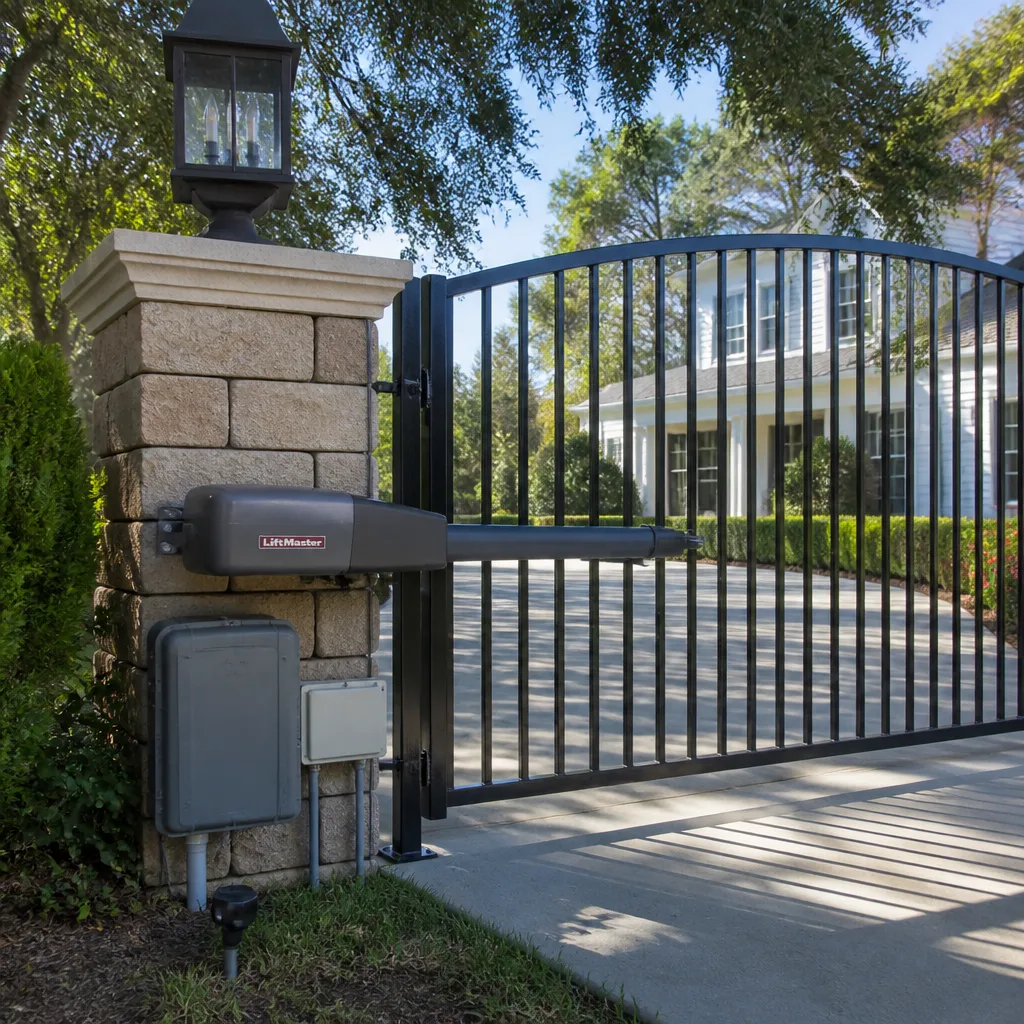
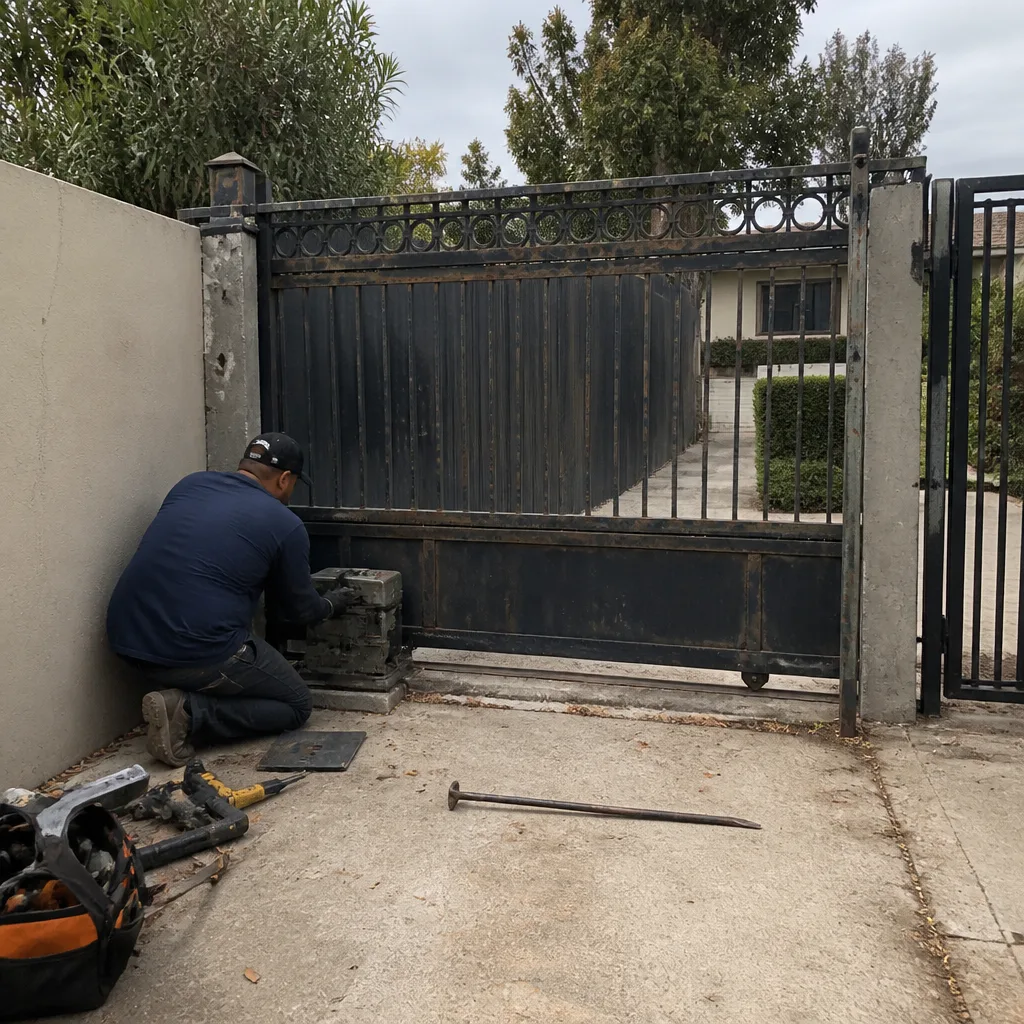 Before
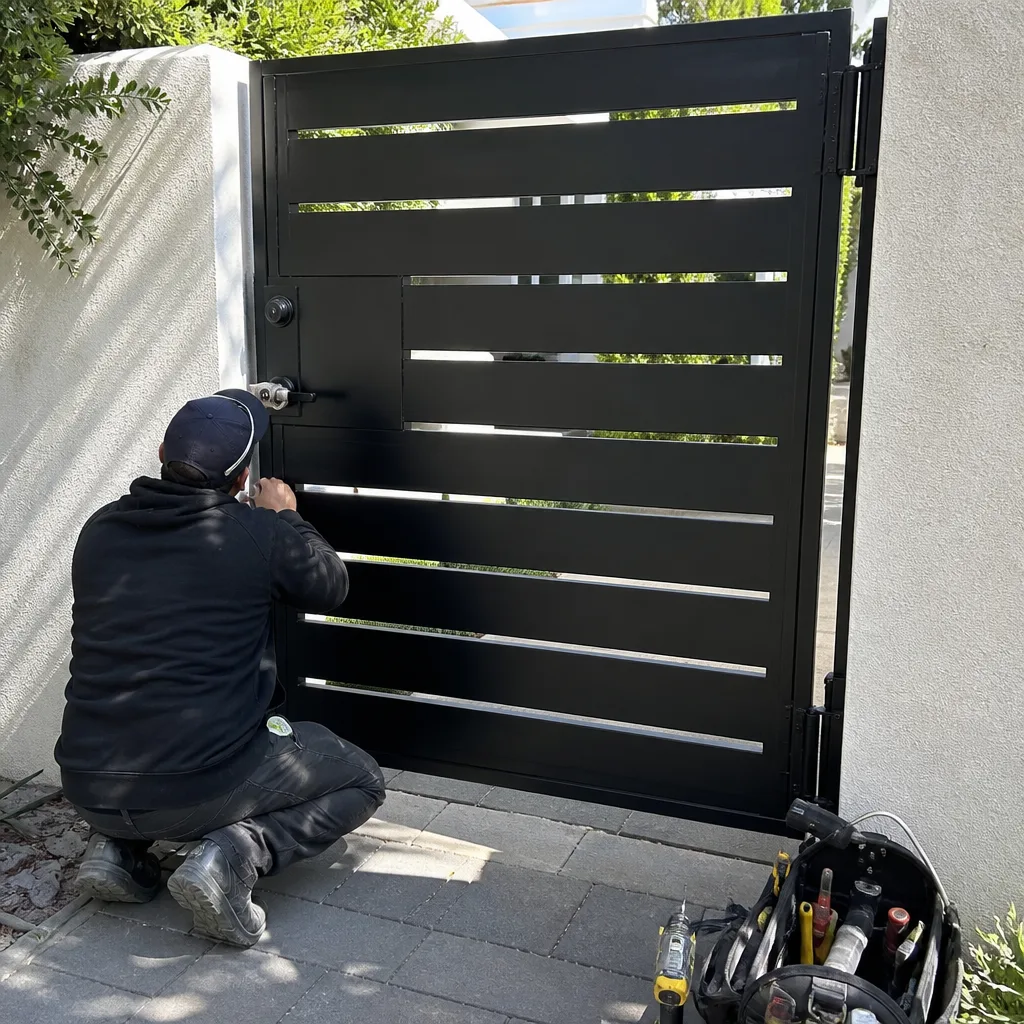 After
After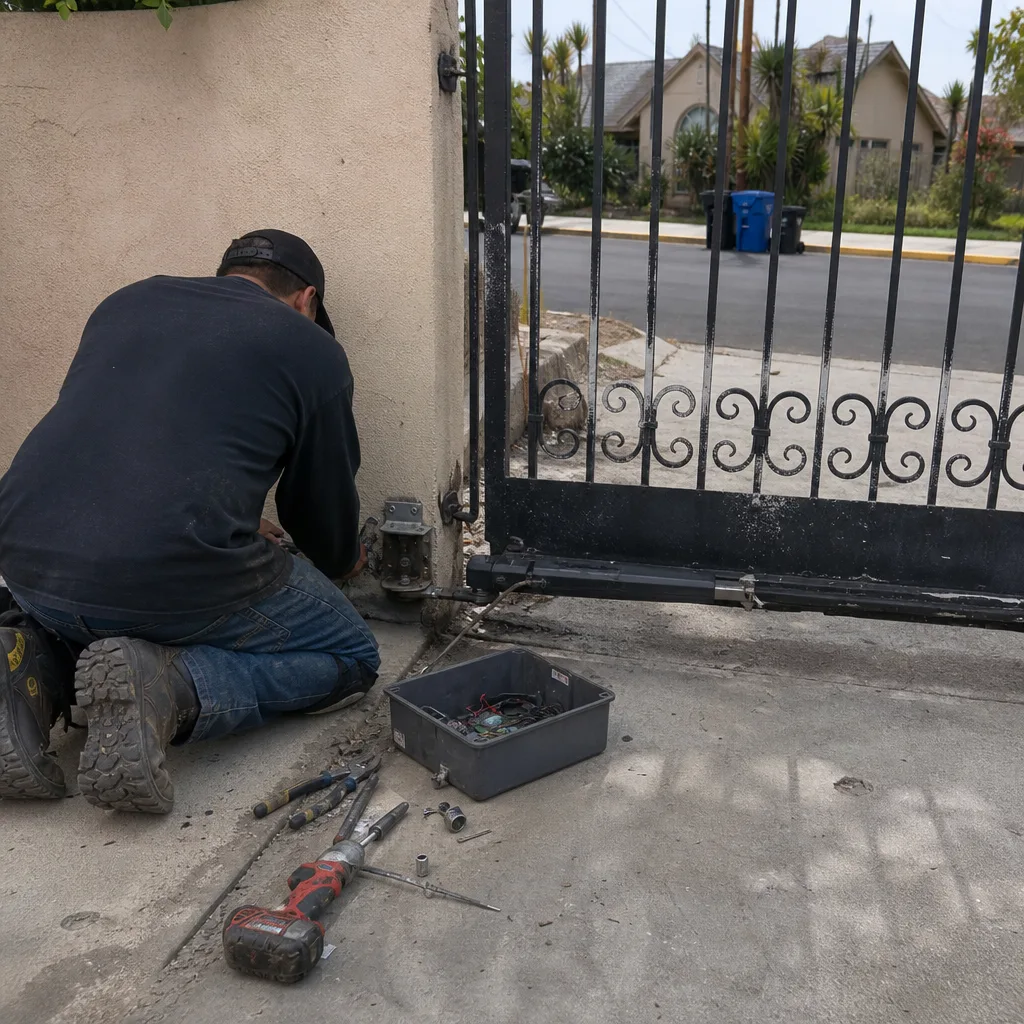 Before
 After
After Before
 After
AfterGate Repair Permits, Codes & Inspections in CA: What You Need to Know
Here’s the surprising part: most gate repairs in Los Angeles never come within a mile of a building department. You replace a hinge, swap a circuit board, reset a sensor, and nobody at the city cares. But the repairs that do trigger permits are often the ones homeowners describe as “small” - moving a gate post, pouring a new concrete pad, or rewiring an operator. A homeowner in Encino found that out the expensive way. She paid to have her driveway gate relocated six feet, no permit pulled, and three years later during escrow the unpermitted work triggered a retroactive inspection that held up her home sale for 47 days. This guide draws the line clearly: what needs a permit, what doesn’t, why UL 325 matters for electric gates, and how Los Angeles rules shift depending on whether you live in the city, the county, or a separate municipality like Pasadena or Burbank. For hands-on help, see our Gate Repair services.
Quick Answer
Most routine gate repair warning signs every homeowner should know stem from wear on hinges, sensors, and operator boards - but these routine fixes in Los Angeles require no permit. A permit is generally required when you replace a structural post, pour new foundation concrete, or install or substantially alter certain electrical components of an automatic gate operator. When in doubt, check with LADBS or your local building department before work starts, because unpermitted structural or electrical gate work can trigger stop-work orders and complicate a future home sale.
Table of Contents
- What Actually Triggers a Gate Permit in Los Angeles
- Los Angeles City vs. County vs. Pasadena, Burbank & Santa Monica: Why the Rules Shift
- UL 325 Compliance: What It Is, Why It Matters, and When a Repair Triggers It
- HOA Architectural Review vs. Municipal Permit: Which Comes First?
- How to Check If a Previous Owner’s Gate Work Was Permitted
- What Permitted Gate Work Costs in Los Angeles
- Step-by-Step: Getting a Gate Permit in Los Angeles Without Losing Your Mind
- Common Mistakes to Avoid
- When to Call a Professional
- Frequently Asked Questions
What Actually Triggers a Gate Permit in Los Angeles
Los Angeles building codes draw the line on gate permits in three specific places: structural posts, foundation work, and electrical operator installations. Understanding these thresholds saves you from either over-permitting a simple fix or under-permitting a job that comes back to haunt you.
Structural post replacement. If a gate post is bent, rusted through, or knocked out of plumb and the repair involves digging out the old post and setting a new one, LADBS generally classifies that as structural work requiring a permit. The reason is load. A driveway gate post in Los Angeles carries hundreds of pounds of swinging steel, and in an earthquake zone, that post is part of the lateral load path. A post set incorrectly in a seismic event is a projectile. If you’re only welding a crack or reinforcing an existing post without disturbing the footing, you typically stay permit-free.
New foundation work. Pouring a new concrete pad for a gate operator, a slide-gate track, or a relocated post footing crosses the permit threshold. Los Angeles soil conditions vary wildly - from the decomposed granite of the foothills to the expansive clay in the Valley - and a foundation spec that works in one neighborhood may crack in another. LADBS wants to see the concrete depth and reinforcement before it goes in.
Electrical operator installations. Installing a new automatic gate operator or replacing an existing one with a different unit can require an electrical permit if the work involves a new circuit, a new subpanel, or trenching for line-voltage power. Low-voltage operator swaps, where the 120V feed already exists and you’re replacing the operator head, usually do not. The distinction, in plain terms: if the work is on the gate side of the outlet, you’re usually fine; if the work is on the breaker-panel side, you need a permit.
At Portcullis Gate Repair in Los Angeles, we’ve walked hundreds of homeowners through this exact question. The fastest way to know is to call LADBS with your address and describe the scope in one sentence. They’ll tell you directly whether a permit is required, and the call takes five minutes.
Los Angeles City vs. County vs. Pasadena, Burbank & Santa Monica: Why the Rules Shift
Here’s what most online guides miss: “California” gate permit rules don’t exist as a single standard. Every municipality in the Greater Los Angeles area operates its own building department with its own interpretations, fees, and inspection timelines. What requires an electrical permit in Pasadena may be handled by a simple over-the-counter review in Los Angeles County unincorporated territory.
City of Los Angeles (LADBS). LADBS uses the California Building Code with local amendments. Gate post replacements and new foundation pads fall under structural permits; operator electrical work falls under electrical permits. LADBS has 11 field offices, and most residential gate permit applications are processed at the Van Nuys, West LA, or Metro offices depending on the address. Turnaround for a simple permit is often same-day to two weeks. Isla Vista and the Hollywood Hills are both LADBS territory, so the rule is consistent citywide.
Los Angeles County unincorporated areas. Communities like Altadena, Topanga, Marina del Rey, and parts of the Santa Clarita Valley fall under LA County Building and Safety rather than LADBS. County rules generally track the same state code, but the county has been slower to adopt certain electrical amendments. The practical difference is process: county permits often require a plan-review step that the city handles over the counter, adding a few days.
Independent building departments. Pasadena, Burbank, Santa Monica, Beverly Hills, and Glendale each run their own building departments. Pasadena, for example, has a historic-preservation overlay that can add a design-review step for any gate visible from the street in certain districts. Burbank’s building department is known for requiring a plot plan drawing even for a simple post replacement. Santa Monica has a public-works requirement if the gate work touches the parkway or the public right-of-way, which driveway gates often do.
The takeaway: never assume a rule from one part of the region applies to another. A gate repair that is permit-free in Los Angeles city limits might need a permit six blocks away in Burbank.
UL 325 Compliance: What It Is, Why It Matters, and When a Repair Triggers It
UL 325 is the Underwriters Laboratories standard for automatic gate operators and other motorized door and gate systems. In plain language, it’s the safety rulebook that says an automatic gate cannot crush a person, a pet, or a car. It became law in California through the state’s incorporation of the standard into Title 24, and every automatic gate operator installed or replaced in the state must comply.
What UL 325 actually requires, in practical terms:
- Entrapment protection. A system that stops and reverses the gate when it hits an obstruction. This is done with contact edges (rubber strips that sense pressure), photo eyes (infrared beams that detect a person in the path), or both.
- Secondary entrapment protection. On most residential installations, at least two independent entrapment-protection devices are required. One primary and one secondary. A single photo eye alone is not enough.
- Warning signage. Every automatic gate must carry a UL 325 compliant warning sign, visible from both sides of the gate, alerting people to the automatic operation.
- Gate travel limits. The operator must be set with force and travel limits so the gate does not over-travel or apply excessive force at the ends of its range.
When does a repair trigger UL 325 re-compliance? The rule is simple: if you replace the operator, you must bring the entire automatic gate system up to current UL 325 standards. That means adding a photo eye or upgrading an older contact edge even if the “repair” started as just a motor swap. We’ve seen this catch Los Angeles homeowners off guard. They budget $800 to replace a failed FAAC or LiftMaster operator, and the compliant installation calls for an additional photo eye, a new edge, and a warning sign, bringing the total to $1,300-$1,600. It’s not an upsell. It’s the law, and skipping it leaves the homeowner liable if the gate injures someone.
Homeowners with older swing gates from the early 2000s are the most likely to find themselves out of compliance. Operators made before 2001 often lack the modern force-limiting and monitoring features that UL 325 mandates, and no legitimate technician in Los Angeles will knowingly install or leave an operator that doesn’t meet the standard.
HOA Architectural Review vs. Municipal Permit: Which Comes First?
Here’s a scenario we see constantly in Los Angeles suburbs: a homeowner replaced an automatic gate operator with a new BFT unit, got the city’s blessing with an electrical permit, and then received a violation letter from the HOA because the new control box was mounted on the street-facing side of the pillar. The lesson: municipal approval and HOA approval are separate tracks, and neither one substitutes for the other.
Municipal permit first. Start with the building department because its rules are codified and objective. LADBS or your local agency will tell you in minutes whether the scope of work needs a permit and, if so, which type. This step is about life safety: structural integrity, electrical safety, and UL 325 compliance for automatic gates.
HOA architectural review second. Once you know the city’s requirements, take the scope to your HOA’s architectural review committee, often called the ARC. The ARC cares about different things: aesthetics, material consistency, color, height, and placement within the neighborhood’s design standards. Many HOAs in the San Fernando Valley and the Westside have a formal application form, a fee of $50-$200, and a review window of 30 to 45 days.
Why the order matters. If you go to the HOA first and then discover the city requires a different post size or a setback the HOA doesn’t like, you’re redoing the whole application. If you go to the city first, you’ll bring concrete specs to the HOA, and that often shortens their review. In some HOAs we work with around Studio City and Sherman Oaks, the ARC will not even review an application until a building-department sign-off is attached for the structural or electrical portions.
And a word about fines: an HOA cannot issue a building permit, but it can levy recurring monthly fines that accumulate faster than any LADBS stop-work order. In the Encino escrow case from the top of this guide, the seller faced both a city retrofit inspection and an HOA disclosure problem. One phone call before the work would have avoided both.
How to Check If a Previous Owner’s Gate Work Was Permitted - and What to Do If It Wasn’t
When you buy a home in Los Angeles, the seller’s disclosure statement covers known defects, but it rarely covers permit status of a gate. The burden is on you to check. A call to the building department before you repair or modify a gate can prevent expensive surprises at the next sale.
Here’s the process we walk our customers through, step by step. You can also explore more guides & resources on our blog:
- Pull the permit history for the address. In Los Angeles city limits, use the LADBS online permit search or call the LADBS records department. In Burbank, Pasadena, Santa Monica, or a county area, call that jurisdiction’s building department directly. Ask for the permit history for the address, specifically any permits for gate, fence, driveway, or electrical work.
- Look at the gate for a permit stamp or inspection sticker. Some municipalities place an inspection sticker on a gate post or the operator’s electrical box. If you see a sticker, note the permit number. If you don’t, it doesn’t prove anything - many inspectors don’t sticker.
- Compare the gate to the original tract plan if you can. Los Angeles homes built as part of a tract often have filed plans that show the original driveway and gate location. A gate that is relocated from the original setback without a matching permit is a red flag for a retroactive inspection later.
- If the work was unpermitted, request a voluntary inspection. Rather than wait for an escrow demand, call the building department and explain the situation. In our experience, Los Angeles inspectors are pragmatic about voluntary disclosures from homeowners. They’ll tell you what needs to be brought up to code. In some cases the original work is sound and they’ll close the file with a small fee; in others, you’ll repair and re-inspect.
- Keep the close-out paperwork. Whatever the outcome, keep the building-department correspondence, the inspection report, and any receipts. This is exactly the documentation that rescues a home sale from the 47-day delay our Encino neighbor faced.
One more note: Los Angeles requires sellers to disclose unpermitted work if they know about it. If you discover unpermitted gate work after you own the home, you now know about it, and in a future sale, disclosure is mandatory. Cleaning it up now is cheaper than negotiating it later.
What Permitted Gate Work Costs in Los Angeles
Talking about gate permit costs in Los Angeles means separating three line items: the permit fee, the inspection fee, and the actual repair work. Most homeowners only budget for the last one, and then the first two show up on the invoice like uninvited guests.
Typical gate repair permit and inspection costs in the Los Angeles area:
- LADBS structural permit for post replacement: $150-$400 including plan check and inspection, depending on whether a plot plan is required.
- LADBS electrical permit for operator circuit work: $80-$250 for a simple residential circuit addition or modification.
- Inspection fees: Often bundled into the permit fee for simple projects, but reinspection fees of $100-$200 apply if the inspector arrives and the work isn’t ready.
- Burbank, Pasadena, or Santa Monica building department fees: Generally 20-40% higher than LADBS for the same scope, with Santa Monica at the top end due to parkway and right-of-way reviews.
- Total permitting cost for a typical residential gate operator replacement with electrical work: $300-$700 all-in, including the permit, plan check, and inspection time.
For the repair work itself, here’s what we regularly see in Los Angeles homes:
- Swing-gate actuator replacement (FAAC, BFT, Viking): $900-$1,800 parts and labor, compliance included.
- Slide-gate operator replacement (Linear, LiftMaster): $1,200-$2,400 parts and labor.
- Structural post replacement with new concrete footing: $800-$2,000 depending on access and whether the pillar is brick, stucco, or steel.
- Full UL 325 compliance package added to an existing operator: $300-$700 for photo eyes, a contact edge, and signage.
Here’s the operating rule we give every customer: the permit is never the expensive part. The expensive part is discovering the work needed one when escrow has already opened. The permit is insurance, and the premium is a few hundred dollars.
Every Portcullis Gate Repair job in Los Angeles includes a written price before any work starts. We quote the permit as a separate line item, so you can see exactly what the city gets and exactly what we get. No surprises on the invoice. If you’re curious about the Gate Installation in Los Angeles side, the same pricing discipline applies: measured, ordered, scheduled, and written down before the first bolt turns.
Step-by-Step: Getting a Gate Permit in Los Angeles Without Losing Your Mind
After years of shepherding Los Angeles homeowners through building departments, we’ve distilled the process into seven steps. None of them are hard, but skipping one adds weeks.
- Determine your jurisdiction. Find your city and your exact address. Are you in LADBS territory, LA County unincorporated, or a separate city like Pasadena or Burbank? This determines which department you call and where you apply. One wrong call can send you to the wrong forms.
- Describe the scope in one paragraph. Writing down what you’re doing reveals what you actually need. “Replace driveway gate post and set new operator with new electrical circuit” triggers two permits (structural and electrical). “Swap operator head on existing circuit” triggers likely none.
- Call the building department and ask. Speak to a plan check or permit services staffer. Tell them the address and read them the scope. Ask specifically: “Is a permit required for this work?” Write down the name of the person you spoke with and the date. That call is your best protection against a future dispute.
- Apply and pay the fee. For simple residential gate work, this is often an over-the-counter transaction in Los Angeles. For more complex work or separate-city jurisdictions, you may need a plot plan sketch showing the gate location, the operator, and the electric feed.
- Schedule the inspection. Do the permitted work, then call for inspection. In Los Angeles, residential inspections typically run three to seven business days out. The inspector will verify the post depth, the concrete work, the electrical connections, and the UL 325 compliance features.
- Pass the inspection and file the close-out. When the inspector signs off, the permit is finalized. Keep a copy of the final inspection record with your home documents. This is the paper that protects your sale years later.
- Notify your HOA if applicable. In HOAs with architectural review, file the completion notice and a photo of the finished work. It closes the loop with the association and prevents open-item issues when you sell.
For Electric Gate Repair in Los Angeles, the same UL 325 requirements apply whether you’re in Encino, Westchester, or Woodland Hills. The operator must be compliant, the entrapment devices must function, and the inspector will test them. We handle this step on every electric repair we do, so the customer isn’t left interpreting the inspector’s checklist alone.
Common Mistakes to Avoid
- Assuming all gate work is exempt from permits. Most is, but structural post replacement and new foundation pads are not. In Los Angeles city limits, LADBS treats a gate post as a structural element subject to seismic review, and skipping the permit on a post replacement is one of the most common stop-work orders we see.
- Replacing an operator without checking UL 325 compliance. A new Linear or BFT operator on an old installation may not meet current entrapment protection by itself. When the operator changes, the whole system must comply, and that means photo eyes and edges. Missing this is a liability problem, not just a code problem.
- Applying to the wrong jurisdiction. A homeowner in Burbank applying to LADBS is going to get bounced. Every city in the Greater Los Angeles area has its own building department, and the rules are not identical. Check your city first.
- Skipping the HOA architectural review. Municipal approval doesn’t satisfy the association, and an HOA inStudio City or Sherman Oaks can issue monthly fines for unapproved work that the city never even noticed. HOA review goes through a different pipeline.
- Ignoring unpermitted work from a previous owner. What you don’t know can delay your sale. Pull the permit history before you repair or modify a gate, and if the work was unpermitted, ask for a voluntary inspection to clear it.
- Paying the entire job before the inspection passes. Legitimate gate companies in Los Angeles don’t demand full payment before the building inspector signs off. A written price before work starts and a written guarantee on the repair are the two documents you want in hand.
When to Call a Professional
Some gate work is genuinely do-it-yourself territory: tightening hinge bolts, cleaning the track on a slide gate, or replacing a warning sign. The jobs that need a professional are the ones where the permit and the liability converge. If you’re replacing a structural post with new concrete, installing or relocating an automatic operator, adding electrical circuits, or bringing an older gate up to UL 325 compliance, call someone who does this work in Los Angeles for a living. The code interpretation, the inspection coordination, and the brand familiarity with Viking, BFT, FAAC, and Linear systems save hours of guesswork and a few hundred dollars in reinspection fees. Portcullis Gate Repair offers free estimates in Los Angeles - call (940) 412-7340 and describe the scope, and we’ll tell you directly whether the job needs a permit and what it will cost before any work starts.
Frequently Asked Questions
No permit is required for most routine gate repairs in California, including hinge replacement, operator board swaps on existing circuits, sensor realignment, and track cleaning. A permit is required when the repair involves replacing a structural post, pouring new foundation concrete, or installing new electrical circuits for an automatic operator.
A gate repair permit in Los Angeles typically costs $150-$400 for structural work and $80-$250 for electrical work, including inspection fees. Separate cities like Pasadena, Burbank, and Santa Monica charge 20-40% more for the same scope.
UL 325 is the safety standard for automatic gate operators, requiring entrapment protection, secondary entrapment devices, warning signage, and proper travel limits. Every automatic gate in California must comply, and replacing an operator triggers the requirement to bring the entire system into compliance.
You can replace a gate operator without a permit if the new unit connects to an existing, permitted electrical circuit and no new wiring or trenching is involved. The replacement must still meet UL 325 standards, which usually means installing photo eyes and a contact edge if they are not already present.
Call your local building department and request the permit history for your address. In Los Angeles city limits, LADBS has an online search tool and phone support. Look for any permits tied to gate, fence, driveway, or electrical work at your address.
Unpermitted structural or electrical gate work can result in a stop-work order, a fine, and a retroactive inspection requirement. When you later sell the home, you’re required to disclose known unpermitted work, and a buyer may demand the work be permitted before escrow closes.
The Bottom Line
Gate repair permits in Los Angeles are not dense, but they’re specific. Most hinge, sensor, and board replacements need no permit at all. Structural posts, foundation work, and new electrical circuits do, and they carry inspection and UL 325 compliance obligations that are easy to miss. The difference between a five-minute hinge replacement and a four-figure retroactive inspection is knowing which category your project falls into before the work starts. Call the building department, pull the permit history, satisfy the HOA, and keep the close-out papers. That’s the whole game. And if you’d rather someone else carry the clipboard, Portcullis Gate Repair home page covers every Los Angeles neighborhood from Encino to Eagle Rock with the same Kingswell Guarantee: a written price before any work, a real arrival window, a clean job site, and a written guarantee on the repair, 365 days, in writing. Call (940) 412-7340 and ask us directly whether your gate project needs a permit. We’ll give you the answer and the price in the same conversation.
Written by Dean Prescott, Owner at Portcullis Gate Repair, serving Los Angeles since 2008.