
Last updated October 8, 2026
Free on-site gate assessment - hinges, posts, and your LiftMaster or Nice gate operator checked before anything is quoted
The assessment is free and the quote is the invoice.

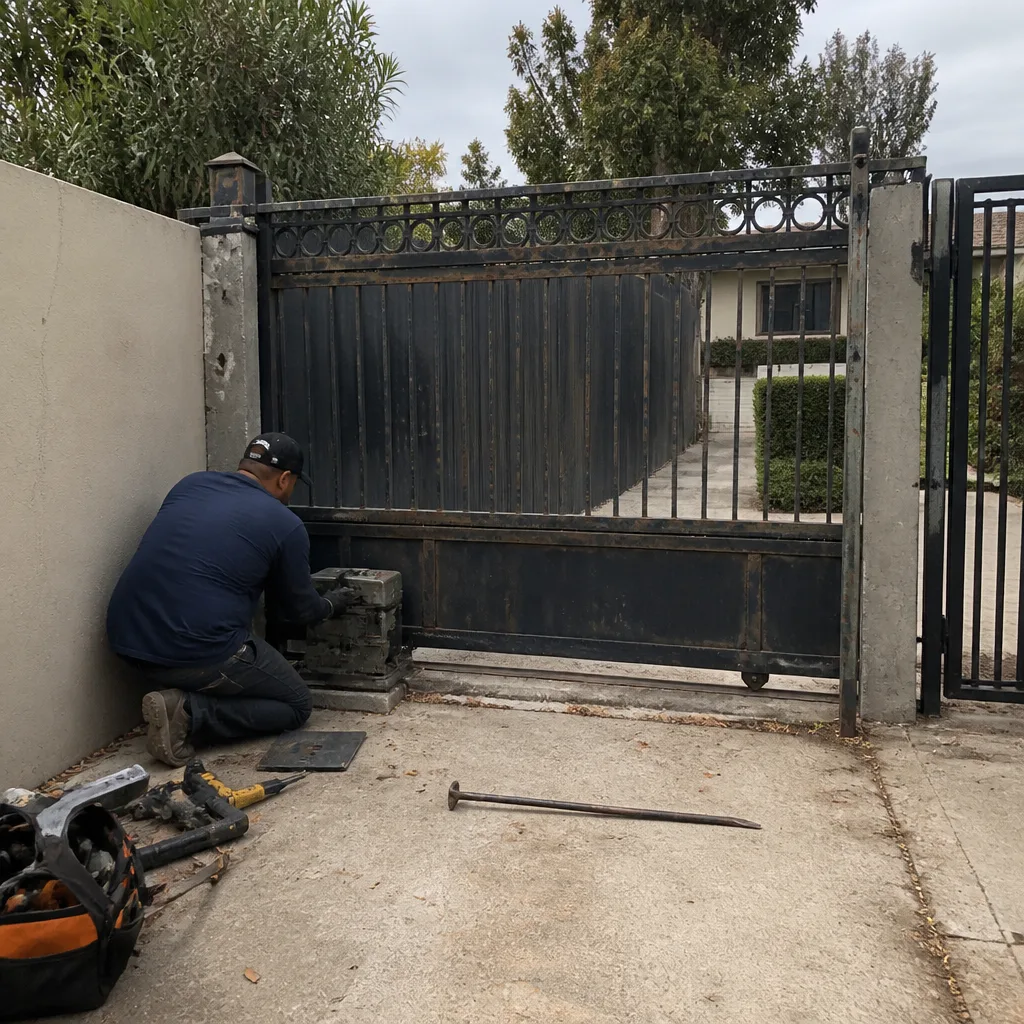 Before
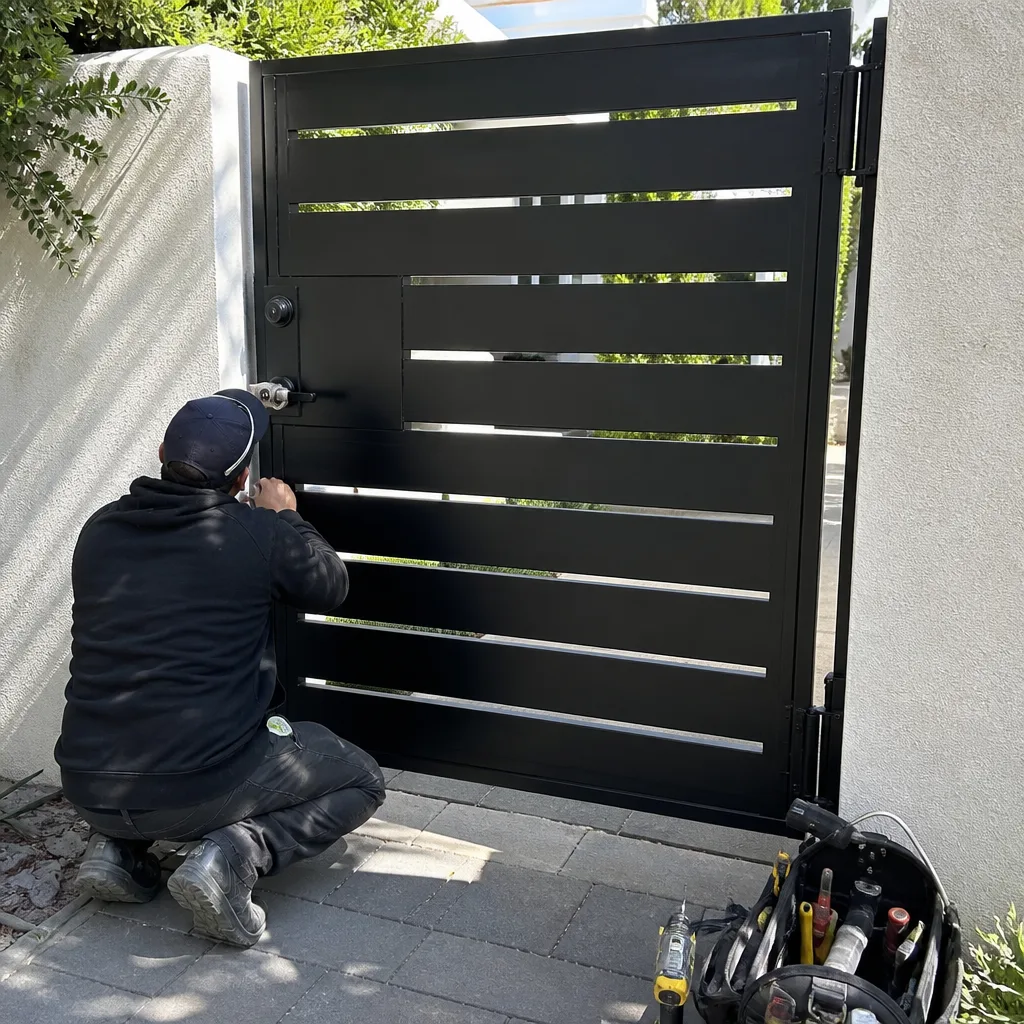 After
After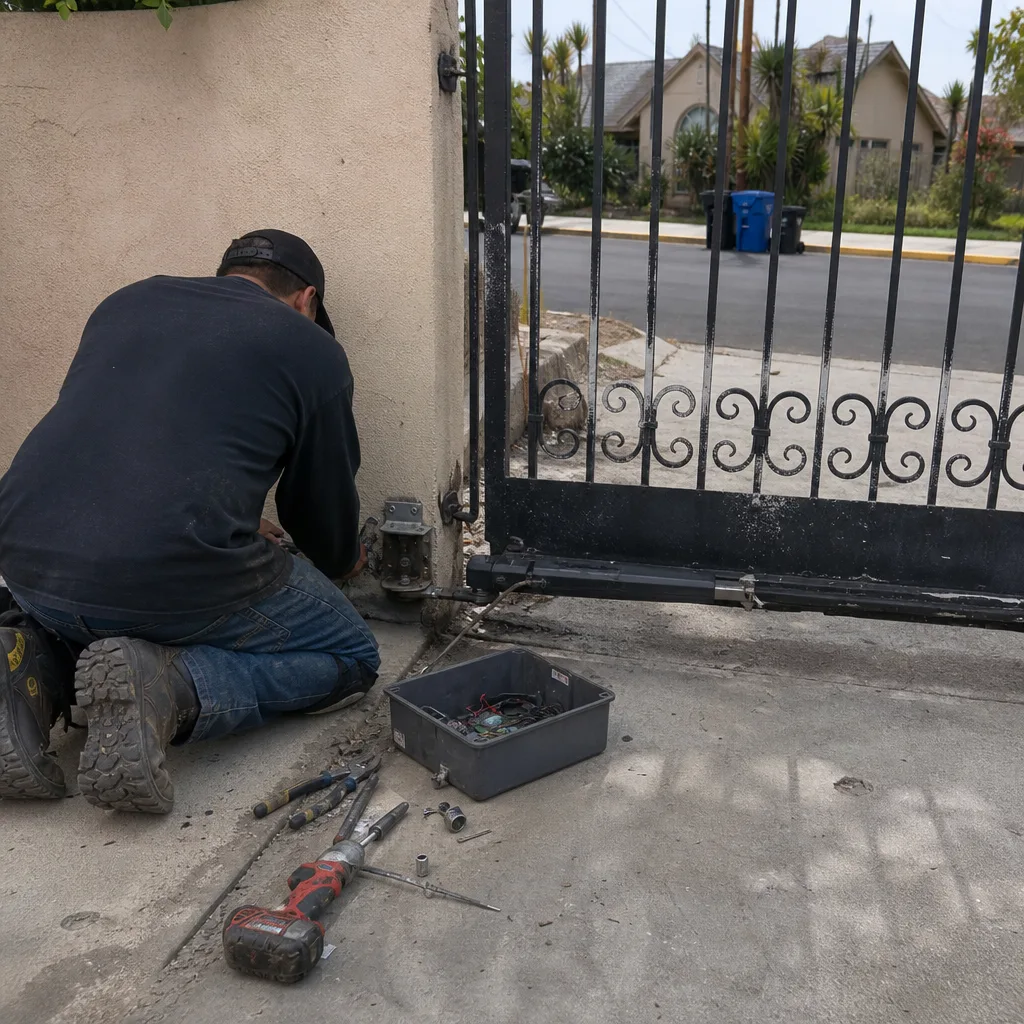 Before
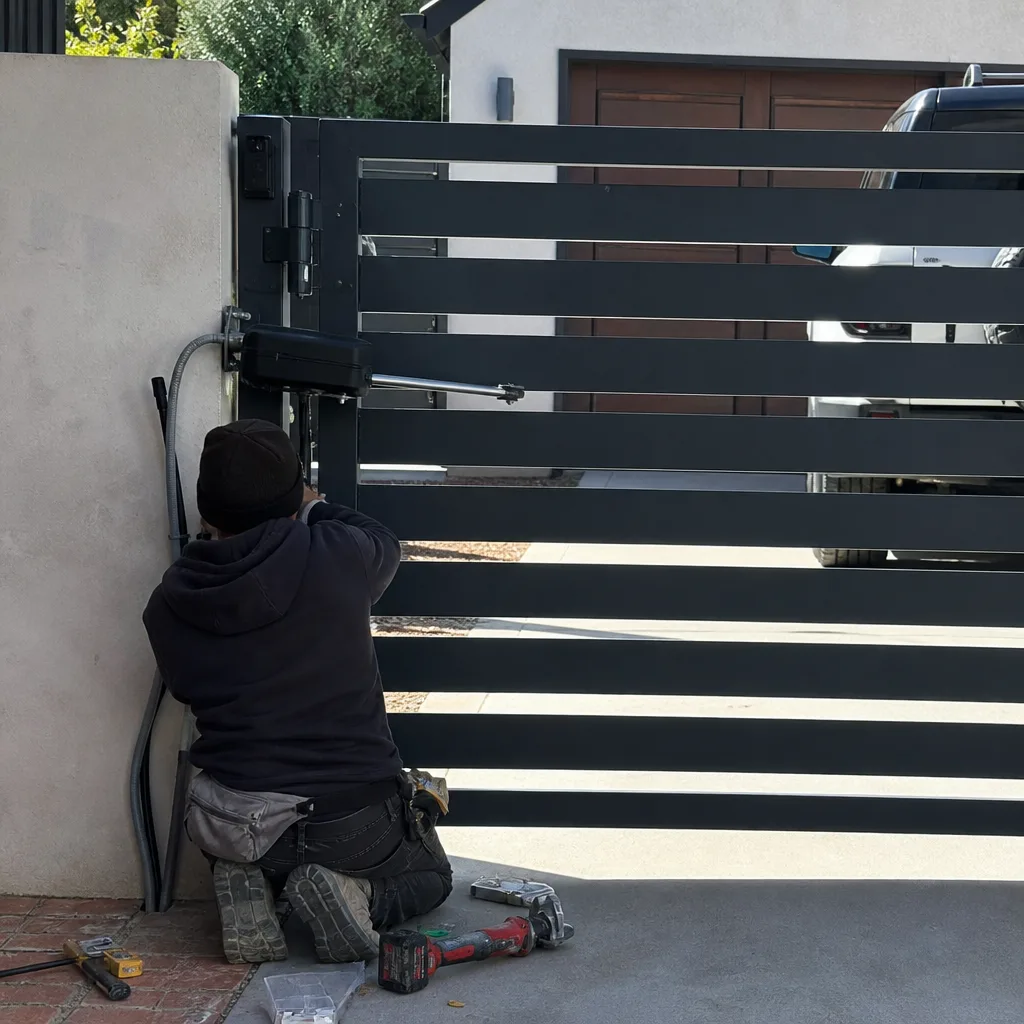 After
After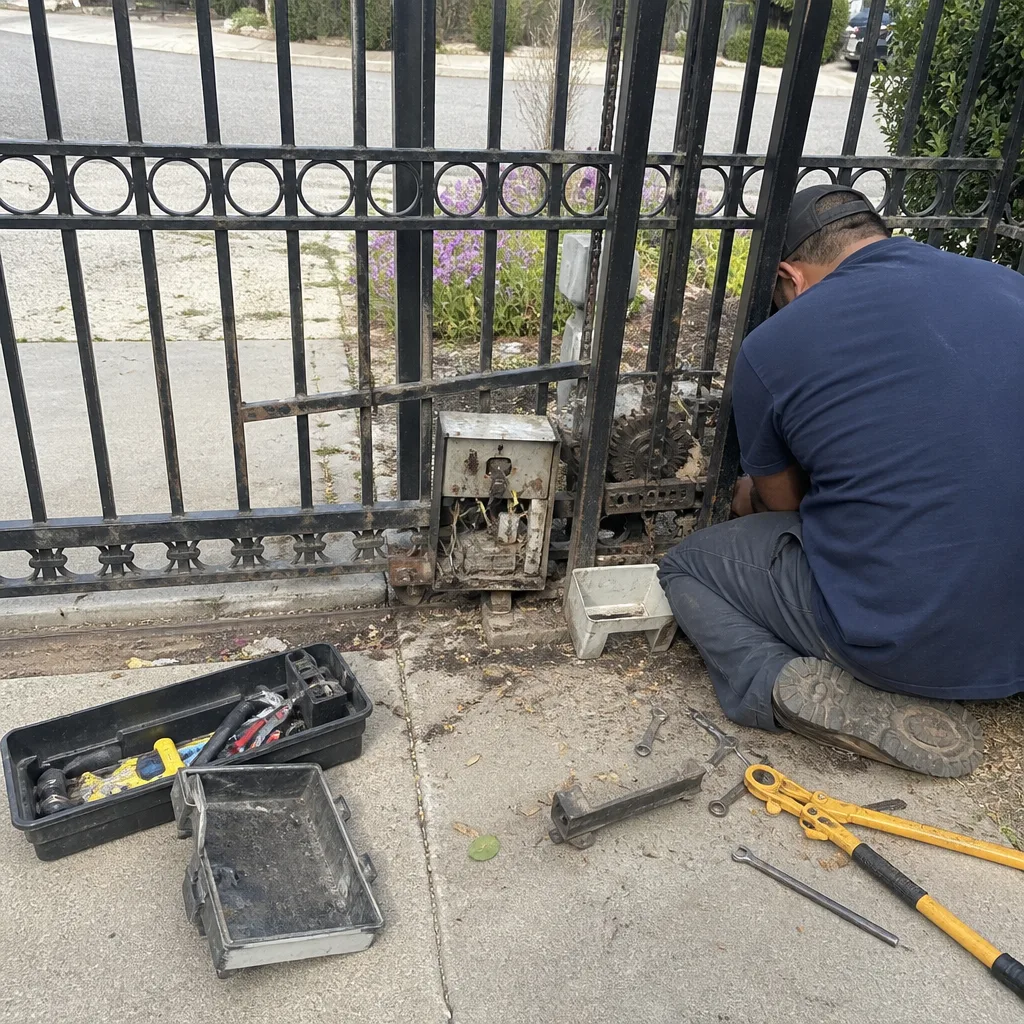 Before
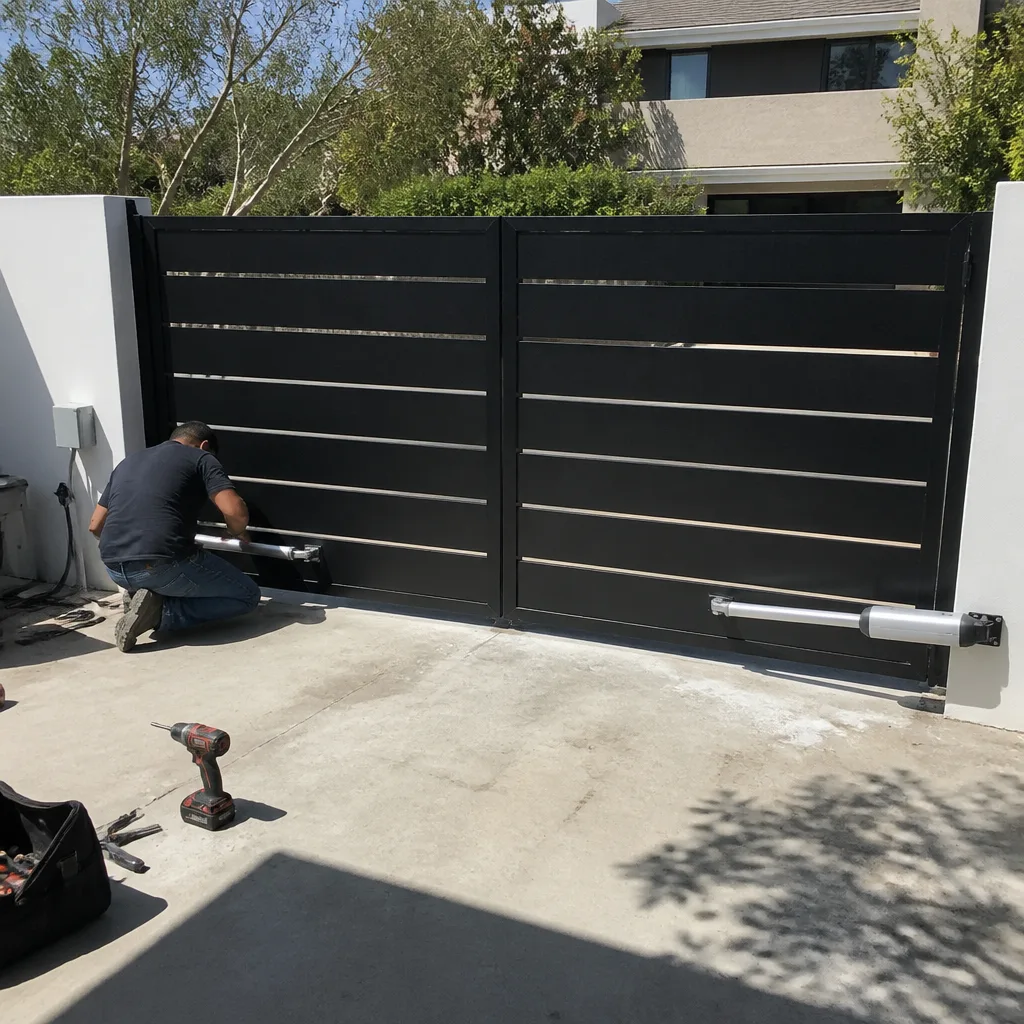 After
AfterGate Repair Emergency Preparedness Guide for Los Angeles Homes
Most Los Angeles homeowners don’t think about their automatic gate until it stops moving. That’s the exact moment they discover whether they’re prepared or panicking. During the 2025 Palisades fire, residents with automatic gates and no manual release knowledge or working battery backup were locked out of their own properties during evacuation. A gate failure in a fire zone isn’t a repair problem. It’s a life-safety problem. This guide walks through the three scenarios where a gate failure becomes a true emergency in Los Angeles: power outages, post-wildfire access chaos, and security events. You’ll learn what to check now, what to keep on hand, and what to say when you call for Gate Repair services.
Quick Answer
Emergency gate preparedness in Los Angeles comes down to three things: knowing how to operate your gate’s manual release, having a tested battery backup if your gate is your only secure entry point, and knowing how to temporarily secure a failed gate before a technician arrives. A homeowner who spends one hour learning these basics will handle a gate emergency in roughly twenty minutes. A homeowner who doesn’t will wait hours for a technician while their property sits open or their family sits locked out.
Table of Contents
- How to Find and Operate the Manual Release on Your Gate
- Battery Backup Systems: What LA Outage Patterns Actually Demand
- How to Temporarily Secure a Failed Gate
- Who to Call and What to Say for Emergency Gate Service
- Post-Wildfire Ash and Debris: Why Gates Fail Weeks After a Fire
- The One-Hour Gate Preparedness Checklist
How to Find and Operate the Manual Release on Your Gate
Every automatic gate has a manual release mechanism. This is the mechanical override that disconnects the gate from the motor so you can push it open by hand. In a power outage, this override is often the only thing standing between you and your evacuation route. Yet in our experience across Los Angeles neighborhoods from Sherman Oaks to Woodland Hills, fewer than one in ten homeowners we meet can locate their manual release without searching for it.
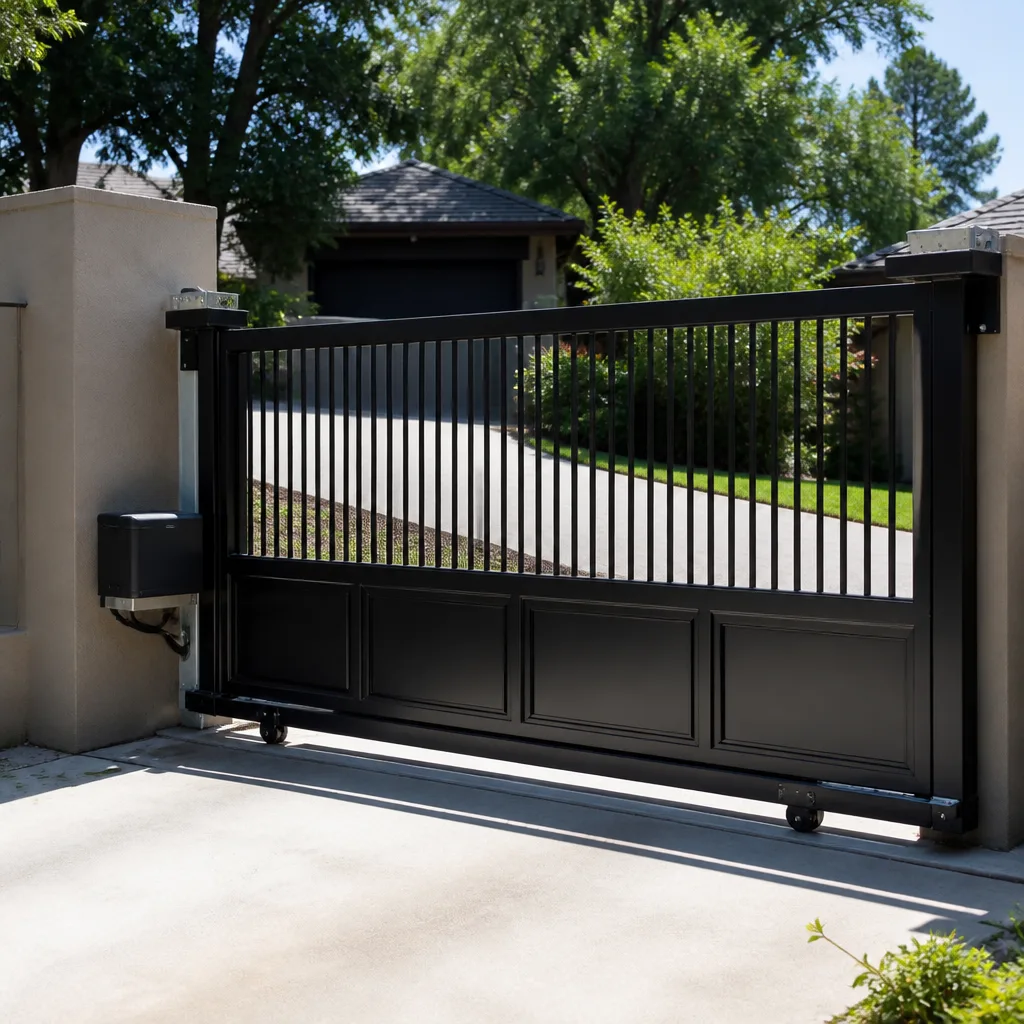
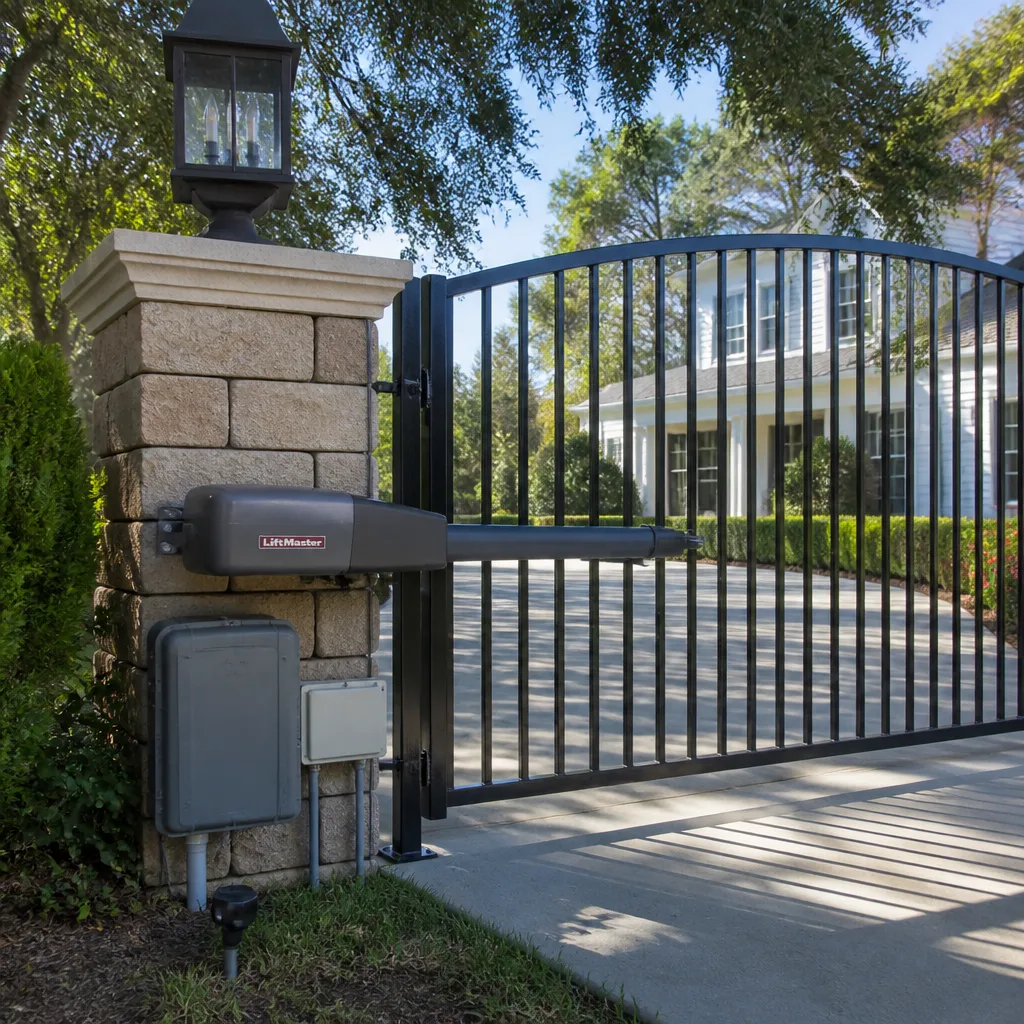
The release is typically a small lever, key, or pull knob mounted on the actuator, which is the motorized arm that physically pushes the gate open. On slide gates, the release is usually near the motor housing on the gate track. On swing gates, it’s on the actuator arm itself. Here’s what to look for on the four most common brands we service:
- LiftMaster: Look for a red release handle or keyed release on the operator housing. On swing-gate actuators, the release is a pull knob near where the arm meets the gate.
- FAAC: FAAC swing actuators have a release key that inserts into the actuator housing. Rotate the key a quarter turn and the gate disengages from the motor.
- Elite: Elite operators use a release lever on the side of the motor unit. Slide gates have a chain-release mechanism accessible from the top of the operator cover.
- Mighty Mule: Most Mighty Mule swing units have a simple pull pin at the base of the actuator. Pull the pin, and the arm pivots freely so you can push the gate open by hand.
The time to find your manual release is not during an evacuation. It’s this weekend, in daylight, with the gate closed. Remove the operator cover if there is one, locate the release, and actually operate it. Push the gate open by hand once so you know how much force it takes. A cast-iron swing gate can weigh 400 pounds or more. If you can’t move it comfortably, you now know you need a battery backup or a second escape route.
- Close the gate completely before touching the release mechanism.
- Locate the release lever, key, or pull pin using your operator’s manual or the brand notes above.
- Operate the release and confirm the gate swings or slides freely by hand.
- Re-engage the release and confirm the motor works normally when you press the opener.
- Show at least one other household member, including any teenagers, how to do this.
If your gate is on a steep driveway in a neighborhood like Mount Washington or Eagle Rock, gravity matters. A swing gate that opens downhill will want to slam open once released. Brace yourself before you pull the release. A slide gate on a slope can roll once the motor releases. Know your grade before you test.
Battery Backup Systems: What LA Outage Patterns Actually Demand
Los Angeles doesn’t have tornadoes or blizzards. What it has is wind. Santa Ana winds knock out power in specific corridors every single year, and the outages last longer in the canyons than they do in the flats. The 2025 fire season proved that public-safety power shutoffs can now affect neighborhoods that never previously lost power. Laurel Canyon, Topanga, and the hills above Studio City all saw extended outages alongside the foothill communities that expect them.
A gate battery backup keeps your automatic gate operating during a power outage. It’s a rechargeable battery system wired into your gate operator. During normal operation, it stays charged off your home’s power. When power drops, the battery takes over. Most entry-level systems will run a residential swing gate through 10 to 20 open-and-close cycles before the battery is drained.
Here’s the part most gate companies don’t tell you: capacity matters less than age. A three-year-old backup battery may only hold 30% of its original charge. In a sustained outage, that’s the difference between getting your family out and pushing a dead gate by hand in the dark. We recommend testing your backup battery twice a year, every year, and replacing it every three to five years depending on the brand and how often it’s cycled.
To test yours:
- Unplug the gate operator from its power source or flip the dedicated breaker off.
- Open and close the gate using the remote or keypad.
- Count how many cycles you get before the gate slows noticeably or the backup warning activates.
- If it’s fewer than five cycles, replace the battery. It’s already degrading.
- Flip the power back on and confirm the operator charges the battery back to full.
One thing to know about Los Angeles specifically: our outages are often paired with wind events that blow debris across your gate track. If a branch or lawn furniture ends up in the path of the gate while you’re running on backup, the gate’s safety edge should stop it. But some older systems lack a proper safety edge. If your gate hits an obstruction and reverses, that’s fine. If it strains against the obstruction and keeps trying, kill the breaker and clear the debris before using the gate again. Forcing a gate through debris during an outage is a reliable way to strip a gear and turn an inconvenience into a full operator replacement.
How to Temporarily Secure a Failed Gate
When a gate fails, you have two problems and they’re not always the same: you can’t get out, or you can’t keep people out. The method you use to temporarily secure a failed gate depends on which problem you’re solving and what kind of gate you have.
For a slide gate that refuses to open: Most slide gates can be disengaged and pushed along their track by hand. Release the motor, push the gate to the open position, and secure it open with a heavy block or a chain around the post. Do not leave a slide gate halfway open. A partially open slide gate in a wind event can roll on its track and strike a vehicle or a person.
For a slide gate that won’t close or won’t stay closed: Slide gates are hard to secure in any position other than open or fully closed because they ride on wheels. If the gate powers down while open, closing it manually means re-engaging the motor and using the manual crank, if your operator has one, or walking it along the track by hand. Once it’s closed, drill a hole through the gate frame and the track and insert a padlock, or run a heavy chain through the gate frame and around the nearest solid post. This is a temporary fix. It buys you hours, not days.
For a swing gate that won’t open: Disengage the actuator and push the gate open by hand. Swing gates are usually easier to move than slide gates because the hinges bear the weight. Once open, chain the gate leaf to the fence or a fixed object so it can’t swing shut on someone.
For a swing gate that won’t close: A failed swing gate in the open position is a security gap. Close it manually and lash the two leaves together with a ratchet strap. If the gate has a center post, chain each leaf to the post. Don’t use bungee cords. A strong gust in a canyon neighborhood will stretch them and let the gate swing.
One important note: if your gate is a primary security barrier for a property with a pool, Los Angeles County code requires self-closing and self-latching gates on pool enclosures. A manually propped or chained gate may not meet the latching requirement. If you have a pool, treat a failed pool gate as a higher-priority repair, and keep children away from the area until the gate is properly fixed.
If you’re not comfortable securing the gate yourself, or the gate is too heavy to move safely, leave it where it is and call a gate repair technician in Los Angeles who can secure it properly. A 500-pound gate falling on a person is not a trade-off for a few hours of convenience.
Who to Call and What to Say for Emergency Gate Service
When you call for emergency gate service in Los Angeles, the information you give determines what happens next. Dispatch sends a technician based on what you say. If you say “my gate’s broken,” you get the nearest available technician with whatever’s on the truck. If you say “my slide gate is stuck half-open, the operator is a FAAC 844, and the chain is off the sprocket,” dispatch sends a technician with FAAC experience and the right parts for a chain drive.
Here’s what an emergency dispatcher needs to hear, in order:
- Your address and the nature of the emergency. Lead with it. “Gate stuck open, security risk” or “gate won’t open, can’t get vehicles out” tells dispatch what they’re dealing with.
- Gate type. Slide gate or swing gate. It changes which tools and parts the technician brings.
- Operator brand and model, if you know it. The brand plate is usually on the operator housing. LiftMaster, FAAC, Elite, and Mighty Mule all have different failure modes and different parts. If you can read the model number off the plate before you call, you’ve already saved a return trip.
- What you’ve already tried. Did you test the manual release? Did you check the breaker? Did the remote work but the keypad didn’t? This helps the technician diagnose over the phone and arrive with a plan.
- Whether the gate is currently open, closed, or stuck somewhere in between. A gate stuck half-open is a bigger immediate problem than a gate stuck closed, because it’s both a security risk and a traffic obstruction.
We answer calls with a live person 24 hours a day, 7 days a week. No voicemail trees, no callback queues. The person who answers is the person who dispatches, and they can tell you honestly whether you need emergency service tonight or whether a scheduled visit tomorrow morning makes more sense for your situation.
One thing to remember if you have a power outage and the gate does not have a backup: if the gate operator is receiving no power, we may advise you over the phone on how to operate the manual release while you wait. Every home with an automatic gate should have at least one family member who has done this before. If nobody has, tell the dispatcher. That changes the urgency of the call.
If you’re in Los Angeles and you need us, call (940) 412-7340. We service the entire city and surrounding areas, and our technicians arrive in uniform and background-checked.
Post-Wildfire Ash and Debris: Why Gates Fail Weeks After a Fire
Wildfires in Los Angeles don’t only damage gates that are in the fire’s path. They damage gates miles from the burn zone. Ash is fine, alkaline, and extremely abrasive. It gets into everything: gear housings, chain drives, circuit boards, limit switches. In the weeks after a fire event, we see a spike in gate failures in neighborhoods that had smoke and ash but no fire damage. The gate was fine one day, and then two weeks later the motor is grinding or the controls are dead.
Here’s what ash does to a gate system, part by part:
- Gear housings: Ash mixes with the grease inside the gear train and becomes a grinding paste. This accelerates wear on the gears and can strip them entirely on a heavy slide gate.
- Chain drives: Ash sticks to the chain oil and creates a slurry that increases friction. The operator has to work harder, which draws more current, which stresses the circuit board.
- Limit switches: These are the sensors that tell the gate where to stop. Ash on the switch contacts or the cam surfaces causes the gate to stop short, overrun, or reverse at the wrong point.
- Photoelectric safety sensors: Ash film on the sensor lenses blocks the beam and the gate refuses to close unless you hold the override. Homeowners often mistake this for a dead board.
The single most valuable thing you can do after a fire event, even if your home was never in an evacuation zone, is have your gate operator inspected. We do a post-ash inspection that covers the gear box, the drive mechanism, the limit switches, and the safety sensors. It costs about $90. The alternative is waiting until the grinding sound becomes a repair, and by then you’re typically looking at $500 to $700 in parts and labor that could have been prevented with an hour of cleaning and re-greasing.
If you’re in one of the canyon neighborhoods or anywhere the ash fell thick enough to leave a visible film on cars, your gate has been exposed. Don’t wait for the failure. Book the inspection. It’s the cheapest gate insurance you’ll ever buy in Los Angeles.
The One-Hour Gate Preparedness Checklist
You can complete our Gate Repair Maintenance Checklist for Los Angeles Homeowners in an hour, and it will change how you handle every gate emergency from here on.
- Find your manual release and test it. Disengage the gate, push it open by hand, and re-engage it. This is the single most valuable thing on this list.
- Read your operator’s model number. The brand plate is on the operator housing. Write the brand and model down somewhere accessible, like a note on your phone or a label inside the garage door.
- Locate the dedicated breaker for your gate. Label it now so you can find it in the dark. Many gate issues are fixed by cycling this breaker.
- Test your battery backup, if you have one. Unplug the operator and count your cycles. Under five cycles means replace the battery.
- Check the condition of the gate wheels or hinges. Rusted hinges and seized wheels make manual operation far harder than it needs to be. Lubricate them if they’re dry.
- Save the number of a gate company that answers 24/7. Put it in your phone contacts. You won’t have time to research during an emergency.
Complete this checklist once, and you’ve done more than most Los Angeles homeowners ever will. Complete it twice a year following our Gate Repair Maintenance Schedule: What to Do and When, and you’ll catch problems while they’re still cheap to fix.
Common Mistakes to Avoid
- Testing the manual release for the first time during an emergency. In a power outage, in the dark, with smoke in the air, you will not figure out a release mechanism you’ve never touched. Learn it before you need it.
- Assuming the gate company will arrive in twenty minutes. Los Angeles is a big city, and traffic between Santa Monica and Burbank can be 45 minutes with no incidents. A 24/7 dispatch line means a live person answers, not that the technician is already parked at your curb. Secure the gate yourself or be honest with dispatch about your timeline.
- Ignoring a gate that’s making a new sound. Grinding, squealing, or straining noises are progressive. What’s a $60 bearing today is a $400 gear replacement next month. Gates don’t heal.
- Using power tools to open a stuck gate. If the gate is jammed, cutting or prying a gate off its track can cause more damage than the original failure. If it can’t be moved by hand with the release disengaged, stop and call a technician.
- Forgetting about the pool gate code. Los Angeles County has specific self-closing and self-latching requirements for pool gate enclosures. A propped-open gate is a violation and a safety hazard. Pool gates get repair priority.
- Skipping the post-ash inspection. After any fire event within a few miles of your home, your gate has been exposed to abrasives. The inspection is $90. The repair you’re avoiding is $700.
When to Call a Professional
Call a professional when the gate is too heavy to move safely by hand, when the failure involves the motor or the control board, when the gate has come off its track, or when you can’t identify what’s wrong within ten minutes of looking. It’s also the right call when a pool safety gate has failed, when you’ve lost the remote programming and the keypad is dead, or when the gate simply won’t respond to any input. Some things are better handled by someone who sees this every day. Portcullis Gate Repair offers free estimates in Los Angeles. Call (940) 412-7340 and a person will answer, 24/7.
Frequently Asked Questions
Emergency gate repair in Los Angeles typically runs $180 to $340 for most common fixes like a failed actuator, a stripped gear, or a dead control board on a residential gate. More involved repairs, like replacing a slide-gate chain drive or a complete operator swap on a heavier gate, can run $500 to $900. What you pay depends on the gate type, the operator brand, and whether parts are on the truck or need to be ordered, and you’ll always know the full price in writing before any work starts. Call (940) 412-7340 and describe the issue for a more exact number.
Yes, a 24/7 gate repair company can usually reach most Los Angeles neighborhoods the same day, especially for true emergencies where the gate is stuck open or the property cannot be accessed. Same-day service depends on where the technician is when you call and what’s currently on the schedule, so be specific about your situation when you call. The more detail you provide up front, the better the chance of a single-trip fix.
Find the manual release on your gate operator and disengage the gate from the motor so you can push it open by hand. If you have a battery backup, your gate should already be running on it, but if the backup is dead or absent, the manual release is your only way through the gate. Test this now, in daylight, before you ever need to do it in an emergency.
A healthy battery backup will run a residential swing gate through 10 to 20 open-and-close cycles, which covers short to moderate outages but not multi-day shutoffs in canyon neighborhoods like Topanga or Laurel Canyon. The real risk in Los Angeles isn’t capacity, it’s age: a battery that’s three years old or more may only hold a fraction of its original charge. Test yours twice a year and replace it every three to five years.
Ash and fine particulate from Los Angeles wildfires get into gate gear housings, chain drives, and sensor lenses, causing increased wear and intermittent faults weeks after the fire event. The most common post-ash problem is a photoelectric sensor that’s coated in film and prevents the gate from closing properly. A $90 inspection and cleaning after any fire event near your neighborhood can prevent hundreds of dollars in repair work.
The fastest method is to close the gate manually using the release mechanism and then secure it with a chain, a ratchet strap, or a padlock depending on whether you have a slide gate or a swing gate. Slide gates should be secured at the track with a chain or lock. Swing gates should be lashed at the leaf tips or chained to a fixed post. Don’t rely on bungee cords, which stretch in wind, and call a professional in the morning if you can’t get same-day service.
The Bottom Line
Gate emergencies in Los Angeles are predictable. Power outages happen every year in the wind corridors. Post-fire ash reaches neighborhoods miles from any burn zone. Security events happen without warning. The prepared homeowner already knows where the manual release is, whether the battery backup works, and who to call when the gate stops moving. The unprepared homeowner pays more, waits longer, and sometimes faces real security risk. An hour of preparation now beats an hour of panic later. If you need help testing a manual release, checking a battery backup, or scheduling a post-ash inspection, call Portcullis Gate Repair at (940) 412-7340. Our home page has more on our services, and you can read about gate installation in Los Angeles or electric gate repair in Los Angeles for more specific information.
Written by Dean Prescott, Owner at Portcullis Gate Repair, serving Los Angeles since 2008. For more guides & resources, visit our blog.