
Last updated October 8, 2026
Free on-site gate assessment - hinges, posts, and your LiftMaster or Nice gate operator checked before anything is quoted
The assessment is free and the quote is the invoice.
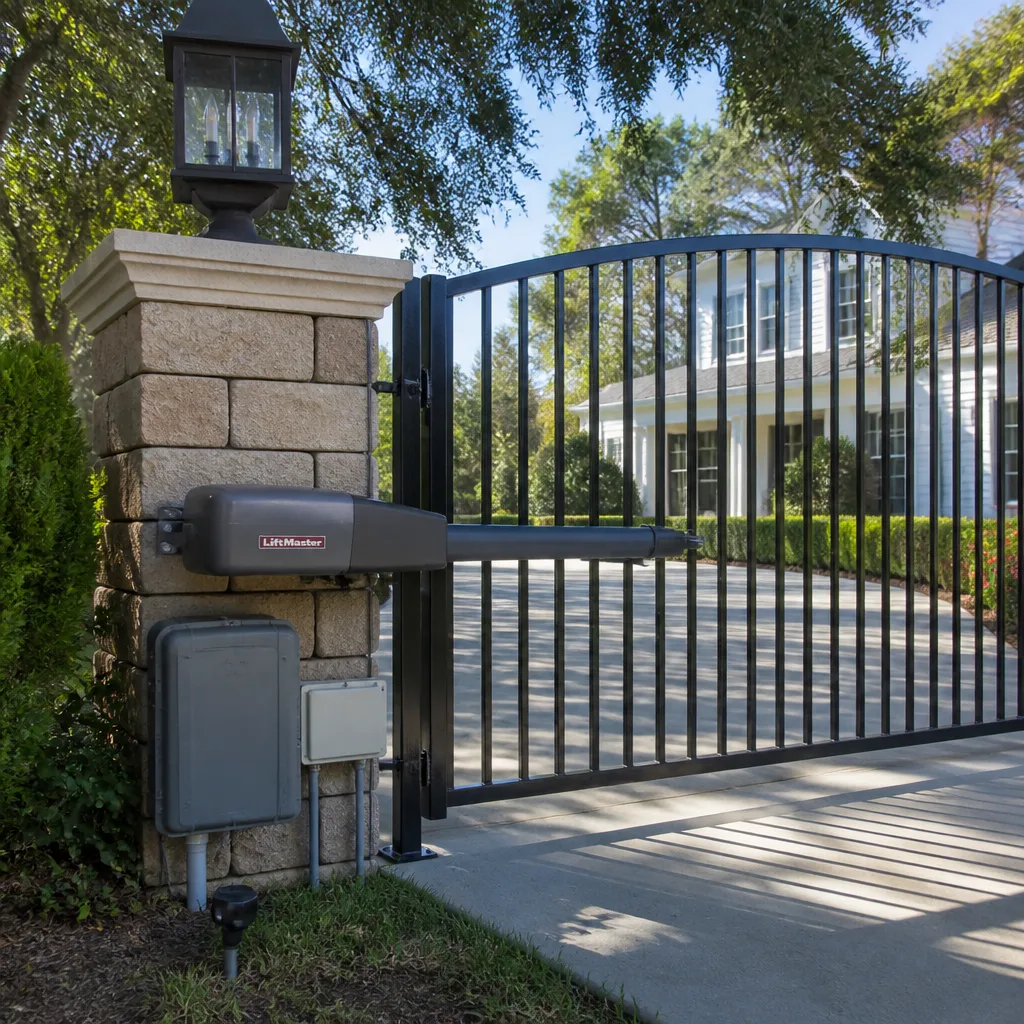
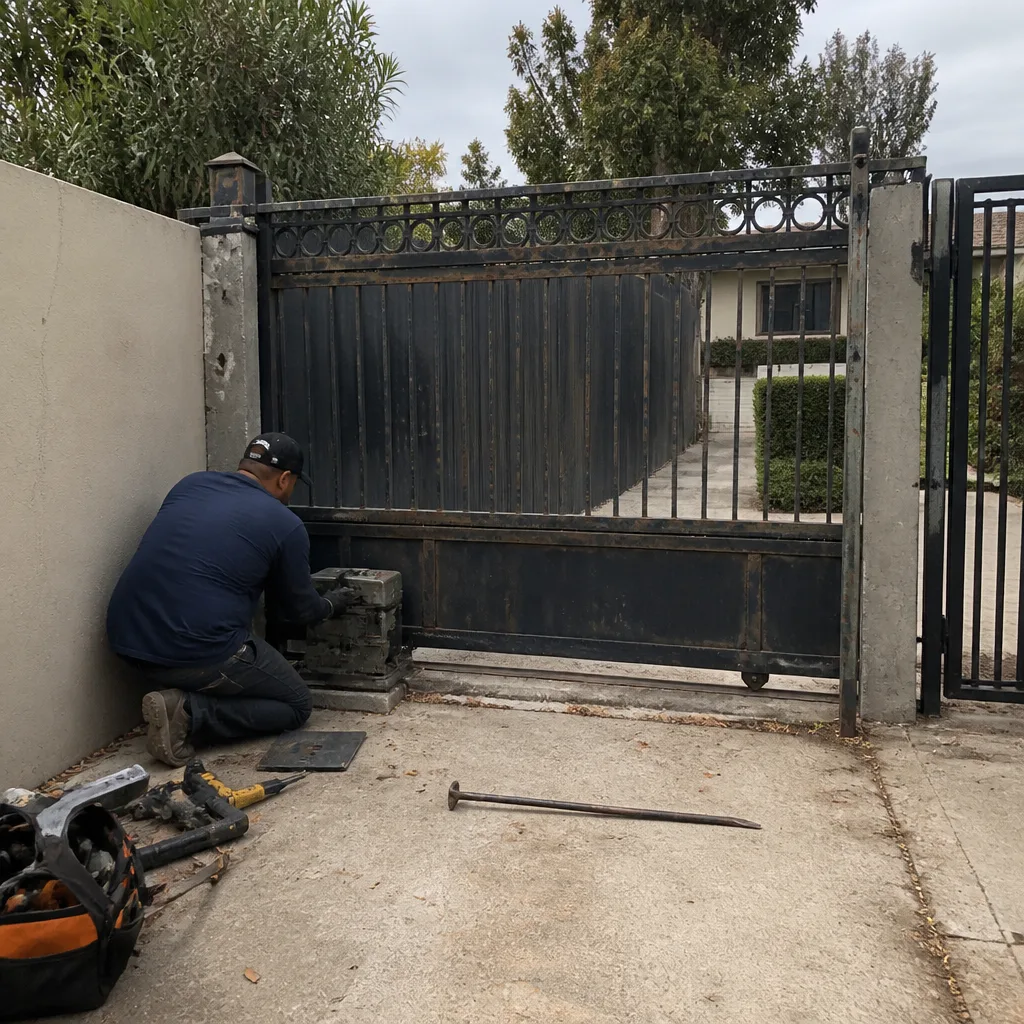 Before
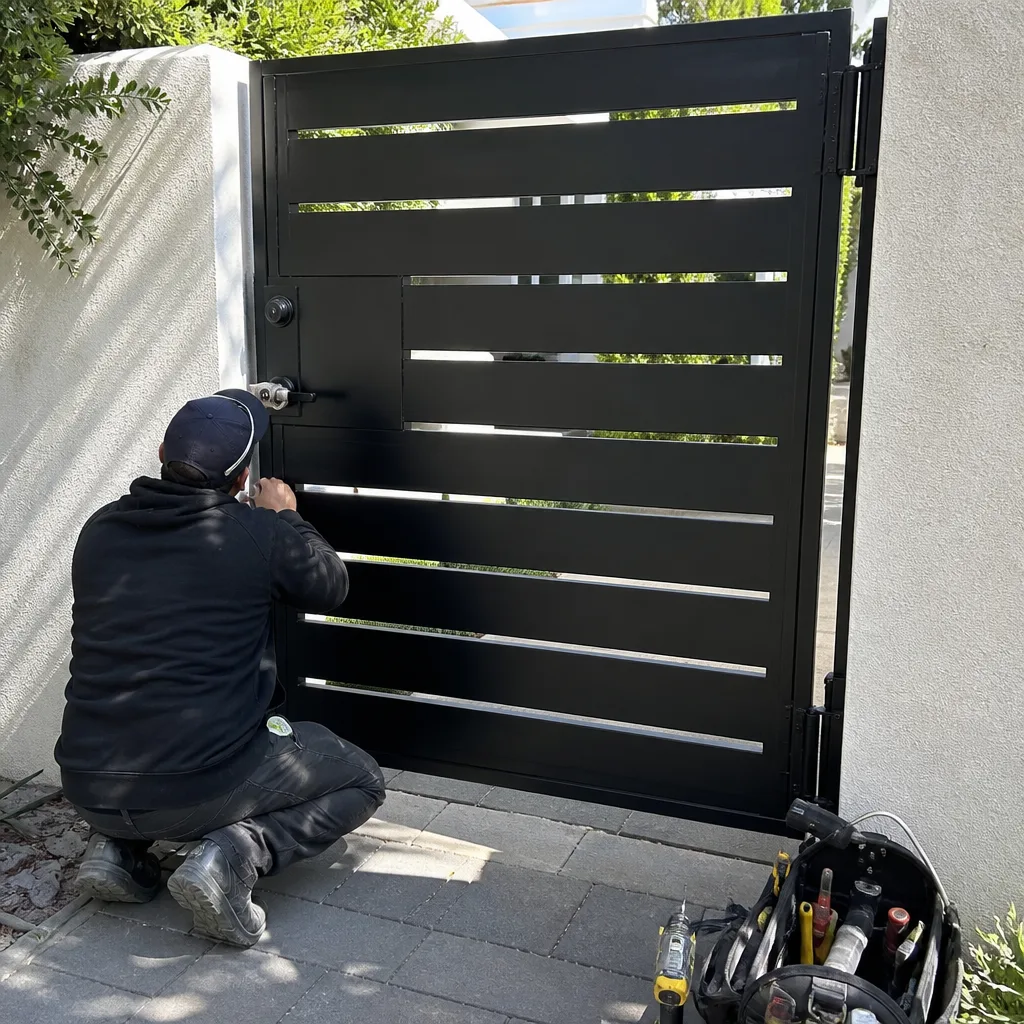 After
After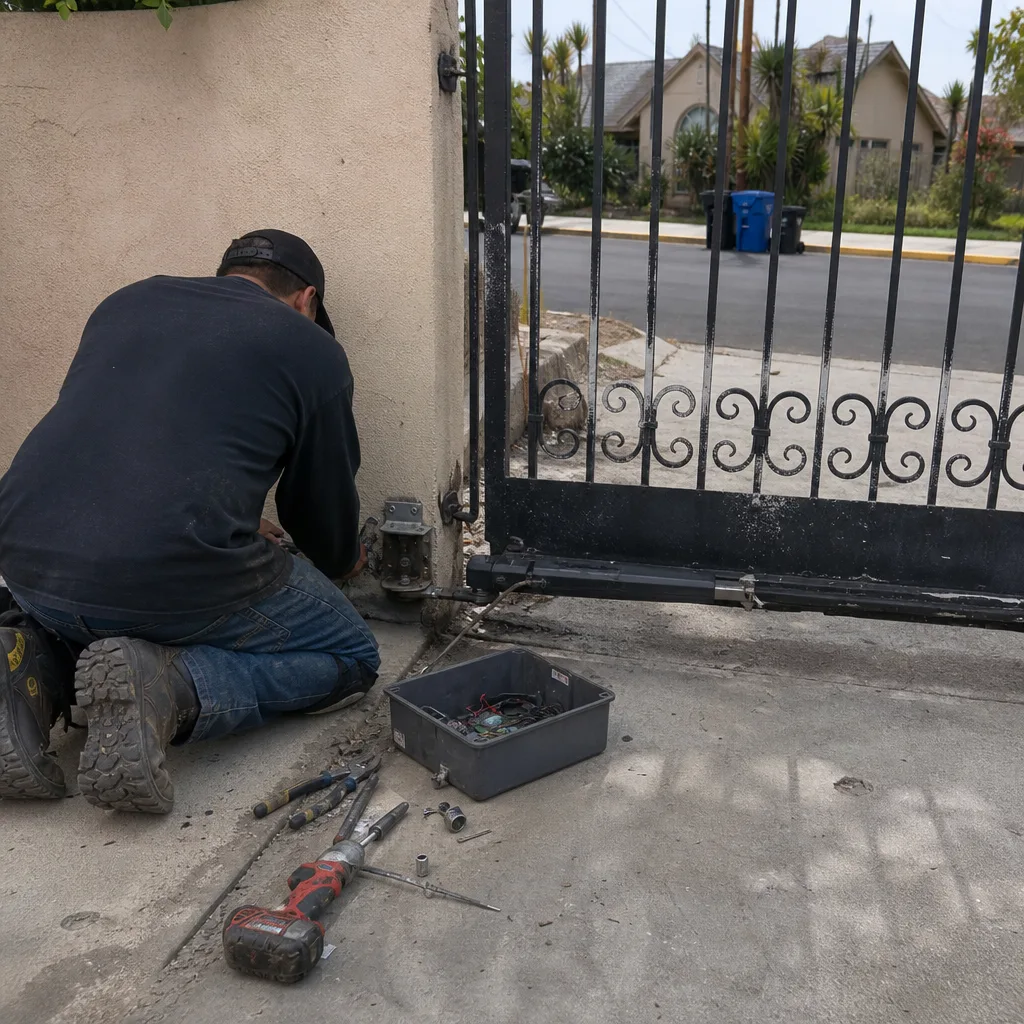 Before
 After
After Before
 After
AfterGate Repair Maintenance Checklist for Los Angeles Homeowners
A standard gate hinge can last 15 years in Phoenix and 6 years two blocks from the LA coast. Same hinge, same install, completely different outcome because nobody adjusted the maintenance schedule for salt-laden marine layer. Los Angeles is not one climate; it’s five or six microclimates stacked on top of each other, and your gate lives in one of them. This checklist is built around what actually goes wrong here: marine layer corrosion near the coast, heat and UV damage in the Valley, ash and ember infiltration during brushfire season, and lateral post drift after seismic activity. By the time you finish reading, you’ll know what to check monthly, what to service seasonally, and what to leave alone before you void a warranty or hurt yourself.
Our team at Portcullis Gate Repair has provided Gate Repair services across Los Angeles since 2008, from Venice to Woodland Hills to Mount Washington. The failure patterns we see repeat by zone, and this guide maps them out so you can stay ahead of the next breakdown instead of discovering it at 7 a.m. on a Monday.
Quick Answer
A Gate Repair Maintenance Schedule: What to Do and When means a monthly visual check of hinges, posts, and operator housings; a seasonal lubrication schedule adjusted for your zone (coastal, Valley heat, or hillside); and a post-earthquake inspection of post plumb and gate alignment. Most homeowners can safely handle cleaning, lubrication, and visual inspection themselves. Anything involving torsion springs, high-tension cables, or operator electrical work should go to a trained technician, both for safety and to keep manufacturer warranties intact.
Table of Contents
- The Zone-Based Checklist: Coastal, Valley, and Hillside Priorities
- Monthly Gate Checks (10 Minutes, No Tools Required)
- Seasonal Maintenance: What to Do Each Quarter in Los Angeles
- Lubrication for LA’s Temperature Swings: Product Types and Intervals
- Post-Seismic Inspection: The 10-Minute Check Most Homeowners Skip
- Brushfire Season Prep: Ash, Embers, and Operator Housings
- DIY vs. Professional: What’s Safe and What Voids a Warranty
- Common Mistakes to Avoid
- When to Call a Professional
- Frequently Asked Questions
- The Bottom Line
The Zone-Based Checklist: Coastal, Valley, and Hillside Priorities
Most gate maintenance guides read like they were written for someone in Scottsdale. They tell you to lubricate hinges twice a year and call it done. That advice fails in Los Angeles because a gate in Playa del Rey faces a fundamentally different set of enemies than a gate in Sherman Oaks or Topanga. The marine layer deposits a fine film of salt and moisture on exposed metal for hours every morning, accelerating rust on hinges, brackets, and exposed operator arms. Ten miles inland, the Valley bakes aluminum housings and plastic keypad faces until they crack and fade. In hillside and canyon neighborhoods, the threats are ash, ember, and shifting soil. Here’s how the priority list shifts by zone.
Coastal Zone (Venice, Playa del Rey, San Pedro, Long Beach, Malibu)
- Rust and corrosion on hinges, brackets, and exposed fasteners is the number one failure mode. Salt-laden air penetrates even powder-coated surfaces once the coating gets a scratch or chip.
- Inspect powder-coated and painted surfaces monthly for chips. A small scratch near the coast becomes visible rust within 60 days.
- Check stainless steel hinges for pitting. Even marine-grade stainless degrades faster within a mile of the surf than it does in West Hollywood.
- Operator circuit boards corrode faster near the coast. If your operator housing is not sealed properly, salt air gets inside and shortens board life by years.
Valley Heat Zone (Woodland Hills, Encino, Northridge, Sherman Oaks, Burbank)
- Plastic and rubber components degrade fastest here. Keypad membranes, photo-eye covers, and capacitor housings dry out and crack under sustained 90-plus-degree heat.
- Operator overheating is a summer failure pattern. Motors in direct sun or unshaded metal housings run hotter and trip thermal overload protection.
- Gate sag from thermal expansion cycles. Metal expands and contracts daily between cool mornings and hot afternoons, loosening hinge bolts and gate frame fasteners over time.
- UV damage to keypad displays. If your keypad faces west or south, the lens can become unreadable within three or four summers.
Hillside and Canyon Zone (Topanga, Mount Washington, Laurel Canyon, Studio City hills, Glendale hills)
- Post drift from soil movement and seismic activity is the top structural issue. Hillside soil shifts constantly, and even small tremors can move a post a quarter inch out of plumb.
- Brushfire ash and ember contamination enters operator housings and keypad internals during fire season, acting as an abrasive and a conductor of moisture.
- Debris accumulation on slide gate tracks. Decomposing leaf litter and dry brush collect in track channels faster on hillside properties.
- Drainage issues around gate posts. Hillside runoff concentrates around post footings, softening concrete and accelerating post lean.
If you live near the coast, your maintenance calendar is rust-first. In the Valley, it’s heat-first. On a hillside, it’s structure-first. Adjusting your checklist to your zone is the single highest-impact change you can make, and it costs nothing.
Monthly Gate Checks (10 Minutes, No Tools Required)
These are visual and physical checks you can do while the gate is opening or while you’re waiting for the coffee to brew. None require tools. You’re looking for changes from last month, not perfection. We’ve seen homeowners catch a failing hinge pin weeks before it snapped just by noticing the gate looked half an inch lower than it used to.
- Watch the gate run one full open and close cycle. Listen for grinding, squealing, or a new hesitation. A gate that pauses at the same spot every cycle often has a track obstruction or a binding hinge. A gate that runs smooth is a gate that’s not wearing itself out prematurely.
- Look at the gap between the gate and the post at the latch side. If the gap is wider at the top than the bottom, the gate is sagging. That sag is your early warning sign for hinge wear or post drift. Catch it now and you’re looking at an adjustment, not a replacement.
- Inspect hinge bolts and bracket fasteners for rust or movement. Rust on a bolt head means moisture has been sitting on it. Movement means the bolt is backing out. Either one is a five-minute fix now and a structural failure later if ignored.
- Check the operator housing for debris, cobwebs, or pest activity. Spider webs inside an operator housing trap moisture and fine dust. Rodents chew wiring. If you see any sign of pests, that’s worth a professional inspection before the problem reaches the circuit board.
- Test the safety features. Place your hand or a broom handle in the gate’s path and try to close it. The gate should stop and reverse. If it doesn’t, shut the operator off and call a technician. This is a safety issue, not a convenience issue.
- Clear debris from slide gate tracks and swing gate path. Leaves, pine needles, and small rocks are the most common cause of “my gate stopped halfway” calls we get in the fall.
- Check keypad and intercom buttons for sticking or unresponsiveness. Press every button once. A key that sticks or requires a hard press is wearing out and will only get worse.
Ten minutes a month buys you early detection on roughly 80% of the failures we see. The other 20% tend to announce themselves, usually on a Friday evening when you’re trying to leave for dinner.
Seasonal Maintenance: What to Do Each Quarter in Los Angeles
Los Angeles doesn’t have a traditional four-season year, but your gate does. The maintenance rhythm here is driven by rain patterns, Santa Ana winds, heat waves, and fire season. Here’s the quarterly schedule we recommend to our clients across the city.
January to March (Rainy Season)
- After every significant rain, inspect gate posts for water pooling at the base. Standing water around a post footing softens the concrete and accelerates post lean.
- Check operator housing seals. Rain driven by wind finds gaps around the housing door or the conduit entry points. A dry operator is a working operator.
- Inspect slide gate tracks for mud and silt accumulation. Runoff from rain carries fine silt into track channels. Let it dry and it compacts into something like concrete.
- Test the manual release mechanism. Power outages during storms are common. You need to know how to disengage the operator and open the gate by hand before the power is actually out.
April to June (Transition, Mild Temperatures)
- Do a full lubrication pass using the product types in the next section. This is the ideal window because temperatures are moderate and lubricants spread evenly.
- Check and tighten all accessible fasteners. Hinge bolts, bracket bolts, operator mounting hardware. Thermal cycling over the previous summer and winter has done its work.
- Inspect the gate frame for cracks or fatigue. Look at weld joints on steel gates and at the corners of aluminum gates. Hairline cracks at a weld are a structural warning, not a cosmetic one.
July to September (Heat and Fire Season)
- Check operator thermal protection. If your operator trips and resets on hot afternoons, the motor is overheating. Shade the housing or relocate the operator if possible.
- Clear brush and dry vegetation away from the gate, posts, and operator. Ember accumulation near a gate post can smolder and ignite. Keep a defensible space of at least five feet around the gate structure.
- Inspect keypad and intercom for UV damage. If the display is fading or the buttons are cracking, schedule a replacement before the heat finishes them off.
October to December (Santa Ana Winds, Early Rain)
- Remove wind-driven debris from operator housings and track channels. Santa Ana winds push leaves, dust, and small debris into every opening on your gate system.
- Check post plumb after any significant wind event. Strong sustained winds on a wide gate put lateral force on posts. A heavy gate acts like a sail.
- Test the gate’s cycle speed and force settings. If the gate closes hard or fast, the operator settings may have drifted. This is the time to recalibrate before holiday traffic on your gate increases.
Lubrication for LA’s Temperature Swings: Product Types and Intervals
Lubrication is the most misunderstood maintenance task on a gate. Most people use whatever spray is in the garage, which is usually WD-40, which is a water displacer, not a lubricant. In Los Angeles, the product choice matters more than it does anywhere else because our temperature swing between marine layer mornings and afternoon heat separates oil-based lubricants and sends them dripping off the hinge within weeks.
What to Use
- White lithium grease for hinge pins and pivot points. It holds up in heat and resists washing away in coastal moisture. Apply a thin coat, not a glob. A glob attracts dust and becomes grinding paste.
- Silicone spray lubricant for slide gate track rollers and wheels. It doesn’t attract dust the way oil-based products do, which matters during the dry months when Santa Ana winds push fine particulate everywhere.
- Dry graphite lubricant for key locks and keypad buttons. Wet lubricants inside a key cylinder trap dust and eventually gum up the tumblers.
- Never use WD-40 or penetrating oil on gate hinges. They break down existing grease and leave the metal dry within a few weeks.
Recommended Intervals by Zone
- Coastal zone: Lubricate hinges every 60 to 90 days. Salt-laden air accelerates lubricant breakdown, and a hinge that runs dry near the coast wears noticeably within a season.
- Valley heat zone: Lubricate every 90 days during summer and every 120 days the rest of the year. Heat thins grease and gravity does the rest.
- Hillside and canyon zones: Lubricate every 90 days year-round, and check more often during fire season when airborne ash increases friction on every moving part.
The rule of thumb: if you can hear the hinge squeaking, it’s already been running dry for weeks. Noise is the symptom of wear that’s already happening, not a warning that it might happen.
Post-Seismic Inspection: The 10-Minute Check Most Homeowners Skip
Los Angeles experiences hundreds of small earthquakes every year. Most are too small to feel, but a magnitude 3.5 or 4.0 within a few miles of your property can shift a gate post enough to throw the gate out of alignment. A gate that’s out of alignment puts uneven stress on hinges, bends the latch, and forces the operator to work harder on every cycle, burning out the motor years early. The inspection below takes ten minutes and requires nothing but your eyes and a level. If you don’t have a level, use the camera grid on your phone or a glass of water set on a flat surface.
- Stand back and look at the gate post from the side. It should be perfectly vertical. Any visible lean, even a quarter inch, means the post has moved in its footing.
- Check the gap between the gate leaf and the post at both top and bottom. If the gap is wider at one end, the post has rotated or the gate has sagged on its hinges.
- Check the gate latch alignment. If the latch no longer lines up with its strike plate, the gate has shifted. Don’t force it; forcing the latch damages both parts.
- Open and close the gate manually by disengaging the operator. A gate that binds or feels heavy in part of its travel after an earthquake has structural movement somewhere.
- Inspect concrete around the post base for new hairline cracks. Fresh cracks radiating out from the post indicate the footing shifted. This is not a cosmetic issue. A shifted footing will continue to move.
If you find post drift after seismic activity, don’t try to shim the post level yourself. A shimmed post looks straight and then fails under load. Post resets require digging out the footing, re-setting the post in fresh concrete, and re-aligning the entire gate assembly. That’s a professional job, and our team at Portcullis Gate Repair handles post resets across Los Angeles regularly after seismic events.
Brushfire Season Prep: Ash, Embers, and Operator Housings
Brushfire season in Los Angeles is no longer a seasonal anomaly; it’s a recurring condition. The ash from a fire ten miles away can drift into your neighborhood and settle inside your gate operator, and what it does there is worse than most homeowners realize. Fine ash is both abrasive and hygroscopic, meaning it absorbs moisture from the air and holds it. Inside an operator housing, ash creates a conductive slurry across circuit boards, corrodes solder joints, and accelerates bearing wear on the motor shaft.
What to Do Before Fire Season (June is the right time)
- Seal or replace operator housing gaskets. A torn or compressed gasket is an open invitation for ash and ember intrusion. Most operator housing gaskets are inexpensive and easy to replace.
- Clear defensible space around the gate, posts, and operator. Remove dry brush, dead leaves, and any vegetation within five feet of the gate structure. Embers smolder in leaf litter.
- Cover or relocate exposed keypads. If your keypad is in a direct ash-fall area, a simple weatherproof cover reduces the amount of particulate that works its way into the button contacts.
- Document the condition of your gate system with photos. If a fire gets close, you’ll need documentation for insurance. A quick walk-around with your phone takes two minutes.
What to Do After a Nearby Fire
- Blow out the operator housing with compressed air. Do this with the power off. Do not wipe the circuit board; wiping drives ash into the components. Air blows it out.
- Inspect the keypad buttons for ash accumulation. Sticky or unresponsive keys after a fire event mean ash has infiltrated the button contacts. Keypad replacement is usually more cost-effective than cleaning.
- Check the gate finish for heat damage. Close-proximity fires can blister powder coating and warp aluminum gate frames. A warped gate will never hang correctly again and should be evaluated for replacement.
- Test the safety sensors. Ash coating on a photo-eye lens prevents the beam from completing. Wipe the lenses with a dry, soft cloth and test the reverse function.
We’ve seen operator failures in the Pacific Palisades, Brentwood, and Tujunga areas directly attributable to ash accumulation from fires that never came within a mile of the property. Ash is airborne for dozens of miles and settles everywhere. Brushfire prep is not just for people who live in the hills.
DIY vs. Professional: What’s Safe and What Voids a Warranty
There’s a real line between what a homeowner can safely maintain and what should go to a technician, and that line is not about skill level. It’s about two things: physical safety and warranty preservation. Manufacturer warranties on operators and gate hardware explicitly state that unauthorized service voids coverage. If you open up a LiftMaster or FAAC operator housing and start moving wires around, and then the board fails, the warranty claim is dead. Here’s the breakdown.
Safe for Homeowners
- Visual inspection of hinges, posts, tracks, and operator housing exteriors
- Lubrication of accessible hinge pins and track rollers using the correct products
- Clearing debris from gate paths, tracks, and the area around the operator
- Testing safety sensors by placing an object in the gate path
- Cleaning keypad faces and photo-eye lenses with a dry cloth
- Testing the manual release mechanism to make sure you can open the gate during a power outage
Leave Alone: The Professional Territory
- Anything involving torsion springs or high-tension cables. Swing gate actuators and slide gate systems use components under enough tension to cause serious injury or death if they release while you’re working on them. This is not a “watch a YouTube video” situation.
- Operator electrical work. Circuit boards, capacitor replacements, motor wiring, and limit switch adjustments. Even with the power off, capacitors store charge.
- Post resets and footing repair. Once a post moves in its footing, restoring it correctly requires excavation, fresh concrete, proper curing time, and re-alignment of the entire gate assembly.
- Gate sag correction on heavy gates. If you repair one hinge on a sagging gate without addressing the root cause, you transfer the load to the other hinges and accelerate their failure.
When you’re not sure whether something crosses the line, call and ask. A reputable gate company will tell you whether it’s a DIY job or a service call. We’d rather give you free advice that saves you money than have you void a warranty on a $1,200 operator because you tried to fix a $2 capacitor yourself.
Common Mistakes to Avoid
- Using WD-40 as a gate lubricant. WD-40 is a water displacer and penetrating oil, not a lubricant. It strips existing grease from hinge pins and leaves them running dry within weeks. Once a hinge runs dry, the pin wears oval and the hinge needs replacement.
- Ignoring a squeaky hinge. A squeak means metal-on-metal contact with no barrier. By the time you hear it, the hinge pin has been wearing against the bracket for weeks. A $5 tube of white lithium grease prevents a $200 hinge replacement.
- Forcing a gate that binds or sticks. If the gate doesn’t move freely, forcing it with the operator or by hand bends hinges, twists the gate frame, and burns out the operator motor. Find the obstruction or the binding point first.
- Skipping the post-earthquake inspection because the gate “still works.” A gate that still cycles after a tremor can have structural damage that fails months later, usually when the ground shifts again or the wind loads up. The failure often happens at the worst possible moment.
- Repainting over a rust patch on a coastal gate without treating the metal. Painting over active rust seals moisture against the metal and accelerates the corrosion underneath. The rust has to be removed and the metal treated before repainting.
- Lubricating the gate track itself instead of the rollers. Lubricant on a slide gate track attracts dust and turns it into grinding paste. Lubricate the rollers and wheels, not the track surface.
- Testing the safety reverse feature by standing in the gate’s path. Use a broom handle, a trash can, or a cardboard box. Testing with your body is how people end up pinned against a post.
When to Call a Professional
Some problems are maintenance. Some are repair. Knowing the difference saves you money and time. Call a technician when: the gate jerks or stutters during its cycle, which usually means a failing capacitor or a worn gear in the operator; the operator motor runs but the gate doesn’t move, which points to a broken sprocket, chain, or coupling; the gate reverses on its own randomly, which is often a photo-eye alignment issue or a failing circuit board; the gate won’t close at all and the manual release doesn’t help; or you find fresh cracks in the concrete around a gate post. Any of these will get worse with continued use, not better. Portcullis Gate Repair offers free estimates across Los Angeles; call (940) 412-7340 and we’ll tell you over the phone whether it’s a service call or something you can realistically handle yourself. We answer with a live person, 24 hours a day, and we’ll give you a straight answer before we ever send a truck.
Frequently Asked Questions
Every 60 to 90 days if you live near the coast, and every 90 to 120 days if you’re in the Valley or inland. Coastal salt air degrades lubricants faster than inland heat does. Use white lithium grease on hinge pins and silicone spray on track rollers, never WD-40. Call (940) 412-7340 if you’re unsure which product your gate needs; we’ll point you to the right one.
Most common gate repairs in Los Angeles run between $150 and $650, with the typical hinge replacement or sensor realignment landing around $180 to $340. Operator replacements run higher, usually $800 to $2,500 depending on the brand and the gate’s weight and length. Every job we quote includes a written price before any work starts, so the number you see is the number you pay. Call (940) 412-7340 for an exact quote; estimates are free.
Look for three things: a visible lean on the post, a changing gap between the gate and the post from top to bottom, and fresh hairline cracks in the concrete around the base. Any of these means the post moved, and a shim won’t fix it properly. Post resets require excavation and re-setting in fresh concrete, which is a professional job. If you spot post drift after a tremor, call us for a free assessment.
You can safely handle lubrication, visual inspections, debris clearing, and safety sensor testing without voiding a warranty. Opening an operator housing, adjusting limit switches, or touching the circuit board will void most manufacturer warranties. When in doubt, call the manufacturer’s support line or a qualified technician before you open anything, or browse our more guides & resources for additional help. We’re happy to tell you over the phone whether a task is DIY-safe.
A hinge that still squeaks after proper lubrication usually has a worn pin or a misaligned bracket. The noise is metal-on-metal contact that lubricant can’t fully resolve. Continuing to run the gate wears the hinge further and eventually the leaf sags. Replace the hinge or realign the bracket before the damage spreads to the post. Call (940) 412-7340 for a free quote if you’re tired of the noise.
We service nine major gate-operator brands including FAAC, BFT, Linear, Viking, LiftMaster, Ghost Controls, DoorKing, Elite, and Mighty Mule. Our technicians arrive knowing the specific system on your property, not learning it on the spot. Whether you need a gate repair in Los Angeles, a new gate installation, or electric gate repair, call (940) 412-7340 and a live person will answer.
The Bottom Line
A gate maintenance checklist that works in Los Angeles has to respect the geography. Coastal corrosion, Valley heat, hillside soil movement, and brushfire ash are not generic concerns; they’re the specific failure patterns we see every week at Portcullis Gate Repair. The monthly checks take ten minutes. The seasonal work takes an afternoon. What you get in return is a gate that runs quietly, holds its alignment, and doesn’t fail at the moment you’re late for something important. And when a repair does come, get it in writing. Our 365-Day Done Right Promise means every repair carries a written guarantee, and if it fails inside that year, we come back and make it right at no charge. That’s the Kingswell Guarantee, every job, every time.
Written by Dean Prescott, Owner at Portcullis Gate Repair, serving Los Angeles since 2008.